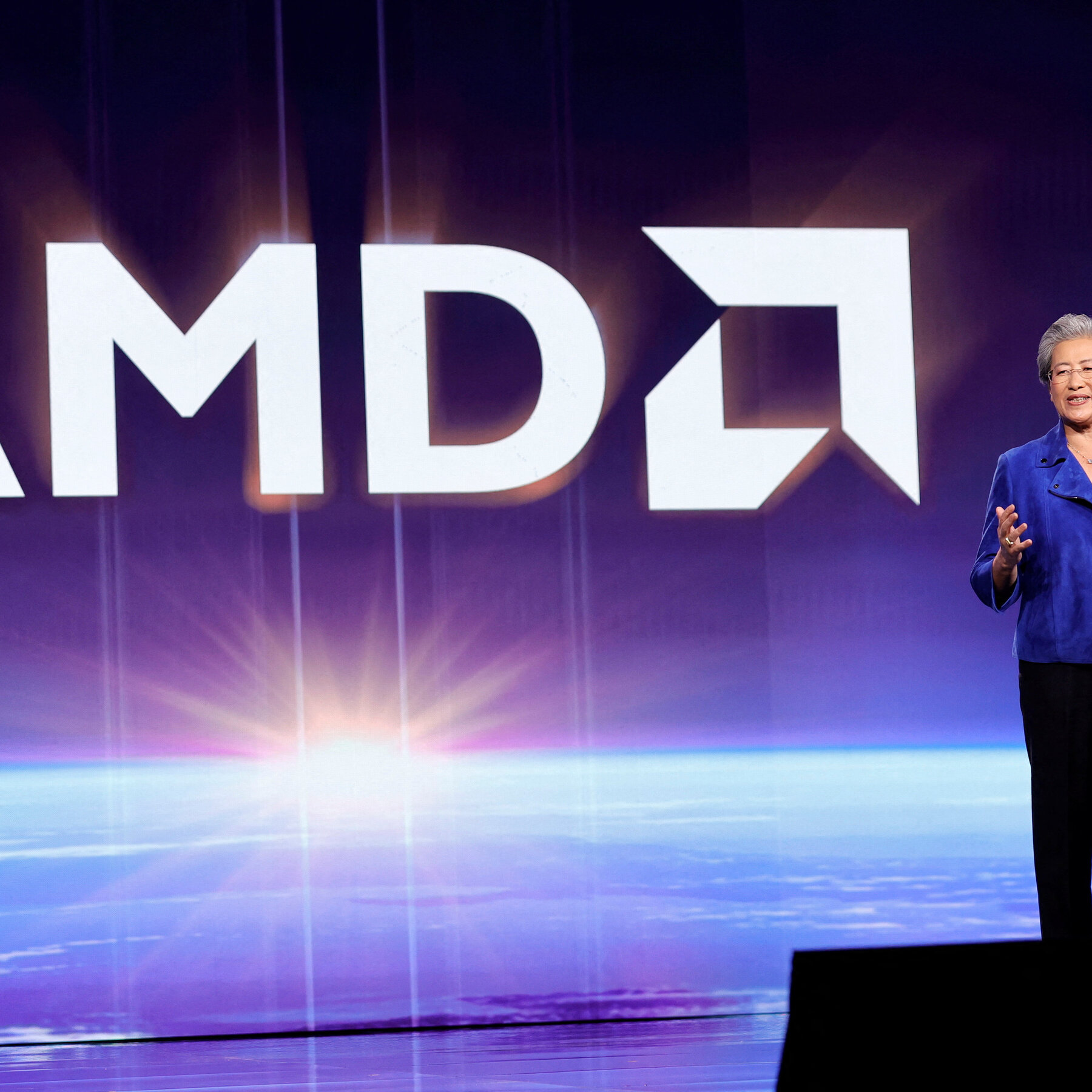
NVIDIA—In a strategic move to bolster its position in the rapidly evolving artificial intelligence (AI) chip market, Advanced Micro Devices (AMD) has entered into a multibillion-dollar chips-for-stock deal with Meta, the parent company of Facebook. This significant partnership underscores AMD’s aggressive push to catch up with its competitor, Nvidia, which has dominated the lucrative AI chip sector. As the tech industry continues to witness a surge in demand for AI and machine learning (ML) technologies, chip manufacturers are racing to deliver high-performance, specialized chips that can efficiently process complex computations.
The AI Chip Market Landscape and AMD’s Strategic Maneuvers
Introduction to AI Chips
The AI chip market has experienced exponential growth in recent years, driven by the increasing adoption of artificial intelligence and machine learning across various industries. The market is primarily dominated by Nvidia, whose graphics processing units (GPUs) have been repurposed for AI computations due to their ability to handle massive parallel processing tasks. However, AMD, with its rich history in semiconductor manufacturing, has been actively seeking ways to penetrate this market and challenge Nvidia’s dominance.
AMD’s Moves to Catch Up
AMD’s latest deal with Meta is a testament to its commitment to gaining a significant share in the AI chip market. By providing Meta with its AI-optimized chips, AMD aims to not only generate substantial revenue but also to demonstrate the capabilities and efficiency of its products to potential clients. This partnership could potentially pave the way for AMD to secure more deals with other major tech companies, further solidifying its position in the market.
Understanding the Chips-for-Stock Deal Between AMD and Meta
Financial Aspects of the Deal
The financial terms of the deal between AMD and Meta are structured such that AMD will supply Meta with a significant quantity of its AI chips in exchange for a substantial amount of Meta’s stock. This arrangement benefits both parties; AMD receives a large order that helps in scaling its production and reducing costs per unit, while Meta secures a stable supply of high-quality AI chips necessary for its operations without having to expend large amounts of cash upfront.
Strategic Implications
From a strategic standpoint, the deal signifies a deepening partnership between AMD and Meta, potentially leading to joint research and development (R&D) efforts focused on enhancing AI technology. Such collaborations can result in the creation of more sophisticated AI chips tailored to specific applications, further accelerating the adoption of AI across different sectors.
Nvidia’s Dominance and the Competitive Landscape of the AI Chip Market
Nvidia’s Position in the AI Chip Market
Nvidia, with its strong foundation in the gaming industry, leveraged its GPU technology to become the leader in the AI chip market. Its products have been favored for AI-related tasks due to their high performance and the company’s early investment in AI-specific software and hardware solutions. Nvidia’s dominance has made it challenging for competitors like AMD to gain significant traction, despite their technological advancements.
Competitive Strategies and Innovations
As AMD and other competitors strive to challenge Nvidia’s position, the focus has shifted towards innovating and differentiating their products. This includes developing more efficient chip architectures, enhancing software support for AI applications, and forming strategic partnerships with major tech companies. The competitive landscape is expected to become more dynamic, with potential newcomers from the Asian market also investing heavily in AI chip development.
Future Prospects and Challenges for AMD in the AI Chip Market
Market Growth and Opportunities
The AI chip market is poised for continued growth, driven by the expanding demand for AI technologies in sectors such as automotive, healthcare, and consumer electronics. As the market grows, AMD, with its recent strategic moves, is well-positioned to capitalize on the trend. The company’s ability to deliver high-quality, cost-effective AI chips could attract a wide range of customers, from cloud computing providers to edge AI device manufacturers.
Challenges Ahead
Despite the opportunities, AMD faces significant challenges in its quest to catch up with Nvidia. The company must continuously invest in R&D to stay at the forefront of AI chip technology, navigate the complexities of forming and maintaining strategic partnerships, and address potential supply chain disruptions. Moreover, the entry of new competitors and the evolving nature of AI workloads could further complicate the market dynamics.
