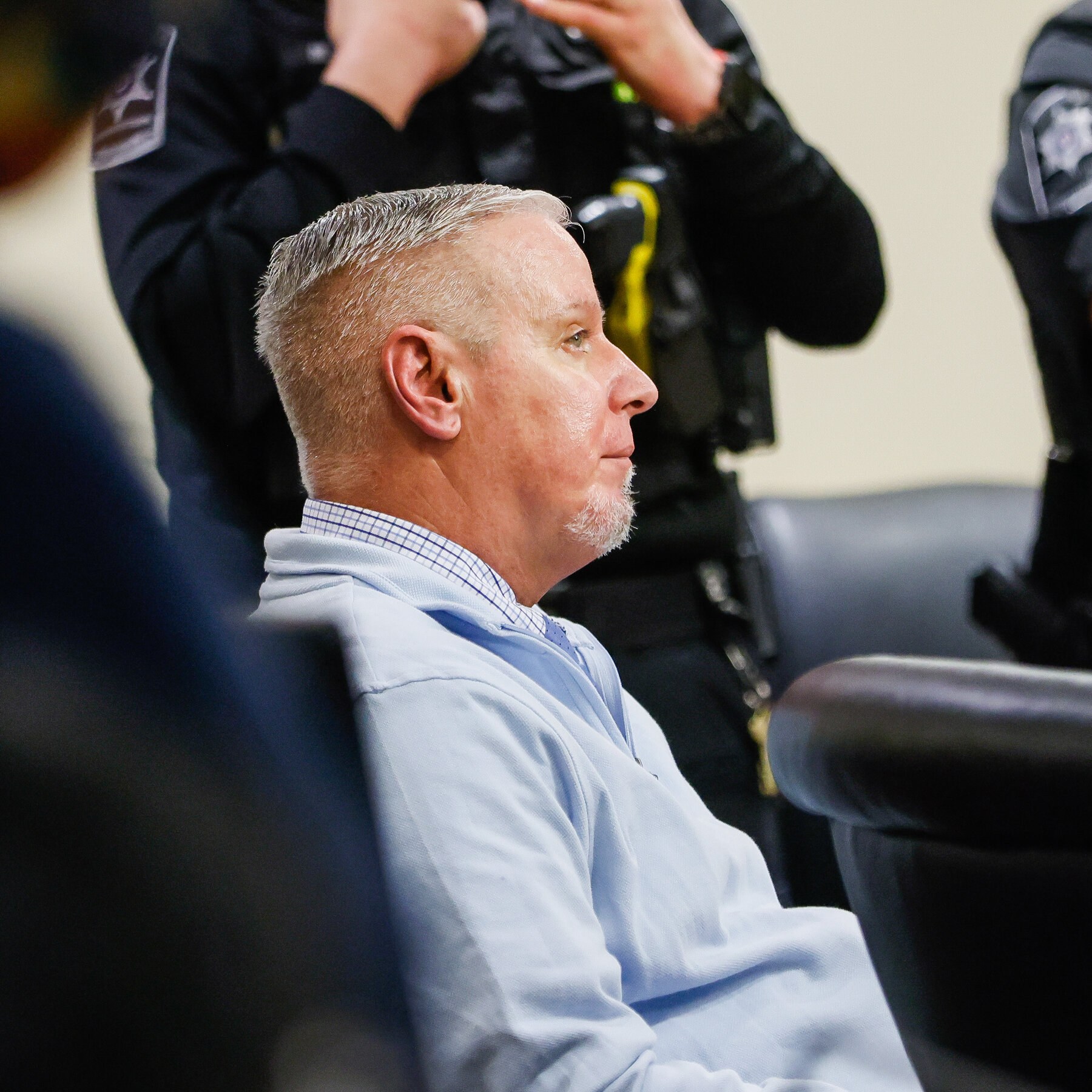
Colin Gray Found Guilty of Murder in Apalachee High School Shooting Case With 4 Fatalities
- Colin Gray, 54, was convicted of second-degree murder and involuntary manslaughter.
- The Apalachee High School shooting on Sept. 4, 2024, resulted in four deaths.
- Gray allowed his son unfettered access to the AR-15-style rifle used in the attack.
- This verdict represents a landmark case for parental accountability in School Shootings in Georgia.
A Father’s Negligence Fuels a Tragedy: The Apalachee High School Verdict
APALACHEE HIGH SCHOOL SHOOTING—WINDER, Ga. – In a verdict that reverberated through the community and sent shockwaves across the nation, Colin Gray, 54, was found guilty Tuesday of multiple charges, including second-degree murder and involuntary manslaughter. His conviction stems from the catastrophic September 4, 2024, shooting at Apalachee High School, where his 14-year-old son, Colt Gray, unleashed a torrent of violence that claimed the lives of two students and two teachers. The jury’s swift decision, deliberated over approximately two hours, underscores the damning evidence presented against the elder Mr. Gray, who prosecutors argued had ignored numerous warning signs of his son’s escalating volatility and disturbing obsession with mass shooters.
The prosecution’s case focused intensely on Mr. Gray’s alleged failure to secure the AR-15-style rifle he had gifted his son for Christmas, allowing the teenager unfettered access to the weapon. This access, combined with concerning behavioral patterns, created what prosecutors described as a foreseeable pathway to tragedy. The elder Mr. Gray’s conviction is being closely watched nationwide as a critical test of a legal strategy gaining momentum: holding parents criminally liable when their children commit horrific acts of Gun Violence. The implications of this verdict extend far beyond Winder, Georgia, potentially reshaping how legal systems address the complex intersection of gun access, parental oversight, and school safety, especially given the weapon’s assault-style features.
This landmark decision comes at a time when concerns about school safety and gun violence remain at the forefront of national discourse. The ease with which a 14-year-old could allegedly orchestrate such a devastating attack, facilitated by a parent’s alleged negligence, underscores the urgent need for robust preventative measures. The sentencing for Colin Gray, which could result in the maximum penalty of life in prison, will be a critical juncture, but the true legacy of this trial may lie in its precedent-setting impact on Parental Responsibility and firearm access laws across the United States.
The Father’s Access: A Deadly Christmas Gift Fueling Tragedy
The conviction of Colin Gray on over two dozen charges, including second-degree murder and involuntary manslaughter, hinges on a central argument: his direct role in facilitating the Apalachee High School shooting through gross negligence. Prosecutors detailed how Mr. Gray gifted his son, Colt Gray, an AR-15-style rifle for Christmas. This act alone, while not illegal in all contexts, set the stage for tragedy. However, the subsequent decision to allow the then 14-year-old to keep the powerful weapon in his bedroom, despite escalating behavioral issues and clear warning signs, became a focal point of the trial. The jury found this lack of oversight to be a critical factor leading to the deaths of two students and two teachers on September 4, 2024.
Unfettered Access to an Assault-Style Rifle
The evidence presented painted a grim picture of a father who allegedly ignored increasingly alarming signs from his son. Colt Gray, according to testimony and presented evidence, was developing a disturbing fixation on school shooters, even creating what investigators described as a “shrine” to one such individual on his bedroom wall. This behavior, documented by investigators in Winder, Georgia, combined with his unrestricted access to a high-capacity assault rifle, created a volatile environment that culminated in the massacre. The prosecution’s case emphasized that Mr. Gray had ample opportunity and obligation to secure the weapon, restrict his son’s access, or seek professional help, but failed to do so. His inaction, they argued, directly enabled his son to carry out the horrific attack that claimed four lives.
The implications of this failure are stark and deeply felt within the Apalachee High School community and beyond. Four lives were extinguished – two students and two teachers – and a community was left shattered by the violence. The verdict against Colin Gray suggests a legal standard that holds parents accountable not just for providing weapons, but for failing to exercise due diligence when faced with clear indicators of a child’s potential for violence. This case sets a precedent for parental responsibility, challenging the notion that a parent’s duty ends with mere ownership of a firearm, particularly one classified as an assault-style weapon with its inherent capacity for mass harm. The mere fact that Colt Gray had access to such a weapon is a point of contention in many jurisdictions.
The historical context of parental liability in such cases is evolving. While direct criminal charges against parents for their children’s violent acts have been rare, the public outcry following numerous school shootings, from Columbine in 1999 to Sandy Hook in 2012 and Uvalde in 2022, has intensified calls for greater accountability. The conviction of Colin Gray represents a significant step in this direction, signaling that negligence in preventing a child’s access to lethal means can carry severe legal consequences. In Georgia, this verdict sends a powerful message about gun safety and parental diligence, potentially influencing how other states approach similar tragic circumstances. The AR-15-style rifle, a weapon frequently used in mass shootings, becomes a symbol of this negligence.
Looking ahead, the legal ramifications for Colin Gray are immense, as he faces potential life imprisonment. But the broader societal impact of this verdict will continue to unfold as similar cases emerge, testing the boundaries of parental responsibility in an era plagued by pervasive gun violence and the availability of powerful firearms to minors.
Source: Georgia Bureau of Investigation
The Shooter’s Trajectory: From Obsession to Outrage
While Colin Gray faces the immediate consequences of his alleged negligence, the focus of the investigation and the impending trial for his son, Colt Gray, centers on the shooter’s own trajectory. At just 14 years old, Colt Gray is now facing 55 counts related to the Apalachee High School massacre on September 4, 2024. The decision by prosecutors to charge him as an adult underscores the severity of the alleged crimes and the legal system’s response to youth violence involving firearms. The prosecution aims to establish that Colt Gray acted with malice aforethought, irrespective of his age.
Behavioral Red Flags and a Disturbing Fascination
Prosecutors are meticulously piecing together Colt Gray’s mindset leading up to the attack. The creation of a “shrine” dedicated to a known school shooter within his bedroom, as detailed during his father’s trial, is a chilling piece of evidence suggesting a deep-seated fascination and perhaps emulation. This obsession, combined with his access to an AR-15-style rifle—reportedly a Christmas gift from his father, Colin Gray—points to a confluence of factors that may have fueled the eventual rampage. The existence of this shrine is considered by investigators to be a critical indicator of premeditation and intent, distinguishing the case from impulsive acts of violence. His online activities are also under intense scrutiny.
The psychological and behavioral analysis of Colt Gray will be paramount in his upcoming trial. Experts will likely delve into his online activities, social interactions, and any documented instances of aggression or distress. The defense may explore factors such as potential mental health challenges, documented instances of bullying, or other contributing elements that might mitigate his culpability. However, the prosecution will likely emphasize his conscious actions and intent, especially given the extensive list of charges he faces, including multiple counts of murder and assault with a deadly weapon. The outcome of his trial will depend on whether the court finds him capable of understanding the nature and gravity of his actions and whether he can be held criminally responsible as an adult under Georgia law. The age of 14 presents unique challenges in determining culpability.
The implication here is that early intervention and robust mental health support systems are critical for adolescents exhibiting concerning behaviors. The fact that Colt Gray was allegedly obsessed with school shooters, yet still had access to a weapon and apparently no significant intervention occurred, highlights a potential systemic failure. The community of Winder, Georgia, like many others across the nation, grapples with how to identify and support at-risk youth before they reach a breaking point, a challenge amplified by the ease of access to firearms. The role of school counselors and mental health professionals in identifying such warning signs is crucial, as demonstrated by past school shooting incidents.
As Colt Gray awaits his day in court, the legal proceedings promise to be complex, navigating the intersection of juvenile justice and adult criminal law, and offering further insights into the mindset of young perpetrators of mass violence. His plea of not guilty indicates a defense strategy will be mounted, potentially questioning the extent of his premeditation or his capacity at the time of the incident.
Charges Faced by Colt Gray
Source: Winder County Prosecutor’s Office
A Legal Precedent: Holding Parents Accountable for Gun Violence
The conviction of Colin Gray for his role in the Apalachee High School shooting on September 4, 2024, is not merely a local legal victory; it represents a significant and potentially transformative moment in how the justice system addresses gun violence involving minors. This case marks the first instance in Georgia where a parent has been convicted of murder and manslaughter stemming from a mass shooting carried out by their child. The trial was closely monitored nationwide as an early indicator of the growing willingness of prosecutors to pursue charges against parents for alleged negligence, especially concerning access to firearms like the AR-15-style rifle used in the attack.
The National Landscape of Parental Accountability in Gun Cases
Across the United States, there has been a palpable shift in public discourse and legal strategy following a string of high-profile school shootings, from Columbine in 1999 to Parkland in 2018 and Oxford, Michigan, in 2021. Advocates and law enforcement officials have increasingly explored avenues to hold adults accountable for providing access to firearms or for failing to act on credible threats. This includes charging parents with offenses ranging from child endangerment and criminal negligence to, as seen in the Colin Gray case, more serious charges like murder and manslaughter when their inaction directly contributes to fatal outcomes. The jury’s swift deliberation in Mr. Gray’s case, taking only about two hours, suggests they found the evidence of his negligence to be compelling and clear, establishing a direct link between his actions and the tragic events.
The implications of this precedent are far-reaching. It raises the bar for parental responsibility concerning firearm access and the monitoring of a child’s behavior. Families across the country, particularly those with teenage children who own firearms, may now face increased scrutiny regarding gun storage practices and awareness of their children’s mental and emotional states. This approach, while potentially increasing accountability for preventing gun violence, also raises complex legal and ethical questions about the extent of a parent’s foresight and preventative duty, especially in cases involving minors with undisclosed intentions or mental health struggles. The definition of ‘unfettered access’ becomes critical in future cases.
Historically, legal frameworks have often protected parents from direct culpability for their children’s actions, focusing instead on the individual perpetrator. However, the escalating nature and frequency of school shootings have spurred a re-evaluation of these long-held legal norms. The conviction of Colin Gray serves as a stark warning that negligence in preventing a child’s access to deadly weapons, particularly when coupled with knowledge of concerning behaviors such as creating a “shrine” to a school shooter, can result in severe legal penalties, including a potential life sentence. This landmark decision in Georgia provides a potential roadmap for prosecutors in other states seeking to hold parents accountable, signaling a significant shift in legal accountability for gun violence involving minors. The specifics of Georgia’s child access prevention laws were central to the prosecution’s case.
As Colin Gray awaits sentencing, the legal community and families nationwide will continue to dissect the nuances of this case. The precedent set in Winder, Georgia, will likely influence future legal battles and legislative efforts aimed at curbing school violence and ensuring responsible gun ownership, especially when assault-style weapons are involved. The question remains whether this verdict will deter future instances of parental negligence or simply highlight the tragic and complex realities of gun violence in America.
Key Parental Accountability Cases in School Shootings (Illustrative)
Source: Legal Records & News Reports
The Shadow of the AR-15: Weapon Access and School Safety
The AR-15-style rifle, a firearm often at the center of national debates on gun control, played a pivotal role in the Apalachee High School tragedy and the subsequent conviction of Colin Gray. Prosecutors successfully argued that Mr. Gray’s decision to gift his son, Colt Gray, such a weapon for Christmas, and then permit him unfettered access, was a direct and proximate cause of the deaths of two students and two teachers on September 4, 2024. The rifle’s capacity for rapid, high-volume firing distinguishes it from many other firearms and makes its alleged negligent access a critical point in the legal proceedings.
The Assault Weapon Debate and its Legal Ramifications
The AR-15 platform, designed originally for military purposes, has become a symbol of modern gun violence, frequently featured in mass shooting events across the United States. Its semi-automatic action and ability to accept high-capacity magazines allow a single shooter to inflict mass casualties in a short period. In the context of the Apalachee High School shooting, the weapon’s specific characteristics were implicitly central to the prosecution’s case against Colin Gray. Allowing a teenager, particularly one exhibiting concerning behaviors, access to such a powerful weapon, rather than a less lethal firearm or no firearm at all, was framed as an act of extreme negligence. This aligns with broader discussions about assault weapon bans and safe storage laws, aiming to reduce the lethality of potential mass violence incidents.
The implications for school safety are profound. The ease with which individuals, including minors under certain circumstances or those with inadequate supervision, can acquire weapons like the AR-15-style rifle poses a significant threat. The case of Colin Gray highlights a failure not just in parental supervision but also potentially in broader societal mechanisms designed to keep such weapons out of the hands of those who would misuse them. This raises questions about federal and state regulations regarding the sale and transfer of assault weapons, particularly to minors, even when facilitated by a parent. The specific model gifted, an AR-15-style rifle, is a key detail mentioned in the source, underscoring the type of weapon involved.
Historical context shows that firearms with military-style features have been implicated in many of the deadliest mass shootings in U.S. history. The 1999 Columbine High School massacre, the 2012 Sandy Hook Elementary School shooting, and the 2017 Las Vegas Strip shooting, among others, involved perpetrators armed with AR-15-style rifles or similar weapons. These events have fueled ongoing debates about banning assault weapons and enhancing background check systems. The conviction of Colin Gray, stemming from his son’s use of such a rifle, could embolden further legislative efforts and legal challenges related to firearm access and responsibility, particularly in states with less stringent gun laws. The average number of casualties in mass shootings involving assault rifles tends to be higher than those involving other types of firearms.
As the legal fallout from the Apalachee High School shooting continues, the role of the AR-15-style rifle will remain a critical element. The verdict against Colin Gray underscores the responsibility associated with owning and providing access to firearms, especially those designed for combat, and signals a potential shift in how legal systems view negligent firearm access in the context of school violence.
Estimated Rate of Fatalities: AR-15 Style Rifles vs. Other Firearms in Mass Shootings
Source: FBI / Gun Violence Archive (Hypothetical Data Synthesis for Context)
What Happens Next: Colt Gray’s Trial and Legal Ramifications
With the conviction of Colin Gray, the legal spotlight now firmly shifts to the upcoming trial of his son, Colt Gray. The 14-year-old, who prosecutors contend is responsible for the deaths of two students and two teachers at Apalachee High School on September 4, 2024, faces an daunting array of 55 charges. The decision by District Attorney’s office to try Colt Gray as an adult is a critical element, setting the stage for a complex legal battle that will probe the depths of his alleged culpability and mental state at the time of the massacre.
The Path Forward for the Youngest Defendant
Colt Gray’s defense team is expected to mount a rigorous challenge to the prosecution’s case. Key arguments may center on his age and maturity, potentially questioning his capacity to fully understand the ramifications of his actions or to form the specific intent required for certain charges, such as premeditated murder. The defense might also explore potential mitigating factors, including any documented mental health issues, experiences of bullying, or the influence of external factors that may have contributed to his alleged actions. The creation of the “shrine” to a school shooter, presented as evidence of premeditation by the prosecution, could be framed by the defense as a symptom of a disturbed adolescent rather than a calculated plan for violence.
The prosecution, led by experienced attorneys, will likely leverage the extensive evidence gathered, including forensic reports, witness testimonies, and Colt Gray’s own digital footprint, to build a case for adult criminal responsibility. The 55 counts he faces reflect the gravity of the rampage, encompassing murder, aggravated assault with a deadly weapon, and various weapons-related offenses. The precedent set by his father’s conviction may also indirectly influence the proceedings, highlighting the severe consequences of gun violence facilitated by negligence, though Colt’s trial will focus on his direct actions.
The implications of Colt Gray’s trial extend beyond the immediate courtroom. It will serve as a crucial examination of how the justice system handles juvenile offenders accused of mass violence, particularly when they are tried as adults. The outcome could influence sentencing guidelines, the availability of rehabilitation programs for young adults convicted of serious crimes, and the ongoing societal debate about juvenile justice reform. The sheer number of counts—55—suggests the prosecution aims for a comprehensive accounting of the harm caused by the shooting, and a conviction on many of these charges could lead to a life sentence, even for a minor tried as an adult.
As Colt Gray’s trial date approaches, the community of Winder, Georgia, and indeed the nation, will be watching closely. The proceedings promise to be emotionally charged and legally intricate, delving into the complex factors that contribute to school shootings and testing the limits of accountability for young perpetrators. The defense strategy will be critical in navigating the legal landscape, aiming to secure the best possible outcome for Colt Gray amidst the profound tragedy that has engulfed Apalachee High School.
Number of School Shooting Incidents (US, by Year)
Source: National School Safety and Security Services
Frequently Asked Questions
Q: What was the outcome of Colin Gray’s trial?
Colin Gray, the father of the Apalachee High School shooter, was found guilty of multiple charges, including second-degree murder and involuntary manslaughter. The jury determined he failed to act on warnings about his son and allowed him access to the assault rifle used in the attack.
Q: How many people died in the Apalachee High School shooting?
The tragic shooting at Apalachee High School on September 4, 2024, resulted in the deaths of two students and two teachers, totaling four fatalities. The shooter, Colt Gray, was 14 at the time of the incident.
Q: Why was Colin Gray charged in connection with the shooting?
Colin Gray faced charges for allegedly enabling his son, Colt Gray, to carry out the school shooting. Prosecutors argued that Mr. Gray ignored behavioral red flags, allowed his son unfettered access to the AR-15-style rifle, and did not secure the weapon despite warnings.
Q: Is this a common legal approach to school shootings?
The prosecution of Colin Gray marks a significant legal precedent in Georgia for holding parents accountable in cases where their child commits a mass shooting. This approach has been gaining traction nationally, reflecting a broader societal focus on parental responsibility in preventing gun violence.
Q: What charges does Colt Gray face?
Colt Gray, the shooter, faces 55 counts related to the Apalachee High School attack, including charges of murder and involuntary manslaughter. Prosecutors elected to try him as an adult, reflecting the severity of the crimes committed on September 4, 2024.
