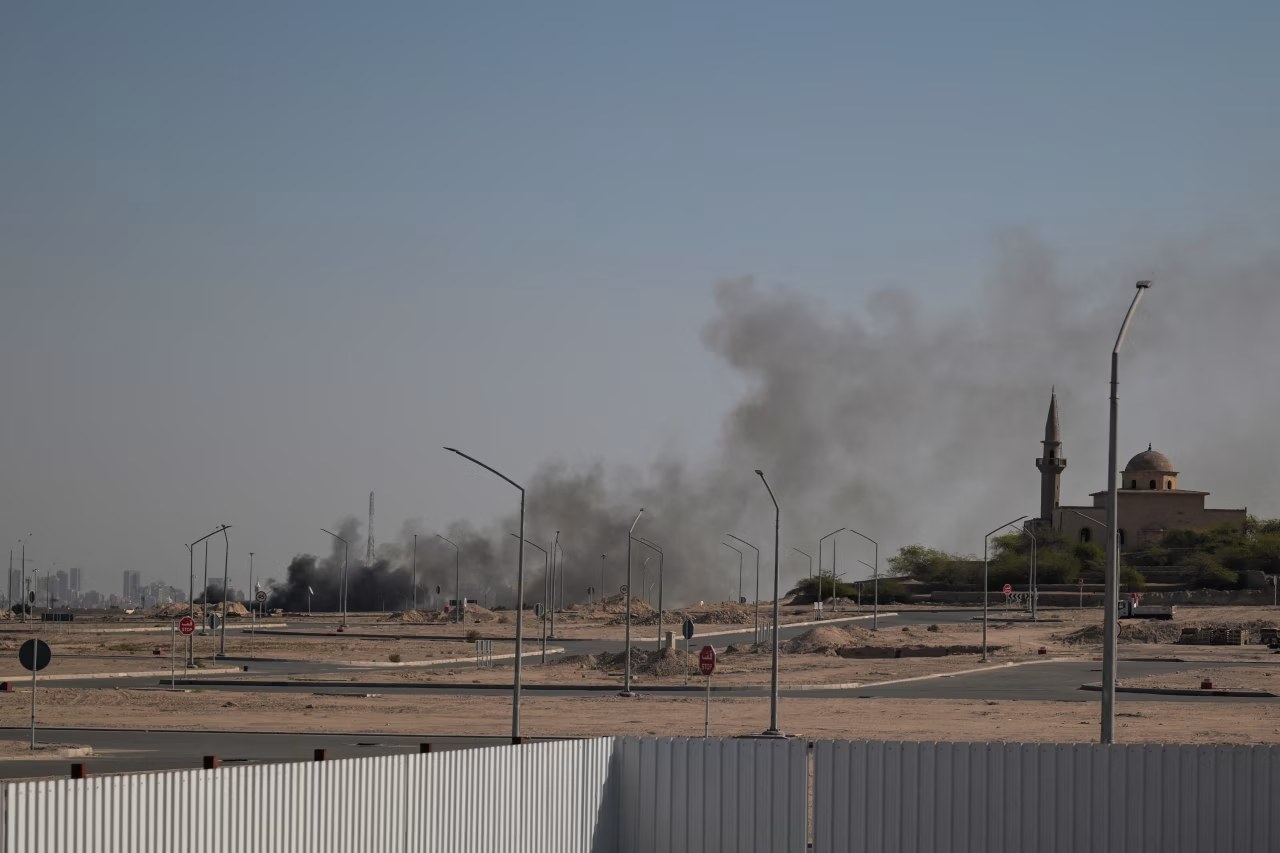
Iran’s Drone Assaults on US Embassies Spark Global Crisis, $2 Trillion Defense Spending Proposed
- Drone attacks hit U.S. consulates in Dubai and the embassy in Saudi Arabia.
- Secretary of State Marco Rubio confirmed President Trump’s independent decision to counter Iran.
- President Trump declared Iran’s military largely neutralized, including its navy.
- Proposed $2 trillion defense spending signals a major geopolitical and military pivot.
Amid escalating tensions, the United States announces a sweeping $2 trillion defense package following direct drone attacks on its diplomatic missions in the Middle East.
IRAN—DUBAI, UAE – A series of coordinated drone strikes on American diplomatic facilities in the Middle East has sent shockwaves through the international community, prompting an unprecedented $2 trillion proposed increase in U.S. defense spending. The attacks, which targeted the American consulate in Dubai and the U.S. Embassy in Riyadh, Saudi Arabia, signify a dramatic escalation in regional hostilities and have triggered a robust, swift response from the Trump administration. This aggressive posture and proposed financial commitment underscore a profound shift in U.S. foreign policy and military readiness, aiming to neutralize perceived threats emanating from Iran.
The immediate aftermath saw significant physical damage to a U.S. diplomatic outpost, with part of the Saudi Arabian embassy’s roof collapsing due to the impact. More critically, the strikes revealed a potent and emboldened Iranian capability to project force directly against U.S. interests. This development challenges previous assessments of Iran’s military strength and has necessitated a re-evaluation of global security strategies, impacting allies and adversaries alike.
The scale of the proposed defense spending, dwarfing previous allocations, indicates a clear intent to bolster military might across all branches. It suggests a proactive, potentially preemptive, strategy to deter future aggression and assert American dominance in a volatile geopolitical landscape. The geopolitical fallout is still unfolding, with diplomatic channels buzzing and military planners undoubtedly reassessing regional dynamics.
The Escalation: Drone Strikes and Diplomatic Fallout
The fragile peace in the Middle East shattered on March 15, 2026, when a meticulously planned series of drone attacks targeted key American diplomatic installations. In Dubai, a drone directly struck the parking lot of the American consulate, a vital hub for regional affairs. Simultaneously, two more drones targeted the U.S. Embassy in Riyadh, the capital of Saudi Arabia. The ferocity of the assault on the Riyadh facility was such that a portion of its roof suffered a catastrophic collapse, a stark visual testament to the attackers’ capabilities. These were not isolated incidents but appear to be part of a broader, synchronized effort to undermine American presence and influence in the region. The implications for diplomatic security and international law were immediately apparent, raising urgent questions about state-sponsored aggression and the protection of sovereign missions.
Riyadh’s Collapsed Roof: A Symbol of Vulnerability
The physical damage sustained by the U.S. Embassy in Riyadh was more than just structural; it was symbolic. The collapse of a section of the roof signified a breach of security that many believed was impenetrable. This event, occurring in the heart of a key U.S. ally’s capital, amplified concerns about the growing reach and sophistication of Iranian-backed operations. Security analysts immediately pointed to the precision of the strikes, suggesting advanced intelligence gathering and technological prowess on the part of the perpetrators. The incident underscored a critical vulnerability for diplomatic outposts worldwide, necessitating an urgent review of protective measures against drone warfare, a threat that had previously been considered nascent but was now demonstrably potent.
The immediate aftermath saw emergency protocols enacted, with personnel evacuated and security perimeters tightened. The U.S. State Department issued stern condemnations, vowing to hold those responsible accountable. The coordination of the attacks, hitting two major diplomatic sites on the same day, suggested a level of operational command and control that indicated significant state backing. This realization shifted the geopolitical calculus, moving beyond proxy conflicts to direct confrontation with a state actor’s capabilities. The world watched as diplomatic channels strained under the pressure of this direct confrontation.
The events of March 15, 2026, therefore, represent a critical juncture. They mark not just an attack on physical infrastructure but an audacious challenge to American authority and security interests in a region already rife with instability. The swiftness and severity of the response, both in terms of immediate security measures and subsequent policy pronouncements, signaled that the United States would not tolerate such direct affronts. This event was clearly setting the stage for a significant recalibration of U.S. foreign policy and military posture in the Middle East and beyond.
President Trump’s Strategic Reversal and the “Neutralized” Navy
In the immediate hours following the drone attacks, the U.S. response was characterized by swift pronouncements from the highest levels of government. Secretary of State Marco Rubio stated that President Trump had made an independent decision to attack Iran, a move reportedly unconnected to any concurrent Israeli security operations. This statement marked a significant pivot from previous diplomatic maneuvering, indicating a unilateral U.S. commitment to direct action. Rubio’s clarification suggested that the U.S. was no longer operating in lockstep with allies on this specific retaliatory strategy, but rather charting its own course based on its direct assessment of the threat. This independent decision-making process highlighted the administration’s perception of imminent danger that required immediate, decisive U.S. action.
Assessing Iran’s Naval Capabilities
President Trump himself weighed in, declaring that Iran’s military had been “largely neutralized,” including its navy. This statement, made in the context of escalating conflict, served a dual purpose: projecting an image of U.S. strength and preempting narratives of Iranian military superiority. While the declaration of neutralization might seem counterintuitive given the recent attacks, it could reflect an assessment of Iran’s long-term strategic capabilities versus its immediate tactical strikes. The U.S. intelligence community, through years of monitoring, likely possesses detailed assessments of Iran’s conventional and unconventional military assets. Trump’s assertion suggests that, despite the drone attacks, the overarching strategic balance of power still heavily favors the United States, and that Iran’s ability to wage a sustained, large-scale conflict has been significantly degraded.
This assessment of neutralization, however, is subject to constant re-evaluation in light of evolving threats. The drone strikes, small in scale but significant in their directness, demonstrated Iran’s capacity for asymmetric warfare and its willingness to test U.S. resolve. The historical context of U.S.-Iran relations is fraught with decades of tension, proxy conflicts, and intermittent diplomatic standoffs. Trump’s statement could be interpreted as an attempt to frame the current confrontation within this existing power dynamic, emphasizing U.S. dominance. The neutralization of Iran’s navy, if accurate, would severely limit its ability to project power beyond its coastal waters and the Persian Gulf, thereby confining any potential conflict to regional theaters.
The implication of this statement is critical for regional stability. By declaring Iran’s military capabilities diminished, the U.S. might be seeking to deter further aggression by projecting an image of overwhelming superiority. However, such declarations can also be perceived as provocative, potentially leading to miscalculation or an escalation by Iran to prove its resilience. The effectiveness of this strategic communication hinges on the actual military capabilities on the ground and the psychological impact it has on both adversaries and allies. The focus on the navy specifically suggests an understanding of Iran’s maritime ambitions and a desire to curtail them. This strategic assessment set the stage for how the U.S. would approach subsequent diplomatic and military actions, framing Iran as a weakened but still dangerous adversary.
The $2 Trillion Defense Spending Proposal: A New Era of Military Investment
In direct response to the escalating threat posed by Iran’s drone attacks, the Trump administration unveiled an ambitious and unprecedented $2 trillion proposed increase in U.S. defense spending. This colossal figure represents a dramatic recalibration of national security priorities, signaling a commitment to bolstering military capabilities across the board. The proposal dwarfs previous defense budgets, making it the largest fiscal package approved by Congress since the emergency stimulus measures enacted during the 2008 financial crisis. This immense financial commitment is earmarked for a wide array of military modernization efforts, including advanced missile defense systems, naval fleet expansion, next-generation fighter jets, and enhanced cyber warfare capabilities. The sheer magnitude of the proposed expenditure underscores the perceived severity of the threat and the administration’s resolve to project overwhelming military power.
Defense Spending Allocation: A Glimpse into Priorities
While the exact breakdown of the $2 trillion package is still being debated in Congress, preliminary reports suggest a significant allocation towards strategic deterrence and power projection. A substantial portion is expected to be directed towards modernizing the nuclear triad—intercontinental ballistic missiles, submarine-launched ballistic missiles, and strategic bombers—ensuring a credible second-strike capability. Furthermore, investments in naval power are anticipated, likely focusing on expanding the carrier strike groups and increasing the number of attack submarines, crucial for maintaining global maritime security and projecting power into contested waters. Air Force modernization will likely see funding for accelerated development and procurement of stealth fighter aircraft and long-range bombers, designed to penetrate sophisticated enemy air defenses.
The historical context of U.S. defense spending reveals a pattern of significant increases during periods of heightened geopolitical tension. Following World War II, the Cold War arms race saw defense budgets consistently consume a large percentage of GDP. Similarly, the post-9/11 era initiated a decade-long surge in military expenditure, primarily focused on counter-terrorism operations and interventions in the Middle East. The current proposal, however, signifies a shift towards confronting state-level adversaries with advanced conventional and emerging technologies, rather than solely counter-insurgency. This focus on high-end capabilities indicates a strategic pivot in response to adversaries like Iran, who are increasingly employing sophisticated asymmetric tactics and developing advanced weaponry.
The proposed $2 trillion increase carries profound implications for the global arms market and international relations. It signals to allies the U.S.’s unwavering commitment to their security while simultaneously sending a clear message to adversaries about the consequences of aggression. Economically, such a massive injection of funds into the defense sector could stimulate job growth and technological innovation, but it also raises concerns about national debt and the allocation of resources away from domestic priorities. The long-term consequences of this increased military posture will undoubtedly shape regional dynamics and global power balances for years to come. The sheer scale of this investment is designed to fundamentally alter the strategic landscape.
▲ +18%
Source: U.S. Treasury Department
Geopolitical Repercussions: A Shifting World Order?
The drone attacks on American diplomatic facilities and the subsequent U.S. response have sent seismic waves through the already volatile Middle East, potentially reshaping regional alliances and power dynamics. The U.S. government’s declaration that Iran’s military, including its navy, is “largely neutralized” may serve as a deterrent, but it also carries the risk of provoking a desperate or unconventional response from Tehran. This strategic framing of Iran’s capabilities could embolden regional adversaries while potentially alarming traditional allies who rely on U.S. military presence for stability. The directness of the attacks suggests a calculated escalation by Iran, aiming to test U.S. resolve and demonstrate its capacity to inflict damage on American interests.
Impact on Regional Alliances
The proposed $2 trillion defense spending increase signals a renewed commitment by the United States to military superiority, particularly in confronting state-level threats. This massive investment is likely to be directed towards advanced technological capabilities, missile defense systems, and naval power projection. For allies in the region, such as Saudi Arabia and the UAE, this could be viewed as a reassuring demonstration of American commitment. However, it could also fuel an arms race, as regional powers seek to match U.S. capabilities or bolster their own defenses against perceived Iranian threats. The historical context of U.S. engagement in the Middle East, marked by periods of intervention and withdrawal, means that allies often view such announcements with a mixture of hope and apprehension.
The implications for Iran itself are significant. Facing a declaration of military neutralization and a massive U.S. defense buildup, Tehran may feel cornered, potentially leading to more erratic or unpredictable actions. The drone attacks, while militarily modest, were a clear signal of intent and capability. The U.S. response, particularly the unilateral decision to pursue attacks against Iran noted by Secretary of State Marco Rubio, indicates a potential divergence from allied strategies, which could complicate diplomatic efforts. This divergence might also influence how other major powers, such as China and Russia, perceive and react to the escalating tensions, potentially leading to new strategic alignments.
The economic ramifications of such a large defense spending increase are also considerable. While it may stimulate certain sectors of the U.S. economy, it also diverts resources that could be used for domestic programs or other foreign policy tools. Globally, it could lead to increased defense spending by other nations in response to perceived threats or U.S. assertiveness. The ultimate geopolitical consequence hinges on how these actions are interpreted and reacted to by all parties involved. The current situation, characterized by direct attacks and massive military investment, suggests a transition to a more confrontational phase in U.S.-Iran relations and potentially broader geopolitical realignments across the Middle East.
What Does Iran’s Military Neutralization Mean for Future Conflicts?
President Trump’s assertion that Iran’s military has been “largely neutralized,” including its navy, presents a complex strategic assessment following direct drone attacks on U.S. embassies. This statement implies that while Iran possesses the capability for tactical strikes, its ability to wage a sustained, conventional conflict or pose a significant strategic threat to U.S. interests has been severely degraded. The historical context of U.S. military engagement suggests a focus on degrading an adversary’s offensive capabilities to prevent large-scale confrontations. The neutralization claim, therefore, likely refers to Iran’s capacity for advanced air defense, long-range strike capabilities, and significant naval power projection, all of which are critical components of a major military force.
Assessing Iran’s Asymmetric Warfare Prowess
The drone attacks, though impactful, can be categorized as asymmetric warfare—employing unconventional tactics and readily available technology to offset a technologically superior adversary. Iran has historically excelled in developing a robust network of proxies and employing asymmetric strategies to counter conventional military power. The success of these recent drone strikes, however, might suggest an advancement in their indigenous drone technology and operational coordination, challenging the notion of complete neutralization. The U.S. intelligence community, tasked with continuous assessment, would have likely factored in Iran’s asymmetric capabilities when making its evaluation. This includes their missile programs, cyber warfare capabilities, and the extensive network of militias operating across the region.
The implication of declaring Iran’s navy neutralized is particularly significant. The Iranian Navy, while not on par with global superpowers, is a formidable force in the Persian Gulf and Strait of Hormuz, capable of disrupting vital shipping lanes. A neutralized navy would suggest severely impaired capabilities in submarine warfare, anti-ship missile deployment, and fleet maneuverability. This assessment is crucial for maintaining freedom of navigation and ensuring the unimpeded flow of global oil supplies, a long-standing U.S. national security interest. The proposed $2 trillion defense spending increase could, in part, be aimed at further solidifying this naval dominance and countering any residual Iranian naval threats.
Looking forward, the U.S. strategy appears to be one of overwhelming deterrence, relying on demonstrable military superiority to prevent further aggression. The effectiveness of this strategy hinges on accurate intelligence and a clear understanding of Iran’s red lines and strategic objectives. While the drone attacks may have been intended to provoke a reaction, the U.S. response, including the massive defense spending proposal, seems designed to signal that any further escalation would be met with overwhelming force. The ongoing challenge for policymakers will be to balance the projection of strength with diplomatic engagement, preventing a cycle of retaliation that could destabilize the region further and impact global security dynamics. The future of U.S.-Iran relations now appears to be heavily influenced by this new military posture.
Frequently Asked Questions
Q: What were the immediate consequences of Iran’s drone attacks on U.S. embassies?
The attacks involved drones hitting the American consulate in Dubai and the U.S. Embassy in Saudi Arabia, causing structural damage. This escalation prompted swift reactions and strategic realignments from the U.S. government.
Q: How did President Trump’s stance on the attacks evolve?
President Trump initially stated Iran’s military was largely neutralized. However, following the attacks, his administration’s response and proposed defense spending indicated a significant shift in threat assessment and a proactive stance against further aggression.
Q: What is the significance of the proposed $2 trillion defense spending increase?
This massive proposed increase represents the largest fiscal package for defense since the 2008 stimulus. It signals a dramatic recalibration of U.S. security priorities in response to heightened geopolitical tensions and direct attacks.
Q: What is the geopolitical implication of the U.S. response to Iran’s attacks?
The aggressive U.S. response, including significant defense spending and statements about Iran’s military, suggests a new phase of heightened tensions in the Middle East. It underscores the volatility of the region and the U.S.’s commitment to projecting power.
