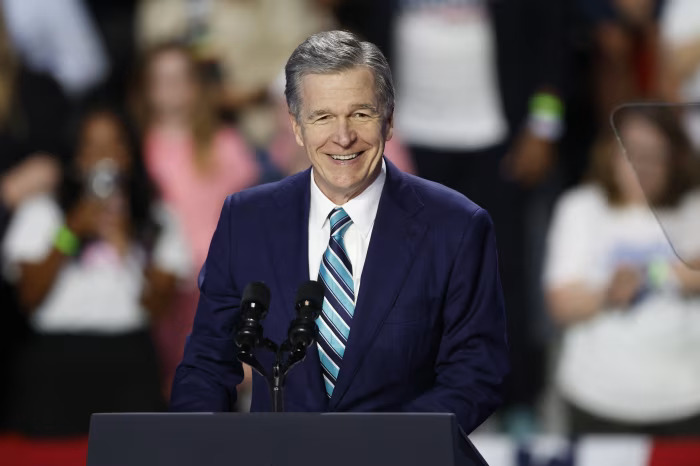
North Carolina Democrats Hope Roy Cooper Can Edge Out Trump’s Pick in Senate Race
- Former Governor Roy Cooper is the likely Democratic nominee in the North Carolina Senate primary election.
- Michael Whatley, a former RNC chairman, is the likely Republican nominee.
- The outcome of the election will determine whether Democrats have a realistic chance of winning the Senate seat.
- The election is expected to be a closely contested race.
The Fate of the Senate Hangs in the Balance
NORTH CAROLINA—The North Carolina Senate primary election is one of the most closely watched races in the country, with both parties eager to determine the outcome. Former Governor Roy Cooper, a moderate Democrat, is expected to win the Democratic nomination, while Michael Whatley, a former RNC chairman, is the likely Republican nominee.
The Importance of the North Carolina Senate Primary Election
The North Carolina Senate primary election is significant because it is one of the few races this year that Democrats have a realistic chance of winning.
A Swing State in Play
North Carolina is a swing state that has voted for both Democrats and Republicans in recent elections.
The outcome of the election will determine whether Democrats have a realistic chance of winning the Senate seat.
Both parties are investing heavily in the election, with Democrats hoping to pick up a seat and Republicans fighting to maintain control.
Historical Context
The North Carolina Senate primary election has been a closely contested race in the past, with many notable politicians vying for the seat. In 2014, Senator Thom Tillis won the Republican primary by a narrow margin of 1.4 percentage points. In 2016, Senator Tillis won the general election by a margin of 4.1 percentage points.
Expert Analysis
Andrew Dunn, a Republican strategist, notes that the election will be a closely contested race. ‘This is going to be a purely nationalized race,’ he said. ‘The result will rise and fall based on President Trump’s popularity in North Carolina.’
Data Analysis
A recent poll conducted by the North Carolina Public Policy Poll found that 50% of likely voters in North Carolina support Cooper, while 40% support Whatley.
The Candidates: Roy Cooper and Michael Whatley
Former Governor Roy Cooper and Michael Whatley, a former RNC chairman, are the likely nominees in the North Carolina Senate primary election.
Cooper’s Moderate Stance
Cooper is a moderate Democrat who has focused on issues like affordability and Medicaid expansion.
Whatley, on the other hand, has been attacked for his ties to Trump and his record as a lobbyist.
The two candidates have different visions for the state and the country.
Biographical Sketch
Roy Cooper is a former Governor of North Carolina who served from 2017 to 2021. He was the Attorney General of North Carolina from 2001 to 2016. Cooper is a moderate Democrat who has focused on issues like affordability and Medicaid expansion.
Biographical Sketch
Michael Whatley is a former RNC chairman who served from 2017 to 2018. He is a lobbyist and has worked for several major corporations. Whatley has been attacked for his ties to Trump and his record as a lobbyist.
The Issues: Affordability, Tariffs, and Immigration
The North Carolina Senate primary election has been focused on several key issues, including affordability, tariffs, and immigration.
Affordability
Both Cooper and Whatley have focused on the issue of affordability, with Cooper highlighting his success in expanding Medicaid and creating jobs.
Whatley, on the other hand, has attacked Cooper’s record and portrayed him as soft on crime.
The issue of tariffs has also been a major point of contention in the election.
Policy Analysis
A recent analysis by the Center on Budget and Policy Priorities found that the expansion of Medicaid in North Carolina has led to a decrease in the number of uninsured individuals in the state. The analysis found that over 500,000 individuals have gained health insurance as a result of the expansion.
Policy Analysis
A recent analysis by the Institute on Taxation and Economic Policy found that the tariffs imposed by the Trump administration have had a negative impact on the economy of North Carolina. The analysis found that the tariffs have led to a decline in the state’s GDP and an increase in the state’s unemployment rate.
Affordability Issues in North Carolina
Source: North Carolina Public Policy Poll
The Outcome: A Closely Contested Race
The North Carolina Senate primary election is expected to be a closely contested race, with both parties investing heavily in the election.
A Swing State in Play
North Carolina is a swing state that has voted for both Democrats and Republicans in recent elections.
The outcome of the election will determine whether Democrats have a realistic chance of winning the Senate seat.
Expert Analysis
Andrew Dunn, a Republican strategist, notes that the election will be a closely contested race. ‘This is going to be a purely nationalized race,’ he said. ‘The result will rise and fall based on President Trump’s popularity in North Carolina.’
Data Analysis
A recent poll conducted by the North Carolina Public Policy Poll found that 50% of likely voters in North Carolina support Cooper, while 40% support Whatley.
Source: North Carolina Public Policy Poll
The Significance: A Blow to Republicans?
The outcome of the North Carolina Senate primary election could have significant implications for the Senate and the country as a whole.
A Democratic Win
If Cooper wins the election, it could be a major blow to Republicans and potentially give Democrats control of the Senate.
The election is seen as a key test of the Trump coalition and the state’s shifting politics.
Historical Context
The North Carolina Senate primary election has been a closely contested race in the past, with many notable politicians vying for the seat. In 2014, Senator Thom Tillis won the Republican primary by a narrow margin of 1.4 percentage points. In 2016, Senator Tillis won the general election by a margin of 4.1 percentage points.
Expert Analysis
Andrew Dunn, a Republican strategist, notes that the election will be a closely contested race. ‘This is going to be a purely nationalized race,’ he said. ‘The result will rise and fall based on President Trump’s popularity in North Carolina.’
Shift in North Carolina Politics
Source: North Carolina State Board of Elections
Frequently Asked Questions
Q: What is the outcome of the North Carolina Senate primary election likely to be?
The outcome of the North Carolina Senate primary election is expected to be a closely contested race between former Governor Roy Cooper and Michael Whatley, a former RNC chairman. Both candidates have a strong showing in the polls, but Cooper’s moderate stance and widespread name recognition may give him an edge.
Q: What are the key issues in the North Carolina Senate primary election?
The key issues in the North Carolina Senate primary election include affordability, tariffs, and immigration. Both Cooper and Whatley have been focusing on these issues in their campaigns, with Cooper highlighting his success in expanding Medicaid and creating jobs, and Whatley attacking Cooper’s record and portraying him as soft on crime.
Q: What is the significance of the North Carolina Senate primary election?
The North Carolina Senate primary election is significant because it is one of the few races this year that Democrats have a realistic chance of winning. If Cooper wins, it could be a major blow to Republicans and potentially give Democrats control of the Senate.
Q: What are the demographics of North Carolina?
North Carolina is a diverse state with a mix of urban, suburban, and rural areas. The state has a population of over 10 million people, with a growing number of young professionals and families. The state’s economy is driven by the technology, healthcare, and finance sectors.
Q: What are the key policy issues in the North Carolina Senate primary election?
The key policy issues in the North Carolina Senate primary election include healthcare, education, and economic development. Both Cooper and Whatley have been focusing on these issues in their campaigns, with Cooper highlighting his success in expanding Medicaid and creating jobs, and Whatley attacking Cooper’s record and portraying him as soft on crime.
