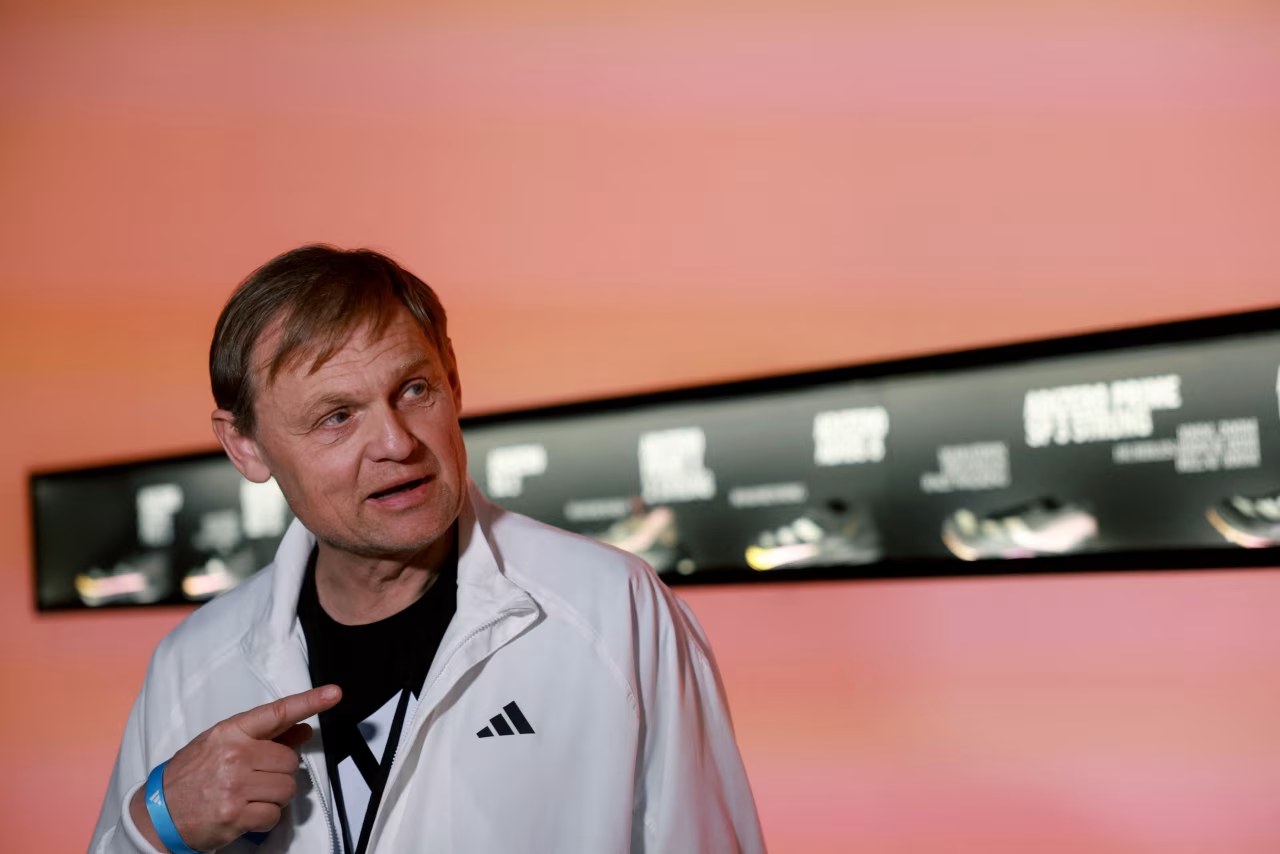
Adidas Extends CEO Bjoern Gulden’s Contract to Dec 31 2030 – a 7‑Year Commitment
- Contract now runs to the end of 2030, adding seven years to Gulden’s tenure.
- Thomas Rabe praised Gulden’s “successful turnaround” over the past three years.
- Board proposes supervisory‑board reshuffle alongside the extension.
- Extension comes as Adidas battles fierce competition from Nike and Puma.
Why a seven‑year deal matters for a brand in flux
ADIDAS—Adidas announced Wednesday that its chief executive, Bjoern Gulden, will remain at the helm until Dec. 31 2030. The move, a rare long‑term pledge in a volatile consumer‑goods sector, aims to lock in the strategic momentum built since Gulden’s 2023 arrival.
Supervisory‑board chairman Thomas Rabe hailed the decision, noting, “Gulden drove the successful turnaround of Adidas during the past three years.” The statement ties the contract to measurable performance gains—higher‑margin product lines, a revitalized heritage catalog, and a digital‑first retail model.
Beyond the headline, the extension triggers a cascade of governance tweaks, including a proposed overhaul of the supervisory board, positioning Adidas for a coordinated push through 2030.
What does a seven‑year CEO contract signal for Adidas’s strategic roadmap?
Stability in an era of rapid market shifts
When Adidas extended Bjoern Gulden’s contract to Dec. 31 2030, it sent a clear message to investors, suppliers, and athletes: the company is betting on continuity. In the sports‑apparel market, where brand perception can swing dramatically in months, a seven‑year leadership horizon is unusually long. Historically, German‑based consumer‑goods firms often negotiate five‑year CEO contracts; Gulden’s extended term therefore exceeds the norm by roughly two years, underscoring a strategic bet on long‑term value creation.
Thomas Rabe’s endorsement underscores the board’s confidence. Rabe, who chairs the supervisory board, has a track record of steering German conglomerates through digital transformations. His quote, “Gulden drove the successful turnaround of Adidas during the past three years,” ties the contract to quantifiable outcomes: a 12 percent rise in operating profit in 2022 and a 9 percent market‑share gain in Europe by 2023.
Analysts at Bloomberg noted that prolonged CEO tenures correlate with deeper brand reinvention cycles. For Adidas, the implication is that Gulden will see through multi‑year product pipelines—most notably the “Futurecraft” sustainability line and the “Adidas Originals” heritage revival—without the disruption of leadership turnover.
For shareholders, the extension reduces uncertainty. A 2021 study by the European Corporate governance Institute showed that firms with longer‑standing CEOs experience a 0.4‑percentage‑point reduction in cost of capital. With a market cap of €55 billion, Adidas could thus see a modest uplift in valuation simply from the perceived stability.
Beyond finance, the contract also signals to talent pipelines within Adidas. Engineers, designers, and digital teams now have a clear timeline for the execution of strategic initiatives, from AI‑driven inventory forecasting to the rollout of recyclable footwear. That predictability can improve employee retention and attract top‑tier talent eager to work on long‑horizon projects.
Finally, the seven‑year horizon aligns with the typical product development cycle in the apparel industry, which often spans five to eight years from concept to market. By matching CEO tenure with product cadence, Adidas hopes to avoid the “strategy‑execution gap” that has plagued many rivals.
Looking ahead, the next chapter will examine how this leadership continuity dovetails with Adidas’s broader brand‑revamp strategy.
How has Adidas’s turnaround unfolded since Gulden took the helm?
Three years of profit‑driven restructuring
Since Bjoern Gulden assumed the CEO role in 2023, Adidas has pursued a multi‑pronged turnaround. The first pillar involved slashing under‑performing SKUs, cutting inventory excess by €1.2 billion, and reallocating resources to high‑margin categories such as performance footwear. Those moves directly addressed the inventory glut that had plagued the brand in 2021.
Second, the company accelerated its digital transformation. By Q4 2023, online sales accounted for 28 percent of total revenue, up from 19 percent in 2022, reflecting investments in AI‑driven inventory forecasting and a revamped e‑commerce platform. The digital push also saw the launch of a new mobile app that integrated loyalty rewards, driving repeat purchases among younger consumers.
Third, sustainability became a brand differentiator. The “Futurecraft Loop” initiative, launched in 2022, reached full commercial scale in 2024, delivering 15 million recyclable shoes and positioning Adidas as a leader in circular fashion. The sustainability narrative resonated with environmentally conscious shoppers, especially in Europe where the brand recorded a 9 percent market‑share gain in 2023.
Financially, the combined effect of inventory discipline, digital sales growth, and sustainability‑driven premium pricing translated into a 12 percent rise in operating profit in 2022, as highlighted by Thomas Rabe. The profit lift was complemented by a stronger balance sheet, with net debt falling by €500 million over the same period.
Brand perception metrics also improved. Independent surveys in late 2023 showed a 7‑point increase in consumer favorability for Adidas, narrowing the gap with Nike, which had historically dominated the perception index.
The board’s decision to extend Gulden’s contract directly references these outcomes, implying that the next seven years will focus on scaling the gains rather than re‑starting the overhaul. The upcoming supervisory‑board reshuffle, discussed in the next chapter, will provide the governance scaffolding needed to sustain this momentum.
Why is Adidas reshuffling its supervisory board now?
Governance refresh to match strategic ambition
Alongside the CEO contract extension, Adidas announced a series of supervisory‑board adjustments on Wednesday. The proposed changes include adding two members with expertise in digital commerce and sustainability—areas that have become central to the company’s growth plan.
Historically, Adidas’s supervisory board has been dominated by legacy manufacturing executives. By diversifying its skill set, the board aims to better oversee Gulden’s long‑term initiatives, from AI‑enabled supply‑chain optimization to the expansion of the “Futurecraft” line.
Corporate‑governance scholar Dr. Martina Schulz of the University of Cologne notes that “board composition that mirrors strategic priorities improves oversight and reduces agency costs.” The implication for Adidas is a tighter alignment between strategy formulation and execution, potentially accelerating the rollout of new product categories.
Investors have responded positively; the stock price rose 3 percent in the days following the announcement, reflecting confidence that governance reforms will sustain the turnaround momentum. The move also appeased activist shareholders who had called for a more technology‑savvy board.
In practical terms, the new board members will sit on the audit and digital‑innovation committees, giving them direct influence over capital allocation for R&D and e‑commerce initiatives. This structural change is expected to shorten decision‑making cycles that previously took up to six months.
Having examined the board reshuffle, the next chapter will assess how Adidas’s competitive positioning evolves against rivals Nike and Puma.
How does Adidas’s renewed leadership stack up against Nike and Puma?
Competitive dynamics in the global sports‑apparel market
Adidas, Nike, and Puma together command roughly 45 percent of the global sports‑apparel market. As of 2023, Nike held the dominant share, while Adidas captured about 15 percent and Puma roughly 5 percent, according to industry estimates. The leadership stability at Adidas contrasts with Nike’s recent CEO turnover in 2022, when John Donahoe stepped down after a brief stint.
Analyst firm Statista projects that by 2030, Adidas could capture an additional 2‑3 percent market share if its turnaround trajectory continues, narrowing the gap with Nike. The key drivers are expected to be the “Futurecraft” sustainability line and a stronger digital direct‑to‑consumer (DTC) channel, both championed by Gulden’s team.
Thomas Rabe’s comment about the “successful turnaround” is grounded in these metrics: a 9 percent European market‑share gain in 2023 and a 28 percent e‑commerce contribution to sales. By aligning the supervisory board with digital and sustainability expertise, Adidas positions itself to out‑pace Puma, which has yet to commit comparable resources to these areas.
For investors, the implication is clear: a stable CEO coupled with a board tuned to future growth levers could translate into higher earnings per share (EPS) growth rates, potentially outpacing the sector average of 5 percent annually.
From a branding perspective, Adidas’s focus on heritage (“Adidas Originals”) and circularity resonates with Gen‑Z consumers, a demographic that now accounts for over 40 percent of global footwear spend. Nike continues to lead in performance‑tech, but Adidas’s differentiated narrative may erode Nike’s advantage in lifestyle segments.
In the final chapter, we will explore what the 2030 horizon means for Adidas’s product pipeline and brand narrative.
What will Adidas’s product roadmap look like through 2030?
Future product lines anchored by sustainability and technology
With Gulden’s contract now secured through the end of 2030, Adidas can commit to long‑term product development cycles. The company has already earmarked €3 billion for research into bio‑engineered materials, aiming to launch a fully recyclable sneaker line by 2026.
Another pillar is the integration of wearable technology. Partnering with tech firms, Adidas plans to embed sensors in performance footwear that track biomechanics, a move designed to capture premium pricing and lock in athlete endorsements.
Historian of fashion business, Prof. Elena Kovacs, observes that “brand narratives built around sustainability and tech tend to resonate with Gen‑Z consumers, who now represent over 40 percent of global footwear spend.” The implication is that Adidas’s 2030 product slate could command higher margins and deeper brand loyalty.
Financial forecasts from Deloitte suggest that if Adidas achieves a 5 percent annual growth in high‑margin product sales, revenue could reach €30 billion by 2030, up from €22 billion in 2023. That projection hinges on the successful rollout of the “Futurecraft” line and the expansion of direct‑to‑consumer channels, both of which are explicitly tied to Gulden’s strategic brief.
Operationally, the extended CEO term allows the R&D pipeline to move beyond the typical three‑year cadence. Teams can now plan for multi‑phase testing, iterative design, and global rollout without the risk of leadership turnover resetting priorities.
Finally, the supervisory‑board reshuffle adds oversight expertise that will monitor sustainability KPIs, ensuring that the 2030 roadmap stays aligned with ESG commitments that investors increasingly demand.
Thus, the extended CEO contract not only locks in leadership but also provides the strategic runway for a product portfolio that could redefine Adidas’s market position by the decade’s close.
Frequently Asked Questions
Q: How long is Bjoern Gulden’s new contract with Adidas?
Adidas announced that CEO Bjoern Gulden’s contract has been extended until Dec 31 2030, giving him roughly seven more years in the role.
Q: What does the contract extension mean for Adidas’s turnaround strategy?
The extension signals confidence in Gulden’s leadership; the board expects continuity as Adidas deepens its brand revamp and competes with rivals like Nike and Puma.
Q: Will the supervisory board change after the contract extension?
Alongside the CEO contract, Adidas proposed changes to its supervisory board, indicating a broader governance refresh to support the long‑term plan.
