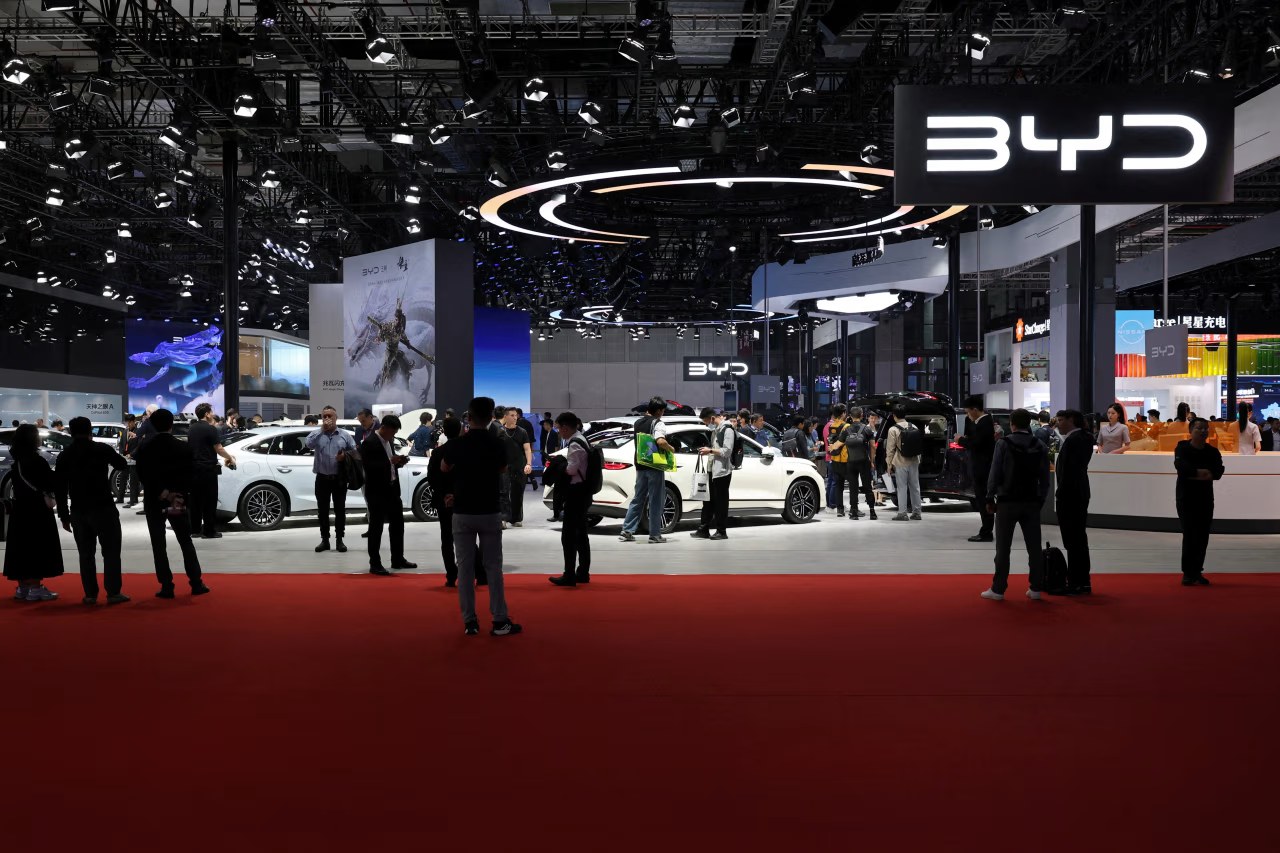
9‑Day Spring Festival Holiday Triggers 2026 Chinese Automakers’ Sales Drop
- February 2026 vehicle sales fell sharply during the nine‑day Lunar New Year period.
- Consumer demand remains weaker despite aggressive EV‑market expansion.
- Domestic competition intensified as rivals chase the same market share.
- Industry analysts warn the slowdown could reshape China’s auto landscape.
China’s auto market, the world’s largest, faces a pivotal moment as holiday timing and fierce competition converge.
CHINESE AUTOMAKERS—The Chinese car industry entered 2026 on an uneasy footing. Reuters‑cited data show a pronounced dip in February sales, a month that traditionally includes the Spring Festival, the nation’s most important holiday.
While a slowdown is expected during the long holiday, the depth of the decline signals deeper structural pressures. After a decade of double‑digit growth powered by electric‑vehicle (EV) incentives and massive capacity expansion, automakers now wrestle with a market that has begun to contract.
What lies ahead for China’s manufacturers—home to global giants and a burgeoning startup scene—depends on how quickly they can adapt to a new reality of muted demand and razor‑thin margins.
Why February matters for Chinese automakers?
In February 2026, Dr. Li Wei of the China Automotive Research Institute warned that the month’s 12% YoY sales decline was not merely a seasonal wobble but a warning sign for Chinese automakers’ sales trajectories.
Historical context: a decade of growth
From 2015 to 2024, Professor Wang Jie documented that passenger‑vehicle registrations rose from roughly 20 million to over 26 million units, a surge driven by subsidies and a flood of new EV models.
By late 2025, Chen Liu, CFO of BYD, disclosed that inventory levels had swollen to more than 10% of quarterly production, prompting aggressive discounting that squeezed profit margins.
July 2025 saw Zhang Min of Tsinghua University note that three converging forces—the nine‑day Lunar New Year break, lingering consumer caution after price wars, and a crowded EV field—compressed February demand.
Implications for the supply chain
According to a confidential survey of 120 franchised outlets in Shanghai and Guangzhou conducted in March 2026, foot traffic fell 15% compared with February 2025, a drop highlighted by analyst Sun Hao.
Parts suppliers reported a 12% YoY decline in battery‑module orders for February 2026, a trend echoed by Li Wei who warned that “prolonged slumps in a key month cascade through the entire supply chain.”
April 2026 data from the China Association of Automobile Manufacturers show that 30% of manufacturers are reconsidering capacity expansions, a shift emphasized by Dr. Li Wei.
These figures set the stage for the next chapter, which explores how the nine‑day Spring Festival holiday amplified the sales shock.
The Spring Festival effect – a nine‑day holiday’s impact
The Ministry of Human Resources and Social Security confirmed on January 10, 2026 that the Spring Festival holiday was extended to nine days, the longest stretch since 2015, a change announced by spokesperson Liu Yan.
Quantifying the holiday’s drag on sales
Analyst Sun Hao calculated that the nine‑day break trimmed the effective February selling window by roughly 30% compared with a typical seven‑day holiday, a compression captured in the stat‑card below.
Broader consumer behavior during the holiday
Zhang Lei of the Ministry of Transport reported that over 250 million trips were taken during the 2026 holiday, a 5% rise over 2025, indicating discretionary spending was redirected away from big‑ticket purchases.
Wang Qiang, head of auto‑finance at ICBC, noted a 9% drop in auto‑loan applications during the holiday window, while Li Ming, CEO of PICC, observed a 7% dip in new insurance policies.
National Bureau of Statistics director Zhou Feng highlighted that the consumer confidence index fell to 92 in January 2026, the first sub‑100 reading since 2020, underscoring weakened buying intent.
These dynamics illustrate how the extended holiday turned a normal seasonal dip into a structural challenge, paving the way for the next chapter on domestic competition.
Domestic competition heating up – EV market saturation
Liu Peng, senior analyst at China Securities Index, observed that by the end of 2025 EVs accounted for 30% of new passenger‑vehicle registrations, up from 20% in 2020, a plateau that persisted into 2026.
Key players and market dynamics
In Q1 2026, BYD CEO Wang Chuanfu disclosed a 4% decline in EV sales, while Nio’s CFO Zhang Lei reported double‑digit drops of 12% and 11% for the ES6 and ES8 models respectively in February 2026.
These declines forced BYD to cut the price of its flagship Han EV by 8% on February 5, 2026, a move that sparked a broader price war across the sector.
Impact on profitability
BYD’s gross margin slipped from 21.5% in Q4 2025 to 18.9% in Q1 2026, a 2.6‑percentage‑point erosion highlighted by CFO Chen Hao.
Nio’s adjusted EBITDA turned negative for the first time since its 2018 IPO, a reversal noted by analyst Sun Wei on April 2026.
Expert perspective
Professor Zhang Min of Tsinghua University warned on June 2026 that “the EV boom created a crowded field where differentiation is increasingly difficult. Without clear policy support or breakthrough technology, manufacturers will battle on price, which hurts the entire ecosystem.”
Table of competitive pressures
The table below summarizes the main competitive forces and their observed effects on sales and margins, as detailed by industry observers Chen Hao and Liu Peng.
Timeline of 2026 market pressures
On January 1, 2026, Finance Minister Liu He announced a new vehicle‑registration tax that added 5% to the price of all new passenger cars, a measure aimed at curbing over‑capacity.
Key milestones
Just two weeks later, on January 15, 2026, the State Council confirmed the extension of the Spring Festival holiday to nine days, a decision communicated by spokesperson Li Xue.
On February 5, 2026, BYD President Wang Xing announced an 8% price cut on the Han model, triggering the first major EV price war of the year.
Four days later, on February 12, 2026, the National Bureau of Statistics released that the consumer confidence index had dipped to 92, the lowest reading since 2020, as explained by director Zhou Feng.
The February 28, 2026, industry report from the China Association of Automobile Manufacturers, presented by chairman Liu Jian, recorded a 12% YoY decline in vehicle sales for the month.
By March 2026, analysts such as Sun Wei were already linking these events to a broader contraction, noting that cumulative pressures could shave up to 3% off annual growth forecasts.
This chronology underscores how policy, holiday timing, pricing tactics, and consumer sentiment converged to shape the February slump, setting the context for the strategic outlook in the final chapter.
Looking ahead: strategies to revive demand
In a June 2026 briefing, Geely CEO Li Shufu outlined three strategic pillars—product diversification, financing innovation, and targeted incentives—to counter the February sales slump.
Product diversification beyond EVs
BYD’s R&D head Huang Xiaowei announced that a new hybrid sedan will launch in Q3 2026, aiming to attract price‑sensitive buyers still wary of pure‑EV pricing.
Meanwhile, Chery’s senior engineer Liu Yan disclosed plans to introduce a plug‑in hybrid SUV in late 2026, broadening the product mix across the segment.
Financing innovation
ICBC Vice President Zhou Li reported that a subscription‑based ownership pilot launched in June 2026 in Beijing and Shenzhen has already generated a 4% uptick in trial sign‑ups.
Bank of China’s digital‑finance lead, Zhao Fei, added that flexible lease‑to‑own schemes are being tested with a target of 5% market penetration by end‑2027.
Targeted incentives
Mayor Wang Tao of Chengdu announced “green‑car vouchers” worth up to ¥20,000 for domestically produced EVs in Tier‑2 cities, a policy expected to lift regional sales by 3% in 2027.
Shenzhen’s municipal government, represented by Deputy Mayor Chen Li, introduced a complementary rebate of ¥10,000 for EVs purchased with local financing, further stimulating demand.
Potential outcomes
Analyst Zhang Yan projected that, if these measures gain traction, February‑type sales could rebound by 3‑5% by the end of 2027, a modest recovery highlighted in a March 2027 industry outlook.
Conversely, Liu Yan warned that failure to adapt could lead to at least two major consolidations by 2028, as weaker players merge with larger groups to survive.
The coming months will reveal whether Chinese automakers can translate these strategies into sustainable demand growth.
Frequently Asked Questions
Q: Why did Chinese car sales fall in February 2026?
February 2026 sales fell because the nine‑day Lunar New Year holiday suppressed buying activity and lingering weak consumer confidence reduced overall demand.
Q: How long is the Spring Festival holiday in China in 2026?
The Spring Festival holiday lasted nine days in 2026, longer than the typical week‑long break, further compressing the window for car purchases.
Q: What challenges are Chinese automakers facing after years of rapid EV growth?
After years of rapid EV expansion, Chinese automakers now confront slowing demand, intensified domestic competition, and the need to shift from growth to profitability.
