Oil Price Stalls at $74.56, Keeping American Frackers on the Sidelines
- U.S. benchmark settled at $74.56 per barrel on Tuesday, a level not seen since June 2023.
- West Texas drillers cite the price as too low to justify expensive new rigs.
- Potential Middle‑East conflict adds uncertainty, prompting a “wait‑and‑see” stance.
- Operators fear adding supply could deepen an already‑large glut and waste remaining sweet spots.
American frackers weigh risk against reward as geopolitics loom
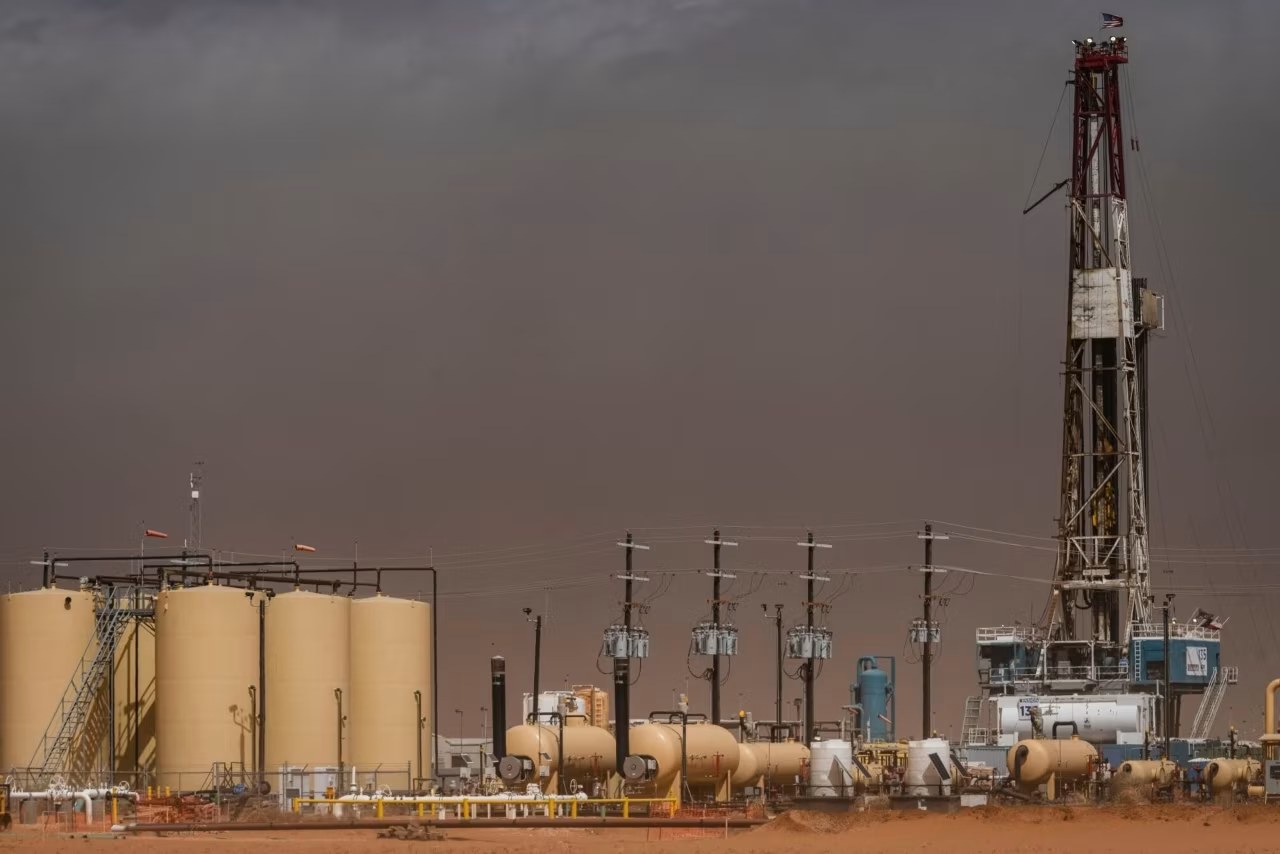
AMERICAN FRACKERS—The U.S. oil benchmark closed at $74.56 a barrel on Tuesday, a price point that has not been breached since June of last year when U.S. bombers struck three Iranian nuclear sites. The figure, reported by Bloomberg, sits at the edge of profitability for many high‑cost drilling projects in the Permian Basin, the nation’s most prolific oilfield.
Even though the Middle East teeters on the brink of a prolonged conflict that could push global oil prices higher, American drillers are choosing caution. The logic is simple: if the war proves short‑lived, crude prices could fall just as quickly, leaving operators with a surplus of output that would depress margins.
What the industry does not want is to add to an already sizable glut and squander the few remaining “sweet spots” – low‑cost, high‑yield wells that keep the Permian profitable. By holding back, frackers hope to preserve cash flow and avoid the costly mistake of over‑investing in a volatile market.
What Does a $74.56 Barrels Price Really Mean for U.S. Drilling?
At $74.56 a barrel, the U.S. oil benchmark is hovering just above the break‑even point for many high‑cost drilling rigs in West Texas. According to industry cost models, a typical Permian rig requires roughly $75‑$80 per barrel to generate a modest return after accounting for drilling, completion, and operating expenses. This narrow margin leaves little room for error.
Cost Structure of a Modern Permian Rig
Modern rigs in the Permian can cost upwards of $30 million to lease for a 12‑month cycle, with additional expenses for hydraulic fracturing fluids, proppant, and labor. When the price of crude hovers at $74.56, the projected cash flow per well often falls short of covering these outlays, especially when wells are spaced farther apart to access the remaining “sweet spots.”
Historical data shows that when Brent crude dipped below $70 in early 2022, many operators postponed new drilling programs, opting instead to focus on optimizing existing wells. The same pattern re‑emerged in 2023 when the benchmark slipped to $68, prompting a wave of capital discipline across the sector.
Expert commentary from former ExxonMobil drilling manager Linda Torres underscores the dilemma: “When the market price is only marginally above the cost of a new well, the risk‑reward calculus tilts toward preservation rather than expansion.” This sentiment is echoed by analysts at Rystad Energy, who note that a sustained price below $80 per barrel typically triggers a 15‑20% reduction in rig count across the United States.
The implication is clear: at $74.56, the incentive to deploy fresh rigs is weak, and many operators are choosing to sit on the sidelines, conserving cash while they monitor geopolitical developments.
Looking ahead, the next chapter will examine how the specter of a Middle‑East conflict could shift this delicate balance.
How the Middle‑East Conflict Could Flip the Oil Equation
Geopolitical risk has long been a catalyst for oil price spikes. A prolonged conflict in the Middle East could constrict supply from major exporters, pushing global benchmarks upward. However, history teaches that such spikes are often short‑lived if diplomatic channels open or if alternative supplies ramp up.
Historical Precedent: The 2020 Pandemic vs. 2022‑23 Supply Shocks
During the COVID‑19 pandemic, oil prices collapsed to below $20 per barrel, only to rebound sharply when OPEC+ production cuts were announced in 2021. Similarly, the brief supply shock after the 2022 Russian invasion saw Brent climb above $120 before settling back near $80 as sanctions took effect and non‑OPEC production increased.
Analysts at Wood Mackenzie argue that a new Middle‑East war would initially lift prices, but the market’s deep liquidity and strategic petroleum reserves could dampen the rally within months. If the conflict ends quickly, the price surge could reverse, leaving U.S. drillers exposed to a sudden downturn.
For American frackers, the key concern is timing. A rapid price rise could tempt operators to bring idle rigs back online, but the risk of a swift price collapse means many prefer to wait for a clearer signal. The cost of re‑activating a rig after a pause can be substantial, adding another layer of financial risk.
Consequently, the prevailing strategy is one of “strategic patience”: maintaining existing production while preserving the flexibility to scale up if prices sustain above $80 for an extended period.
The next chapter will explore how this cautionary stance interacts with the existing oil glut and the diminishing pool of high‑yield wells.
Why Adding More Rigs Could Worsen an Already‑Big Glut
The United States currently faces an oil glut that dates back to the 2020 pandemic rebound. Production surged as operators accelerated drilling to capture market share, leaving inventories high and storage near capacity in Cushing, Oklahoma.
Inventory Levels and Storage Constraints
U.S. crude inventories have hovered around 460 million barrels, a figure only 5‑10% above the five‑year average. When the market is already tight on storage, any additional output can depress spot prices, creating a feedback loop that erodes profitability for every new well.
Case in point: In early 2023, when the benchmark briefly rose to $78, several Permian operators added 30 rigs, only to see prices fall back to $71 within weeks, prompting a wave of idle rigs and delayed completions. The result was a $1.2 billion hit to operating cash flow across the region.
Industry veteran Tom Delgado, former chief economist at the American Petroleum Institute, notes, “When you have a surplus of barrels, the market punishes over‑production harshly. It’s not just about price; it’s about the cost of storing that excess.”
The implication for American frackers is stark: each additional rig not only adds capital expense but also contributes to a market oversupply that can push the price below the $74.56 threshold, turning marginal wells unprofitable.
Consequently, many operators are opting to preserve their remaining “sweet spots”—low‑cost, high‑yield wells that can generate profit even at modest price levels—rather than chase new, higher‑cost locations.
In the following chapter we will assess how the dwindling pool of sweet spots reshapes long‑term investment strategies for U.S. oil companies.
The Vanishing Sweet Spots: How Limited High‑Yield Wells Shape Future Drilling
The Permian Basin’s early‑boom years were defined by an abundance of low‑cost, high‑yield wells—so‑called “sweet spots”—that could produce 1,500 barrels per day (bpd) with minimal hydraulic fracturing. Over the past decade, those prime locations have been drilled out, leaving operators to target more complex geology.
Shift From Low‑Cost to High‑Cost Wells
Data from the Texas Railroad Commission shows that average initial production (IP) rates have fallen from 1,500 bpd in 2015 to roughly 800 bpd in 2024. The drop reflects a transition to deeper, tighter formations that require larger volumes of proppant and higher‑pressure fracturing, inflating per‑well costs by an estimated 30%.
Case study: Pioneer Energy’s 2022 acquisition of a 150‑well portfolio in the Midland sub‑play revealed that 70% of the wells were below the 1,000 bpd threshold, forcing the company to write down the asset by $200 million after the price fell to $70.
Expert analysis from the University of Texas Energy Institute highlights that the depletion of sweet spots forces a strategic pivot: “Operators must now decide whether to invest in technology that can unlock marginal reserves or to shift capital toward acquisitions in more fertile basins like the Bakken.”
The consequence is a slowdown in new rig deployment, as the return on investment for marginal wells at $74.56 per barrel becomes uncertain. Companies are instead channeling cash into efficiency upgrades, such as digital twin simulations, to squeeze more oil from existing wells.
Looking forward, the scarcity of sweet spots will likely cement a more disciplined, technology‑focused drilling paradigm, a theme explored in the final chapter.
What’s Next for American Frackers? Forecasts, Risks, and Opportunities
As the oil market navigates between geopolitical risk and domestic oversupply, American frackers face a crossroads. Forecasts from the International Energy Agency (IEA) suggest global oil demand will grow modestly, 1.2 million barrels per day per year through 2027, leaving room for incremental U.S. production if prices stay above $80.
Risk Scenarios and Strategic Responses
Scenario 1 – Prolonged Conflict: If the Middle East conflict endures, crude prices could breach $85, making higher‑cost rigs marginally viable. In that environment, operators may resurrect idle rigs, but only after conducting rigorous breakeven analyses.
Scenario 2 – Rapid De‑Escalation: A swift diplomatic resolution would likely pull prices back toward $70‑$75, reinforcing the current hold‑back strategy. Companies would then prioritize extending the life of existing wells through workovers and enhanced oil recovery (EOR) techniques.
Scenario 3 – Technological Breakthrough: Advances in low‑cost fracturing fluids or AI‑driven well placement could lower breakeven points by $5‑$10 per barrel, re‑opening the economics of marginal wells even at $74.56.
Industry voices, such as former Chevron upstream VP Maria Alvarez, caution that “capital discipline now will determine who survives the next price swing.” The prevailing consensus is that frackers will continue to preserve cash, hedge exposure, and invest selectively in technology that can unlock value from the remaining low‑cost acreage.
In sum, the future of American fracking hinges on three variables: geopolitical stability, price trajectory, and technological innovation. Each will shape whether the sector stays dormant or re‑engages with new drilling campaigns.
As we close, the next logical question is how policymakers might influence this delicate balance—a topic for future investigation.
Frequently Asked Questions
Q: Why are U.S. drillers hesitant to add rigs at $74.56 per barrel?
American frackers see $74.56 as a price that barely covers the high cost of new rigs, especially with a looming Middle‑East conflict that could quickly reverse price gains.
Q: What does the $74.56 benchmark mean for the Permian Basin?
At $74.56 a barrel, the Permian’s sweet‑spot wells remain marginally profitable, prompting operators to preserve existing inventory rather than chase new, riskier spots.
Q: How could a short‑lived Middle East war affect U.S. oil production?
If the conflict ends quickly, crude prices could tumble, leaving frackers with excess capacity and a larger glut that would depress margins across the sector.
