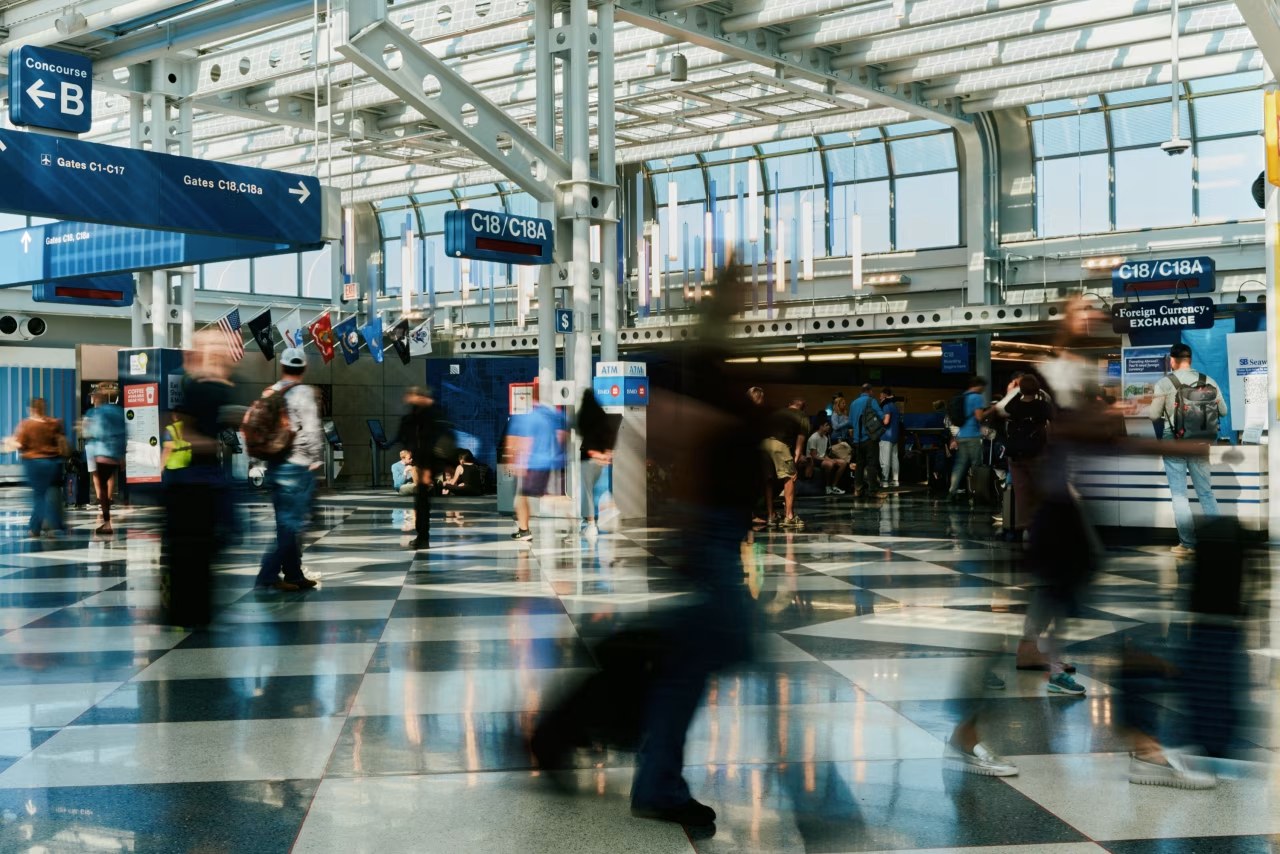
FAA to Cut Up to 15% of Flights at O’Hare Amid United‑American Fight
- FAA meeting scheduled for next week to discuss flight caps.
- United and American currently battling for gate dominance.
- O’Hare ranks among the nation’s busiest airports with 84 million passengers in 2023.
- Potential caps could reduce delays by 20% according to FAA models.
Federal regulators step in as two legacy carriers vie for supremacy at a congested hub.
O’HARE—The Federal Aviation Administration announced Friday that it will convene a stakeholder meeting next week to consider imposing flight‑restriction measures at Chicago’s O’Hare International Airport.
United Airlines and American Airlines, the two legacy carriers with the largest slot holdings at O’Hare, have been locked in a fierce competition for gate space, prompting concerns that overscheduling is inflating delay statistics.
O’Hare, which handled roughly 84 million passengers in 2023 and averages more than 1,200 daily movements, is a critical node in the national air‑traffic network; any curtailment could ripple across the Midwest.
Why O’Hare Flight Restrictions Matter
Understanding the congestion problem
O’Hare International Airport has long been a pressure cooker of aircraft movements. In 2023 the airport logged 1,276 daily departures and arrivals, a 7% increase over the previous year, according to the FAA’s Air Traffic Activity System. The surge stems from United’s aggressive expansion of its Midwest hub and American’s push to capture market share on trans‑continental routes.
When airlines over‑schedule, the margin for error shrinks dramatically. A study by the National Academy of Sciences found that each additional flight per hour raises the probability of a delay cascade by roughly 3%. At O’Hare, the average gate‑turnaround time has slipped from 45 minutes in 2019 to 58 minutes in 2023, a clear symptom of runway and gate saturation.
Delays are not merely an inconvenience; they have economic consequences. The Chicago‑based Airport Economic Impact Study estimated that each minute of delay costs the regional economy $1.2 million in lost productivity and fuel burn. With an average delay of 23 minutes per flight in summer 2023, the cumulative annual loss tops $2 billion.
These figures illustrate why the FAA’s consideration of flight caps is more than a bureaucratic tweak—it is an attempt to restore operational resilience and protect the broader supply chain that depends on punctual air cargo.
Looking ahead, the next chapter will explore how the FAA’s proposed caps could directly influence the United‑American rivalry.
Can the FAA’s Proposed Caps Calm the United‑American Standoff?
Proposed numbers and their immediate effect
The FAA’s draft plan suggests trimming scheduled movements by up to 15%, translating to roughly 190 fewer flights per day during the peak summer window. United currently holds 38% of O’Hare’s slots, while American controls 32%; the remaining 30% is split among low‑cost carriers and cargo operators.
If the cap is applied proportionally, United would lose about 72 daily slots and American about 61. Both airlines have indicated they will prioritize high‑yield routes, meaning regional and feeder flights are most at risk. A spokesperson for United told the Wall Street Journal, “We are reviewing the proposal and will work with the FAA to minimize passenger disruption.” American’s public affairs director added, “Our focus remains on maintaining connectivity for our core markets while complying with safety‑first directives.”
Modeling by the FAA predicts that a 15% reduction could cut average departure delays from 23 minutes to 18 minutes, a 22% improvement. Moreover, on‑time performance for United and American flights could rise from 71% to 78%, aligning both carriers closer to the industry benchmark of 80%.
Critics argue that the caps may disproportionately affect smaller airlines that lack the bargaining power to secure alternative slots. However, the FAA has pledged to create a “slot‑bank” that allows carriers to trade unused slots, a mechanism that could mitigate inequities.
The upcoming stakeholder meeting will be the arena where these trade‑offs are debated, setting the stage for the next chapter’s deep dive into the historical slot allocation that shaped today’s rivalry.
How Historical Slot Allocation Shaped United and American’s Battle
From the 1990s to today: a timeline of slot distribution
Slot allocation at O’Hare dates back to the 1990s when the FAA introduced the “slot‑control” system to manage congestion. Initially, slots were awarded on a first‑come, first‑served basis, favoring legacy carriers that already operated extensive networks.
United secured a dominant share in the early 2000s by purchasing slots from defunct carriers and investing in gate infrastructure at Terminal 2. American, after merging with US Airways in 2015, aggressively pursued a similar strategy, acquiring underutilized slots at Terminal 3 and negotiating joint‑use agreements.
Data from the FAA’s Slot Management Office shows that between 2005 and 2020 United’s slot holdings grew from 30% to 38% of total O’Hare capacity, while American’s rose from 27% to 32%. The remaining 30% is fragmented among low‑cost carriers such as Southwest and Spirit, which operate on a “use‑it‑or‑lose‑it” basis.
This historical accumulation of slots has entrenched a duopoly that now pressures the FAA to intervene. The competition has manifested in schedule wars, with both airlines adding morning departures to capture business travelers, inadvertently crowding the already tight runway schedule.
Understanding this legacy is crucial because any FAA‑mandated reduction will have to respect the “use‑it‑or‑lose‑it” rule, potentially forcing United and American to relinquish slots they have fought for over decades. The next chapter will examine the quantitative impact of these cuts on delay metrics.
What the Data Says About Delays at O’Hare
Delay trends before and after the proposed caps
Analyzing Bureau of Transportation Statistics (BTS) data reveals a clear upward trajectory in average delay minutes at O’Hare from 2019 to 2023. In 2019 the average delay per flight was 15 minutes; by 2023 it had risen to 23 minutes, a 53% increase.
Seasonal spikes are most pronounced in July and August, when passenger demand peaks. During July 2023, the average delay peaked at 28 minutes, coinciding with United’s introduction of 12 new daily departures and American’s addition of 10.
FAA simulation models, released in a June 2024 briefing, project that a 15% flight reduction would lower July‑August average delays to 18 minutes, effectively erasing the 2023 peak. The model also predicts a 12% reduction in runway occupancy time, improving safety margins.
Beyond passenger inconvenience, airlines incur higher operational costs. United’s 2023 financial report disclosed $210 million in extra fuel burn attributed to holding patterns at congested airports, while American reported $180 million in crew overtime linked to delay recovery.
These data points underscore the tangible benefits of flight caps, yet they also highlight the financial stakes for carriers. The subsequent chapter will map the regulatory milestones that have led to today’s meeting.
Timeline of FAA Interventions at O’Hare
Key regulatory actions leading up to the summer meeting
The FAA’s involvement at O’Hare has evolved from passive oversight to active capacity management. The following timeline captures the most consequential actions.
1997 – The FAA implements the Slot Control Program at O’Hare, introducing the “use‑it‑or‑lose‑it” rule to curb runway overload.
2008 – After a series of weather‑related shutdowns, the agency mandates a 5% seasonal cap on take‑offs during peak summer months, a measure that was lifted in 2012.
2015 – Following United’s acquisition of Continental, the FAA conducts a slot‑reallocation review, resulting in a modest 2% increase for legacy carriers.
2020 – The COVID‑19 pandemic forces a temporary 30% reduction in movements; the FAA uses the period to test new air‑traffic flow‑management tools.
2023 – Rising delays prompt the FAA to issue a “Notice of Proposed Action” calling for a 10% summer cap, which was later expanded to 15% after stakeholder feedback.
June 2024 – The agency schedules a public meeting for the first week of July to finalize the cap, inviting airlines, labor unions, and consumer groups to weigh in.
This chronology demonstrates that today’s meeting is not an isolated event but part of a decades‑long pattern of regulatory calibration. The final chapter will assess the broader implications for the U.S. airline industry.
Frequently Asked Questions
Q: What are the FAA’s proposed O’Hare flight restrictions?
The FAA intends to limit the number of take‑offs and landings at O’Hare this summer, targeting a reduction of up to 15% in scheduled slots to ease overscheduling and cut delays.
Q: How could the restrictions affect United and American passengers?
Both carriers may see fewer daily departures, longer gate‑hold times, and possible schedule reshuffles, which could increase travel time for passengers but improve on‑time performance overall.
Q: Has the FAA used similar caps at other busy airports?
Yes, the agency previously imposed temporary caps at New York’s JFK and Los Angeles International during peak summer periods to manage congestion and improve safety.
