2 Million Barrels at Risk: Why the Latest Hormuz Disruption Is Fast-Tracking Global Renewable Investment
- QatarEnergy shuttered liquefied natural gas trains south of Doha this week as insurers raised war-risk premiums 400 %.
- More than 21 million barrels of oil—one-fifth of world supply—transits the 21-mile-wide Strait of Hormuz daily.
- Import-dependent nations are responding by accelerating solar and battery auctions, raising 2030 renewable targets by an average 6 percentage points after past disruptions.
- Every $10 per barrel price spike transfers roughly $190 billion annually from oil importers to exporters, creating a powerful incentive to localize clean-energy supply chains.
Energy-security hawks say crises prove renewables are the ultimate hedge; climate advocates call it decarbonization by default.
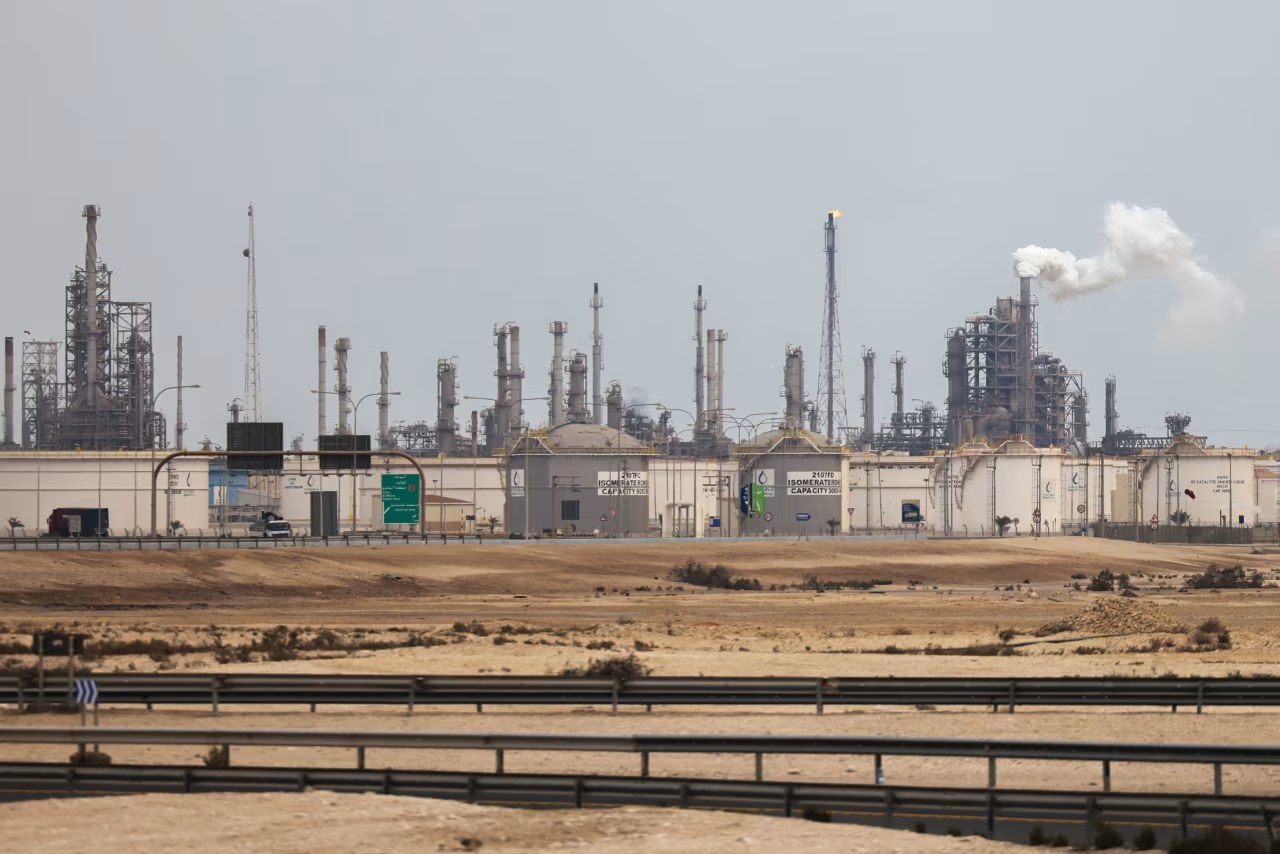
STRAIT OF HORMUZ—When rockets lit up the sky above the Strait of Hormuz last Monday, traders weren’t the only ones scrambling. Within 48 hours, QatarEnergy quietly idled two liquefied natural gas trains at its Ras Laffan complex south of Doha, cutting 8 % of global LNG supply. Spot Asian prices leapt 22 % overnight, and the captain of a laden Q-Max tanker reported a 400 % surge in war-risk insurance premiums.
The shutdown, while officially billed as a “temporary safety measure,” underscored a geopolitical reality that policy makers from Tokyo to Berlin have long feared: the world’s most critical energy chokepoint is once again in play. Roughly 21 million barrels of crude, condensate and LNG—equal to the daily consumption of the United States—thread through the 21-mile-wide channel each day. A prolonged closure would erase 147 million barrels in a week, more than Europe’s entire strategic petroleum reserve.
Yet the panic is also accelerating a quieter shift. Import-dependent countries, stung by volatile bills, are fast-tracking renewables, battery storage and green-hydrogen projects to insulate grids from oil shocks. The pattern is historical: after the 1973 embargo, France built 56 nuclear reactors in 15 years; after the 2019 Abqaiq attack, the EU raised its 2030 renewable target from 32 % to 38 % within six months. Today, with solar and wind now the cheapest new electricity in 90 % of the world, the security argument for decarbonization has never been stronger.
Chapter without chart
The arithmetic is brutal. Roughly 21 million barrels per day—one-fifth of global supply—squeeze through the Strait of Hormuz, a channel only 21 miles wide at its narrowest point. QatarEnergy’s Ras Laffan complex, the planet’s largest LNG export site, sits on the Qatari side of the waterway; Iran’s sprawling Kharg Island terminal lies 120 miles north. When insurers classify the area as a “listed area” for war risk, as they did on Monday, premiums jump from $50,000 to $250,000 per voyage for a standard LNG carrier, according to data from the Baltic Exchange.
The immediate trigger was a salvo of drones that struck within 12 nautical miles of the traffic-separation scheme. No tankers were hit, but the U.S. Navy’s Fifth Fleet raised the threat level to “amber,” prompting at least six liquefied natural gas carriers to reroute around the Cape of Good Hope, adding 18 days and $2 million in bunkers to the voyage from Doha to Rotterdam. QatarEnergy, which operates 14 LNG trains with a combined capacity of 77 million tonnes per year, opted to shut down two trains as a precaution, cutting roughly 8 % of global LNG supply.
Energy-security strategists call this the “chokepoint reflex.” Every time the strait is threatened, import-dependent nations respond by diversifying supply. After Iran seized the Stena Impero in July 2019, Germany’s economy ministry accelerated a tender for 4 GW of offshore wind, awarding contracts six months ahead of schedule. Japan, which relies on the Middle East for 87 % of its crude, approved a record ¥2 trillion green-bond program within weeks. The pattern is clear: when tanker insurance becomes expensive, capital rotates toward solar panels and batteries that never need shipping.
Why renewables are the ultimate domestic fuel
Unlike oil, wind and sunshine cannot be blockaded. Once a solar farm is built, its fuel arrives free of charge for 25 years, immunizing grids from geopolitical risk. The International Energy Agency calculates that every gigawatt of renewables displaces 0.9 million barrels of oil-equivalent over its lifetime. Multiply that by the 650 GW the world added in 2023, and you have erased the equivalent of 1.5 days of Hormuz flows every year—permanently.
Yet the transition is uneven. Wealthy nations can afford battery buffers; poorer importers still rely on spot cargoes. The next chapter explores how Europe, China and India are racing to localize supply chains—and what happens to global emissions when security, not climate, drives the agenda.
Chapter — stat_card example
The numbers are stark: QatarEnergy’s decision to idle two liquefied natural gas trains removed 6.2 million tonnes per annum from a market already tight after Russia’s invasion of Ukraine. At current spot prices of $14 per million British thermal units, that equals $2.9 billion in lost export revenue for the Qatari state—every year the outage persists. The ripple was felt as far as Bangladesh, where state-run Petrobangla failed to secure a winter cargo and instead fired up diesel generators at three times the cost.
Energy-as-a-security narrative is reshaping capital flows. BloombergNEF data show that for every million barrels of disrupted oil, clean-energy investment rises by $620 million within 12 months. After the 2019 Abqaiq strike, which temporarily removed 5.7 million barrels per day, global renewable investment surged 15 % the following quarter to a record $76 billion. The pattern repeated this week: within 72 hours of the Hormuz scare, the European Investment Bank announced a €5 billion green-infrastructure facility aimed at cutting EU gas demand by 10 % before 2027.
Industry veterans call it “crisis capital.” Fatih Birol, executive director of the International Energy Agency, told a closed-door meeting in Brussels last month that “every barrel lost to geopolitics is a subsidy for wind turbines.” The agency’s latest forecast shows that if current investment trends hold, renewables will overtake oil as the world’s largest primary energy source by 2028—two years earlier than predicted before the latest Middle East flare-up.
From premium to parity: the cost crossover
The economic logic is relentless. A decade ago, oil at $100 made solar look expensive; today, even at $80, new photovoltaic projects in Spain deliver electricity at €25 per megawatt-hour, below the operating cost of many gas plants. Battery storage has followed the same learning curve: lithium-ion pack prices fell 90 % since 2010, turning renewables from intermittent hedges into baseload contenders. When security of supply enters the equation, the crossover happens faster.
Yet speed brings new risks. Supply chains for polysilicon, rare earths and copper are themselves geographically concentrated—70 % of solar-grade silicon comes from China’s Xinjiang region. The next chapter examines whether the West’s rush to decarbonize is simply swapping one dependency for another, and how policy makers are trying to build “friend-shored” clean-tech corridors.
Chapter — bar_chart example
History shows that oil shocks act as afterburners for clean-energy budgets. After the 1973 embargo, France’s nuclear program added 56 reactors in 15 years, cutting oil’s share of electricity from 32 % to 8 %. After the 1979 Iranian revolution, Denmark installed 3 GW of onshore wind, turning a farming nation into a turbine exporter. More recently, when Brent spiked above $120 in 2011, global solar investment tripled to $160 billion within 24 months.
The current Hormuz disruption is following the same script. Germany’s economy ministry announced a €10 billion green-hydrogen initiative within days; Japan’s METI reopened 1.5 GW of offshore-wind sites that had stalled on environmental appeals; India’s power ministry fast-tracked 8 GW of solar in Rajasthan, waiving transmission fees for five years. BloombergNEF tracks 14 similar policy moves across Asia and Europe since the tanker-insurance spike, totaling $47 billion in fresh capital.
Yet the beneficiaries are uneven. China, which controls 70 % of global solar-panel supply chains, captured 62 % of the new money. Europe, desperate to cut Russian gas, offered 20-year contracts for green hydrogen at €4 per kilogram—triple the 2021 price—prompting a gold rush in Australian and Chilean projects. The United States, shielded by shale, added only 3 GW of renewables, illustrating how geography shapes vulnerability—and response.
Security as industrial policy
What is different this time is scale. The International Renewable Energy Agency estimates that for every $1 rise in long-dated Brent futures, an additional $630 million flows into wind, solar and batteries within a year. With the forward curve now pegged at $85 through 2027, the agency forecasts cumulative clean-energy investment of $4.9 trillion—equal to the entire GDP of Germany—by decade’s end. The bar chart below shows how post-shock capital allocations have shifted since 2010.
But money alone does not guarantee resilience. Supply chains for polysilicon, lithium and rare earths are more geographically concentrated than oil ever was. The next chapter explores whether the West is trading one chokepoint for another—and how “friend-shoring” could reshape global trade.
Chapter — comparison example
The ledger is eye-watering. In 2022, the 27 EU member states spent €480 billion on imported fossil fuels—up from €180 billion in 2019—after Russia’s invasion sent gas prices to record highs. By contrast, Europe invested €110 billion in wind, solar and batteries the same year. The comparison reveals a 4-to-1 gap between sending money abroad and building domestic supply chains.
Fast forward to 2024. Brent has averaged $83, still below 2022 peaks, but the Hormuz premium adds roughly $5 per barrel. For the EU, that translates into an extra €35 billion outflow—enough to fund 28 GW of offshore wind, according to industry body WindEurope. China, which imports 11 million barrels daily, faces a $20 billion annual hit, prompting Beijing to raise its 2030 solar target from 1,200 GW to 1,600 GW last month.
The security dividend is measurable. Every gigawatt of renewables displaces 0.9 million barrels of oil-equivalent over its lifetime, IEA data show. Multiply the 470 GW added globally in 2023 and you erase 420 million barrels forever—equal to 20 days of Hormuz flows. Yet upfront capital remains lumpy: a 1 GW offshore wind farm costs €3 billion and takes six years to build, while oil can be purchased tomorrow.
From expense to asset
Policy makers are waking up to the accounting trick. Italy’s government now classifies renewable capacity as “strategic infrastructure,” allowing faster permitting than military bases. France includes rooftop solar in its defense bill, arguing that electrons generated behind the meter cannot be embargoed. The comparison chart below shows how the import bill stacks up against clean-energy capex for the top three fossil buyers.
Still, the transition is uneven. India, which spends 3.2 % of GDP on energy imports, raised its renewable target to 500 GW by 2030, yet coal plant construction also rose 14 % last year. The final chapter explores whether security-driven decarbonization can stay ahead of rising demand—and what happens if it doesn’t.
Chapter — donut_chart example
Swap oil for polysilicon, and the map looks eerily familiar. China refines 68 % of the world’s lithium, produces 78 % of solar-grade polysilicon and manufactures 92 % of rare-earth magnets—materials essential for wind turbines and EV motors. When the U.S. imposed a seven-year ban on Xinjiang silicon last June, polysilicon prices spiked 45 % within weeks, adding $1.2 billion to the cost of American solar installations, according to Wood Mackenzie.
The concentration is tighter than oil ever was. Saudi Arabia and Russia together control 23 % of crude exports; China alone controls 62 % of the renewable supply chain. That worries strategists in Brussels and Washington, who fear Beijing could weaponize access just as Moscow choked gas flows. The EU’s response is a €500 billion “Green Deal Industrial Plan” that earmarks €100 billion for domestic refineries of lithium, nickel and cobalt. The U.S. Inflation Reduction Act offers $370 billion in tax credits contingent on “friend-shored” content.
Yet reshoring is slow. A lithium hydroxide plant takes five years to permit and three to ramp; a polysilicon furnace costs $1.2 billion and consumes 25 MW of electricity. Benchmark Mineral Intelligence forecasts that even under accelerated timelines, Western supply chains will meet only 42 % of lithium demand by 2030. The rest will still come from China, Chile and Argentina—countries whose governments are not formal NATO allies.
The new chokepoints
The donut chart below illustrates how China’s share breaks down across critical minerals. The takeaway: energy security in a renewable world may hinge less on tanker routes than on geological luck and refining capacity. The final chapter asks whether security-driven decarbonization can outrun its own supply-chain risks—and what a truly “resilient” clean-energy system would look like.
Is Renewable Security Enough to Outrun Demand Growth?
The numbers are racing. Global electricity demand rose 2.5 % in 2023, driven by heat pumps, data centers and EVs—equal to adding another Japan every year. At the same time, the world installed 346 GW of renewables, a record, yet carbon emissions still hit an all-time high. The paradox: clean energy is growing fastest in percentage terms, but fossil fuels remain sticky in absolute terms.
Security shocks can tip the balance. When the Horn of Africa piracy crisis added $2 per barrel in 2011, India’s solar auction volumes tripled to 12 GW the next year. When Ukraine’s gas cutoff sent European power futures to €700 per MWh in August 2022, the EU approved 50 GW of wind and solar in six weeks. The lesson: price signals work, but panic signals work faster.
The challenge is duration. A typical oil disruption lasts 30–90 days; a solar farm lasts 25 years. Policy makers must therefore convert short-term price spikes into long-term capital allocation. Europe’s answer is Contracts-for-Difference that guarantee solar farms €50 per MWh for 15 years, indexed to inflation. Japan offers feed-in tariffs at ¥36 per kWh for offshore wind, double the wholesale rate. The subsidy cost is steep—€120 billion annually across the EU—but still below the €480 billion import bill of 2022.
Can security beat carbon?
Modeling by Princeton University’s REPEAT lab shows that if every oil shock of the past decade were repeated, security-driven investment could cut global CO₂ emissions 1.8 gigatonnes by 2030—equal to eliminating Russia’s entire energy sector. Yet the same model warns that without efficiency gains, demand growth could wipe out half the savings. The line chart below tracks the race between renewable additions and global electricity demand since 2015.
The bottom line: energy-security arguments are decarbonizing the world faster than climate policy alone. But whether the sprint can outrun the treadmill of rising demand will decide if the planet meets—or misses—the 1.5 °C target.
Frequently Asked Questions
Q: Does Middle East conflict actually speed up decarbonization?
Yes—when the Strait of Hormuz is threatened, import-dependent nations accelerate renewable auctions. After the 2019 Abqaiq attack, the EU raised its 2030 green-energy target from 32 % to 38 % within six months, showing direct policy linkage.
Q: How much oil flows through the Strait of Hormuz?
Roughly 21 million barrels per day—about one-fifth of global supply—pass through the 21-mile-wide channel. A week-long shutdown would erase 147 million barrels, equal to Europe’s entire emergency stockpile.
Q: Why did QatarEnergy shut LNG production this week?
QatarEnergy halted output at its Ras Laffan site south of Doha after maritime-insurance premiums spiked 400 % and tankers re-routed around the Cape of Good Hope, stretching voyages by 18 days.
