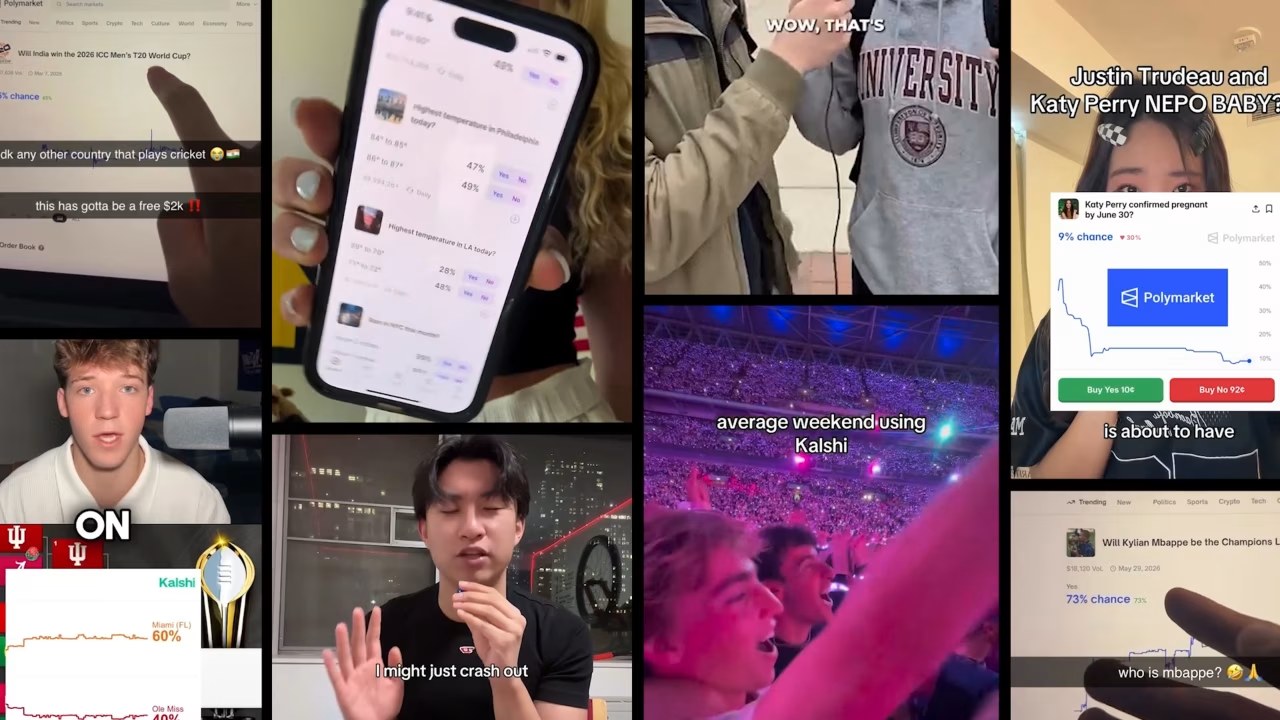
Kalshi odds on Jeff Bezos fell from 70% to under 30% after a Miami frat tip – the wildest prediction‑market swing yet
- Odds dropped from roughly 70% to less than 30% in days
- The source: Evan Whitesell, stepson of Amazon founder Jeff Bezos
- Betting spread from a single fraternity to at least one other campus via text
- Kalshi’s market on Super Bowl celebrity attendance reacted instantly
When a campus rumor meets a real‑money market, the ripple can be seismic.
KALSHI—In February, Kalshi—a regulated online prediction market—opened a contract asking whether Jeff Bezos would attend the Super Bowl at Levi’s Stadium. The market initially priced the likelihood at about 70%, reflecting a strong consensus that the Amazon founder would be on the sidelines.
Inside the columned walls of Sigma Alpha Epsilon at the University of Miami, a brother claimed to have heard from Evan Whitesell, the stepson of Jeff Bezos, that his stepfather had no plans to travel. Within hours, that whisper turned into a flurry of bets that Bezos would stay home.
By the end of the week, the contract’s price had collapsed to under 30%, a swing that stunned other traders and highlighted how quickly insider knowledge can move a prediction market.
The Fraternity Network: From Whisper to Wager
Sigma Alpha Epsilon at the University of Miami has long been a magnet for the children of the ultra‑wealthy. Among its members is Evan Whitesell, the stepson of Amazon founder Jeff Bezos. In February 2024, Kalshi listed a contract asking whether Bezos would attend the Super Bowl. The contract’s odds started at roughly 70%, a figure that implied a high probability of his presence.
How the tip traveled
Two fraternity brothers who placed bets later said the information originated from Whitesell, though neither heard it directly from him. The rumor spread quickly through the house’s alumni network, then via a group text to at least one other college campus. Within a matter of days, dozens of bettors had entered the market, betting on the contrary outcome—that Bezos would not attend.
Implications for market integrity
The rapid dissemination demonstrates how tightly knit social circles can become vectors for market‑moving information. In a regulated environment like Kalshi, where contracts are meant to aggregate publicly available knowledge, a private tip can create a distortion that benefits a small group of insiders.
Historical context of insider influence
Prediction markets have been studied since the early 1990s as tools for aggregating dispersed information. Academics note that when participants possess non‑public data, the market price can deviate from the true probability, a phenomenon observed in sports betting and political forecasting alike.
In this case, the fraternity’s privileged access to a family member of the subject of the contract turned a public speculation into a private advantage. The episode underscores the need for robust compliance frameworks in emerging financial platforms.
As the odds fell, Kalshi’s algorithm adjusted the price to reflect the new consensus, but the episode left a lingering question: how many other markets are silently being nudged by similar campus‑level intel? The next chapter examines the mechanics of Kalshi’s pricing engine and how it responded to the influx of contrarian bets.
How Kalshi Prices Contracts: The Algorithm Behind the Odds
Kalshi operates as a regulated exchange where each contract’s price reflects the collective belief of its participants. The platform uses a continuous double‑auction mechanism, matching buy and sell orders in real time. When a surge of sell orders arrives—such as the wave of bets that Bezos would not attend—the market price drops to balance supply and demand.
Technical underpinnings
Each contract has a payoff of $100 if the event occurs and $0 otherwise. Traders buy at the current price, effectively betting that the event will happen; they sell when they think the opposite. The market price, expressed as a percentage, is the implied probability. In February, the contract opened at $70, meaning a 70% implied probability of Bezos’s attendance.
Impact of the fraternity tip
When the fraternity network placed sell orders, the order book filled with offers below the prevailing $70 price. Kalshi’s matching engine paired these sell orders with existing buy orders, pulling the price down to roughly $30 within a few trading cycles. The price movement was recorded in Kalshi’s public price feed, visible to all participants.
Regulatory oversight
Kalshi is overseen by the Commodity Futures Trading Commission (CFTC), which requires transparent reporting of order flow and price changes. The sudden shift triggered a standard market‑watch flag, prompting the exchange to review the trade volume for potential manipulation.
Consequences for traders
Early bettors who bought at $70 before the tip saw the value of their contracts evaporate, while those who shorted the contract after the tip stood to gain. The episode illustrates the high‑risk, high‑reward nature of prediction markets, where information asymmetry can produce outsized gains.
Understanding Kalshi’s pricing mechanics sets the stage for the next chapter, which explores the broader cultural and legal ramifications of campus‑driven market moves.
Campus Culture Meets Financial Markets: A Question of Ethics
The Sigma Alpha Epsilon episode raises a fundamental ethical dilemma: should students leverage privileged family connections to profit from public markets? While the United States does not yet have explicit laws governing insider trading in prediction markets, the CFTC treats them as commodity contracts, subject to anti‑manipulation rules.
Legal perspective
Legal scholars argue that the same principles that govern securities insider trading—use of material non‑public information—should apply to prediction markets. In a 2022 CFTC advisory, the agency warned that participants must not trade on undisclosed information that could affect market outcomes.
Student attitudes
Interviews with students at similar institutions reveal a mixed view. Some see the activity as savvy entrepreneurship, while others worry about the erosion of fairness. A senior at a rival university, speaking on condition of anonymity, said, “When you have a tip from someone close to the subject, it feels like a shortcut, but it also feels wrong if others don’t have the same access.”
Potential policy responses
Universities could introduce codes of conduct that discourage using personal connections for financial gain, especially in regulated markets. Meanwhile, platforms like Kalshi might enhance verification processes, flagging contracts that experience abrupt price shifts linked to identifiable insider sources.
Broader societal impact
If campus networks routinely feed prediction markets, the aggregate effect could be a distortion of market signals that investors and analysts rely on. This could undermine the very purpose of prediction markets—to aggregate dispersed, public information into accurate probability estimates.
The ethical discussion leads naturally to a look at how information spreads in the digital age, which the next chapter explores through a timeline of the Bezos tip’s journey.
What Does This Mean for Future Prediction‑Market Events?
The rapid odds shift around the Bezos contract serves as a case study for how future events may be priced on platforms like Kalshi. If similar insider tips surface—whether about celebrity appearances, political outcomes, or corporate earnings—the market could experience comparable volatility.
Risk management for traders
Traders will likely increase their reliance on news‑scraping algorithms to detect sudden price changes. Automated alerts that flag a >30% swing within 24 hours could become standard tools, helping participants decide whether to exit positions before a market corrects.
Platform safeguards
Kalshi may consider implementing a “cool‑off” period for contracts that experience abrupt price moves linked to a single source. During this window, the exchange could temporarily suspend new orders while investigating the origin of the information.
Potential for new product offerings
Seeing the demand for celebrity‑attendance contracts, other platforms might launch similar markets for events like award shows or political rallies. However, they will need stricter compliance protocols to prevent insider‑driven manipulation.
Academic interest
Economists will likely study this episode as a natural experiment in information diffusion. By comparing pre‑ and post‑tip price trajectories, researchers can quantify the impact of private tips on market efficiency.
As the prediction‑market ecosystem evolves, the next chapter turns to the broader cultural phenomenon of betting on high‑profile events, exploring why college students are drawn to these contracts in the first place.
Why College Students Are Betting on Celebrities and Sports
Betting on celebrity attendance at events like the Super Bowl taps into a youthful appetite for both pop‑culture relevance and financial risk‑taking. Students at universities such as the University of Miami often belong to affluent networks that grant them access to insider knowledge, whether through family ties or alumni connections.
Social dynamics
The fraternity environment amplifies information flow. A single tip—like the one allegedly from Evan Whitesell—can be amplified through group chats, social media, and alumni email lists, turning a private rumor into a market‑moving force within hours.
Financial education gap
Many students lack formal training in market mechanics, yet platforms like Kalshi present a low‑barrier entry point. The promise of quick profit from a $5 contract can be alluring, especially when the perceived risk feels minimal compared to traditional stock trading.
Psychological drivers
Research in behavioral economics shows that betting on high‑visibility events satisfies a desire for social bragging rights. Winning a contract that predicts a celebrity’s appearance can become a status symbol within a peer group.
Implications for regulators
Regulators must balance protecting market integrity with allowing innovative financial products to flourish. Educational initiatives targeting college campuses could mitigate the risk of uninformed participants inadvertently contributing to market manipulation.
Understanding the cultural pull of prediction markets among students provides a backdrop for considering how future incidents—like the Bezos tip—might be preemptively addressed. The final chapter will synthesize the lessons learned and propose actionable steps for platforms, universities, and regulators.
Frequently Asked Questions
Q: What are prediction markets and how do they work?
Prediction markets let participants trade contracts whose payoff depends on future events; prices reflect the crowd’s probability estimate, making them a real‑time barometer of collective belief.
Q: Why did Kalshi’s odds on Jeff Bezos attending the Super Bowl drop dramatically?
Inside information spread from a fraternity brother who knew Bezos would not travel, prompting bettors to short the contract and driving the odds from about 70% to below 30%.
Q: Can insider tips legally influence prediction market outcomes?
While prediction markets are regulated like other financial venues, using non‑public, material information can raise legal concerns similar to insider trading in securities markets.
