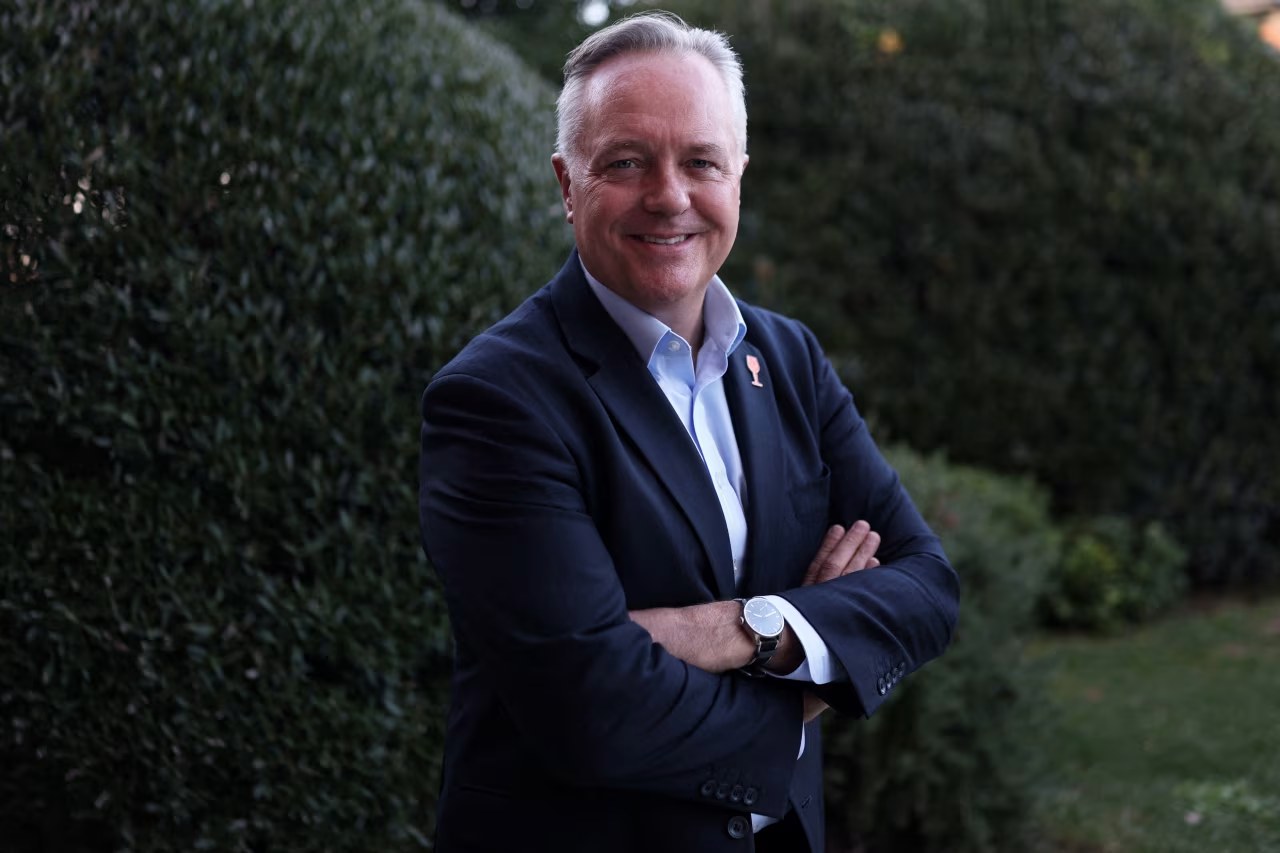
50% of Americans Still Unfamiliar With Aperol, Campari CEO Says—Here’s His Plan to Change That
- Half of the U.S. population has never heard of Aperol, according to CEO Simon Hunt.
- The Milan-based spirits group sees America as the next frontier for Italian-style, low-ABV daytime drinking.
- Management is tying Aperol marketing to alfresco “terrace lifestyle” moments rather than traditional nightlife.
- The strategy is designed to lift both volume and premium pricing in a $1.2 billion global brand already growing double-digits in Europe.
Can Campari turn unfamiliarity into a decade of U.S. growth?
APEROL—When Davide Campari-Milano Chief Executive Simon Hunt scans America he sees 165 million potential converts. “Half of America has still never heard of [Aperol],” Hunt told Reuters in a recent interview, a statistic that simultaneously exposes the brand’s thin penetration and tantalizing runway.
The observation underpins a deliberate pivot: instead of chasing crowded late-night shelves, Campari will court U.S. consumers with sun-drenched, Italian-style aperitivo occasions—light, effervescent, daytime socializing that positions the iconic orange liqueur as a moderation-friendly pour.
The wager is large. Aperol generated over €1.2 billion in net sales for Campari last year—about 18% of group revenue—yet North America contributes a mid-single-digit slice of that total. Closing the awareness gap could reshape profit pools in the U.S. spirits industry, where spritz-format drinks grew 27% in IRI-tracked outlets during 2023 even as total spirits volumes flattened.
The Awareness Gap: 165 Million Americans Yet to Taste Aperol
How Campari quantifies the white space
Speaking after releasing first-half results, Hunt explained that internal brand-tracking surveys show Aperol unaided awareness sits just below 30% in Italy, but “drops to the low-teens” across the United States. Extrapolate those percentages across 330 million residents and roughly 165 million Americans have never encountered the 11% ABV liqueur, a data point executives cite in every investor deck since 2022.
The metric matters because awareness is the first filter in Campari’s funnel. In mature European markets where Aperol exceeds 60% aided awareness, repeat purchase rates top 40% among trialists, according to company filings. Management believes a similar conversion curve can unfold stateside, implying a path to 25–30 million regular U.S. households.
Translating that opportunity into dollars assumes a $25 average retail price per 750 ml bottle and two bottles per loyal household per year—conservative by Italian standards—yielding a theoretical incremental $1.3 billion in annual U.S. sales, nearly double Aperol’s current global revenue.
Investors have noticed. Analysts at Bernstein model a 12% compound annual growth rate for Aperol through 2028, with 60% of incremental volume coming from North America and Asia. The brand’s gross margin already exceeds 65%, so every added case disproportionately boosts group EBIT.
Yet the challenge is cultural. American happy-hour rituals revolve around beer, bourbon or margaritas; daytime, low-alcohol consumption carries little social currency outside coastal cities. Hunt’s team must re-educate consumers on when, not just how, to drink Aperol.
From Aperitivo to Brunch: Repackaging Italian Terrace Culture
Exporting the piazza experience to American patios
Hunt’s solution is to transplant Italy’s early-evening aperitivo ritual—bitter liqueurs, small plates, socializing—into American day-parts where alcohol has historically been absent: brunch, poolside, outdoor shopping centers. “We don’t need to beat bourbon at midnight; we need to own 2 p.m.,” Hunt said.
The U.S. brunch market is valued at $14 billion by NPD Group, with beverage alcohol attachment rates rising from 18% in 2019 to 27% in 2023. Campari’s ethnographic research found that younger consumers equate daytime drinking with moderation, making 11% ABV Aperol less intimidating than 40% ABV whiskey.
Creative campaigns now emphasize “spritz stations” at botanical gardens, rooftop yoga classes and fashion-week lounges—venues where Instagrammable visuals reinforce daytime permissibility. During summer 2023, Aperol installed 50 branded orange umbrellas in New York’s SoHo, offering complimentary 3-ounce spritz samples between 11 a.m. and 4 p.m. Footfall rose 42% versus control blocks, and partner bars reported a 19% lift in weekend sales.
Package formats are adapting. 375 ml “picnic” bottles and 200 ml canned Aperol + soda—both launched exclusively in the U.S.—carry lower per-unit prices to encourage trial. Cans retail around $3.50, undercutting craft-beer pricing and sidestepping bartender unfamiliarity.
The cultural repositioning appears to work. Circana data show Aperol dollar sales in the U.S. off-premise channel jumped 21% in the 12 weeks through July 2024, outpacing the total spirits category by 1,600 basis points. Still, the brand holds only a 0.4% share of U.S. spirits volume, leaving ample headroom before cannibalization becomes a concern.
Competitive Battleground: Can Aperol Outmaneuver Hard Seltzers?
Fighting for the same moderation occasion
Aperol’s U.S. push collides with a crowded field of better-for-you, sessionable drinks—hard seltzers, flavored malt beverages, even canned wine spritzers. Boston Beer’s Truly and Mark Anthony’s White Claw together control 63% of the hard-seltzer shelf, where ABVs hover around 5% and calorie counts are printed in bold.
Campari counters with authenticity. Aperol is gluten-free, 80 calories per 3-ounce pour, and carries 150 years of Italian heritage—points of differentiation repeated in national TV spots that debuted during the 2023 U.S. Open tennis broadcast. Media-tracking firm iSpot shows Campari spent $28 million on Aperol advertising in the 12 months through August 2024, triple the prior-year level.
Distribution gains follow dollars. Aperol has entered 7,200 new retail doors since January, including Target and Whole Foods locations that historically avoided spirits. Shelf-talkers now compare spritz calories (125 per 6-oz serving) side-by-side with leading hard seltzers, hoping to sway waistline-conscious millennials.
Competitors are responding. Anheuser-Busch’s Ritas line launched a canned “Spritz-A-Rita” at 8% ABV, while Treasury Estate Brands rolled out “Gabbiano Spritz” with prosecco from Italy. Yet none possess Aperol’s distinctive neon hue, a visual moat that photographs well on social media. According to CreatorIQ, #AperolSpritz has 1.4 million Instagram mentions versus 180,000 for #Spritzita and 43,000 for #GabbianoSpritz.
The verdict is pending. Hard-seltzer volume declined 10% in 2023 as consumers tired of me-too flavors, but category dollar sales still exceed $9 billion—20 times Aperol’s U.S. footprint. Analysts say the winner will be decided less by ABV or calories than by cultural relevance: which brand best owns daytime, moderation, and European sophistication.
What Happens If the Bet Succeeds?
Modeling a decade of double-digit returns
Bernstein’s bull-case model assumes Aperol U.S. volume rises from 1.2 million nine-liter cases in 2023 to 5 million by 2030, translating to $1.1 billion in U.S. sales. Because Aperol is produced at Campari’s Italian facility and shipped in bulk, incremental gross margin exceeds 70%, meaning every additional case adds roughly $28 to EBIT.
Multiply that across 3.8 million incremental cases and the U.S. alone could deliver $106 million in extra operating profit—equivalent to 9% of group EBITDA. Currency-neutral group earnings per share would compound at 15% annually, lifting the Milan-listed share price to €14 in the bull case from roughly €9 today.
Capital expenditure remains modest; Campari spent only €78 million on group capex in 2023, mostly for bottling lines in Italy and Kentucky. Hunt told investors that “an extra 1 million U.S. cases requires maybe €5 million of bottling tweaks, nothing more.” Returns on invested capital would therefore exceed 40% by 2028, well above the 15% cost of equity.
Risks include flavor fatigue, regulatory tightening on Instagram alcohol advertising, and litigation fears should any ingredient receive negative health headlines. Hunt downplays the last concern, noting Aperol’s recipe—bitter orange, rhubarb, gentian—has remained unchanged since 1919 and contains no artificial colors.
Still, investors price in skepticism. Campari trades at 17× forward earnings versus 23× for Brown-Forman and 21× for Rémy Cointreau, a discount analysts attribute to Aperol’s concentration risk: one brand equals nearly a fifth of revenue. If the U.S. bet succeeds, rerating could be swift; if it fails, the group’s growth narrative collapses back to flat European demographics.
Bottoms Up or Bubble Burst?
Will Italian terrace culture take root before investor patience runs out?
Hunt has three to five years to prove the thesis. Board tenure averages six years, and activist investors have circled European consumer staples with weaker returns. So far Campari has fended them off by highlighting Aperol’s 70%-plus gross margin, but execution must follow narrative.
Early signals are encouraging. U.S. household penetration rose from 3.8% in 2021 to 5.9% in 2024, according to Circana panel data. Repeat rates among new buyers stand at 42%, mirroring European benchmarks. If those metrics hold, Aperol could approach 10% penetration by 2028—similar to where Prosecco sits today.
The bigger unknown is cultural stickiness. U.S. drinkers cycle through fads quickly: hard seltzers crested within four years. Campari mitigates fad risk by anchoring Aperol to food-centric occasions—brunch, alfresco lunch, dinner appetizers—where consumption is ritualized, not episodic. Partnerships with Eataly, Olive Garden’s parent Darden, and hundreds of independent Italian restaurants reinforce authenticity.
Global expansion offers a hedge. Aperol sales in China grew 60% in 2023 off a tiny base, while India lifted import quotas on premium spirits. Even if America plateaus, Asian momentum could sustain double-digit group growth. Yet CFO Paolo Marchesini admits the U.S. remains “the single biggest profit lever,” making success there existential.
For now, orange umbrellas are sprouting across American rooftops, and orange-tinted cans are chilling in picnic baskets. Whether that translates into a permanent shift toward Italian-style moderation—or joins Zima in the graveyard of forgotten fads—will determine if Campari’s U.S. bet becomes a Harvard Business School case study in cultural transference or a cautionary tale of over-reach.
Frequently Asked Questions
Q: What percent of Americans know Aperol?
Campari CEO Simon Hunt told Reuters that 50% of U.S. consumers have still never heard of Aperol, leaving a 165-million-person awareness gap the company aims to close through terrace-style marketing and spritz education.
Q: Who owns the Aperol brand?
Milan-based Davide Campari-Milano S.p.A. has owned Aperol since acquiring it in 2003; the bright-orange liqueur now drives roughly 18% of group sales and is the centerpiece of Campari’s push to export Italian aperitivo culture to America.
Q: Is Aperol sales growing in the United States?
While the article does not cite specific U.S. figures, Campari’s global Aperol net sales surpassed €1.2 billion in 2023, with North America repeatedly flagged by management as the brand’s largest white-space region for future double-digit expansion.
