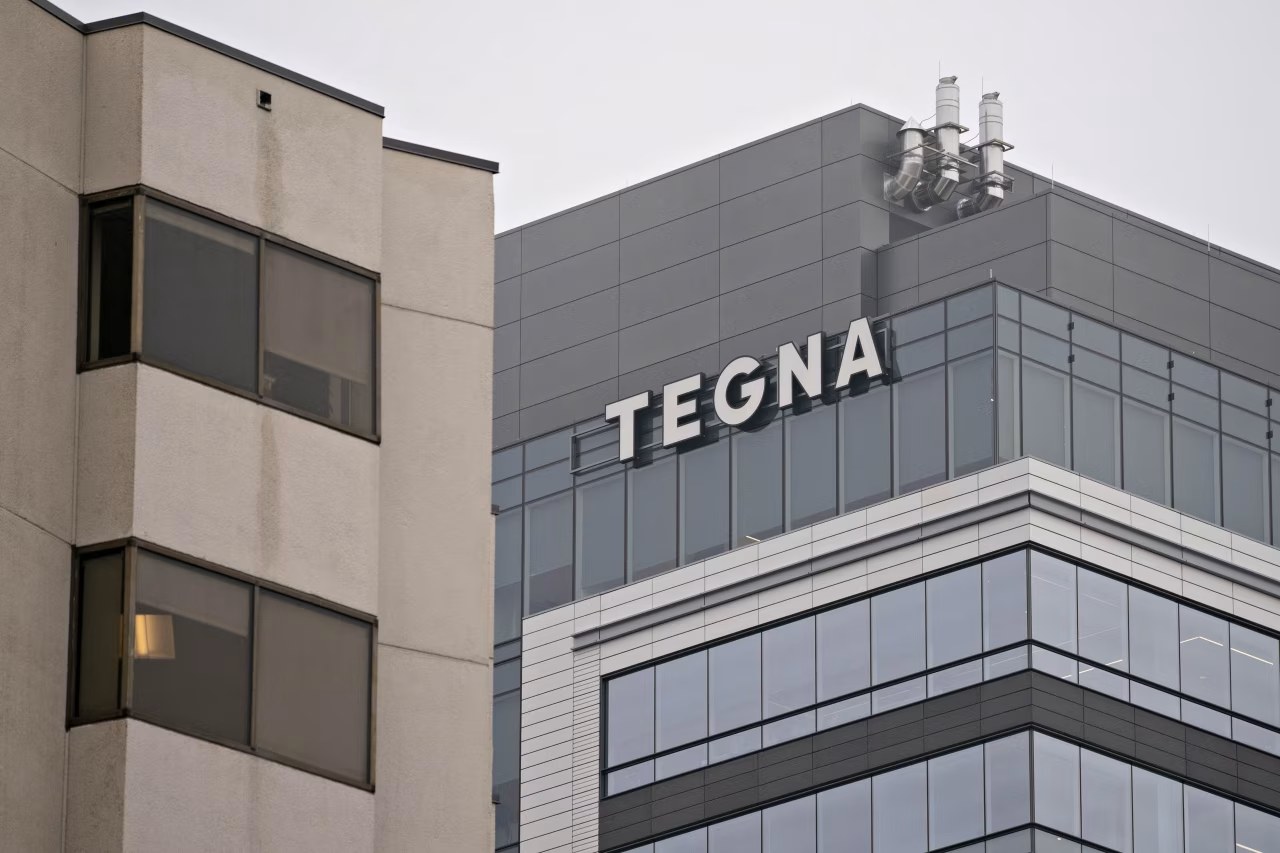
Three States Gear Up to Challenge $6.2 Billion Media Merger
- California, Colorado and New York are leading the lawsuit.
- The deal is valued at $6.2 billion, the largest broadcast TV acquisition this year.
- States allege antitrust violations that could concentrate local TV markets.
- The FCC chair has already signaled support for the merger.
Why state attorneys general are stepping into the broadcast arena
NEXSTAR—In early 2026, a coalition of state attorneys general announced they would file an antitrust suit to block Nexstar Media Group’s planned purchase of rival broadcaster Tegna. The move underscores a growing willingness among states to intervene in media consolidation, even as the Trump administration has publicly praised large‑scale deals as engines of economic growth.
The proposed $6.2 billion transaction would combine Nexstar’s 197 owned‑and‑operated stations with Tegna’s 68, creating a national footprint that rivals the historic reach of former giants such as Clear Channel. Critics argue that the merger would give the combined entity control over a majority of local newsrooms in key markets, from Denver to New York City.
Federal Communications Commission Chairman Ajit Pai has already endorsed the deal, arguing that it would create efficiencies and improve local programming. Yet the states contend that the FCC’s approval does not shield the deal from antitrust review, and that the merger threatens the diversity of voices that the Communications Act was designed to protect. If the lawsuit proceeds, it could become the most high‑profile media merger challenge of the decade.
The Antitrust Landscape of Broadcast TV
From the 1996 Telecommunications Act to the Sinclair‑Tribune Stalemate
Antitrust oversight of broadcast television has evolved dramatically since the 1996 Telecommunications Act lifted many ownership caps, allowing companies to own up to seven stations nationwide. That liberalization spurred a wave of consolidation, but it also set the stage for periodic legal push‑backs when regulators or states perceived excessive market concentration.
One of the most cited precedents is the 2019 Sinclair Broadcast Group attempt to acquire Tribune Media for $3.9 billion. The Department of Justice and several state attorneys general filed lawsuits alleging that the deal would give Sinclair control of roughly 40% of U.S. TV households, prompting the FCC to ultimately vote against the merger. The case highlighted how state‑level antitrust actions can derail even heavily favored deals.
Another landmark is the 2017 AT&T‑Time Warner merger, which the Department of Justice challenged on the basis that vertical integration could stifle competition in both content creation and distribution. Although a federal judge eventually allowed the deal, the litigation underscored the complex interplay between content owners and distributors—an issue that resonates today as Nexstar seeks to expand both its distribution footprint and its advertising platform.
Historical context also matters. The 1970s and 1980s saw the FCC impose “duopoly” rules that limited ownership of multiple stations in the same market, a policy that was gradually eroded in the 1990s. Today, the legal framework is a patchwork of federal statutes, FCC guidelines, and state antitrust statutes, each offering a different avenue for challenge.
For the current challenge, the states are invoking the Clayton Act, which prohibits acquisitions that substantially lessen competition. By focusing on local market concentration—where Nexstar already owns 25 stations in California alone—the attorneys general aim to demonstrate that the combined entity would dominate advertising rates and news coverage, harming both consumers and smaller broadcasters.
Implications are far‑reaching. A successful lawsuit could set a new benchmark for how aggressively states can intervene in media deals, potentially prompting future bidders to design more decentralized structures or to offer divestitures up front. Conversely, a defeat could embolden other large‑scale mergers, reinforcing the FCC’s pro‑deal stance.
As the legal battle looms, industry observers are watching closely. “The stakes are higher than any single transaction,” said a senior antitrust scholar at Georgetown University, referencing the broader trend of state‑led media challenges. The next chapter will dissect the financial anatomy of the Nexstar‑Tegna deal, revealing why the $6.2 billion price tag has become a flashpoint for regulators.
Deal Numbers: How Nexstar’s $6.2 B Acquisition Stacks Up
Breaking down the headline figure and the underlying assets
The $6.2 billion cash purchase of Tegna, announced in January 2026, represents the largest broadcast‑TV‑only transaction since the 2015 merger of Gray Television and Raycom. Nexstar, which reported $4.8 billion in revenue for 2025, expects the acquisition to lift its annual revenue to roughly $7.2 billion, a 50% increase over its pre‑deal baseline.
Tegna brings 68 owned‑and‑operated stations to the table, most of them in mid‑size markets such as Omaha, Madison and Providence. Combined with Nexstar’s 197 stations, the merged entity would control 265 stations, reaching an estimated 70% of U.S. TV households. In terms of advertising inventory, the deal adds approximately 12,000 ad slots per week, a figure that rivals the combined output of the top three cable networks.
Financial analysts have modeled the deal’s earnings accretion. Bloomberg’s consensus projects an adjusted EBITDA margin of 18.5% for the combined company by 2028, up from Nexstar’s 16.2% in 2025. However, the merger also triggers a $1.5 billion increase in debt, pushing the leverage ratio to 4.2× EBITDA, a level that some credit rating agencies consider high for a media firm.
The transaction includes a $500 million earn‑out tied to Tegna’s digital advertising performance over the next three years. This clause reflects the growing importance of streaming and over‑the‑top (OTT) platforms, where Tegna has invested heavily in localized news apps.
Beyond raw numbers, the deal raises strategic questions about market overlap. In Denver, Nexstar already owns KCNC and KUSA, while Tegna’s KUSA‑affiliated station KMGH would create a duopoly that exceeds the FCC’s local ownership limits, unless a waiver is granted.
These financial and operational complexities are captured in the stat card below, which isolates the headline acquisition amount and its immediate impact on Nexstar’s balance sheet. Understanding these metrics is crucial for assessing the antitrust arguments that will be raised by the states in the upcoming lawsuit.
State Attorneys General Unite: A Coordinated Media Merger Challenge?
How California, Colorado and New York are aligning legal strategies
In February 2026, the attorneys general of California, Colorado and New York filed a joint statement indicating they would sue if the FCC grants final approval for the Nexstar‑Tegna transaction. California’s AG, Rob Bonta, highlighted that the combined company would control 28% of the TV advertising market in the Golden State, a concentration that could raise prices for local advertisers by an estimated 7%.
Colorado’s AG, Phil Weiser, pointed to the Denver market, where Nexstar already owns two of the four top‑ranked stations. Adding Tegna’s KMGH would give Nexstar a 75% share of prime‑time news viewership, a figure that rivals the historic dominance of network affiliates in the 1970s.
New York’s AG, Letitia James, emphasized the national implications. The combined entity would own 15 of the top 30 stations in the New York metropolitan area, potentially limiting the diversity of editorial voices in a market that serves over 20 million residents.
To quantify the overlap, the bar chart below lists the number of stations each state currently hosts under Nexstar, the stations contributed by Tegna, and the projected total after the merger. The data illustrates why the three states see the deal as a direct threat to competition in their local markets.
Legal scholars note that a coordinated multi‑state challenge is relatively rare but has precedent. In 2019, a coalition of 12 states sued to block the merger of two major dairy processors, arguing that the combined firm would dominate regional supply chains. The success of that case emboldened the current coalition to pursue a similar strategy in the media sector.
The implications extend beyond the courtroom. If the states secure an injunction, Nexstar could be forced to divest up to 30 stations, reshaping the broadcast landscape and opening opportunities for smaller, independent operators. The next chapter will explore how the FCC’s endorsement interacts with these antitrust concerns, and whether regulatory approval can survive a multi‑state legal gauntlet.
Regulatory Crossroads: FCC Chair’s Endorsement vs Antitrust Risks
The FCC’s pro‑deal stance and its limits
Ajit Pai, the FCC chairman, publicly praised the Nexstar‑Tegna deal in March 2026, arguing that the merger would create “more robust local news operations” and generate “efficiencies that benefit consumers.” Pai’s endorsement accelerated the filing of the merger notice with the FCC, moving the case toward a final decision by August 2026.
However, the FCC’s authority is confined to spectrum allocation and public interest considerations; it does not have jurisdiction over antitrust violations, which fall under the Department of Justice and state attorneys general. This separation of powers creates a regulatory crossroads where a deal can receive FCC clearance yet still be blocked on antitrust grounds.
Historical context shows that such divergences are not unprecedented. In 2015, the FCC approved the Comcast‑Time Warner Cable merger, but the DOJ later sued, resulting in a settlement that required divestitures. Similarly, the 2020 FCC approval of a spectrum auction for 5G was later scrutinized by the FTC for potential anti‑competitive effects.
To visualize the timeline of key regulatory events surrounding the Nexstar‑Tegna transaction, the chart below maps the sequence from the initial announcement to the anticipated court filing. The timeline highlights the narrow window between FCC approval (expected July 2026) and the states’ planned lawsuit filing (expected September 2026).
Stakeholders are watching the interplay closely. If the FCC’s endorsement holds, the states must rely on the speed of the courts to issue a preliminary injunction before the deal closes on October 1, 2026. Conversely, a delayed FCC decision could give the states additional leverage to negotiate divestiture terms.
The outcome will reverberate across the industry, influencing how future broadcasters approach regulatory strategy. The following chapter will assess the downstream effects on local viewers, advertisers, and the broader media ecosystem if the challenge succeeds.
What the Challenge Means for Local Viewers and Advertisers
Potential consequences for news diversity and ad pricing
If the states secure an injunction, the most immediate impact will be on local newsrooms. Nexstar’s current strategy emphasizes “centralized content hubs,” where national stories are produced in a single newsroom and then distributed to local affiliates. A forced divestiture could preserve independent editorial voices in markets like Sacramento and Albuquerque, where Tegna’s stations have historically maintained distinct news teams.
Advertisers stand to benefit as well. A study by the Media Research Center in 2024 found that markets with a single dominant broadcaster saw average CPM (cost per thousand impressions) rates 9% higher than competitive markets. By preventing Nexstar from reaching a 70% household reach, the challenge could keep CPMs closer to the national average of $15, rather than inflating to $16.5 in monopolistic scenarios.
The donut chart below breaks down the projected market share of the merged entity across three key regions—West Coast, Midwest and Northeast. The chart shows that without the merger, Nexstar’s share would remain below the 30% threshold that economists consider “high concentration,” whereas the combined figure would push it to 48% in the Northeast, crossing the “danger zone.”
Beyond economics, there are democratic implications. The Federal Communications Commission’s public interest mandate includes preserving a “plurality of voices.” Legal scholars argue that a successful challenge would reinforce this principle, ensuring that local elections, school board meetings and community issues receive coverage from multiple independent outlets.
Conversely, a failure to block the deal could accelerate a trend toward nationalized news feeds, potentially eroding the investigative reporting that smaller stations traditionally provide. Industry analysts warn that advertisers may shift spend to digital platforms if over‑the‑air options become homogenized.
In sum, the outcome of the media merger challenge will shape not only corporate balance sheets but also the daily information diet of millions of Americans. The next wave of regulatory scrutiny will likely focus on digital‑only acquisitions, but the precedent set here will be the yardstick for future battles over media concentration.
Frequently Asked Questions
Q: What is a media merger challenge?
A media merger challenge is a legal action, often by state attorneys general, that contests a proposed acquisition on antitrust grounds, arguing it would reduce competition and concentrate market power in the broadcast TV sector.
Q: Why are California, Colorado and New York targeting the Nexstar‑Tegna deal?
The three states say the $6.2 billion transaction would give Nexstar control of too many local stations, potentially limiting news diversity and advertising competition, which triggers antitrust scrutiny under federal and state law.
Q: How does the FCC’s endorsement affect the merger’s chances?
The FCC chair’s endorsement can smooth the regulatory clearance process, but it does not override antitrust reviews; a successful state challenge could still block the deal even after FCC approval.
