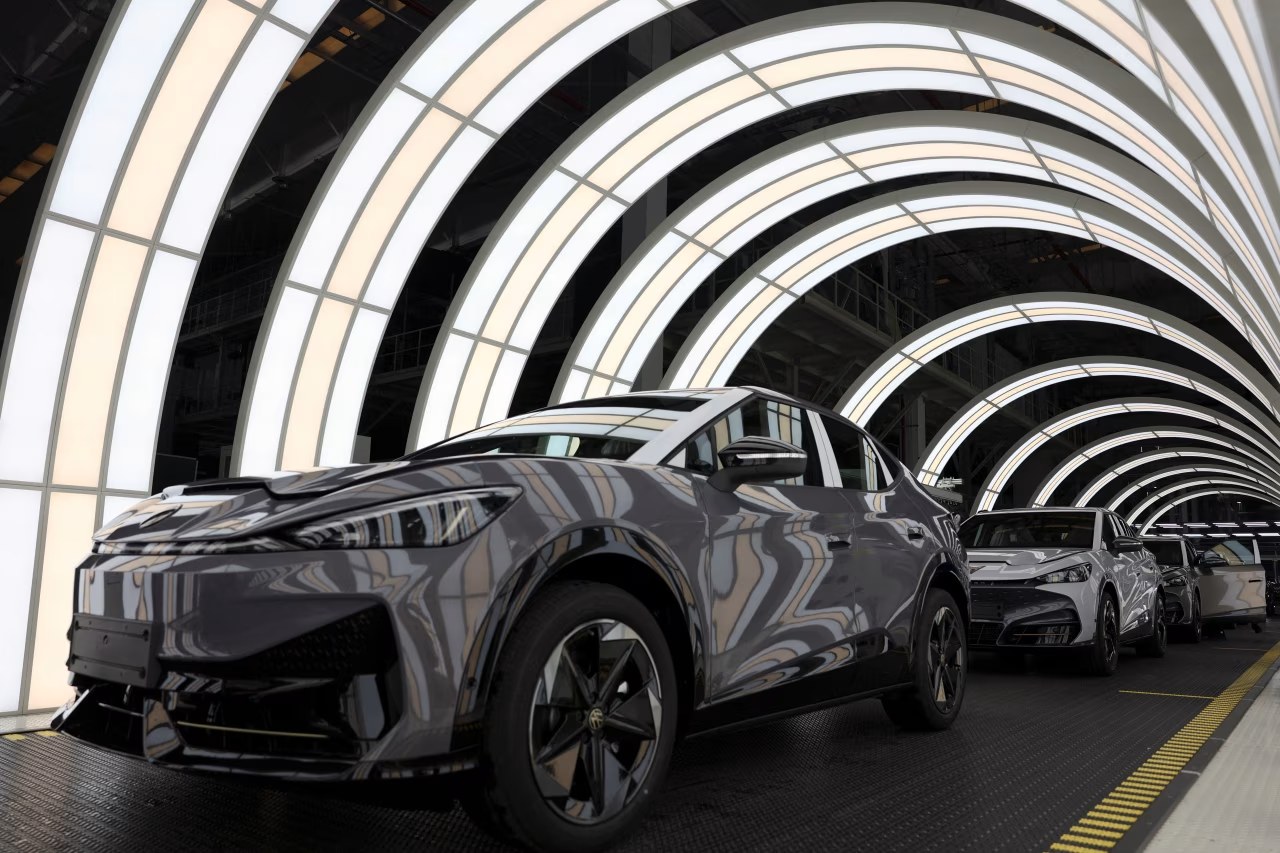
4 Million Volkswagen Electric Vehicles Delivered Since 2013
- 4 million EVs shipped since the first model debuted in 2013.
- First million required roughly ten years to reach.
- The fourth million was delivered in just one year.
- CEO Oliver Blume praised the acceleration of Volkswagen electric vehicles production.
Volkswagen’s electric‑vehicle push hits a historic benchmark
VOLKSWAGEN—Volkswagen Group (VOW3) announced on Thursday that it has now delivered four million all‑electric vehicles, a milestone that marks a dramatic shift in the company’s sustainability trajectory.
The figure reflects deliveries that began with the launch of the first pure‑electric model in 2013 and have accelerated to the point where the fourth million was shipped in a single calendar year, a pace the automaker says is unprecedented in its history.
“It took us around ten years to deliver the first million pure electric vehicles. The fourth million took just one year,” said Chief Executive Oliver Blume, underscoring the speed of the transition toward Volkswagen electric vehicles across global markets, including the Anhui plant in Hefei, China.
Stat Card – 4 Million EVs Delivered
Why the four‑million figure matters
The headline number – four million Volkswagen electric vehicles – is more than a statistic; it is a signal that the German automaker’s electrification strategy is finally bearing fruit. The tally aggregates every battery‑powered model sold worldwide since the brand’s first EV launch in 2013, a period that spanned a decade of incremental growth before the recent surge.
Industry analysts have long warned that without a decisive pivot to electric mobility, legacy manufacturers could lose relevance. Volkswagen’s four‑million milestone demonstrates that the company has not only avoided that fate but is now competing head‑to‑head with dedicated EV firms. The figure also provides a concrete benchmark for measuring future sustainability targets, such as the group’s ambition to sell ten million electric cars by the end of the decade.
From a financial perspective, the delivery count is a key performance indicator that investors watch closely. While the stock ticker VOW3 showed a modest 3.04 % decline on the day of the announcement, the underlying delivery growth offers a counterbalance, suggesting that revenue streams from battery‑electric models are expanding faster than legacy combustion‑engine sales.
Looking ahead, the four‑million stat card sets the stage for the next chapter of the story: how Volkswagen will translate this momentum into broader market share and deeper integration of electric‑vehicle technology.
Timeline – Milestones in Volkswagen’s EV Journey
From 2013 launch to a four‑million surge
Understanding how Volkswagen reached the four‑million mark requires a look back at the key events that shaped its electric‑vehicle programme. The timeline below captures the most consequential moments, each of which contributed to the acceleration of Volkswagen electric vehicles on the road.
In 2013, Volkswagen introduced its first pure‑electric model, a modest entry that laid the technical foundation for later, more scalable platforms. Over the next several years, the company experimented with battery chemistry, supply‑chain logistics, and market positioning, gradually building expertise that would later be leveraged across multiple brands.
The turning point arrived in 2018 when Volkswagen announced a €30 billion investment in electric‑mobility, signalling a strategic shift from incremental to transformational. That same year, the group opened its Anhui plant in Hefei, China, a facility that would become a linchpin for high‑volume EV production in the world’s largest automotive market.
By 2022, the first million electric vehicles had been delivered, a milestone that took roughly ten years to achieve. The following year, the company accelerated its output, and in 2024 the fourth million was shipped in just twelve months – a dramatic compression of the delivery timeline that underscores both operational efficiencies and rising consumer demand.
Each milestone on the timeline reflects a blend of strategic investment, technological refinement, and market response, all of which converge to define the current state of Volkswagen electric vehicles. The next chapter will compare the speed of delivery between the first and fourth millions, revealing how the company shaved years off its rollout schedule.
How Did the Fourth Million Arrive in One Year? – A Comparison
Speeding up from ten years to twelve months
The contrast between the first and fourth million Volkswagen electric vehicles is stark. According to CEO Oliver Blume, the first million required roughly ten years to accumulate, whereas the fourth million was delivered in just one year. This comparison illustrates a dramatic improvement in production capacity, supply‑chain coordination, and market acceptance.
When the first million was reached, the company was still fine‑tuning its modular electric platform, and many of its factories were retrofitted rather than purpose‑built for battery‑electric assembly. By the time the fourth million arrived, Volkswagen had fully integrated dedicated EV lines, such as the Anhui plant, and benefitted from economies of scale in battery procurement.
From a financial lens, the acceleration translates into faster revenue recognition from higher‑margin EV sales. Although the stock ticker VOW3 dipped 3.04 % on the day of the announcement, analysts note that the rapid delivery curve could improve cash flow and profitability in subsequent quarters.
Operationally, the reduction in time to deliver each successive million reflects advances in automation, tighter supplier contracts, and a more mature global charging infrastructure that encourages consumer adoption. The comparison also underscores the importance of regulatory pressure in Europe and China, which has nudged the group toward faster electrification.
Having quantified the speed‑up, the next chapter asks what this rapid acceleration means for the broader auto industry and how competitors are responding to Volkswagen’s electric‑vehicle surge.
What Does the Rapid Acceleration Mean for the Auto Industry?
Industry ripple effects of Volkswagen’s EV surge
The acceleration of Volkswagen electric vehicles deliveries reshapes competitive dynamics across the global automotive sector. Traditional rivals such as Toyota and General Motors now face a German heavyweight that has demonstrated the ability to compress a decade‑long rollout into a single year.
For suppliers, the surge creates both opportunities and pressures. Battery manufacturers, for instance, must scale production to meet Volkswagen’s heightened demand while maintaining cost targets. At the same time, component makers that failed to adapt to EV specifications risk losing market share.
Regulators view the milestone as evidence that large OEMs can meet tightening emissions standards without sacrificing growth. In Europe, the European Commission cites Volkswagen’s progress when assessing the feasibility of its 2030 carbon‑neutral targets for the transport sector.
Consumers benefit from a broader portfolio of electric models, as the rapid output increase forces pricing competition and expands charging‑network investments. The Anhui factory in Hefei, China, exemplifies how localized production can lower costs and improve availability in key markets.
Looking forward, the next chapter will explore Volkswagen’s strategic roadmap for the next decade, including its ambition to double EV sales by 2030 and the role of emerging technologies such as solid‑state batteries.
Looking Ahead: Volkswagen’s Next Electric Targets
From four million to the next horizon
With four million electric vehicles already on the road, Volkswagen Group has set its sights on even more ambitious goals. The company’s public roadmap outlines a target of ten million EV deliveries by 2030, a figure that would double the current cumulative total in less than a decade.
Achieving that target will require further expansion of dedicated EV factories, continued investment in battery technology, and deeper integration of software‑defined vehicle platforms. Oliver Blume has repeatedly emphasized that the speed of delivery is now a core competitive advantage, and the group plans to replicate the one‑year million‑vehicle cadence across multiple future milestones.
In addition to volume, Volkswagen aims to improve the sustainability of its electric‑vehicle supply chain. The firm has pledged to source 100 % renewable electricity for its European production sites by 2025, a move that aligns with broader ESG expectations from investors and regulators.
Market analysts predict that if Volkswagen can maintain its accelerated delivery rhythm, it could capture a sizable share of the projected 30 million global EV market by 2030. However, the path is fraught with challenges, including potential battery‑material shortages and the need to stay ahead of software competitors.
As the group prepares for the next phase, the industry will watch closely to see whether Volkswagen can turn its four‑million milestone into a springboard for a truly electrified future.
Frequently Asked Questions
Q: How many electric vehicles has Volkswagen delivered since 2013?
Volkswagen Group has delivered 4 million electric vehicles since it launched its first model in 2013, according to the company’s Thursday announcement.
Q: How long did it take Volkswagen to deliver its first million EVs?
The company said it took around ten years to deliver the first million pure‑electric vehicles, a timeline that underscores the rapid acceleration of its EV programme.
Q: What did CEO Oliver Blume say about the fourth million deliveries?
Oliver Blume noted, “The fourth million took just one year,” highlighting the speed‑up in Volkswagen electric vehicles production and market uptake.
