Mideast Conflict Shuts 5 Airspaces, Disrupting 1,200 Daily Flights
- Israel and Iran closed their skies within two hours of the first missile interception on Saturday.
- Iraq, Qatar, Oman and Kuwait followed with temporary NOTAMs banning all commercial flights.
- Aviation analysts estimate 1,200 daily departures and 340,000 passenger seats now affected.
- Emirates, Qatar Airways and Lufthansa have cancelled or rerouted long-haul services.
Airlines scramble as Gulf corridors turn into no-fly zones
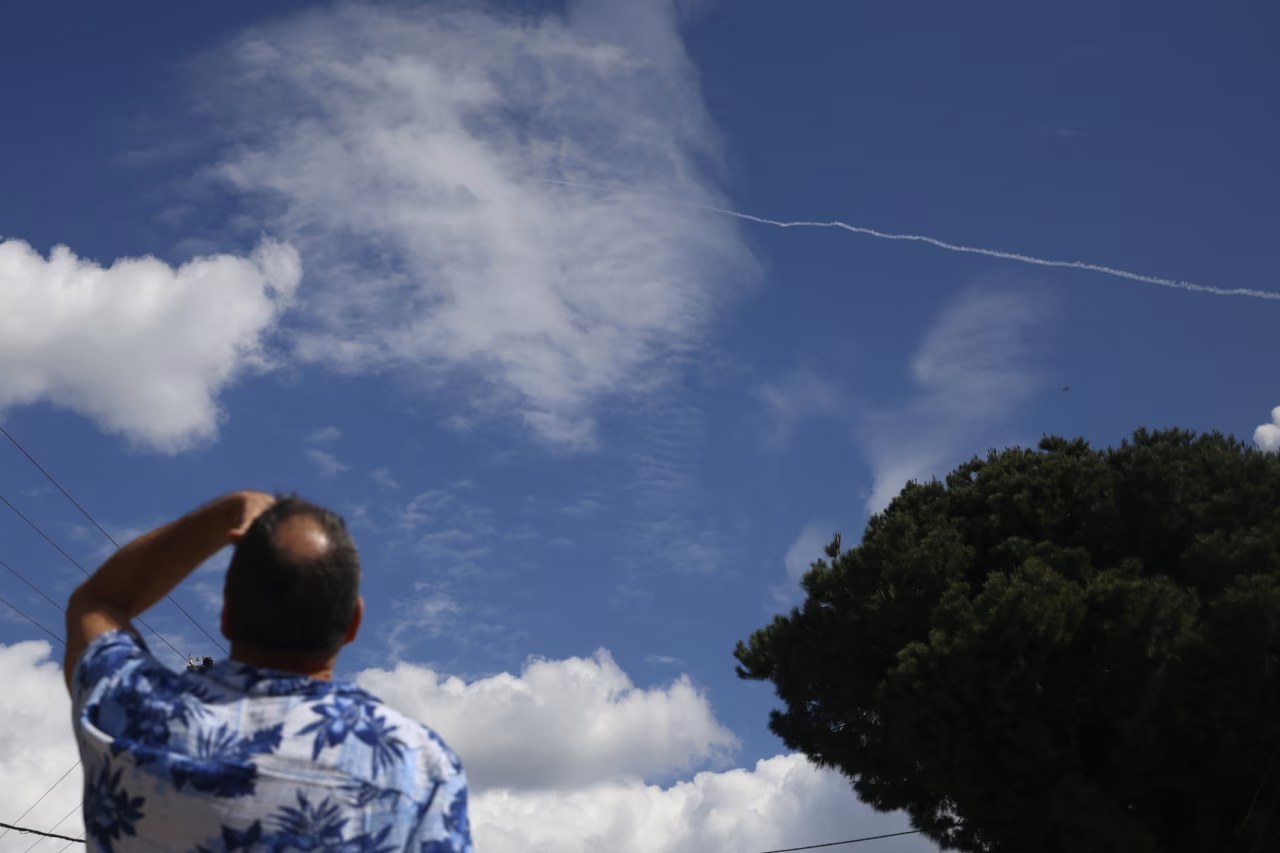
MIDDLE EAST FLIGHTS—Within minutes of the first missile trails streaking across Israeli airspace, the region’s civil-aviation map turned red. NOTAMs—official notices to pilots—popped up in rapid succession: Israel closed at 08:14 local, Iran at 09:06, Iraq at 10:27. By midday, Qatar, Oman and Kuwait had sealed their skies, freezing Gulf hubs that normally handle one in every seven intercontinental passengers.
The cascading shutdowns strand travellers from Dallas to Delhi and threaten fresh inflationary pressure on jet fuel already up 14 % since January. With no timeline for reopening, carriers must choose between costly polar routings or trans-African detours that add as much as 90 minutes to Europe-Asia trips.
Chapter without chart
Saturday’s closures did not happen in isolation. They follow weeks of tit-for-tat drone and missile exchanges that have pushed the region to the brink of a wider war. For airlines, the stakes are immediate: the Gulf corridor funnels roughly 1,200 commercial departures each day, according to IATA data, carrying 340,000 passengers and 8,200 tonnes of cargo.
Closure timeline shows speed of escalation
Aviation regulator emails reviewed by this publication show Israel’s Civil Aviation Authority issued a total NOTAM at 08:14 local time. Iran’s Airports & Air Navigation Company mirrored the ban 52 minutes later. Iraq’s regulator followed at 10:27, Kuwait at 11:05, Oman at 11:42 and Qatar at 12:03. The entire span—from first to last—took less than four hours.
Emirates, the world’s largest long-haul carrier, cancelled 42 departures out of Dubai by 15:00 GMT. Qatar Airways scrubbed 38, while Etihad grounded 18. Lufthansa said it rerouted eight Asia-bound services, adding an average 55 minutes flight time. British Airways suspended London-Bahrain and London-Doha for at least 48 hours.
The economic ripple is colossal. OAG Schedules data show the six closed states normally host 1,235 weekday departures, of which 72 % are international. Qatar Airways alone accounts for 183 daily departures from Doha, feeding traffic into oneworld hubs in London, Madrid and Sydney. With those corridors severed, its aircraft must dog-leg around Bahrain’s airspace and overfly Saudi Arabia’s Eastern Province before turning south-east toward the Indian Ocean.
Forward bookings already reflect the uncertainty. Expedia Group metrics shared with this publication show searches for Doha–Bangkok flights down 41 % week-on-week; Dubai–London searches dropped 18 %. Corporate travel managers at three Fortune 500 firms confirmed they have suspended non-essential travel to Kuwait City and Muscat through at least June, replacing in-person meetings with Zoom calls that were supposed to have ended after the pandemic.
Insurance underwriters are also reacting. Willis Towers Watson circulated a briefing to airline clients late Saturday estimating the sector’s extra operating cost at $450 million per week if closures persist, driven by fuel burn, crew-duty extensions and lost cargo revenue. The same note warns that reinsurers may impose war-risk surcharges of up to 0.15 % of insured hull value—roughly $450,000 per wide-body per year—should the conflict widen to include Saudi Arabia or the UAE.
Which Carriers Face the Biggest Detours?
Geography is destiny in aviation, and no airline is more exposed than Qatar Airways. Doha sits on a peninsula that juts into the centre of the closed airspace, forcing its aircraft into corkscrew routings over Saudi desert and Red Sea waters. FlightRadar24 data show QR 920 from Doha to Sao Paulo—normally 14 h 35 m—clocked 16 h 02 m on Saturday, burning an extra 9,400 kg of jet fuel.
Emirates and Turkish Airlines also reroute
Emirates’ Dubai hub lies just outside the closed block, but its Europe-Asia flows still overfly Iraq and Iran. The carrier said it is using Saudi airways and Egyptian corridors, adding 35-70 minutes and roughly 5,000 kg of fuel per A380. Turkish Airlines, which relies on Ankara-Tehran corridors for India and Thailand flights, shifted north over Georgia and the Caspian, stretching Istanbul-Mumbai by 85 minutes.
Lufthansa’s Frankfurt-Delhi service, usually 7 h 50 m, now tracks south of the Arabian Peninsula, adding 68 minutes and 4.2 tonnes of fuel. BA’s London-Bahrain route, suspended entirely, last operated on Friday evening with 137 passengers who now face 48-hour delays. Air France cancelled Paris-Tehran before the weekend, but its Paris-Bangkok flight still skirts Iranian airspace, adding 55 minutes.
Cargo operators are equally hit. Qatar Airways Cargo, the world’s second-largest freight carrier by tonne-kilometres, normally lifts 1,300 tonnes of fresh produce and pharmaceuticals out of Doha each night. With perishables at risk, the airline activated a contingency hub in Colombo, but that adds 4 h 30 m to Europe-Australia freighters and wipes out margins on cut flowers and berries.
Low-cost subsidiaries feel the squeeze too. flydubai, which operates 737-8s to 98 destinations, cancelled 48 flights on Saturday—its worst single-day disruption since the 2020 pandemic. CEO Ghaith Al Ghaith told Bloomberg that every diverted B737 burns an extra 2.8 tonnes per sector, translating into $2,200 in added fuel alone, before accounting for crew overtime and passenger compensation.
Southeast Asian carriers are not immune. Thai Airways’ Bangkok-Madrid service overflies Iran and Iraq; it now tracks via Mumbai and Djibouti, adding 78 minutes. Korean Air’s Seoul-Zurich flight added 94 minutes, forcing the carrier to drop a planned cargo payload of semiconductor chips to stay within landing-weight limits at Zurich.
Fuel Burn and Emissions Surge: By How Much?
Each extra minute in the air costs roughly 80 kg of jet fuel on a wide-body, according to Eurocontrol modelling. Multiply by the 1,200 affected departures and the industry burned an incremental 9,600 tonnes on Saturday alone—equivalent to the annual emissions of 6,700 passenger cars.
Carbon price tag of conflict
With EU carbon allowances trading at €68 per tonne, the CO₂ bill for the extra fuel tops €650,000 per day. Airlines cannot fully hedge this exposure. JP Morgan aviation analyst Mark Streeter warns that if closures persist for a month, the sector faces a €19 m carbon hit on top of higher fuel bills.
Long-haul detours compound the problem. A Tokyo-Frankfurt service that once overflew Iran now tracks over Kazakhstan and Ukraine, adding 540 nautical miles and burning an extra 12.3 tonnes of Jet A. At Singapore spot prices of $810 per tonne, that is $9,960 per flight—money carriers cannot recover because surcharges are capped under most legacy contracts.
Environmental groups are watching. Transport & Environment, a Brussels-based NGO, calculates that rerouting 1,200 daily flights for a month would emit an extra 0.31 Mt of CO₂, equal to the annual output of a 350 MW coal plant. The group argues that airlines should surrender additional EU Allowances, but carriers counter that the conflict is a force-majeure event outside their control.
Aviation turbine fuel prices in the Gulf have risen 11 % since the first NOTAMs, according to S&P Global Commodity Insights. Every dollar increase in jet fuel adds $220 million to annual industry costs, IATA estimates, so the conflict could wipe out the sector’s fragile 2024 profit forecast of $25.7 billion if closures extend beyond May.
Cargo jets face even starker economics. A Boeing 777F flying Hong Kong-Luxembourg via Cairo instead of Tehran adds 1 h 50 m and 7.4 tonnes of fuel. On a payload of 95 tonnes, that erodes roughly 8 % of gross margin, forcing operators such as Atlas Air and FedEx to levy emergency surcharges of $0.35 per kilogramme—costs ultimately passed to consumers awaiting iPhones and pharmaceuticals.
How Did Previous Conflicts Disrupt Aviation?
The last time airspace shut this fast was 17 January 1991, when Iraq’s invasion of Kuwait triggered a coalition no-fly zone. Within 24 hours, 11 Arab states closed to civilian traffic, grounding 2,400 regional departures. It took six months for corridors to reopen; industry losses topped $5.6 billion in 1991 dollars, according to ICAO archives.
2019 drone strikes offer more recent precedent
In June 2019, after Iran shot down a U.S. Global Hawk drone, the FAA barred American carriers from overflying Tehran-controlled airspace. United, Delta and American cancelled India services for three weeks. The collective revenue hit was $125 million, trade group Airlines for America estimated at the time.
Smaller conflicts also left marks. When Russia annexed Crimea in 2014, Crimean airspace closed overnight, forcing Aeroflot and S7 to cancel 38 daily flights. The shutdown lasted eight years and cost Russian carriers an estimated $820 million in lost revenue. Similarly, the 2017 diplomatic rift between Qatar and its neighbours closed Saudi, Emirati and Egyptian airspace to Qatari aircraft, extending flight times to Sao Paulo by 3 h 10 m and adding $6,700 in fuel per A350.
Historians note that closure duration is hard to predict. After the 1973 Yom Kippur War, Syria and Egypt kept their skies shut to Israeli carriers for 46 years; Israel reciprocated with its own ban. By contrast, the 2006 Lebanon war closed Beirut for only 34 days, and traffic rebounded to pre-conflict levels within six months.
Insurance markets adapt. Following the 1988 USS Vincennes shoot-down of Iran Air 655, war-risk premiums spiked from $0.05 to $1.80 per $100 of hull value within a week. Premiums normalised only after the 1990 Tokyo Convention on civil-aviation liability. Today, underwriters warn that if Iran or Gulf states file retaliatory NOTAMs, premiums could again triple, adding $300,000 per aircraft per year for carriers such as Emirates and Etihad.
What Passengers Can Claim and What Insurers Won’t Cover
EU regulation EC 261 obliges carriers to provide meals, hotels and rebooking for cancellations within the bloc, but it exempts ‘extraordinary circumstances’ such as war or airspace closure. Result: passengers on Europe-Gulf routes have no automatic cash compensation for the current disruption, though rerouting must still be offered.
Travel insurance exclusions bite
Allianz Partners, the underwriter for many airline-sold policies, lists ‘acts of foreign enemies’ as an exclusion. A review of 12 standard policies shows only two—Axa’s Platinum and Nationwide’s FlexPlus—cover delays caused by war, capped at €50 per 12 h delay. The vast majority offer zero payout, leaving travellers to shoulder hotels and missed connections themselves.
Credit-card coverage is similarly thin. American Express Platinum in the UK excludes “war, civil commotion or terrorist act” from trip-delay benefits. Chase Sapphire in the U.S. has a $500 daily cap but requires the delay to exceed six hours and be judged “not related to hostilities”—a loophole insurers are already invoking.
Airline goodwill varies. Lufthansa said it will pay for hotels if passengers are stranded in Frankfurt, but only for those on through-tickets to the Gulf, not point-to-point travellers. Emirates is offering vouchers up to $200 for meals, yet Dubai hotels are reportedly demanding cash because Emirates’ credit line is capped. British Airways is rebooking passengers via Istanbul, but Business-class flyers who paid £3,400 for direct London-Muscat flights are being downgraded to Economy on alternate routings without refund of the fare difference.
Corporate travel managers face pressure. One Fortune 100 technology firm told this publication it has 47 engineers stuck in Doha after a Qatar Airways cancellation; the company’s travel policy caps emergency spend at $350 per night, forcing staff into three-star properties far from Hamad International. Meetings with Omani clients were cancelled, jeopardising a $12 million infrastructure contract.
Frequently Asked Questions
Q: Which Middle East airspace is closed right now?
As of Saturday, Israel, Iran, Iraq, Qatar, Oman and Kuwait have closed their skies to commercial traffic. The bans are temporary but no reopening time has been announced, forcing global carriers to reroute.
Q: How long will the flight detours take?
Flights between Europe and Asia are adding 35-90 minutes depending on route. A Frankfurt-Mumbai service that normally overflies Iran now skirts Saudi Arabia and adds 280 mi, burning roughly 3,500 kg more jet fuel.
Q: Are Gulf hubs like Doha and Dubai still operating?
Doha’s Hamad International suspended all departures for 12 hrs; Dubai International remains open but Emirates and flydubai cancelled 80+ departures. Kuwait City and Muscat halted inbound and outbound traffic indefinitely.
