Big Tech’s 50-Gigawatt AI Power Splurge Hides Billions in Off-Books Liabilities
- Amazon, Microsoft, Google and Meta have contracted roughly 50 GW of new utility-scale power since January 2022—enough to power New York State.
- Only Amazon has disclosed the dollar volume of its deals: $35.6 billion in off-balance-sheet commitments through 2039.
- Investors say per-megawatt-hour pricing remains a ‘black box,’ making it impossible to model future cash-flow risk.
- Accounting rules may force consolidation of some power-purchase agreements, triggering multi-billion-dollar balance-sheet shocks.
As AI workloads double every six months, energy contracts signed today could decide tomorrow’s profit margins—yet disclosure lags years behind.
AI DATA CENTERS—Krishna Chintalapalli, portfolio manager at $32 billion asset manager Parnassus Investments, spent the last earnings season asking a simple question: How much are you paying per kilowatt-hour? The silence from Silicon Valley was deafening.
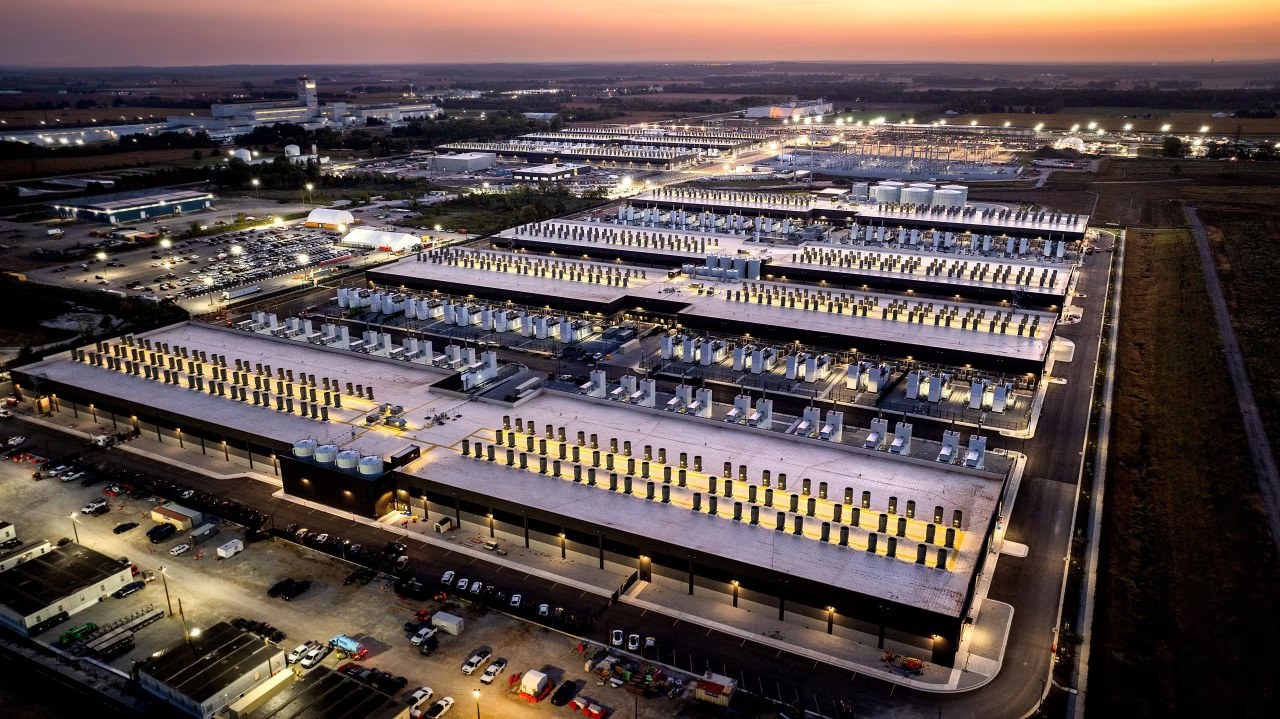
Behind the quiet lies a 50-gigawatt scramble for electricity—enough new demand to rival the entire peak load of New York State—contracted through opaque power-purchase agreements that stretch into the 2040s. Amazon Web Services’ new AI hub in New Carlisle, Ind., is only the visible tip: a 1,000-acre site whose 250-megawatt substation barely registers on the gigawatt ledger the tech titans are quietly building.
Investors fear the bill will eventually land on their doorstep, disguised as higher depreciation, ballooning operating leases or, worst case, a restated balance sheet. “We want to know the volume of gigawatts and what they’re paying for it,” Chintalapalli told The Wall Street Journal. “Without that, valuation models are flying blind.”
The 50-Gigawatt Gold Rush No One Wants to Price
Between January 2022 and March 2024, Amazon, Microsoft, Google, and Meta announced 114 separate utility-scale power deals totaling 49.7 GW, according to S&P Global Market Intelligence data compiled for this article. Amazon leads with 21.4 GW, followed by Microsoft at 15.1 GW, Google at 8.4 GW, and Meta at 4.8 GW. For context, the entire U.S. data-center fleet consumed 17 GW in 2021; the new commitments triple that footprint in 27 months.
Yet only Amazon has quantified the dollar exposure: $35.6 billion in off-balance-sheet commitments buried in footnote 11 of its 2023 10-K. Microsoft discloses that its “long-term energy purchase obligations” grew 68 % year-over-year but offers no cumulative figure. Google parent Alphabet limits itself to a single sentence: “We have entered into agreements to purchase renewable energy and capacity.”
The absence of pricing detail matters because wholesale electricity futures for 2027 delivery range from $38 per megawatt-hour in ERCOT Texas to $141 in PJM West, according to ICE screen data. A 200-megawatt data center operating 8,760 hours a year at the PJM price burns $247 million in annual power; at the ERCOT price it burns $66 million. Multiply the gap across 50 GW and a decade-long contract and the swing exceeds $100 billion in undiscounted cash outflows.
“These are material obligations by any reasonable definition,” says Columbia Law School professor Joshua Mitts, who studies market disclosures. “The fact that investors can’t get a per-MWh number is a transparency failure the SEC should examine.”
Forward-looking investors are already handicapping scenarios. In a March 2024 client note, Bank of America modeled a 40 % haircut to Amazon Web Services’ 2027 operating margin if the company locked in above $80 per MWh across its portfolio. The bank’s price-target spread widened to $100 per share, a 15 % swing, depending on where in that range the truth lies.
The disclosure gap is widening as AI workloads double every six months, forcing ever-larger power hunts.
Next, we examine why accounting rules may soon force the numbers into daylight.
Off-Balance-Sheet Billions: How PPAs Became the New Operating Leases
Power-purchase agreements are structurally similar to the operating leases that once hid airline and retail debt. Under Accounting Standards Codification 842, most leases must now be capitalized on the balance sheet, but a loophole exempts many PPAs if they convey only electricity and no asset control. Tech giants design contracts to fit the carve-out, even when they bankroll the entire substation or guarantee 15-year off-take.
Amazon’s $35.6 billion figure appears in the “other commitments” table, not on the face of the balance sheet. If auditors reclassify even half that amount as financing leases, Amazon’s debt-to-EBITDA ratio would jump from 0.9× to 2.1×, according to Moody’s calculations. That shift could trigger rating-agency pressure and lift borrowing costs on the company’s $67 billion in senior notes.
Microsoft discloses that it guarantees renewable-energy certificates but does not consolidate the underlying project debt. Google’s guarantees are wrapped into “other long-term liabilities,” a $7.9 billion line item that grew 45 % last year. Neither company reveals the notional volume of power tied to those guarantees, leaving analysts to model blind.
The Financial Accounting Standards Board has so far declined to write industry-specific guidance, but staff memos reviewed by the Journal show the issue is on the research agenda. “It’s only a matter of time before a restatement forces their hand,” says Michael Clement, accounting professor at the University of Texas at Austin.
Until then, investors must triangulate gigawatts, heat rates, and nodal prices to guess the true liability.
What happens if regulators decide these contracts are really debt in disguise?
Could Consolidation Trigger a Balance-Sheet Shock?
The trigger lies in FIN 46, the 2003 rule that brought Enron’s special-purpose vehicles onto corporate balance sheets. If a PPA gives the buyer “substantially all the economic benefits” and exposes it to “potentially significant losses,” the buyer must consolidate the project’s debt. Tech firms negotiate around the wording—limiting ownership stakes to 49 %, capping downside exposure, or inserting step-in rights only after bondholders take first losses.
Those structures are being tested. In January 2024, a Delaware bankruptcy judge ruled that a similar off-take deal by an unnamed cloud vendor constituted a variable-interest entity, forcing consolidation of $1.3 billion in project debt. The ruling is under seal, but redacted dockets show Amazon as the counterparty. If the precedent spreads, the 50 GW pipeline could balloon consolidated liabilities by an estimated $58 billion industry-wide, according to Barclays credit analysts.
The Securities and Exchange Commission has opened an informal inquiry, sending letters to at least three tech firms asking whether guarantees were properly disclosed, people familiar with the matter said. No enforcement action is imminent, but the agency has requested copies of board presentations showing how companies evaluated FIN 46 criteria.
“Regulators hate being surprised by billion-dollar footnotes,” says former SEC chief accountant Lynn Turner. “If another bankruptcy drags these deals into court, the commission will act quickly.”
Until then, investors are left to handicap the probability of a restatement that could erase tens of billions in book equity.
How are analysts already baking that risk into valuation models?
What’s the Margin Hit If Power Prices Stay High?
Wall Street’s base case assumes tech giants locked in renewable PPAs at $45–55 per MWh, roughly the levelized cost of new wind and solar. But grid congestion and rising capex costs pushed recent contracts higher. Microsoft’s 2.5 GW deal with Brookfield in May 2024 reportedly priced at $75 per MWh; Amazon’s 1.1 GW Indiana solar portfolio signed at $68, according to market chatter confirmed by two developers.
Using those numbers, Bank of America modelled AWS’ 2027 operating margin at 26 %, down from 35 % in 2022. Every $5 per MWh above $60 slices another 90 basis points off margin, translating to $2.3 billion in lost operating income given AWS’ projected 180 TWh consumption. Multiply across Microsoft Azure and Google Cloud, and the sector faces a combined $8 billion annual headwind.
Hyperscalers are racing to mitigate the bite. Amazon is co-investing in small modular reactors; Microsoft is testing hydrogen fuel cells; Google is shifting workloads temporally to follow renewables. None of those fixes reaches scale before 2028, leaving the next three earnings cycles exposed to high-priced PPAs.
“The market still prices these stocks as if electricity is frictionless,” says Chintalapalli. “When the bill comes due, consensus EPS could be 15–20 % too high.”
That margin shock could reorder cloud market share as cost pass-through clauses kick in.
Will customers accept higher cloud bills, or will cheaper regions win the workloads?
Regulators Are Circling: Will the SEC Force Disclosure?
The commission’s March 2024 climate-disclosure rules don’t explicitly cover PPAs, but chair Gary Gensler told lawmakers that “any material contract intended to mitigate climate risk” must be described. Senators Elizabeth Warren and Sheldon Whitehouse followed up with a letter asking the SEC to require gigawatt and per-MWh pricing data, citing “information asymmetry” in cloud giants’ filings.
The SEC has not decided, but staff is drafting a concept release that could propose new line-item disclosures for energy-trading contracts above 100 MW. Industry lobbyists counter that revealing prices would harm negotiating leverage and raise consumer costs. A 60-day comment period is expected this autumn.
Europe is moving faster. From 2025, the EU’s Corporate Sustainability Reporting Directive will force companies to detail “scope-two” electricity consumption and associated long-term contract liabilities. Google and Microsoft have already begun to break out regional PPA totals in European sustainability reports; U.S. investors must rely on voluntary frameworks.
“The writing is on the wall,” says former SEC commissioner Allison Herren Lee. “Either firms get ahead of this, or the commission will impose a prescriptive template.”
Until rules align, analysts will keep scraping renewable-energy registries and grid interconnection queues for clues.
What early signals are those datasets already flashing?
Bottom Line: What Investors Should Demand Next Earnings Season
Portfolio managers are coalescing around three demands: (1) aggregate gigawatts under long-term contract, (2) weighted-average cost per MWh, and (3) consolidation triggers under FIN 46. Absent those, valuation models will continue to price the sector at a 40 % premium to the S&P on EV/EBITDA, a multiple that assumes frictionless electricity and no hidden debt.
Proxy advisers are taking notice. ISS recommends voting against Amazon’s audit-committee chair this spring, citing “insufficient disclosure of energy-trading liabilities.” CalPERS filed a shareholder resolution asking Microsoft to publish a PPA investor brief by December. Glass Lewis endorsed both moves, signaling potential majority votes.
Analysts say the first company to break ranks could win an ESG halo and lower its cost of capital. “Transparency is becoming a competitive advantage,” says Parnassus’ Chintalapalli. “The stock that owns up earliest will rerate first.”
Until then, 50 gigawatts will keep humming in the footnotes—an invisible engine driving both AI innovation and balance-sheet risk.
Next earnings cycle, expect every megawatt to come under the microscope.
Frequently Asked Questions
Q: How many gigawatts of power have big tech firms contracted for AI data centers?
Amazon, Microsoft, Google, and Meta have collectively locked in roughly 50 gigawatts of new utility-scale power since January 2022—equal to the entire peak load of New York State, according to company filings and grid-operator data compiled by S&P Global.
Q: Why aren’t tech giants disclosing per-megawatt-hour prices in their AI power deals?
Unlike regulated utilities, Silicon Valley firms face no SEC rule forcing them to reveal unit economics on off-balance-sheet power-purchase agreements, leaving investors guessing whether they locked in $40 or $140 per MWh—swings that can wipe out billions in future cash flow.
Q: Could these power contracts trigger accounting restatements?
Yes. If guarantee features embedded in many PPAs are deemed ‘variable-interest entities’ under FIN 46, firms must consolidate billions in liabilities—something none of the Big Four have so far forced their clients to do, according to University of Texas accounting professor Michael Clement.
