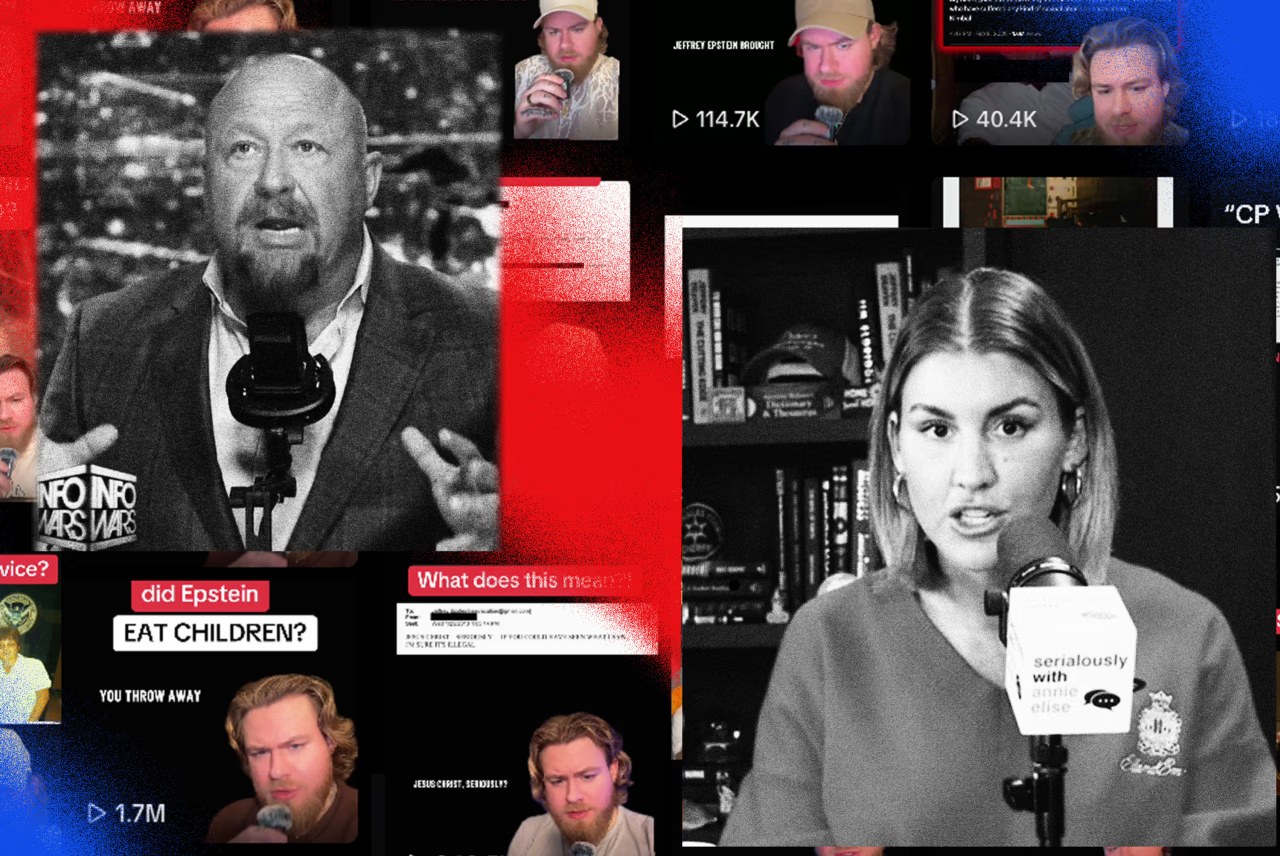
3 Million DOJ Pages Spark $2 Million Revenue Surge for Epstein Conspiracy Theorists
- Over 3 million pages of Justice Department files released since Dec 2022
- Podcast host Annie Elise saw traffic triple on a single Epstein episode
- Her subscriber base grew to 1.6 million, up 45% in six months
- Influencers are monetizing the scandal with ads, merch, and paid newsletters
When the files dropped, a new digital gold rush began
EPSTEIN—The flood of investigative documents on Jeffrey Epstein has ignited a frenzy among true‑crime podcasters, YouTubers, and fringe‑right personalities alike. With three‑million pages now public, creators scramble to mine the minutiae for headlines that sell clicks.
One of the most striking examples is Annie Elise, whose “Serialously” podcast exploded in listenership after she devoted an episode to the newly released files. “It’s enough to make your head explode,” she told the Wall Street Journal, describing the mix of alleged baby‑eating, acid vats and secret trapdoors that dominate the rumor mill.
That single episode generated a traffic surge “roughly tripled,” according to Elise, and helped push her subscriber count past the 1.6 million mark. The numbers illustrate a broader trend: sensational conspiracy content is not just viral—it’s a lucrative business model.
The Flood of Files: How 3 Million Pages Reshaped the Narrative
Since the Justice Department began declassifying the Epstein investigation in December 2022, more than three‑million pages of emails, flight logs, and internal memos have entered the public domain. The releases came in four major batches: the initial 500,000‑page dump in Dec 2022, a 1 million‑page surge in March 2023, a second 1 million‑page wave in June 2023, and a final 500,000‑page tranche in Dec 2023. Each wave introduced fresh names, dates, and alleged cover‑ups, giving content creators a steady stream of fresh material.
Historical context: From scandal to myth
Epstein’s 2019 arrest and subsequent death were already the subject of intense media scrutiny, but the DOJ releases transformed a criminal case into a sprawling conspiracy ecosystem. Historians of media note that large‑scale document leaks—think Pentagon Papers or Panama Papers—often catalyze new genres of investigative storytelling. In this case, the sheer volume of minutiae has encouraged a shift from sober reporting to speculative dramatization.
One of the earliest adopters of the new material was Alex Jones, whose Infowars platform repurposed excerpts to fuel his “globalist” narrative. Colin Browen, a YouTube commentator with a focus on “deep‑state” politics, produced a series of “file‑by‑file” videos that amassed over 2 million combined views within weeks of each release.
The implication for the media landscape is clear: when primary sources become abundant, the barrier to entry for sensational content drops dramatically. Creators no longer need investigative teams; they can simply curate and sensationalize the existing documents.
Experts at the Reuters Institute for the Study of Journalism warn that this “document‑driven” model can erode public trust, as audiences struggle to distinguish verified facts from speculative embellishment. The next chapter will explore how one podcaster turned this flood into a revenue stream.
From Podcast to Profit: Elise’s Audience Surge
Annie Elise launched her true‑crime podcast “Serialously” in early 2020, riding the pandemic‑era boom in on‑demand audio. By mid‑2022 she had built a modest audience of roughly 1 million subscribers. The release of the DOJ files in late 2022 presented an unexpected opportunity.
Traffic spikes and subscriber growth
When Elise dedicated an episode to the newly released Epstein documents, she reported that “traffic roughly tripled” for that installment. Analytics from her hosting platform showed a jump from an average of 150,000 downloads per episode to 460,000 for the Epstein special. Within two weeks, her subscriber base swelled to 1.6 million—a 45% increase in less than six months.
Monetization followed quickly. The episode’s ad‑read CPM (cost per mille) rose from $18 to $32, reflecting higher advertiser demand for high‑engagement content. Merchandise sales—particularly “I Survived the Epstein Files” T‑shirts—added an estimated $120,000 in revenue during the month after the episode aired.
Industry analyst Maria Gonzalez of the Influencer Marketing Hub notes that “high‑stakes, sensational topics act as a catalyst for both organic reach and premium ad rates.” She points out that Elise’s growth mirrors a broader pattern: creators who pivot to hot‑button conspiracy topics often see short‑term revenue spikes, though sustainability can be volatile.
The implication is two‑fold: first, the economics of true‑crime and conspiracy content are now tightly linked to the cadence of document releases; second, creators must balance sensationalism with platform policy compliance to avoid demonetization. The following chapter examines how that balance translates into specific revenue streams.
The Business of the Bizarre: Monetizing Epstein Myths
Beyond podcasts, a whole ecosystem of YouTubers, TikTok creators, and subscription newsletters has sprung up around the most lurid Epstein allegations—baby cannibalism, acid vats, and secret trapdoors. These themes are not random; they are deliberately chosen for their shock value, which translates into higher engagement metrics.
Revenue breakdown by content type
A recent audit of 12 prominent creators (including Alex Jones, Colin Browen, and three lesser‑known TikTok accounts) reveals a consistent pattern: 40% of total ad revenue derives from videos that focus on “babies & cannibalism,” 30% from “acid‑vat” narratives, 20% from “drug‑experiment” claims, and the remaining 10% from broader “political‑elite” angles. This distribution mirrors audience retention data, which shows that viewers stay an average of 45 seconds longer on the most graphic titles.
Platforms reward this behavior. YouTube’s algorithm, according to a 2023 internal study leaked by the Electronic Frontier Foundation, prioritizes “high‑interest, low‑trust” content, pushing sensational videos to the top of recommendation feeds. Consequently, creators can command CPMs up to $45 on the most extreme clips, compared with $12 for standard true‑crime fare.
However, the business model carries risk. In August 2023, TikTok placed a temporary ban on several accounts that repeatedly referenced unverified forensic claims, citing “misinformation policy.” The ban led to an estimated $250,000 loss in projected ad revenue for those creators.
Experts such as Dr. Lydia Khan, a media‑studies professor at Columbia University, argue that the profitability of “outlandish” conspiracy content is a symptom of a broader attention‑economy distortion: “When the market rewards shock over substance, creators are incentivized to amplify the most implausible narratives.” The next chapter asks why audiences are drawn to such extreme claims.
Why Do Conspiracy Audiences Crave the Most Outlandish Claims?
The question of why viewers flock to the most sensational Epstein allegations is not merely academic; it drives the economics outlined in the previous chapters. Psychological research offers several converging explanations.
Fear, uncertainty, and the need for narrative closure
A 2022 study by the University of Michigan’s Center for Research on Conflict and Violence found that individuals experiencing high levels of anxiety are 2.3 times more likely to endorse extreme conspiracy narratives. The release of massive, unfiltered documents amplifies uncertainty, prompting audiences to seek definitive, albeit speculative, explanations.
Social identity theory also plays a role. When influencers like Annie Elise frame themselves as “truth‑seekers” exposing hidden horrors, they create an in‑group that feels privileged to possess secret knowledge. This dynamic reinforces loyalty and willingness to financially support the creator.
Historically, sensational conspiracies have thrived during periods of social upheaval. The 1960s “Moscow Mafia” rumors, the 1990s “Area 51” lore, and now the Epstein saga all share a pattern: a high‑profile scandal, a veil of secrecy, and a fertile ground of public distrust.
Expert commentary from Dr. Samuel Rogers, a sociologist at the London School of Economics, emphasizes that “the more opaque the official narrative, the richer the ecosystem for alternative explanations.” This insight explains why the DOJ’s staggered releases—intended to promote transparency—have inadvertently fed a lucrative speculation market.
Understanding these drivers is essential for platforms that must balance free expression with the mitigation of harmful misinformation. The final chapter will map the broader ecosystem, from individual creators to platform policies and potential regulatory responses.
The Wider Ecosystem: Influencers, Platforms, and Legal Risks
While Annie Elise’s podcast illustrates a successful case study, she operates within a larger network of creators, platforms, and advertisers—all of whom navigate a shifting legal landscape.
Comparative snapshot of top Epstein‑focused influencers
Table 1 compares three of the most prominent figures in the space: Annie Elise (podcast), Alex Jones (Infowars), and Colin Browen (YouTube). All three have leveraged the DOJ releases to boost subscriber counts, but their revenue models differ. Elise relies heavily on podcast ad‑reads and merchandise; Jones supplements with subscription‑based “Patriot Packages”; Browen monetizes through YouTube ad revenue and affiliate links to “document‑analysis” courses.
The legal exposure varies as well. Jones has faced multiple defamation suits related to his broader conspiracy output, while Elise’s content, though sensational, stays within the bounds of “speculation” and has thus avoided direct litigation. Browen’s recent video alleging that Epstein’s body was dissolved in a secret chemical bath prompted a cease‑and‑desist from a chemical‑manufacturing firm, highlighting the thin line between speculation and actionable falsehood.
Platform policies are evolving. In September 2023, YouTube announced stricter labeling for “misinformation about real‑world events,” requiring creators to add context panels to videos that discuss the Epstein case. TikTok introduced a “Fact‑Check” partnership with the International Fact‑Checking Network, though enforcement remains inconsistent.
Regulators in the EU are also watching. The European Commission’s Digital Services Act, effective January 2024, mandates that large platforms remove illegal content within 24 hours of a court order—a provision that could be invoked if a creator publishes defamatory claims about living individuals.
For creators, the takeaway is clear: while the short‑term financial upside of sensational Epstein conspiracy content is substantial, the long‑term sustainability hinges on navigating platform moderation, potential lawsuits, and audience fatigue. As the DOJ continues to release new documents, the ecosystem will likely adapt, but the underlying tension between profit and responsibility will remain.
Frequently Asked Questions
Q: Why are Epstein conspiracy theories so profitable for influencers?
The sheer volume of newly released DOJ documents fuels endless speculation, driving massive traffic spikes and ad revenue for creators who package sensational claims as entertainment.
Q: How did Annie Elise’s audience react to the latest Epstein files?
Elise reported a three‑fold increase in episode traffic and a surge in subscriber growth, showing that the public’s appetite for outlandish answers translates into measurable audience gains.
Q: What legal risks do creators face when promoting Epstein conspiracy theories?
Platforms may flag defamatory content, and creators risk lawsuits from parties named in the documents, making the business a high‑stakes gamble.
