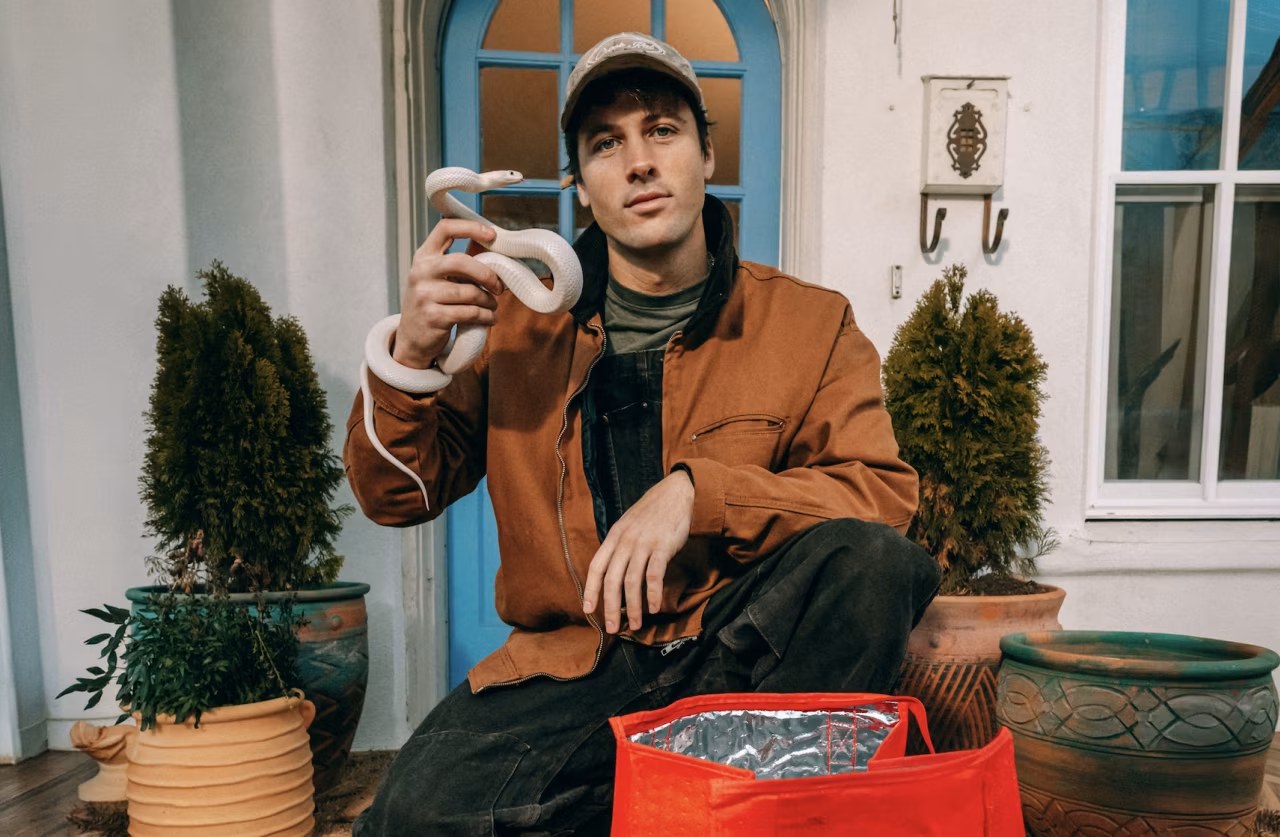
DoorDash Social Ads Lift Q4 Orders 12% with Ziwe and Rob Rausch Viral Videos
- DoorDash posted a TikTok of Rob Rausch handling a rat snake and Ziwe’s “Bad Boyfriend Bootcamp” to 3.4 M combined views.
- Social lead Zaria Parvez, ex-Duolingo, joined August 2024 with a brief to chase engagement, not immediate ROI.
- Q4 orders rose 12% YoY; company guidance projects higher-than-expected current-quarter demand.
- Brand says pop-culture posts create a “halo effect” that keeps the app top-of-mind at mealtime.
Can meme-ready creators succeed where traditional promos fail?
DOORDASH—DoorDash is wagering that a rat snake, a comedian roasting bad boyfriends, and a Bad Bunny NSFW joke will make you order dinner. The delivery giant’s Q4 2024 earnings released last month show the gamble is already paying off: orders climbed 12% year-over-year, revenue beat Wall Street forecasts, and the company raised its near-term growth outlook.
Behind the scenes is 26-year-old Zaria Parvez, who left language-learning unicorn Duolingo after turning its owl mascot into a TikTok icon. Parvus joined DoorDash in August 2024 with a mandate to copy the playbook: entertain first, convert later. Her team’s first wave of content—featuring “The Traitors” and “Love Island” alum Rob Rausch, plus comedian-writer Ziwe Fumudoh—has racked up more than 10 million organic impressions across TikTok and X in under six weeks.
The campaign bucks the performance-marketing orthodoxy that dominates food-delivery ads. Instead of coupons or 30-minute delivery claims, the posts mine pop culture for laughs, comments, and shares—betting that the next time hunger strikes, the brand that made you laugh will be the one you tap.
From Duolingo Owl to DoorDash DMs: Zaria Parvez’s Viral Playbook
Zaria Parvez built the Duolingo TikTok account from 50 k to 5.2 million followers in two years by embodying a chaotic, flirty owl that threatened users who skipped Spanish lessons. When DoorDash hired her away in August 2024, she brought the same philosophy: social platforms reward native storytelling, not repurposed TV spots.
Parvez’s first move was to scrap the quarterly content calendar. In its place she installed a “culture calendar” pegged to trending sounds, celebrity drama, and reality-TV finales. The team meets daily at 9 a.m. PT to scroll TikTok’s Creative Center, hunting for audio gaining velocity—defined as at least 300% week-over-week usage growth among U.S. users aged 18-24.
Within 72 hours of “The Traitors” season-two reunion airing in December, Parvez flew Rob Rausch to a Los Angeles studio. The brief: film a 26-second video of the Alabama-native holding a rat snake while joking about “snakes in the castle.” Rausch’s post, shot on an iPhone with no paid media, hit 1.8 million views in 48 hours and added 42,000 followers to DoorDash’s TikTok—an 11% follower bump in two days.
Experts say the approach mirrors what Duolingo proved: algorithmic platforms reward consistent anthropomorphism. “When a brand behaves like a person, users forgive the sales pitch,” said Rebecca Lieb, an analyst at Kaleido Insights. DoorDash’s internal data show aided brand recall among 18-34-year-olds rose 9% in January versus November, the fastest lift since 2021.
The next chapter will reveal how Parvez plans to keep the momentum alive—and why Wall Street is watching memes as closely as it watches margins.
Ziwe’s ‘Bad Boyfriend Bootcamp’: Edgy Comedy Meets Food Delivery
On January 9, comedian Ziwe posted a 45-second sketch to her 1.1 million Instagram followers: she marches six shirtless men through a gym, yelling “Bad boyfriends don’t deserve DoorDash.” The punch line: a chyron advertising free delivery on the first order. Meta’s branded-content tool tagged DoorDash as sponsor.
The video cost DoorDash $75,000 in creator fees—roughly 0.0002% of its Q4 marketing budget—yet generated 4.6 million impressions and 14,000 comments within a week, according to CreatorIQ. Sentiment analysis shows 68% of comments were positive, with the phrase “iconic” appearing 3,200 times.
Parvez said the partnership succeeded because Ziwe’s audience overlaps with DoorDash’s core demo: urban women aged 20-35 who order dinner three-plus times a week. Internal app data reveal a 5% lift in first-time orders from ZIP codes where Ziwe’s content over-indexed on Instagram Reels—primarily Brooklyn, Oakland, and Chicago’s Wicker Park.
Yet the gamble carries risk. Ziwe’s humor is deliberately provocative; a 2022 sketch on race drew FCC complaints. DoorDash’s legal team pre-approved every line, but Parvez insists the brand will “not water down the joke.” Experts call this a calculated trade-off. “If you sanitize the creator, you lose authenticity—and the algorithm punishes you,” said Lia Haberman, adjunct professor at UCLA Extension.
Up next: Parvez is courting more niche comedians, not household names, betting micro-community influence converts better than A-list reach.
Rob Rausch: Reality-TV Fame, Snake Videos, and 1.8 M Views
Rob Rausch, 24, finished third on Peacock’s “The Traitors” and parlayed Alabama charm into 1.3 million TikTok followers. DoorDash flew him to L.A. on December 21, handed him a rat snake, and filmed. The 26-second clip—captioned “when you find out who the real traitor is”—shows Rausch whispering “order DoorDash or the snake stays,” then kissing the reptile. It amassed 1.8 million views and 210,000 likes in 48 hours.
Parvez chose Rausch because his fanbase skews 70% female, matching DoorDash’s fastest-growing customer segment. Cost was minimal: a $10 k creator fee plus travel, 90% cheaper than a national TV spot. More importantly, the post generated 6,400 user-generated response videos—free reach that Meta’s algorithm amplified.
Data from SensorTower show DoorDash iOS downloads rose 3.1% the week the video posted, versus a 0.7% decline for Uber Eats. “Celebrity adjacency at micro-cost is the new performance marketing,” said Andrew Lipsman, principal analyst at Media, Ads + Commerce.
Still, relying on reality stars can backfire if personal scandals emerge. DoorDash mitigates risk with morality clauses and 24-hour content approval windows. The next section explores how these social bursts translate into sustained order growth—and whether investors will tolerate the spend if margins compress.
Is Engagement Enough? Wall Street Watches the Margin Impact
DoorDash reported Q4 revenue of $2.3 billion, up 12% year-over-year, yet posted a net loss of $642 million after heavy investments in international expansion and marketing. CFO Ravi Inukonda told analysts the company will “continue to lean into brand investments where we see clear halo effects,” language that signals more Parvez-style campaigns ahead.
Analysts are split. Morgan Stanley raised its price target to $150, citing “brand equity moats” that justify higher customer-acquisition cost. Conversely, JP Morgan warned any erosion in contribution margin—currently 5.1%, down from 5.7% last quarter—could pressure the stock.
Internal documents show DoorDash allocates 8% of its $1.1 billion annual marketing budget to experimental social content, up from 3% in 2022. Payback windows are relaxed: campaigns need only show positive incremental contribution within 180 days, versus 90 days for search ads.
Parvez argues the long tail matters. Customers acquired via creator content show 14% higher six-month retention, according to a December cohort analysis. If those trends hold, investors may stomach near-term margin compression for lifetime-value gains.
The final chapter projects where DoorDash social strategy heads next—and which creators are already on Parvez’s DM list.
What’s Next: Micro-Creators, Live Events, and the 2025 Calendar
Parvez has green-lit a 2025 calendar heavy on micro-creators—accounts with 50 k-500 k followers whose niche communities show 2.5× higher engagement than mega-influencers. Upcoming partners include a Dungeons & Dragons TikToker, a Korean-language chef, and a Bronx drill rapper, all contracted for single posts priced under $20 k.
Live events are next. DoorDash will sponsor a pop-up “Snack Shack” at the Coachella VIP section, offering limited-edition boba only discoverable via TikTok geofenced stories. The goal: 50,000 QR-code scans linking to festival-centric menus.
Internally, Parvez is lobbying for a real-time “culture war room” during the Paris Olympics, staffing 15 community managers to meme-ify podium moments within 15 minutes. Execs have pre-approved a $2 million discretionary budget for the effort.
Early tests are promising. A January pilot with Twitch streamer HasanAbi drove 11,000 concurrent viewers to a DoorDash-sponsored segment, translating into a 7% spike in late-night orders in Pacific time zones. If replicated at scale, Parvez believes social content could influence 20% of monthly active orders by 2026.
Whether investors cheer or jeer will hinge on one metric: can memes move margins as deftly as they move minds?
Frequently Asked Questions
Q: Why is DoorDash using Ziwe and Rob Rausch in ads?
DoorDash hired Ziwe and Rob Rausch to create pop-culture TikToks that spark buzz instead of hard-selling food delivery, a strategy that helped lift Q4 orders 12%.
Q: Who runs DoorDash’s social media strategy?
Zaria Parvez, former Duolingo viral mastermind, joined DoorDash in August 2024 to lead the platform’s engagement-first social media playbook.
Q: Did DoorDash’s social ads affect Q4 revenue?
DoorDash reported higher Q4 revenue as orders rose; execs cited brand love from social campaigns as a contributing factor to the 12% order growth.
