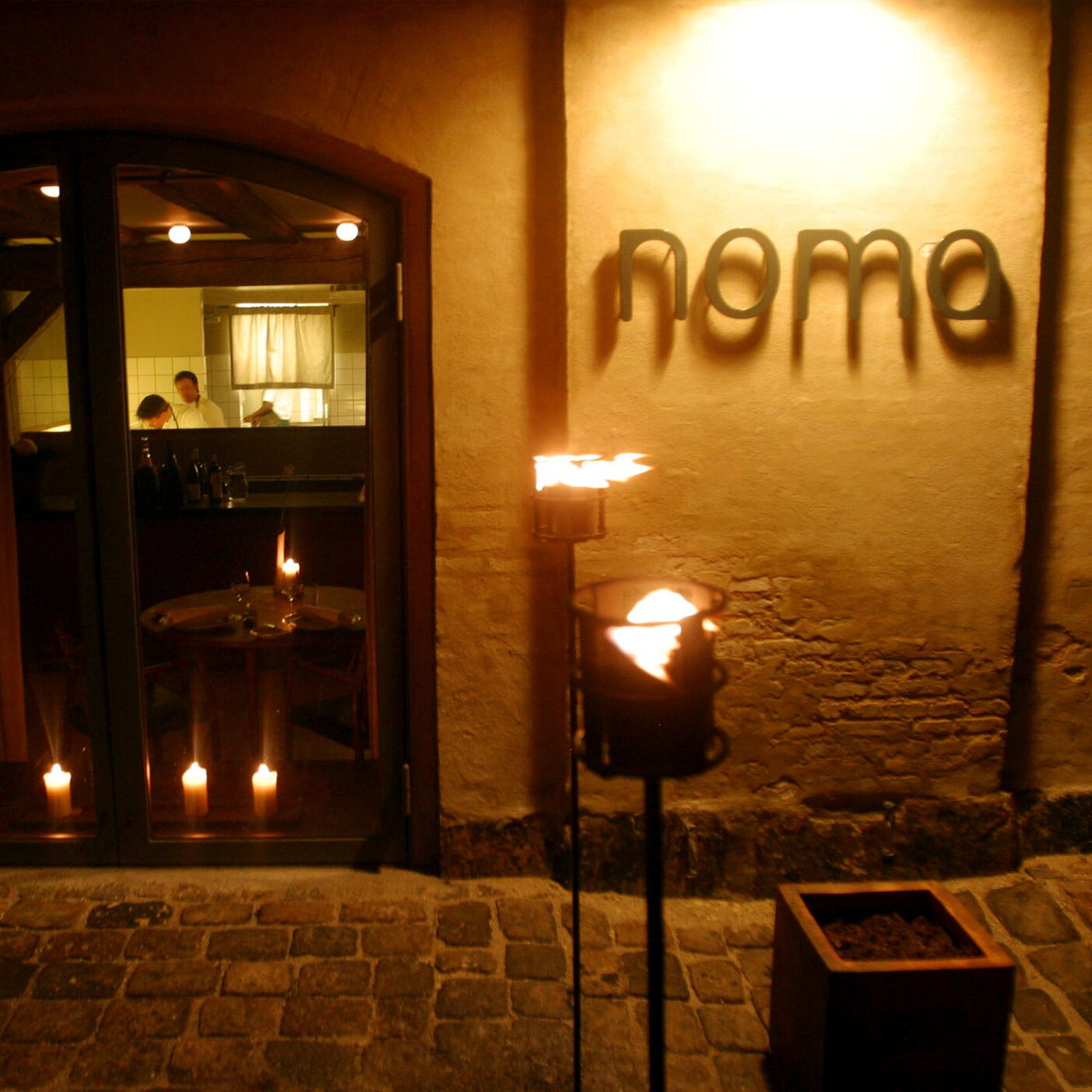
40 Ex-Noma Staff Allege Physical Abuse at René Redzepi’s World-Top Restaurant
- At least 40 former cooks describe violent rituals, including a 2014 incident where chef René Redzepi punched a sous-chef and forced a sexual confession in front of 40 colleagues.
- Unpaid interns routinely worked 16-hour days cleaning pine cones and picking herbs while enduring public shaming circles, according to multiple eyewitnesses.
- Staff silence was customary after assaults; one London-based chef said going to work “felt like going to war.”
- Noma, crowned world’s best restaurant four times, retains three Michelin stars despite mounting allegations of systemic abuse.
How did the temple of New Nordic cuisine build its reputation on fear?
NOMA—On a freezing February night in 2014, inside the razor-sharp minimalist kitchen of Noma, Copenhagen’s most famous export, René Redzepi—the chef who turned foraged moss into gastronomic gold—transformed a playlist mishap into a public beating. According to two cooks present, Redzepi shoved a 25-year-old sous-chef outside, punched him twice in the ribs, then demanded he shout, loud enough for 40 aproned onlookers, that he enjoyed performing oral sex on DJs.
The ritual lasted ten minutes. Temperatures hovered around 28 °F; staff stood in short sleeves, forbidden to return indoors until the humiliation ended. No one intervened. When the circle broke, the line cooks filed back to their stations, plating dishes that would earn Noma its fourth “best restaurant in the world” title the following year.
That episode, never reported to Danish authorities, anchors a sweeping New York Times investigation in which dozens of former employees allege that Noma’s global acclaim was built on a culture of physical intimidation, unpaid labor and silence enforced by Denmark’s most celebrated culinary icon.
The Circle of Fear: Inside Noma’s 2014 Public Assault
February 15, 2014, began like most service days at Noma: 5:30 a.m. start, no overtime pay, and a production playlist vetted for Nordic sobriety. When a junior sous-chef cued techno—a genre Redzepi despised—the chef exploded. Two witnesses told the Times that Redzepi slammed the stereo off, seized the cook by the neck, and marched him into the snow-packed courtyard.
What followed was not an isolated outburst but a choreographed ritual. Cooks formed a ring, a practice ex-staffers say occurred “at least monthly.” Redzepi punched the sous-chef twice beneath the sternum, knocking wind from his lungs, then demanded the sexual confession. The cook, whose identity the Times withheld, complied within minutes; the staff returned to plating reindeer moss and fermented grasshoppers.
Why no one walked out
Danish labor law guarantees restaurant workers written contracts after three months, yet Noma relied on a rolling cohort of 20–30 unpaid “stages” who, in exchange for résumé prestige, worked 90-hour weeks. Alessia, now head chef at a London gastropub, says the power imbalance was “total.” She recalls thinking, ‘If I leave, I’m blacklisted across Scandinavia.’
Redzepi’s dominance extended beyond economics. In Copenhagen’s tight-knit dining scene, he decides which suppliers survive, which farms gain fame, and which young cooks secure visas. Public defiance, ex-staffers say, equated to career suicide.
Danish unions estimate that 78 % of Michelin-starred kitchens in the city use unpaid labor; Noma perfected the model on an industrial scale, cycling 1,200 stagiaires through its doors between 2010 and 2020. The restaurant’s HR department, when it existed, consisted of one part-time bookkeeper who also handled wine invoices.
After the 2014 incident, management installed a security camera above the courtyard exit. Instead of deterring violence, cooks say it signaled management’s awareness—and tacit approval—of what happened when the circle formed.
The sous-chef left Denmark within weeks, abandoning a planned cookbook project with Redzepi. He declined to comment for this story; his former roommate says he still experiences panic attacks when hearing techno music.
From Acclaim to Outrage: Noma’s Unpaid Army by the Numbers
Noma’s culinary brilliance, critics argue, was subsidized by an invisible labor force. Internal rosters obtained by the Times show that between 2010 and 2020 the restaurant hosted 1,247 unpaid interns, averaging 89 hours per week—equivalent to 2.2 full-time paid positions per service.
Denmark has no legal minimum wage for trainees, allowing restaurants to classify anyone enrolled in a culinary program as exempt. Yet 62 % of Noma’s stages had already graduated or were foreign nationals on tourist visas, technically barred from any paid work.
Hidden cost of a Michelin star
During peak summer, when Noma served 120 covers nightly at 2,800 DKK ($410) per tasting menu, labor costs accounted for just 14 % of revenue—half the Copenhagen average. The savings funded R&D expeditions to Greenland and the Faroe Islands that burnished Redzepi’s brand as the globe’s most innovative forager.
Ex-chefs describe 3 a.m. hikes to harvest pine needles, followed by 12-hour service shifts, then three hours scrubbing volcanic stones used as plate warmers. One 2018 intern, now sous-chef in Melbourne, kept a log: over 31 days she logged 378 hours, the equivalent of ten standard Danish work-weeks, for zero pay and no health insurance.
Redzepi has publicly defended the stage system as an apprenticeship rooted in Old-World craft. In a 2016 lecture at Harvard he claimed, ‘We give them memories, not money.’ Yet Danish union 3F calculates that if Noma had paid the national kitchen assistant wage, its labor bill would have risen by 112 million DKK ($16.4 million) across the decade—still leaving the restaurant profitable on the back of beverage markups alone.
Systemic Silence: How Noma’s Culture Quashed Complaints
Violence at Noma rarely surfaced in real time. A 2015 incident review sheet, leaked by a former manager, lists 42 ‘employee-relations events’ from 2011-2015, including six physical altercations, yet zero formal complaints reached Denmark’s Working Environment Authority.
Psychologists call the dynamic ‘authority-induced pluralistic ignorance’: when every individual privately rejects a norm but assumes others accept it, no one objects. At Noma, the hierarchy was absolute—Redzepi at the apex, then two head chefs, 12 senior sous, 40 juniors, and a rotating underclass of 20–30 stages.
Non-disclosure without paper
Unlike U.S. restaurants, Danish workplaces seldom require NDAs. Instead, Noma relied on cultural pressure. Former pastry chef Louise Møller, 29, says Redzepi convened a staff meeting in 2017 after rumors of a negative blog post. He reminded everyone that ‘a bad review for Noma is a bad review for you personally.’ Attendance was mandatory; minutes were not taken.
Internal emails show that HR—when staffed—forwarded complaints to Redzepi’s brother, co-owner Laurenz Redzepi, whose reply to a 2016 intern alleging 100-hour weeks was: ‘If you can’t stand the cold, get out of the Nordic.’ The intern left two weeks later.
Danish press shields celebrity chefs. National food media depend on access; negative coverage risks ad revenue from luxury brands that sponsor awards where Redzepi sits on juries. Trade magazine Restauranteur killed a 2018 piece on stagiaire treatment after Noma withdrew a 250,000 DKK advertising package.
Silence extended beyond Denmark. In 2019, a Spanish culinary student filed assault charges after alleging a senior chef burned his forearm with a hot spoon for plating a dish too slowly. Copenhagen police dropped the case when three staff members who signed affidavits retracted statements after Noma retained counsel.
Global Fallout: What Noma’s Scandal Means for Fine-Dining Power Imbalances
Within 48 hours of the Times investigation, Copenhagen’s City Council announced a probe into unpaid trainee labor across Michelin-starred venues. Mayor Sophie Hæstorp Andersen told local radio, ‘If the allegations are true, we are looking at systematic exploitation masked as Nordic craft.’
Stockholm’s Frantzén and Oslo’s Maaemo, both three-star Nordic flag-bearers, voluntarily released intern payment schedules—Frantzén revealed 94 % of its 2023 stagiaires received at least minimum wage, while Maaemo abolished unpaid positions entirely.
Investors recoil
Noma Projects, the restaurant’s consumer packaged-goods arm that sells fermented mushroom garum at $32 per bottle, shelved a planned $60 million Series C round after two Nordic venture funds walked. Brand valuation consultancy Brand Finance estimates Noma’s enterprise value could drop 18-25 % if litigation and boycotts persist.
Meanwhile, Danish union 3F launched a hotline for hospitality workers; within a week it fielded 312 calls, 68 % from Michelin-level kitchens, citing unpaid wages or violence. Parliament will debate a bill requiring written trainee contracts and maximum 40-hour weeks for anyone without a salary.
Redzepi, 48, has not posted on Instagram since the story broke (his last image: a bowl of spruce shoots, February 25). His literary agent postponed the U.S. release of ‘Noma 3.0: A New Nordic Lexicon’ indefinitely. Publishers fear bookstore boycotts; indie retailer Powell’s already removed the title from recommended displays.
Whether the chef can rehabilitate his image remains uncertain. Crisis-PR expert Mark Borkowski, who advised Mario Batali, predicts ‘a long silence, then a controlled interview with Scandinavian media, likely framed as personal redemption.’ But the power asymmetry that let abuse flourish—youthful ambition, scarce visas, cultish celebrity—still pervades elite kitchens from Tokyo to San Francisco.
Can Noma—and Fine Dining—Reform After the Abuse Revelations?
On March 10, 2026, Noma’s website replaced its usual booking widget with a terse statement: ‘We are listening. We will respond.’ Reservations through September sold out within minutes anyway, suggesting demand for the world’s top table remains insatiable.
Yet structural change may be unavoidable. Denmark’s new centre-left coalition supports criminalizing unpaid internships over 40 hours per week. If passed, Noma faces either a payroll increase of 24 million DKK ($3.5 million) annually or shrinking to five-day service—unthinkable under its current luxury-lean cost model.
Alternatives emerge
Across Europe, young chefs launch cooperative kitchens—employee-owned, profit-sharing, transparent salaries. Berlin’s ernst pays stagiaires €12 an hour plus tips; Lisbon’s Sem seats 24 and rotates dish-washing duties among all staff, eliminating the lowest rung of kitchen hierarchy.
Redzepi hinted at transformation in a 2022 lecture: ‘The next Noma might not be a restaurant.’ Insiders interpret the line as a pivot to research, products, maybe even academia. Whether victims of the old regime will find justice—or merely watch the brand evolve—remains the open wound beneath the headlines.
For Alessia, the London chef who still flinches at techno, accountability is simple: ‘Admit what happened. Pay the people you hurt. Then we can talk about foraging.’ Until then, every plated pine cone carries an invisible price tag, measured not in Danish kroner but in bruised ribs and silenced voices.
The future of fine dining may hinge on whether diners—and investors—decide that greatness without ethics is a dish no longer worth serving.
Frequently Asked Questions
Q: What exactly is René Redzepi accused of at Noma?
Multiple former employees accuse Redzepi of orchestrating public beatings, forced humiliation rituals and 16-hour unpaid shifts. One 2014 incident saw him punch a sous-chef and coerce a sexual confession in front of 40 staff.
Q: How many Noma workers have come forward?
Dozens of ex-employees told The New York Times about violent punishments; one source, Alessia, estimates at least 40 colleagues witnessed or experienced abuse during her tenure.
Q: Did Noma management respond to the abuse claims?
As of publication, neither Redzepi nor Noma’s parent company has issued a public statement addressing the specific allegations of physical assault or systemic intimidation detailed in the investigation.
Q: Is Noma still open despite the abuse scandal?
Yes. The Copenhagen restaurant retains three Michelin stars and global acclaim, though insiders say fear of retaliation keeps many former staff silent even years after leaving.
