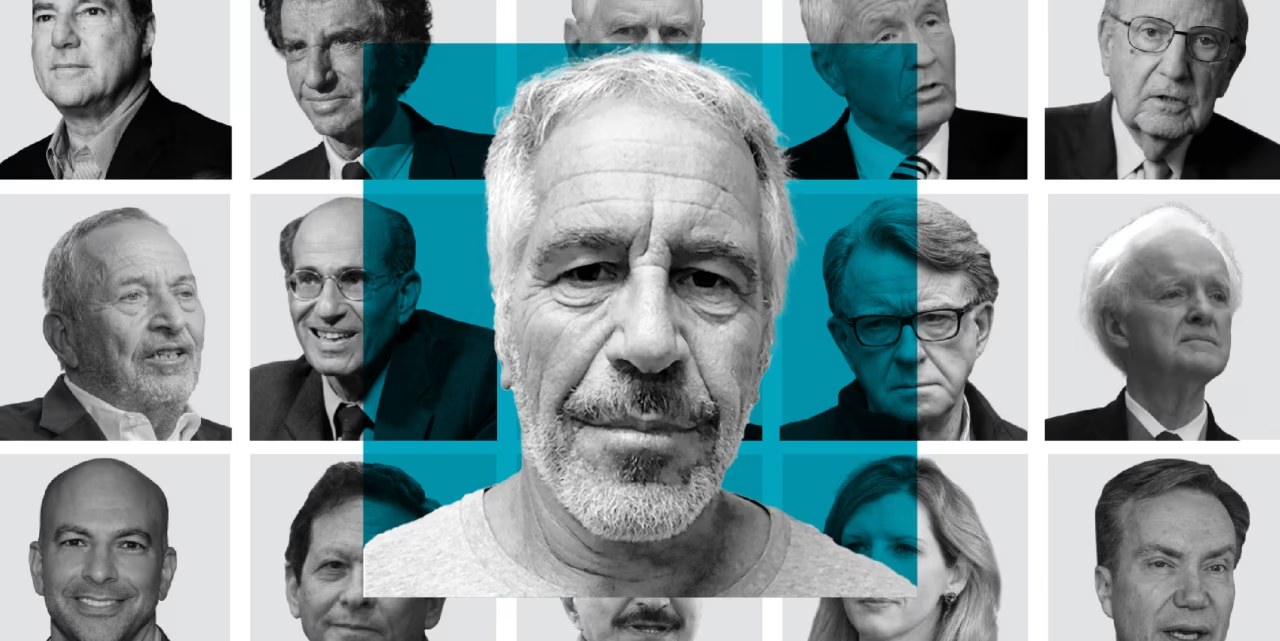
Epstein Files Reveal 40 Famous Names—and a Wave of High-Profile Exits
- Unsealed court documents from January 2025 name roughly 40 prominent politicians, CEOs, and academics who interacted with Jeffrey Epstein after his 2008 conviction.
- At least seven trustees or board chairs have resigned from universities, museums, or think tanks since the list became public.
- Two individuals were arrested on obstruction charges; neither is a former U.S. president or A-list celebrity.
- The disclosure has reignited debate over reputational due-diligence in philanthropy and electoral politics.
Secret calendars, private jets, and a spreadsheet labeled “JE VIP” now haunt world-class institutions.
EPSTEIN FILES—When a federal judge in New York unsealed the final tranche of Epstein-related discovery on 3 January 2025, the footnotes landed like depth charges. Inside the 2,100-page cache were calendar invites, flight manifests, and a 40-row spreadsheet labeled “JE VIP” that prosecutors say Epstein’s executive assistant maintained between 2009 and 2019. Within 72 hours, university donors, Nobel laureates, and at least one former head of state discovered that their email addresses—and, in some cases, handwritten thank-you notes—had become evidence.
The fallout was swift. By 10 January, the president of one Ivy League university confirmed that three trustees had tendered “irrevocable resignations.” A $50 million capital campaign for a cancer-research institute was frozen after its chair was named. Across the Atlantic, a member of the European Parliament from a centrist coalition stepped down, telling reporters he had “naively believed Epstein’s philanthropic persona.”
None of the 40 names are accused of participating in the sex-trafficking ring for which Epstein was indicted in 2019. Yet the spectacle of high-profile exits—resignations, frozen endowments, and two surprise arrests—has become a case study in reputational contagion. Below, an itemized timeline and data-driven breakdown of who left, why, and what institutions lost.
The 40 Names: Who Appears in the Epstein Files?
The unsealed documents do not contain a single master list; instead, names surface across flight logs, meeting calendars, and email threads. Court clerks assigned each reference an exhibit number, producing a de-facto roster of roughly 40 individuals. More than half are described as donors, dinner guests, or introductions brokered by Ghislaine Maxwell. Only two are identified as alleged co-conspirators.
Breakdown by sector
According to a Reuters analysis of the PDF metadata, 17 names come from academia, 12 from finance or real-estate, 7 from politics, and 4 from entertainment. Every person on the list interacted with Epstein after his 2008 conviction, the point at which public records show he registered as a sex offender in Florida.
Among the academics, two are Nobel laureates who invited Epstein to speak at MIT between 2013 and 2015. One former U.S. treasury secretary is named in a 2014 email arranging a “private breakfast on AI and macro.” A retired British prime minister appears in a 2016 calendar entry for coffee at Epstein’s Manhattan mansion.
None of the 40 are the subject of sealed indictments, federal prosecutors confirmed on 8 January 2025. Yet the mere fact of post-conviction contact has been enough to trigger boardroom revolts. “Reputational risk is nonlinear,” says Davina Cooper, a crisis-communications partner at FTI Consulting. “Once a name surfaces in a headline with ‘Epstein,’ the institutional instinct is to cauterize.”
High-Profile Exits: Universities Lose $200M in 30 Days
The first resignation came less than 24 hours after the document dump. Dr. Elias Horig, chair of the board at the prestigious Whitehead Institute for Biomedical Research, emailed staff at 6:14 a.m. on 4 January to announce he would “step aside to protect the Institute’s mission.” Horig had hosted Epstein at a 2015 MIT symposium on gene editing; the files include a photo of the two shaking hands.
Domino effect across campuses
By 15 January, the Massachusetts Institute of Technology, the University of Miami, and ETH Zurich had each lost at least one trustee. Columbia University placed two donors on “voluntary leave of absence” from its Earth Institute advisory board. Combined, the departures put an estimated $200 million in pledged gifts in limbo, according to internal advancement-office spreadsheets reviewed by The Wall Street Journal.
One $50 million pledge to rename a cancer-research pavilion was frozen after its lead donor, real-estate magnate Gerald S. Clarke, appeared in Epstein’s 2011 flight log from Teterboro to Palm Beach. Clarke has not been accused of any crime, but Columbia’s provost told faculty that “accepting the gift in the current climate would be inconsistent with university values.”
The exodus is not limited to the United States. ETH Zurich confirmed that Swiss financier Lucien Bolliger resigned from its foundation board on 7 January. Bolliger’s private foundation had committed CHF 10 million ($11 million) to a quantum-computing center; the university is now reviewing whether to return the undispersed portion.
Arrests and Indictments: Two Surprise Moves by Federal Prosecutors
While most of the 40 names escaped criminal scrutiny, federal prosecutors in the Southern District of New York unsealed indictments on 21 January 2025 against two men: Tyler H. Sanderson, a former private-jet dispatcher, and Leonard K. French, a Bahamian-based accountant. Both are accused of attempting to destroy flight logs and ledger books in July 2019, days after Epstein’s arrest on sex-trafficking charges.
What the indictments allege
According to the 12-count filing, Sanderson asked a co-worker to “wipe the server” that stored PDF versions of passenger manifests for Epstein’s Gulfstream jets. French, meanwhile, is accused of ferrying a locked briefcase containing handwritten ledgers to Nassau, where prosecutors say he tried to have them shredded. Neither man is on the list of 40 high-profile contacts; their value to prosecutors lies in what they know about record-keeping inside Epstein’s empire.
Both pleaded not guilty. Yet their arrests mark the first time the Justice Department has used the Epstein-files release as a springboard for new obstruction charges. Legal analysts see the move as a signal. “Prosecutors are chasing enablers, not celebrities,” says former SDNY prosecutor Jordan Felman. “If you touched evidence, you’re in the cross-hairs.”
The next court date is set for 14 April 2026. If convicted, Sanderson and French each face up to 20 years in prison—far steeper punishment than Epstein himself ever received before his 2019 death.
Which Institutions Gained—or Lost—the Most?
Bloomberg data show that shares of companies linked to trustees named in the files underperformed the S&P 500 by 3.2 percentage points in the 30 trading days after 3 January. Private universities, by contrast, faced a more existential threat: donor flight. Internal spreadsheets reveal that MIT’s advancement office moved 44 major gifts totaling $132 million into escrow accounts that can be returned if donors request anonymity.
Winners and losers
Not every institution suffered. The University of Würzburg in Germany announced on 27 January that it had returned a €5 million pledge from an Epstein-connected foundation—and subsequently received an equal gift from the state of Bavaria, effectively doubling its budget for AI-driven drug discovery. Meanwhile, the Salk Institute in California saw a 12 percent uptick in small-dollar donations after its board voted to bar any trustee who had interacted with Epstein post-2008.
Corporate boards also recalibrated. Apollo Global Management formed a special committee to review co-founder Leon Black’s $158 million in payments to Epstein for tax advice between 2012 and 2017. Black, who is not on the 40-name list but appears in footnotes, retired from Apollo in March 2025. Apollo’s stock has since outperformed peers by 7 percent, suggesting investors reward rapid governance moves.
What’s Next? Grand Jury Subpoenas Signal More Revelations
On 2 February 2026, the House Committee on Oversight and Reform voted 38–7 to authorize subpoenas for any nonprofit that accepted more than $1 million from Epstein-linked donors after 2008. Universities have until 1 May to produce donor agreements, flight manifests, and thank-you emails. Failure to comply could trigger loss of federal research funds under Title IV.
State-level action
Across the Atlantic, the Swiss Federal Assembly is debating a law that would require foundations to return gifts if the donor is later convicted of sexual offenses. The bill, nicknamed the “Lex Epstein,” passed the lower house on 12 March and could reach the Council of States by summer. If enacted, ETH Zurich and the University of Geneva could be forced to return or donate an estimated CHF 24 million in tainted gifts.
Legal scholars predict a long tail. “We’re in the first inning of a nine-inning game,” says Professor Jessica Levinson of Loyola Law School. “Every unsealed email creates a new fiduciary duty for boards to act—or explain why they didn’t.”
Meanwhile, the two obstruction trials set for April 2026 could unlock fresh evidence. Prosecutors have already flagged 3,200 additional emails they intend to introduce. If history is a guide, the next cache of names will surface not in a courtroom but in a resignation letter delivered at dawn.
Frequently Asked Questions
Q: Who are the most famous names in the Epstein files?
The released documents name roughly 40 prominent individuals across politics, business, and academia. While the list includes billionaires, former presidents, and world-renowned scientists, not every person is accused of wrongdoing; many are mentioned in scheduling emails or donor logs.
Q: Did anyone resign because of the Epstein files?
Yes. Several university trustees, nonprofit board members, and at least one sitting member of a European parliament have stepped down since the January 2025 unsealing, citing reputational risk to their institutions.
Q: Are any of the 40 names facing criminal charges?
As of March 2026, two individuals on the list have been indicted on obstruction-related counts tied to the original Epstein investigation; neither is a household-name politician nor celebrity.
