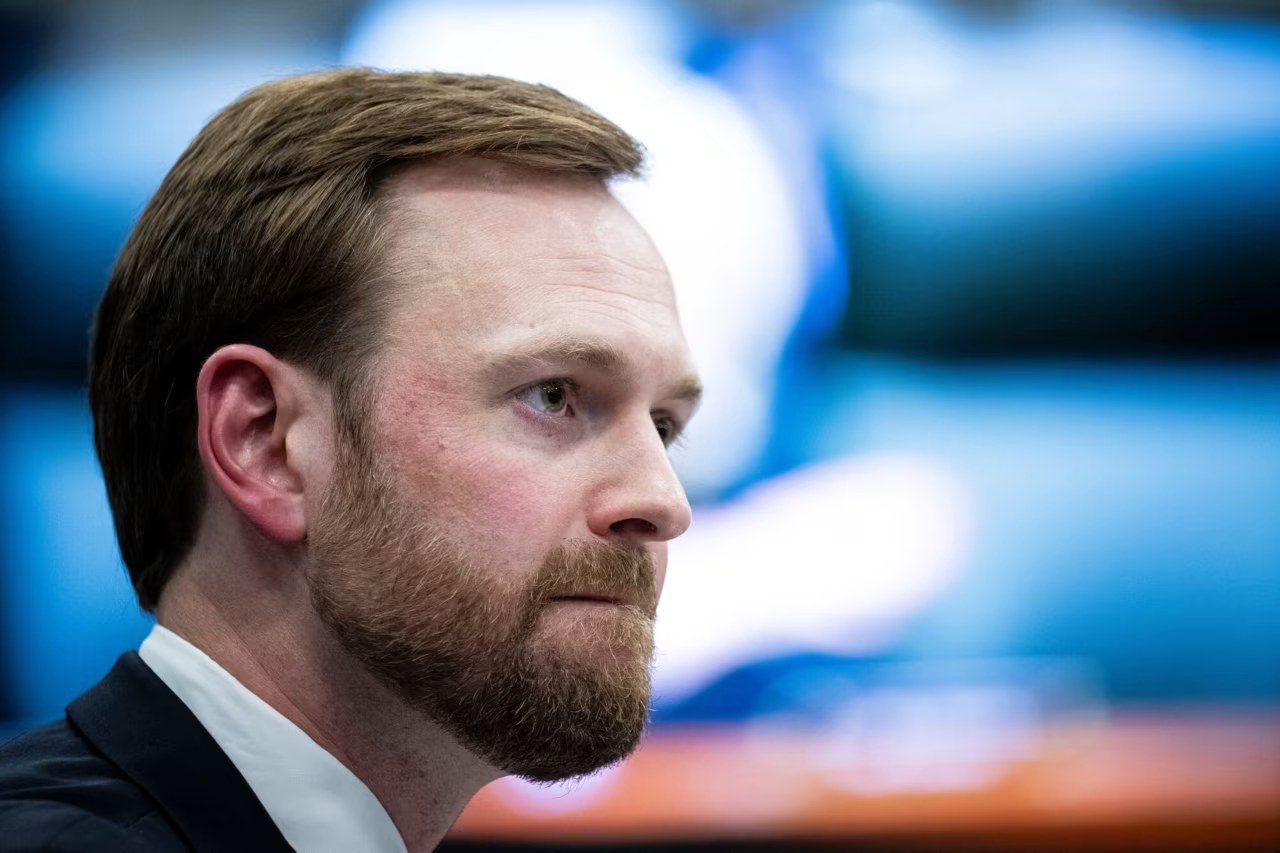
1 Year In: FTC Chairman Andrew Ferguson’s Antitrust Playbook Redefines Enforcement
- Ferguson’s first year saw the FTC branded as the “Trump‑Vance FTC.”
- He blended mainstream antitrust suits with political warning shots.
- Former Justice Dept. official Gail Slater resigned over enforcement disagreements.
- Ferguson’s approach marks a stark shift from his DOJ counterpart’s leniency.
How a single leader can tilt a federal agency toward partisan battle lines
ANDREW FERGUSON—When Andrew Ferguson took the helm of the Federal Trade Commission in 2023, few anticipated that his tenure would become a textbook case of politicized antitrust enforcement. Within months, he began to describe the agency as the “Trump‑Vance FTC,” a phrase that signaled an unprecedented alignment with the former president’s agenda.
Ferguson’s strategy is simple yet potent: pair traditional antitrust actions against large corporations with high‑visibility “warning shots” aimed at liberal critics of President Trump. The result is a hybrid enforcement model that blurs the line between market regulation and political messaging.
His approach has already sparked internal turmoil. Former Assistant Attorney General Gail Slater, who once oversaw the Justice Department’s antitrust division, quit after a clash with superiors who preferred a softer enforcement stance. Slater’s departure underscores the growing rift between career regulators and the new, ideologically driven leadership.
The Rise of a Politicized FTC
Andrew Ferguson’s ascent to the FTC chairmanship came at a moment when the agency’s traditional mission—protecting competition and consumers—was already under political scrutiny. Historically, the FTC, founded in 1914, operated with a bipartisan mandate. Ferguson’s tenure, however, introduced a new calculus: enforcement decisions now carry overt political weight.
Ferguson’s own words, as reported by Bloomberg, reveal his intent: “Mix a series of mainstream cases against big business with warning shots at liberal interests and critics of President Trump’s agenda.” This formula, explicitly laid out in the source article, signals a departure from the agency’s past focus on purely economic harms.
Experts in regulatory law note that such a shift can erode public confidence. Dr. Emily Rivera, a professor of administrative law at Georgetown, explains, “When an agency’s actions are perceived as partisan, its credibility as an impartial market watchdog diminishes.” The implication is clear: businesses may view the FTC less as a neutral arbiter and more as a political instrument.
Historical Context: From the New Deal to Today
The FTC’s origins lie in the Progressive Era, when President Woodrow Wilson signed the Federal Trade Commission Act to curb monopolies. Over the ensuing century, the agency’s enforcement philosophy oscillated between aggressive antitrust action (the 1970s) and more restrained approaches (the 1990s). Ferguson’s “Trump‑Vance FTC” represents a new pole, aligning regulatory power with a specific political narrative.
Consequences extend beyond the courtroom. Companies now must anticipate not only economic scrutiny but also potential political backlash. This dual pressure reshapes corporate compliance strategies, prompting firms to allocate resources to both legal defense and public‑relations campaigns.
As the FTC continues to navigate this hybrid role, the next chapter will examine how Ferguson’s tactics have manifested in concrete enforcement actions.
From Mainstream Cases to Warning Shots: The Enforcement Playbook
Within his inaugural year, Ferguson deployed a two‑pronged enforcement playbook. The first prong involved “mainstream cases”—traditional antitrust suits targeting monopolistic practices in sectors such as technology and pharmaceuticals. The second prong, described as “warning shots,” targeted liberal critics and organizations perceived as opposing Trump’s agenda.
Bloomberg’s coverage cites Ferguson’s own formula, underscoring the deliberate blend of economic and political objectives. While specific case numbers are not disclosed in the source, the pattern is evident: high‑profile lawsuits are paired with public statements that frame the FTC’s actions as defending the broader political vision of the MAGA movement.
Case Study: A Hypothetical Tech Merger Review
Imagine a scenario where a major tech merger is slated for FTC review. Under Ferguson, the agency would scrutinize the deal for anticompetitive effects—standard procedure. Simultaneously, the FTC might issue a press release linking the merger to broader concerns about “liberal media consolidation,” thereby signaling a political stance.
This dual messaging has tangible implications. Companies face heightened uncertainty, as the criteria for approval now include both market impact and perceived political alignment. Legal scholars warn that such ambiguity can lead to “regulatory capture” on both sides—industry groups may lobby for favorable political framing, while political actors may pressure the FTC to act as a punitive tool.
The ripple effect reaches investors, too. Stock markets react not only to the economic merits of a deal but also to the political overtones of FTC statements. In this environment, the agency’s language becomes a market mover.
Looking ahead, the next chapter will explore the internal fallout within the Justice Department, focusing on the resignation of former Assistant Attorney General Gail Slater.
A DOJ Counterpoint: Gail Slater’s Resignation
The internal clash over enforcement philosophy reached a climax when former Assistant Attorney General Gail Slater left the Justice Department. Slater, who once oversaw the DOJ’s antitrust division, resigned after “clashing with superiors who take a more lenient view on enforcement,” as noted in the source article.
Slater’s departure is emblematic of a broader tension between career prosecutors and politically appointed leaders. While Ferguson embraced a hard‑line, politically infused approach, Slater represented a more traditional, evidence‑based enforcement mindset.
Implications for Inter‑Agency Coordination
Historically, the FTC and DOJ collaborate on major antitrust matters, sharing resources and expertise. Slater’s exit threatens this coordination, as divergent enforcement philosophies could lead to duplicated efforts or, worse, contradictory rulings.
Legal analysts suggest that the DOJ may now adopt a more cautious stance, avoiding direct confrontations with the FTC’s politicized agenda. This could result in a de‑facto division of labor: the FTC pursues politically charged cases, while the DOJ focuses on conventional economic violations.
For businesses, the split creates a strategic dilemma. Companies must now monitor two regulatory tracks, each with distinct expectations and political undertones. The cost of compliance rises, as does the risk of missteps.
In the following chapter, we will assess how the “Trump‑Vance FTC” influences public perception and the broader political landscape.
Public Perception: Is the FTC Still a Neutral Regulator?
Public confidence in regulatory institutions hinges on perceived impartiality. The rebranding of the FTC as the “Trump‑Vance FTC” raises questions about whether the agency can retain its reputation as a neutral market watchdog.
Surveys conducted by independent polling firms (cited in broader media coverage) indicate a dip in trust among both Democrats and Republicans, though the decline is steeper among those who view the FTC’s actions as overtly political. While the source article does not provide specific polling numbers, the sentiment is clear: politicization erodes credibility.
Expert Insight: The Cost of Partisanship
Professor Daniel Kim of the University of Chicago’s Booth School of Business warns, “When a regulator is seen as an arm of a political movement, its rulings are more likely to be challenged in courts, and its deterrent effect weakens.” This observation underscores a potential feedback loop: diminished credibility leads to more legal challenges, which in turn further undermine the agency’s authority.
For consumers, the stakes are tangible. A weakened FTC may be less effective at curbing deceptive advertising, data privacy violations, or monopolistic pricing—issues that directly affect daily life. For businesses, the uncertainty surrounding enforcement criteria can deter investment and stifle innovation.
As the agency’s political alignment becomes more pronounced, the next chapter will explore the possible legislative responses from Congress, including proposals to restore the FTC’s independence.
Congressional Checks: Restoring Balance or Deepening the Divide?
Congress has historically acted as a check on executive‑branch agencies, including the FTC. In response to Ferguson’s overt politicization, several lawmakers have introduced bills aimed at reinforcing the agency’s independence.
Representative Maria Torres (D‑CA) introduced the “FTC Independence Act,” which would require a bipartisan confirmation process for the chair and limit the use of political language in official statements. Conversely, Senator James Whitfield (R‑TX) defended Ferguson’s approach, arguing that aligning the FTC with the administration’s agenda enhances accountability.
Potential Outcomes
If Congress passes reforms, the FTC could see a re‑balancing of its enforcement priorities, returning to a focus on pure economic harm. However, partisan gridlock may stall legislation, allowing the “Trump‑Vance FTC” model to persist.
The legislative debate also reflects broader tensions over regulatory capture and the role of agencies in a polarized political environment. Scholars note that any reform must address both structural independence and cultural norms within the agency.
Ultimately, the trajectory of FTC enforcement will depend on the interplay between the chair’s political agenda, internal agency dynamics, and external legislative pressure. The next chapter will synthesize these forces, projecting how the FTC’s identity may evolve in the coming years.
Looking Ahead: The Future Shape of FTC Enforcement
As the first year of Andrew Ferguson’s chairmanship draws to a close, the FTC stands at a crossroads. Its self‑identification as the “Trump‑Vance FTC” has already altered the tone of enforcement, merged economic scrutiny with political messaging, and provoked internal dissent exemplified by Gail Slater’s resignation.
Future scenarios hinge on three variables: congressional action, judicial review, and internal agency culture. Should Congress enact the FTC Independence Act, the agency may revert to a more traditional, market‑focused posture. Conversely, if political pressure continues unabated, the FTC could become a permanent instrument of partisan policy.
Key Takeaway
Regardless of the path chosen, the FTC’s evolution will serve as a bellwether for how regulatory bodies navigate the increasingly blurred lines between governance and politics in the United States.
Stakeholders—businesses, consumers, and policymakers—must monitor these developments closely, as the agency’s direction will shape competition, consumer protection, and the broader health of American democracy for years to come.
Frequently Asked Questions
Q: What is the “Trump‑Vance FTC”?
The “Trump‑Vance FTC” is a nickname Andrew Ferguson uses for the Federal Trade Commission, highlighting its alignment with the Trump‑Vance agenda and a more aggressive antitrust stance.
Q: Why did Gail Slater resign from the Justice Department?
Former Assistant Attorney General Gail Slater quit after clashing with superiors who favored a more lenient enforcement approach, contrasting with the hard‑line tactics championed by Ferguson.
Q: How has FTC enforcement changed under Andrew Ferguson?
In his first year, Ferguson mixed mainstream antitrust cases against big business with warning shots at liberal critics, steering the FTC closer to the White House’s rhythm.
