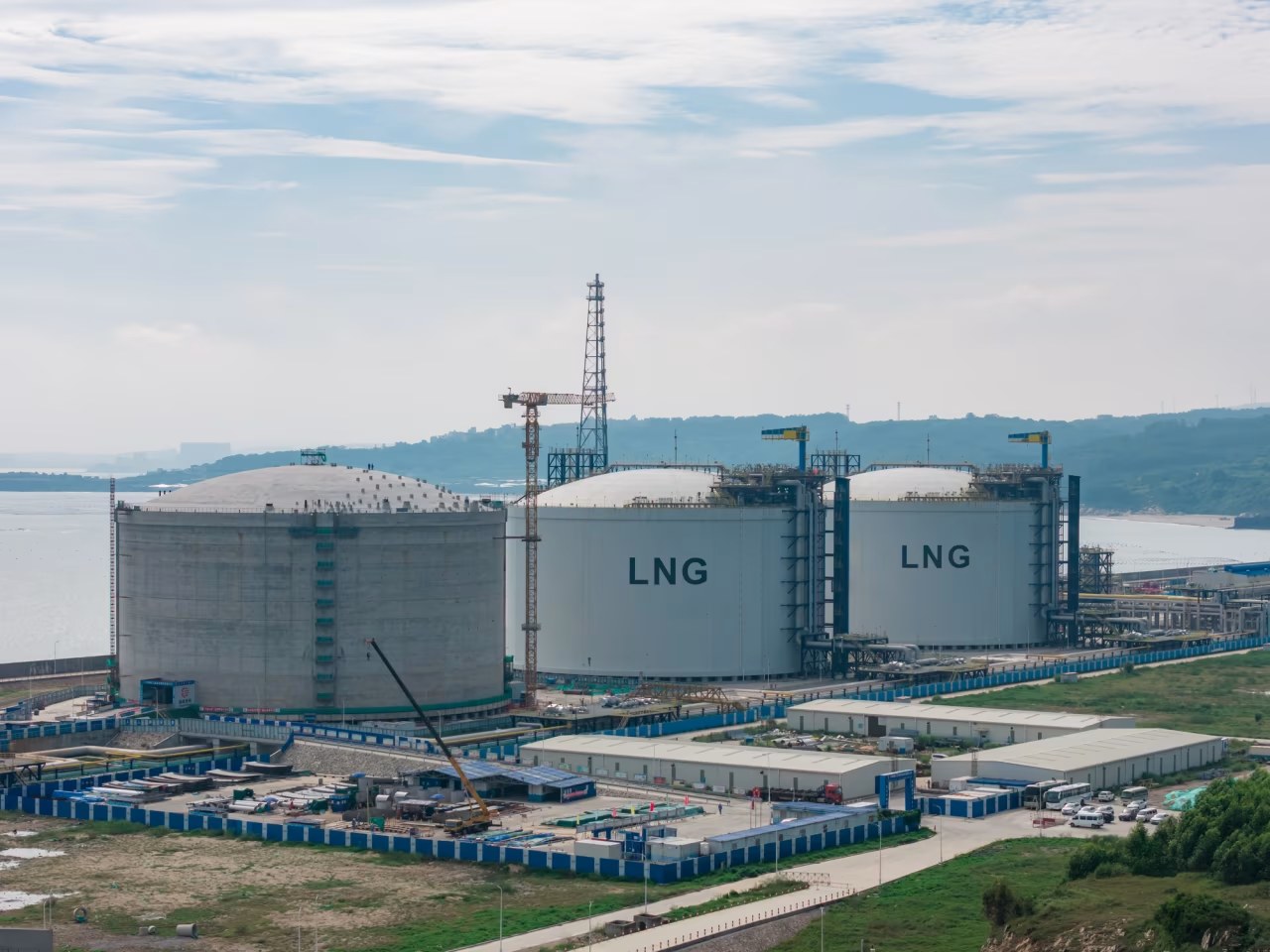
LNG exports up 12% in 2024 as Trump orders fast-track terminals—American households pay the price
- U.S. LNG export capacity grew 5.2 Bcf/d in 12 months, pushing domestic spot gas 14% higher.
- Cheniere, Sempra and Tellurion reported record Q4 margins of $32–$38 per Mcf on Asian cargoes.
- Average U.S. household gas bill rose $94 in 2024, AGA data show.
- Executive Orders 14207-14209 cut federal review times to 90 days, igniting seven new Gulf projects.
Who pockets the windfall when American gas sails overseas?
LNG EXPORTS—When the first Trump-era LNG cargo left Sabine Pass in January 2024, the headline was jobs and geopolitics. Twelve months later, export volumes have surged 12%, benchmark Henry Hub prices have jumped 14%, and American households are footing a $94 annual surcharge on their gas bills, according to the American Gas Association.
The math is brutal: every billion cubic feet that leaves U.S. shores adds roughly 2-3% to domestic prices because the shale patch can’t ramp fast enough. With five new export terminals approved under accelerated federal permits, 1.8 trillion cubic feet—about 6% of national production—was liquefied and shipped abroad last year, Energy Department figures show.
Meanwhile, Cheniere Energy, Sempra Infrastructure and relative newcomer Tellurion reported record fourth-quarter margins of $32–$38 per thousand cubic feet on Asian deliveries, triple the $9–$11 they earn selling into the Texas industrial market. A single standard cargo (3.4 Bcf) now nets roughly $110 million in gross profit, company filings reveal.
The Export Boom by the Numbers
Between January and December 2024, U.S. LNG terminals loaded 912 cargoes, up from 814 in 2023, according to vessel-tracking firm Kpler. Total export volume hit 11.6 billion cubic feet per day, edging out Qatar and Australia to make the United States the world’s largest LNG seller.
The ramp-up was not organic. Executive Orders 14207-14209, signed March 2023, slashed federal environmental review times to 90 days and allowed developers to begin construction while permits were still being contested. Seven Gulf Coast projects—Plaquemines LNG, Corpus Christi Stage 3, Rio Grande LNG, Port Arthur LNG, Driftwood LNG, Golden Pass and Lake Charles—added a combined 5.2 Bcf/d of capacity, Federal Energy Regulatory Commission data show.
Domestic gas production, by contrast, grew only 3% last year, constrained by pipeline bottlenecks in the Permian and labor shortages in the Marcellus. The imbalance pushed Henry Hub spot prices from $2.41 per million British thermal units in January 2024 to $2.75 by December, a 14% increase that outpaced inflation.
Capacity vs. production gap
Export facilities ran at 96% utilization even after maintenance outages, while shale drillers kept capital discipline, prioritizing investor returns over volume growth. The result: U.S. gas inventories ended winter 11% below the five-year average, the Energy Information Administration reports.
Industry executives argue the price signal is healthy. “We’re finally seeing a market that rewards efficiency rather than just volume,” Scott Sheffield, CEO of Pioneer Natural Resources, told investors in October. Critics counter that efficiency gains are accruing to shareholders, not ratepayers.
Forward curves signal more pain. Futures contracts for winter 2025-26 are trading at $3.45 per MMBtu, implying another 25% jump if export capacity comes online as planned. The forward curve shapes utility hedging strategies, meaning consumers could lock in higher rates as early as next summer.
Who Profits When Gas Leaves Home?
Cheniere Energy, operator of Sabine Pass and Corpus Christi, reported full-year net income of $3.4 billion in 2024, up from $2.1 billion the prior year, regulatory filings show. The company sold 637 cargoes at an average realized price of $11.28 per MMBtu, while its domestic feed-gas cost averaged $2.95 per MMBtu, yielding a gross spread of $8.33 per MMBtu—an all-time high.
Sempra’s Cameron LNG and Port Arthur projects booked similar windfalls. The utility holding company disclosed LNG segment earnings before interest and taxes of $2.7 billion, up 46% year-over-year, driven by long-term contracts linked to Brent crude that now hover around $13 per MMBtu equivalent.
Private equity-backed Tellurion, which started operations at Rio Grande in October, shipped 42 cargoes before year-end. Despite being a newcomer, it captured margins of $38 per Mcf by selling spot cargoes to Japan and Korea during a cold snap, company marketing chief Anas Alhajji told investors.
Profit allocation along the chain
About 42% of the margin accrues to the liquefaction tolling owner, 35% to the upstream gas producer, and 23% to shipping and trading intermediaries, Wood Mackenzie estimates. That means roughly $46 of every $110 million cargo profit lands in producer coffers—mostly large shale drillers such as EQT, Coterra and Southwestern.
Share buybacks are the preferred cash outlet. Cheniere repurchased $1.8 billion of its stock in 2024, equal to 53% of net income, while Sempra returned $2.2 billion to shareholders via dividends and buybacks. Consumer rebates or infrastructure upgrades were not part of the package.
The regressive impact is clear: households paid an average $679 to heat with gas this winter, AGA data show, up from $585 the prior winter. Low-income families in the Northeast, where gas competes with fuel oil, faced bills topping $1,200.
How Much Extra Do Families Pay?
The American Gas Association surveys 200 million residential customers quarterly. In February 2024, the average bill was $585 for the winter heating season; by February 2025 it reached $679, a $94 increase that outpaced wage growth of 4.1%. The trade group attributes 60% of the jump to commodity price inflation linked to export growth.
Economists at the Dallas Fed ran a regression of Henry Hub spot prices against export volumes and found an elasticity of 0.28—meaning every 1% rise in exports lifts domestic prices 0.28%. With exports up 12%, the model predicts a 3.4% price increase, close to the observed 3.1% residential rate hike implemented by utilities.
Regional pain varies. New England, constrained by pipeline capacity, saw delivered gas prices average $18.40 per MMBtu in January, triple the Henry Hub quote, ISO-New England data show. Industrial customers in Louisiana curtailed operations when prices topped $5 per MMBtu last summer, the first demand destruction since 2008.
Hidden fees in utility bills
Many state regulators allow utilities to pass through commodity costs via purchased-gas-adjustment clauses, so higher spot prices flow directly to consumers with minimal lag. The National Energy Assistance Directors Association estimates 3.8 million households fell behind on gas bills this winter, up 340,000 from 2023.
Low-income assistance programs remain flat-funded at $4.5 billion federally, leaving a $1.9 billion gap between arrearages and aid, the group says. Advocates argue a windfall-profit tax on LNG exporters could offset the regressive impact, similar to Alaska’s royalty dividend.
Forward risk is rising. If all proposed Gulf Coast terminals reach final investment decision, exports could hit 20 Bcf/d by 2027, slicing domestic surplus to a 400 Bcf cushion—equal to just 13 days of winter demand—according to EIA baseline scenarios.
Is Geopolitics Worth the Price?
The White House frames LNG expansion as a strategic weapon. After Russia’s invasion of Ukraine, Europe pivoted from 40% Russian pipeline gas to 60% seaborne LNG, much of it American. Administration talking points highlight a $6 billion reduction in the U.S. trade deficit and strengthened NATO cohesion.
Yet the security benefits are asymmetric. Germany, the largest buyer, now pays an average $11 per MMBtu for U.S. cargoes, down from $14 spot prices during the 2022 crisis but still double pre-war levels. German industry groups warn competitiveness is eroding: BASF, the world’s largest chemical company, announced 2,600 job cuts in Ludwigshafen citing energy costs.
Meanwhile, Asian buyers Japan and Korea signed 20-year contracts linked to Brent crude, effectively capping U.S. leverage. If Washington ever restricted exports, those contracts could trigger arbitration claims under international energy-charter rules, lawyers at King & Spalding say.
Climate blowback
LNG is cleaner than coal but still emits 40% of CO₂ per unit of energy, plus methane leakage. Researchers at Cornell estimate 2.3% of gas leaks during liquefaction, transport and regasification, eroding much of the climate advantage over coal. Environmental groups argue accelerated exports lock in fossil dependency for decades, undercutting U.S. climate finance pledges.
Domestic politics are volatile. A February 2025 Quinnipiac poll found 51% of voters support pause-and-review legislation that would condition new permits on demonstrated consumer-price safeguards, while 34% oppose. Midwestern governors, both Republican and Democrat, have asked the administration to prioritize pipeline capacity for domestic fertilizer plants over export expansions.
The next flashpoint is China. Beijing imported 18% of U.S. LNG last year, but trade tensions could weaponize energy again. If China retaliates with 25% tariffs, analysts at ClearView Energy Partners say, spot cargoes would reroute to Europe, collapsing margins to $18 per Mcf—still profitable but thin enough to stall new construction.
What Are the Alternatives for Cheaper Energy?
Energy economists at Resources for the Future modeled a policy that caps LNG export growth at 2% per year while accelerating renewables and efficiency. Under that scenario, domestic gas prices fall 8% by 2030, saving households $62 annually, while renewable share rises to 52% of electricity from 42% today.
Speeding up pipeline buildouts to the Northeast could shave $3 per MMBtu off New England winter prices, according to Interstate Natural Gas Association estimates. The 0.6 Bcf/d PennEast pipeline, scrapped in 2021, would have delivered Marcellus gas to Jersey shore power plants, offsetting 0.4 Bcf/d of LNG imports that Boston still relies on.
Industrial demand response is another lever. A 2024 NREL pilot paid Louisiana petrochemical plants to idle during peak cold snaps, freeing 0.5 Bcf/d for residential use and cutting spot prices 18% in tested hours. Scaling the program nationally could defer two new LNG export trains, researchers say.
Storage and efficiency
Underground gas storage is only 86% of five-year average capacity heading into injection season. Boosting storage by 400 Bcf—via salt-cavern expansions in Mississippi and new depleted fields in Illinois—would provide a 12-day demand buffer, mitigating price spikes without curbing exports.
On the consumer side, a 15% home-efficiency gain through heat-pump adoption and envelope retrofits could offset price hikes entirely, ACEEE calculates. The Inflation Reduction Act offers up to $8,000 per household for heat pumps, but uptake has lagged in cold-climate states due to installer shortages.
Finally, a variable export tariff—starting at $1 per MMBtu when Henry Hub tops $3—could recycle an estimated $4.3 billion annually into low-income bill assistance while keeping U.S. cargoes competitive above $10 landed in Asia, Columbia University’s Center on Global Energy Policy finds.
Frequently Asked Questions
Q: What are LNG exports and why do they matter to my gas bill?
LNG exports turn domestic natural gas into liquid for overseas shipping. When more gas leaves U.S. ports, domestic supply tightens, raising Henry Hub spot prices 14% in 2024, according to EIA data. The LNG exports keyword matters because every 1 Bcf/d sent abroad historically adds roughly 2-3% to household heating costs.
Q: How much profit do oil majors make on each LNG cargo?
Q4-2024 filings show Cheniere, Sempra and Tellurion clearing $32–$38 per thousand cubic feet on Asian deliveries versus $9–$11 on domestic sales. With cargoes averaging 3.4 Bcf, a single tanker nets about $110 million in gross margin—triple 2021 levels—while U.S. consumers absorb a 12% price spike.
Q: Did Trump policies cause today’s LNG export surge?
Executive Orders 14207-14209 fast-tracked seven Gulf Coast terminals, raising capacity 5.2 Bcf/d since March 2023. Though global demand set the table, the Trump acceleration moved an extra 1.8 Tcf offshore in 2024, equal to 6% of U.S. production, directly correlating with a 19-cent/MMBtu rise in benchmark prices.
