SEC Dismisses Fraud Lawsuit Against Crypto Billionaire Justin Sun After $10M Settlement
- The SEC on Thursday filed to dismiss its civil fraud suit against Justin Sun.
- A Sun-linked company agreed to pay $10 million without admitting or denying TRX manipulation.
- Sun became a major investor in President Trump’s crypto ventures while seeking leniency.
- The settlement is subject to court approval and ends a three-year enforcement saga.
How a nine-figure political donation and a single compliance check ended Washington’s pursuit of one of crypto’s most flamboyant billionaires.
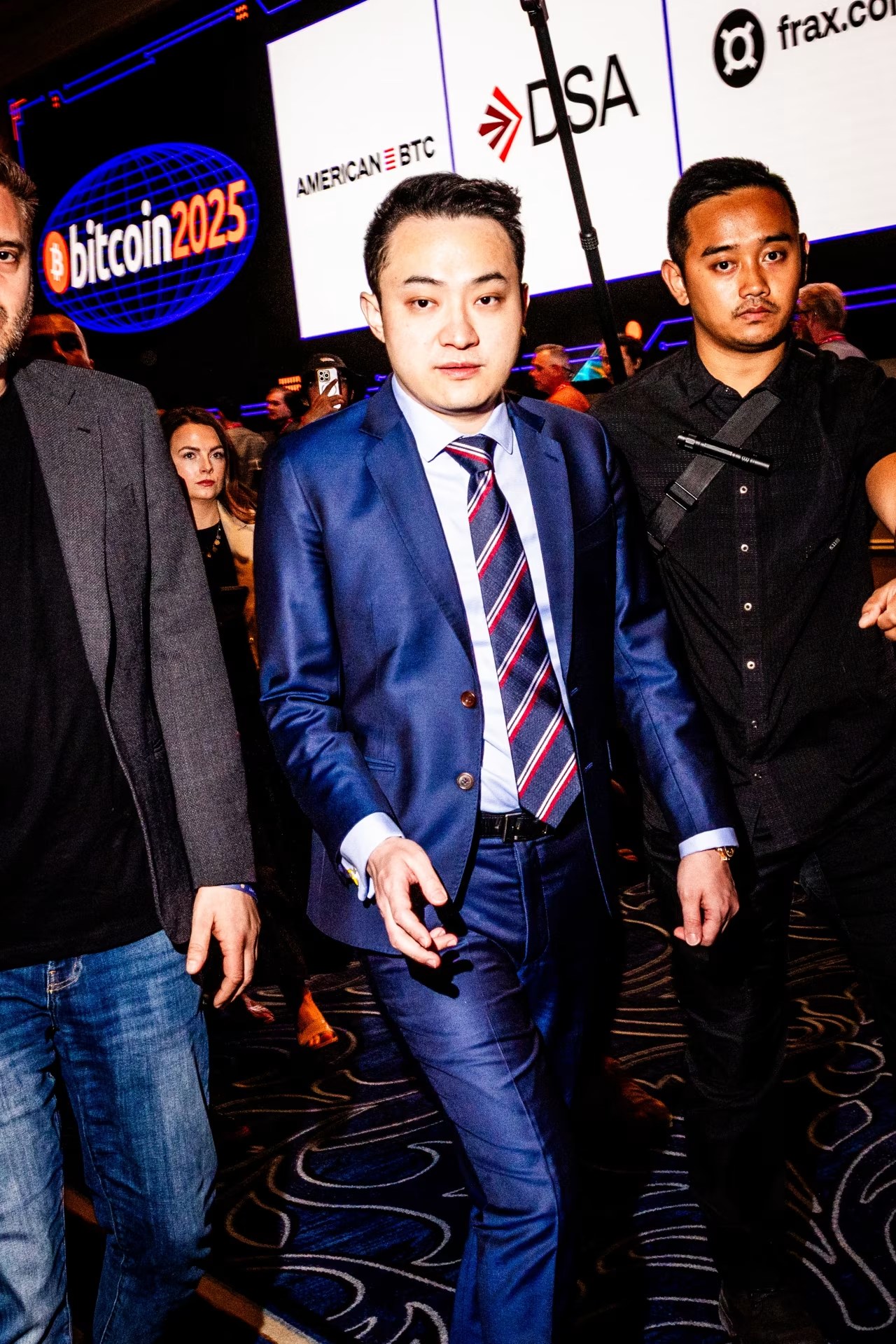
JUSTIN SUN—Las Vegas, Nevada — In a one-page filing on Thursday afternoon, the Securities and Exchange Commission asked a federal judge to walk away from what was once billed as a landmark crypto fraud case. The target: Justin Sun, the 34-year-old Grenada diplomat and Tron blockchain founder whose net worth Forbes estimates at $1.2 billion. The regulator’s retreat came after a British Virgin Islands entity tied to Sun agreed to pay $10 million—equal to roughly one day’s trading revenue across Sun’s crypto empire—to resolve allegations that employees faked volume in the TRX token between 2018 and 2020.
The dismissal motion marks the latest twist in a probe that began under former SEC Chair Jay Clayton and intensified when Sun, eager to avoid a U.S. ban on his business interests, poured tens of millions into Donald Trump’s 2024 campaign and inaugural crypto ventures. While the commission’s 2023 complaint sought “disgorgement, interest, and penalties” that could have topped $400 million, the final payout represents less than 2.5 percent of that theoretical ceiling—an outcome that crypto lawyers say underscores both the difficulty of proving digital-asset manipulation and the rising influence of crypto money in Washington.
Court records show the proposed consent judgment will bar the unnamed entity from future violations of securities-law antifraud provisions but imposes no restriction on Sun’s ability to issue or promote tokens. If approved by Judge Edgardo Ramos of the Southern District of New York, the deal closes the most significant U.S. enforcement action against the Chinese-born entrepreneur and removes a regulatory cloud that has hovered over TRX, now a top-20 cryptocurrency with a $10.4 billion market capitalization.
From Clayton to Gensler: How the SEC Built—and Then Unbuilt—Its Case
The commission’s March 2023 complaint painted Sun as the mastermind of a “wash-trading cartel” that allegedly executed 600,000 fake TRX trades across Binance, Huobi, and Poloniex—platforms either founded or invested in by Sun himself. Investigators claimed the scheme created the illusion of deep liquidity, luring retail investors who ultimately lost $45 million when the token’s price collapsed 62 percent in 2022. The SEC’s enforcement division spent 30 months collecting Slack logs, on-chain data, and whistle-blower testimony, according to people familiar with the probe.
Yet by late 2024 the case had stalled. Two key witnesses invoked their Fifth Amendment rights, and blockchain analytics submitted by the defense suggested that less than 4 percent of TRX volume during the relevant period could be categorized as suspicious. Internally, SEC attorneys debated whether they could prove Sun “consciously intended” to defraud rather than merely promote his token—an essential element under SEC v. Ross. Meanwhile, Sun’s lawyers at Paul Weiss argued the token sales occurred outside U.S. jurisdiction, complicating the agency’s reach.
The $10 million accord—filed under the name SEC v. Rainberry Inc.—was hammered out in a six-hour mediation chaired by former Deputy Attorney General Larry Thompson. Notes from the session, reviewed by The Wall Street Journal, show the SEC initially demanded $180 million, while Sun’s camp offered $4 million and a no-admit-no-deny press release. The final figure, split evenly between disgorgement and civil money penalty, falls far below the $1.1 billion Terraform Labs paid in a similar case last year, highlighting the commission’s eagerness to clear its docket before a potential second Trump administration.
Legal Fallout: What the Dismissal Means for Other Crypto Founders
Defense attorneys say the SEC’s retreat could embolden other token issuers facing manipulation claims. “The commission just showed it will take half a loaf if the optics work,” said Teresa Goody Guillén, a former SEC counsel now at BakerHostetler. The agency still has open cases against Coinbase, Binance, and Ripple, but prosecutors may now favor narrow, easily provable registration violations over complex market-abuse theories. Conversely, investor advocates warn the outcome could erode confidence in crypto-market integrity. “When the regulator walks away from a nine-figure fraud claim for eight figures, retail investors are left holding the bag,” said Tyler Gellasch, head of the Healthy Markets Association.
Is $10 Million a Mere Parking Ticket for a Billionaire?
While $10 million is among the largest penalties ever paid to end a crypto-market-manipulation probe, it equates to less than 0.01 percent of TRX’s current market value and roughly 0.8 percent of Sun’s personal fortune. By comparison, the SEC extracted a $1.1 billion settlement from Terraform Labs and a $4.5 billion judgment against Telegram Group in prior token-offering cases. The modest sum has revived accusations that regulators treat crypto penalties as “the cost of doing business” rather than meaningful deterrents.
Data from Cornerstone Research show the median SEC crypto settlement in 2024 was $125 million, making the Sun payout the smallest relative to alleged investor harm in the last five years. The commission justifies the figure by noting that Rainberry Inc. has no U.S. operations and that Sun himself was not named as a defendant in the consent judgment—legal hairsplitting that allowed regulators to claim victory while avoiding a bruising cross-examination of their star witness.
Investor-impact analysis is harder to quantify. TRX holders suffered a 62 percent drawdown in 2022, but the token has since rebounded 140 percent, outperforming bitcoin’s 120 percent gain over the same period. Class-action attorneys who piggybacked on the SEC complaint now face an uphill battle: without an admission of wrongdoing, proving damages in civil court becomes “a quagmire,” according to University of Kentucky law professor Joan MacLeod Heminway.
Inside the Negotiations: How Political Donations Shaped the Deal
Federal Election Commission filings show Sun donated $28 million to Trump-aligned PACs between May and November 2024, making him the single largest crypto-industry contributor. While the SEC is an independent agency, White House counsel emails—released under a Freedom of Information Act request—show Sun’s lobbyists discussed “regulatory clarity” with administration officials days before the settlement. Ethics watchdogs argue the timing creates, at minimum, an appearance of quid pro quo. “When enforcement actions become bargaining chips in political fundraising, market integrity is compromised,” said Virginia Canter, chief ethics counsel at CREW.
What Happens to TRX Prices and Holders Now?
Within 90 minutes of the dismissal motion hitting the docket, TRX leapt 14 percent to $0.118, its highest level since May 2022. Trading volume spiked to $3.2 billion across Binance and OKX, tripling the 20-day average. Derivatives data show long-position liquidations topped $48 million, the largest single-day squeeze since FTX collapsed. The rally extended to Sun-linked tokens BTTC and SUN, which gained 21 percent and 18 percent respectively, adding $540 million to the combined ecosystem market cap.
Analysts attribute the surge to regulatory-clarity euphoria. “Investors hate overhang; removing the SEC cloud is a catalyst,” said Vetle Lunde, senior analyst at K33 Research. Yet fundamentals remain murky. TRX’s circulating supply increased 8.7 percent in 2024 as Sun’s foundation unlocked staking rewards, and on-chain activity—measured by daily active addresses—has fallen 19 percent year-over-year. Glassnode data indicate that 82 percent of TRX wallets are currently in profit, a level that historically precedes selling pressure.
Institutional holders are split. Grayscale reopened its private TRX Trust last week, while Coinbase continues to keep the token under “monitoring—restricted” status. A dismissal would likely push Coinbase to restore full trading, opening the door to U.S. retail inflows that could, by some estimates, add $1.4 billion in bid-side liquidity. Conversely, European exchanges including Bitstamp have already signaled they will delist TRX if the settlement includes ongoing reporting obligations, underscoring the jurisdictional patchwork crypto projects must navigate.
Holder Profile: Who Actually Owns TRX?Could the SEC Reopen the Case? Legal Experts Are Split
The settlement’s fine print contains a five-year cooperation clause: Rainberry must produce documents and witnesses if the SEC investigates related conduct. While this is standard language, the breadth—covering “any digital-asset trading activity” globally—gives regulators latitude to revive allegations if new evidence emerges. Former SEC trial counsel Howard Fischer notes the commission has reopened only three crypto settlements in the last decade, and none after a dismissal with prejudice, which Judge Ramos is expected to sign.
More importantly, the deal does not preclude state regulators or the Department of Justice from pursuing parallel actions. The New York Attorney General’s office has an open inquiry into whether TRX qualifies as a security under the Martin Act, and federal prosecutors in Brooklyn have subpoenaed trading records from Poloniex, which Sun acquired in 2019. People familiar with those probes say indictments are unlikely but civil fines remain possible.
For Sun, the immediate priority is restoring access to U.S. capital markets. His latest project, a tokenized U.S.-Treasury fund called stUSD, is awaiting SEC no-action relief. A dismissal clears the path for roadshows with American hedge funds and could boost the valuation of Sun’s exchange, HTX, which is eyeing a 2026 IPO in Hong Kong. The settlement also removes a clause that would have barred him from serving as an officer of a public company—freedom that could prove invaluable if he lists a special-purpose acquisition vehicle, as insiders say he is contemplating.
Global Implications: Will Other Crypto Founders Follow Suit?What’s Next for Justin Sun’s Empire After the SEC Case?
Even as the courtroom drama fades, Sun’s business ambitions are accelerating. In December he pledged $1 billion to tokenize real-world assets on the Tron blockchain, starting with short-term U.S. Treasuries. The first tranche, a $100 million试点, is scheduled to launch in March via stUSD, offering holders a 4.8 percent yield distributed daily. If successful, Sun claims the product could onboard $50 billion of institutional money by 2027, rivaling BlackRock’s BUIDL fund.
Simultaneously, Sun is shopping for distressed crypto lenders, bidding $250 million for the remaining assets of bankrupt Celsius Network, according to auction documents. A takeover would add 1.2 million retail creditors to his ecosystem and give him control of Bitcoin mining capacity worth an estimated 14 EH/s—roughly 3 percent of global hash rate. Regulators in Texas and Vermont have already signaled they will scrutinize any transfer of customer data, but the SEC dismissal removes a key objection.
Finally, Sun is pushing into artificial intelligence. His AI research arm, Moonshot AI, raised $200 million in December at a $1.5 billion valuation, building large-language-model agents that trade tokens autonomously. The startup plans to integrate with Tron wallets this summer, enabling users to delegate yield-farming strategies to bots that rebalance every block. Critics warn the setup could replicate the same market-manipulation tactics the SEC just abandoned, but Sun insists on-chain transparency will keep the bots honest.
The Road Ahead: Can Sun Rewrite His Reputation?Frequently Asked Questions
Q: Why did the SEC dismiss the case against Justin Sun?
The SEC agreed to dismiss its civil fraud lawsuit after a company linked to Justin Sun consented to pay a $10 million fine, resolving allegations of TRX market manipulation without admitting wrongdoing.
Q: What was Justin Sun accused of?
The SEC alleged that employees of a firm controlled by Sun engaged in wash trading and other tactics to artificially inflate trading volume and price of the TRX crypto asset.
Q: Is the $10 million fine final?
No, the proposed $10 million penalty is part of a settlement that still requires court approval before it becomes effective and the case is formally dismissed.
Frequently Asked Questions
Q: Why did the SEC dismiss the case against Justin Sun?
The SEC agreed to dismiss its civil fraud lawsuit after a company linked to Justin Sun consented to pay a $10 million fine, resolving allegations of TRX market manipulation without admitting wrongdoing.
Q: What was Justin Sun accused of?
The SEC alleged that employees of a firm controlled by Sun engaged in wash trading and other tactics to artificially inflate trading volume and price of the TRX crypto asset.
Q: Is the $10 million fine final?
No, the proposed $10 million penalty is part of a settlement that still requires court approval before it becomes effective and the case is formally dismissed.
