Oil rockets 50% to $110+ after Iran strikes, first triple-digit Brent since 2021
- Brent crude closed Monday at $110.40, up 50% since Feb 28 when U.S.–Israel strikes on Iran began.
- Strait of Hormuz is “all but closed,” blocking 20% of daily world oil flows and 30% of Asia’s LNG.
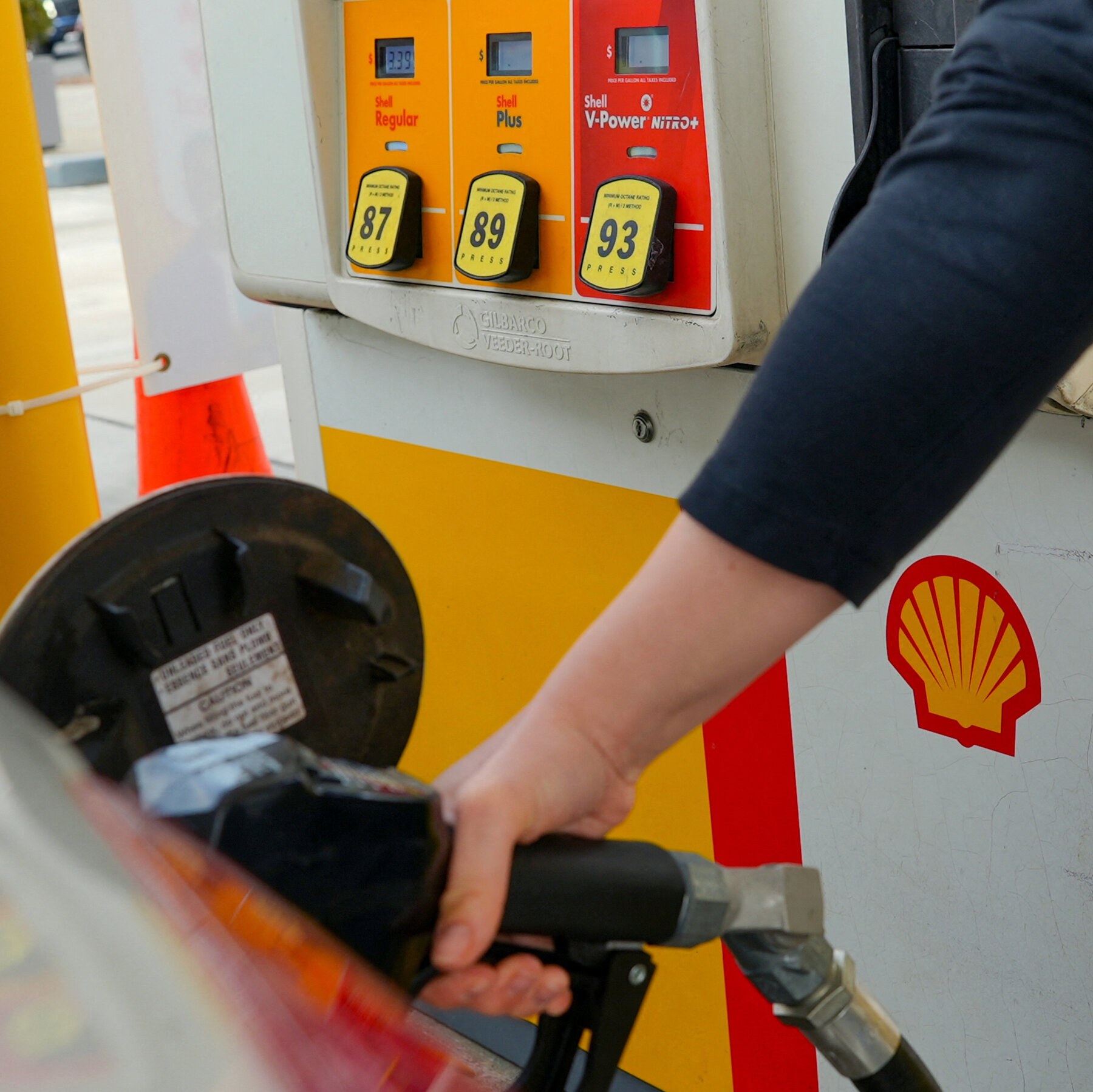
- Gasoline averaged $3.45/gal Sunday, up 16% in two weeks; diesel surged 22%.
- Investors now expect 4.5% U.S. inflation within 12 months, doubling January forecasts.
A single waterway shutdown is sending energy inflation rippling from Seoul to Stuttgart—and into the Fed’s next rate decision.
BRENT CRUDE—Oil traders stared at screens they had not seen since 2021: Brent crude futures kissing $115 a barrel, the global benchmark’s first triple-digit print in almost four years. By Monday’s settlement the price had cooled to $110.40, yet that still left crude 50% more expensive than on Feb 28, the day U.S. and Israeli forces began striking Iranian targets.
The catalyst is geographic but the fallout is economic. The Strait of Hormuz—only 21 nautical miles wide—has been virtually shut for more than a week after Tehran threatened reprisals and insurers pulled tanker coverage. Roughly 21 million barrels of oil, liquefied natural gas and refined products normally exit the Persian Gulf through the chokepoint every day, equal to one-fifth of global demand.
Energy Secretary Chris Wright insisted the world is “not short of oil today,” yet futures curves tell a different story. Asian stock markets, heavily exposed to Middle East crude, posted their worst session since 2022: South Korea’s Kospi dropped 6%, Japan’s Nikkei 225 fell 4.7%. Inflation expectations embedded in U.S. five-year breakevens leapt to 4.5%, complicating the Federal Reserve’s next move on rates.
The $110 Milestone: How We Got Here
Monday’s session opened with Brent gapping $8 higher to $108. By mid-morning London time algorithmic buy-stops pushed the front-month contract to an intraday peak of $115.20 before profit-taking trimmed the gain. The 9.6% daily range was the widest since Russia’s invasion of Ukraine in February 2022.
The rally actually began Feb 28 at $73.40, according to Intercontinental Exchange data, meaning crude has appreciated $36.60 in less than three weeks. West Texas Intermediate, the U.S. marker, followed suit, touching $109.15 before settling at $105.90.
From $70 to $110 in 17 trading days
Three technical factors amplified the move. First, commodity-fund positioning was historically short; CFTC data show money managers held 205,000 net-short contracts on Feb 25, a record. Second, liquidity was thin because China’s markets were closed for Qingming holiday. Third, margin calls forced leveraged players to cover, accelerating the spike.
The geopolitical fuse was lit when Iran’s Revolutionary Guard seized a Marshall-Islands-flagged tanker and Tehran’s defense ministry warned that any vessel linked to Israel or the U.S. would be considered a “legitimate target.” Lloyd’s List Intelligence reports that daily transits through Hormuz fell from an average of 40 to just 3 over the past week.
President Trump, who had pledged cheaper gasoline during the campaign, called the surge “a very small price to pay for U.S.A., and World, Safety and Peace” in a Truth Social post. Yet the math is stark: every $10 rise in crude translates into roughly 25 cents at the pump within two weeks, according to GasBuddy analytics.
Forward curves are now in steep backwardation—December 2024 Brent trades $12 below the front month—signaling traders expect physical shortages imminently. The last time the market structure was this tight was during the 2019 Abqaiq attack on Saudi Aramco facilities.
Strait of Hormuz: The 21-Mile Pinch Point Choking Global Supply
Stretching between Oman and Iran, the Strait of Hormuz is the world’s most critical energy artery. Roughly 21 million barrels of oil pass through daily, plus 100 billion cubic meters of liquefied natural gas each year, according to the U.S. Energy Information Administration.
Over the past week, daily tanker transits have collapsed to 3 from 40, ship-tracking data from Vortexa show. Insurers at the London market have slapped a “war risk” premium of $400,000 per voyage on very-large-crude-carriers, adding $1.20 to the landed cost of every barrel that does get through.
Insurance costs quadruple overnight
Japan’s Mitsui O.S.K. Lines and South Korea’s HMM have both rerouted cargoes around the Cape of Good Hope, adding 18 days and $2.3 million in fuel per voyage. That detour inflates freight rates measured by the Dubai-to-Yokohama route to $14.80 per barrel, a four-year high.
Energy Secretary Chris Wright told CNN he expects “weeks, not months” of disruption, yet history suggests otherwise. During the 1980s Tanker War, transit insurance was elevated for three years; after the 2019 Abqaiq attack, full capacity took six weeks to restore.
The Pentagon has floated escorting flagged vessels, but Fifth Fleet sources say only 12% of tankers are U.S.-flagged, limiting practical coverage. Meanwhile, Iran’s navy has laid sea-mine equivalents—cheap, drifting contact mines that can keep insurers skittish long after headlines fade.
Consequences ripple outward: Saudi Aramco’s 7-million-barrel-per-day East-West Petroline to Yanbu is already at 90% capacity, yet that still leaves 14 million barrels dependent on Hormuz. Every day the strait is closed, global inventories draw by an estimated 42 million barrels, according to Rystad Energy models.
Pump Pain: Gasoline Up 16% and Counting
AAA data released Sunday show regular gasoline averaging $3.45 per gallon nationwide, up 48 cents—or 16%—since Feb 28. Diesel has surged even faster, climbing 89 cents to $4.31, a 22% jump that ripples through trucking and farming costs.
California drivers are paying $5.12, while Mississippi remains the cheapest at $2.98. Tom Kloza, global head of energy analysis at OPIS, predicts a national average above $4 by Memorial Day if crude holds $110.
$4 gasoline could erase $90 billion in consumer spending
Every 10-cent rise at the pump pulls roughly $1 billion per month out of discretionary budgets, J.P. Morgan economists estimate. A sustained $4 level would erase 0.4 percentage points from U.S. GDP growth in the second half, complicating Trump’s 3% growth target.
Uber and Lyft have already reinstated fuel surcharges of 55 cents per ride in 12 metros; American Airlines raised domestic fares $7 each way last Friday. Logistics firm CH Robinson reports spot trucking rates up 11% week-over-week, threatening to reignite goods inflation.
Europe is even more exposed: Brent-priced gasoline in Germany hit €1.89 per liter, the highest since 2013 when the euro was stronger, translating into $7.60 per gallon. Asian nations subsidize fuel, so the fiscal hit lands on government budgets: India’s diesel subsidy bill is projected to rise ₹420 billion ($5 billion) this quarter.
Inflation Reawakens: Bond Yields Jump as Expectations Hit 4.5%
The Federal Reserve’s preferred gauge—five-year breakeven inflation—has leapt to 4.5%, according to St. Louis Fed data, doubling the 2.3% forecast at the start of the year. Two-year Treasury yields rose 20 basis points to 3.56%, while the dollar index gained 1.8% in two sessions.
Core goods inflation had been running negative for 11 consecutive months; energy’s 25% weight in the CPI could flip that trend. Bank of America now sees headline CPI at 3.7% by June, forcing the Fed to choose between fighting inflation and supporting a softening labor market.
Fed faces stagflationary dilemma
Friday’s non-farm payrolls rose only 150,000—40% below consensus—and the unemployment rate ticked up to 4.1%. Markets price a 68% chance of a June rate cut, yet rising oil-driven inflation may tie the Fed’s hands. The result: two-year yields have become more correlated with oil than at any time since 2008, Citi says.
Emerging markets are particularly vulnerable. Turkey imports 93% of its energy; each $10 oil rise worsens the current-account gap by 0.5% of GDP. The lira slid 3% Monday, while South Africa’s rand hit a record low. Outflows from EM debt funds totaled $2.1 billion last week, the most since October 2022, EPFR data show.
Corporate credit feels the squeeze as well. Energy accounts for 8% of high-yield issuance; rising oil boosts revenues for explorers but raises input costs for airlines, chemical firms and truckers. Moody’s warns that default rates among energy-intensive sectors could rise 80 basis points if crude stays above $100 through year-end.
Can Strategic Reserves or OPEC Replace the Missing Barrels?
The International Energy Agency convened an emergency call Tuesday, yet member countries held off triggering collective stock releases. The U.S. Strategic Petroleum Reserve holds 363 million barrels, down from 640 million in 2021 after 180 million were sold in 2022. Energy Secretary Wright says no decision has been made, but traders estimate Washington could offer 30 million barrels in a swap.
OPEC’s spare capacity is another question mark. Saudi Arabia claims 3 million barrels per day of idle output; analysts at Rystad put workable capacity closer to 2.2 million. Even if Riyadh pumped flat-out, it would take 45 days to offset a 60-day Hormuz closure, by which time inventories would have drawn 2.5 billion barrels globally.
IEA hesitates, citing uncertain duration
Russia has also offered 1.5 million barrels per day to Asian buyers at a $20 discount to Brent, but sanctions complicate insurance and payments. China’s teapot refiners are reportedly negotiating barter deals using yuan, yet volumes so far are only 200,000 b/d.
Meanwhile, U.S. producers are ramping. The rig count rose by 11 last week to 513, the highest since October, but shale growth is constrained by capital discipline and service-sector bottlenecks. Halliburton says frack crews are 90% utilized, limiting quick additions.
Bottom line: without Hormuz reopening, no combination of SPR, OPEC or shale can fully plug a 15-million-barrel daily gap. The only near-term price relief may come from demand destruction—precisely the scenario central banks fear most.
Frequently Asked Questions
Q: Why did oil prices spike above $110?
Brent crude topped $110 after U.S.–Israel attacks on Iran shut the Strait of Hormuz, choking one-fifth of global supply and lifting prices 50% since Feb 28.
Q: How high could gasoline prices go?
Pump prices have already jumped 16% to $3.45/gal; analysts see $4+ if the strait stays closed, adding $1,000 annually to average U.S. household fuel bills.
Q: Is this the highest oil price since the pandemic?
Yes, $115 intraday marks the first breach of $100 since 2021, surpassing even post-Ukraine-invasion peaks and eclipsing pandemic-era highs.
