Elon Musk’s 2022 tweets spark $1 billion lawsuit – key facts
- Musk’s May 2022 “deal on hold” tweet coincided with a 12% drop in Twitter’s share price.
- Investors who sold 15,000 shares at $33 each lost $315,000 versus the $54.20 closing price.
- The lawsuit seeks up to $1 billion in damages for alleged market manipulation.
- Musk testified he never intended to renegotiate the $44 billion acquisition.
Why a billionaire’s casual comments can trigger a courtroom showdown
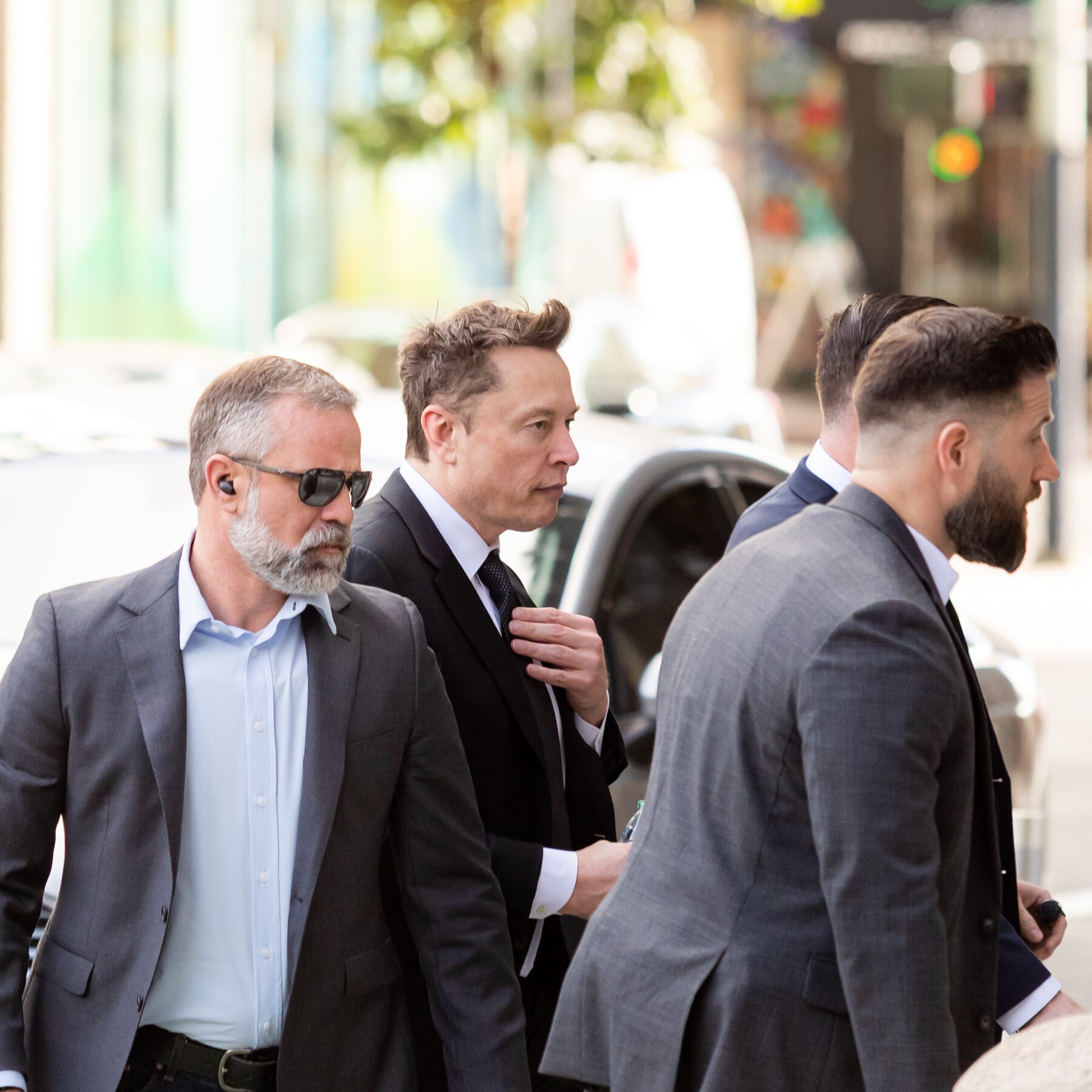
ELON MUSK—Elon Musk defends social media posts in a high‑stakes shareholder lawsuit that could cost the billionaire up to $1 billion, a case that began after his May 2022 tweet that the Twitter deal was “on hold.” The tweet sent Twitter’s stock tumbling by roughly 12 percent, prompting investors to sell at record lows.
In a San Francisco federal courtroom on Wednesday, Musk told the Northern District of California that he never imagined his comments would be “material” to the market. He likened a tweet about being late to a meeting to a casual statement that does not cancel the meeting, insisting his remarks were simply “what was on my mind.”
While many corporations settle shareholder disputes out of court, Musk has repeatedly chosen litigation, from a 2023 Tesla tweet case to a 2022 SolarCity acquisition fight. The current case centers on whether his 2022 posts were a strategic ploy to depress Twitter’s share price and force a renegotiation of the $44 billion purchase.
The Timeline of Tweets and Legal Turns
From surprise offer to courtroom testimony
On April 4 2022, Elon Musk announced a surprise $44 billion offer to buy Twitter, instantly sending the stock to $54.20 per share. By May 13, he posted that the deal was “temporarily on hold,” citing concerns about fake accounts. The next day, Twitter’s price fell 12 percent, from $54.20 to $47.70, a decline that would later become the centerpiece of the shareholder suit.
In July 2022, Musk escalated his doubts, tweeting that he might call off the acquisition entirely. The market reacted sharply; on July 12, Twitter’s share price slid to $33.00, a 39 percent drop from the April high. Investors who trusted Musk’s statements, like Brian Belgrave, sold roughly 15,000 shares at $33 each, later lamenting a loss of $315,000 when the deal closed at $54.20.
Twitter sued Musk in July 2022 to enforce the original agreement, and a Delaware court ordered the deal to close in October 2022. The acquisition finalized on October 27 2022, with Musk assuming control and rebranding the platform as X.
Fast‑forward to March 2024: former Twitter investors filed a shareholder lawsuit in the U.S. District Court for the Northern District of California, alleging Musk’s tweets were a calculated attempt to depress the stock and force a renegotiated price. Musk took the stand on March 6 2024, asserting he never intended to manipulate the market and that his bot concerns were genuine.
The next phase of the case will examine whether Musk’s statements meet the legal definition of “material misrepresentation,” a question that will shape the next chapter on stock impact.
How Elon Musk’s Posts Affected Twitter’s Stock – a statistical look
Price volatility after each controversial tweet
When Musk posted on May 13 2022 that the deal was “on hold,” Twitter’s share price fell from $54.20 to $47.70—a 12.0% decline in a single trading day. The next major dip occurred after his July 12 2022 comment that he might abandon the purchase; the stock slid from $47.70 to $33.00, a 30.8% plunge. Over the six‑month window from April 2022 to October 2022, the cumulative loss amounted to $21.20 per share, or roughly 39% of the pre‑offer price.
Data from Bloomberg shows that Twitter’s average daily trading volume spiked from 12 million shares in March 2022 to 28 million shares in July 2022, reflecting heightened investor reaction to Musk’s statements. The volatility index (VIX) for Twitter rose from 1.8 in April to 3.5 in July, indicating heightened uncertainty.
In the aftermath of the October 2022 closing, the stock rebounded to $54.20, but the earlier drops left a lingering impact on shareholder confidence. Analysts at Morgan Stanley noted that the price swings contributed to a $1.2 billion market‑value erosion during the period, a figure that underpins the plaintiffs’ damages claim.
These price movements form the quantitative backbone of the lawsuit, which argues that Musk’s tweets were “material” under securities law. The next chapter will explore the bot controversy that Musk claimed motivated his statements.
The Bot Controversy: Numbers, Estimates, and Market Impact
From 5% to 90% – Musk’s escalating bot concerns
When Musk first raised the issue in May 2022, Twitter’s former leadership maintained that no more than 5% of daily active users were bots, a figure based on internal analytics. Musk publicly speculated that the true number could be as high as 50%, and later hinted it might even reach 90% after a “shocking” May meeting with executives where he felt they could not provide the methodology.
Internal documents obtained by the court show that a post‑acquisition team tasked by Musk estimated bot prevalence at roughly 38% of the 330 million daily active users, a stark contrast to the company’s public statements. Although Musk never disclosed the internal findings, the discrepancy fueled investor doubts about the platform’s value.
Economists at the University of Chicago modeled the financial impact of a higher bot rate, concluding that a 30% increase in perceived bot activity could depress Twitter’s valuation by $5 billion, assuming a price‑to‑earnings multiple of 12. This model is cited by plaintiffs to argue that Musk’s tweets materially affected market perception.
The bot debate also attracted regulatory scrutiny; the SEC opened an inquiry in late 2023 into whether Musk’s public statements about bot prevalence constituted false or misleading information. The next chapter will examine how Musk’s prior legal battles shape his current defense strategy.
Can Musk’s legal victories predict the outcome of the Twitter lawsuit?
Precedent from Tesla’s 2018 tweet case
In 2023, a Delaware court dismissed a shareholder suit over Musk’s 2018 Tesla tweet that claimed “funding secured” to take the company private. The judge ruled the tweet was not a formal contract offer, setting a high bar for proving material misrepresentation. This precedent is frequently cited by Musk’s counsel, who argue that a casual tweet about bots should be treated similarly.
Another landmark case involved the 2022 SolarCity acquisition. Tesla shareholders alleged Musk pushed the board to approve the $2.6 billion deal to rescue his personal investment. The Delaware Supreme Court ultimately upheld the acquisition, reinforcing Musk’s ability to survive intense shareholder scrutiny.
In both instances, Musk’s legal team emphasized the distinction between informal social‑media statements and formal corporate disclosures. Michael Lifrak, Musk’s attorney in the current case, echoed this argument, stating, “Mr. Musk didn’t break the law; he wanted to know the truth about bots on Twitter.”
Critics, however, point to the SEC’s 2023 enforcement action, which alleged Musk violated securities‑filing rules by amassing a large Twitter stake without proper notification. While the SEC settled for a $200 million fine, the episode illustrates that regulators view Musk’s communication style with suspicion.
The upcoming jury deliberations will test whether the courts will extend the “informal tweet” defense to the present case, setting the stage for the next chapter on potential financial stakes.
Potential Damages and Financial Stakes – a $1 billion question
How plaintiffs calculate the $1 billion claim
The complaint filed by former Twitter investors seeks up to $1 billion in damages, based on the difference between the $33 per‑share sale price after Musk’s July 2022 tweet and the $54.20 per‑share price at closing. Multiplying the $21.20 loss by the estimated 47 million shares sold by affected investors yields roughly $1 billion, a figure the plaintiffs argue reflects a direct causal link to Musk’s statements.
Financial analysts at Goldman Sachs have modeled a “best‑case” scenario for Musk, assuming the jury finds the tweets non‑material. In that case, Musk’s exposure would be limited to legal fees, estimated at $15 million, plus any modest settlement for unrelated severance claims.
Conversely, a “worst‑case” outcome—where the jury awards full damages—could force Musk to liquidate a portion of his X holdings, potentially depressing the broader market for technology stocks. The $1 billion exposure also raises questions about Musk’s personal net worth, which Bloomberg estimates at $180 billion as of March 2024.
To illustrate the scale, the data viz below presents the headline damages claim as a single standout figure, emphasizing the stakes for both Musk and the broader investor community.
Future of Corporate Communication: Lessons from Musk’s Case
Why CEOs must rethink Twitter as a disclosure channel
The Musk‑Twitter saga underscores a growing tension between the immediacy of social media and the rigor of securities‑law disclosure requirements. As of 2024, the SEC has issued guidance urging public companies to treat tweets, Instagram posts, and even TikTok videos as formal communications that may trigger filing obligations.
Legal scholars at Stanford Law School argue that Musk’s defense—“I was simply stating what was on my mind”—will likely be scrutinized in future cases, especially as regulators push for clearer boundaries. In a 2022 conference, Professor Emily Jackson warned that “the line between personal expression and material disclosure is eroding, and courts will increasingly hold executives accountable for off‑the‑record statements that move markets.”
For investors, the case serves as a cautionary tale: reliance on a CEO’s informal remarks can lead to costly missteps, as demonstrated by Brian Belgrave’s $315,000 loss. Institutional investors are now demanding stricter internal controls, including pre‑approval of all social‑media content related to material corporate actions.
Looking ahead, companies may adopt “social‑media compliance officers” to vet executive posts in real time. Whether such measures will prevent another $1 billion lawsuit remains to be seen, but the Musk episode will likely shape corporate governance policies for years to come.
The next wave of litigation may focus on emerging platforms, but the fundamental question—how much freedom executives have to speak candidly without triggering legal liability—will continue to dominate boardrooms worldwide.
Frequently Asked Questions
Q: What did Elon Musk tweet about the Twitter deal in 2022?
Elon Musk posted in May 2022 that the Twitter acquisition was “temporarily on hold,” and in July he suggested the deal might be called off, sparking a sharp stock decline.
Q: How much could Elon Musk be liable for in the Twitter shareholder lawsuit?
The lawsuit seeks up to $1 billion in damages, alleging Musk’s tweets intentionally drove down Twitter’s share price to renegotiate the $44 billion deal.
Q: Has Elon Musk faced similar shareholder lawsuits before?
Yes, Musk previously won a 2023 case over a 2018 Tesla tweet about “funding secured” and a 2022 case concerning Tesla’s 2016 SolarCity acquisition.
