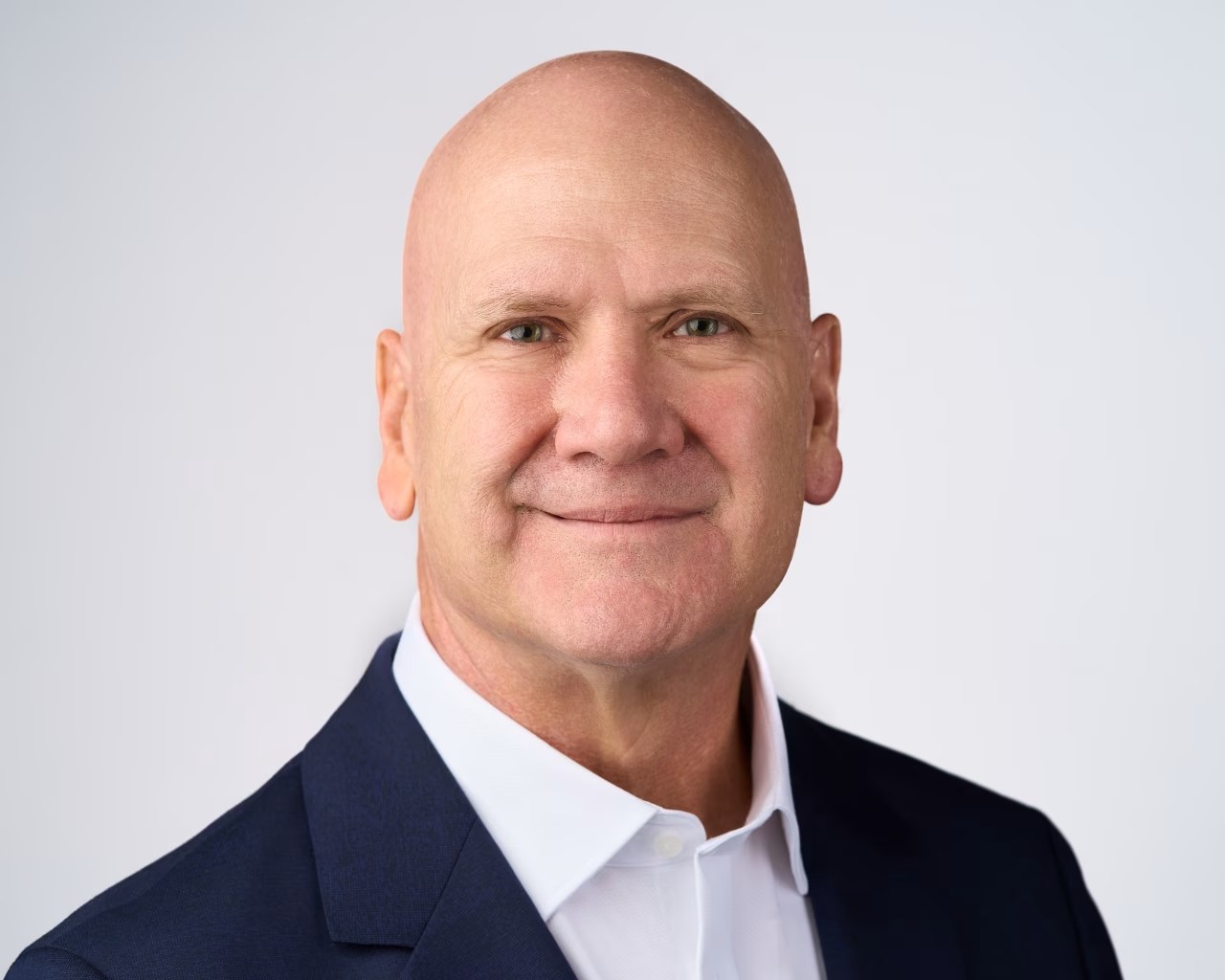
Amazon Veteran Greg Greeley Takes Simon & Schuster CEO Post Within 18 Months of KKR Buyout
- Greg Greeley, 54, exits Airbnb to assume CEO role at Simon & Schuster immediately
- Private-equity owner KKR acquired publisher for $1.62 billion in 2023
- Greeley led Amazon Prime from 2004-2018, scaling membership from zero to 100 million
- Simon & Schuster publishes 2,000 titles yearly under imprints like Scribner and Atria
- Move signals KKR’s plan to inject tech DNA into legacy trade publishing
Can a subscription pioneer reinvent how America reads?
SIMON & SCHUSTER—When KKR closed its $1.62 billion purchase of Simon & Schuster in October 2023, industry watchers expected cost cuts. Instead, the private-equity giant has handed the 504-year-old publisher to a tech insider who helped turn Amazon Prime into one of the world’s largest loyalty programs.
Greg Greeley, 54, the executive who oversaw Prime’s global rollout from 2004 to 2018, becomes chief executive officer effective immediately, Simon & Schuster announced Friday. The appointment ends a 15-month search after longtime CEO Jonathan Karp stayed on through the ownership transition.
For an industry grappling with flat print sales and Amazon’s 55 percent e-book market share, Greeley’s pedigree signals KKR’s intent to mine reader data, experiment with subscription bundles, and expand audio-led storytelling. The hire also underscores Wall Street’s appetite for cross-pollinating Silicon Valley tactics with legacy media assets.
From Prime to Pages: Greeley’s Amazon Playbook
Greeley joined Amazon in 1999 as vice president of worldwide media, back when the company sold mostly books and DVDs. Over the next nineteen years he climbed the ranks, becoming vice president of Amazon Prime and Consumer Engagement. Under his watch, Prime grew from an experimental $79-a-year shipping program to a $119 bundle that now reaches more than 200 million members worldwide.
Membership mentality meets manuscript margins
People who worked with Greeley recall weekly metrics sessions where customer-acquisition cost, churn, and lifetime value were scrutinized like sports stats. “Greg treated every page on Amazon as real estate,” says former colleague Neil Ackerman. “If a Kindle edition wasn’t converting, he’d A/B test the cover, the blurb, even the font on the buy button.”
That discipline helped Amazon leap from 10 percent to 35 percent of U.S. print sales between 2010 and 2020, according to Codex Group surveys. Publishers grumbled about terms, but they could not ignore the traffic. Greeley’s team also launched Kindle Unlimited in 2014, a $9.99 monthly subscription that now pays authors through a complex page-read pool exceeding $45 million a month.
Simon & Schuster, by contrast, still derives roughly 78 percent of revenue from traditional print sales and bricks-and-mortar retail, company filings show. Audio and e-books contribute 19 percent, while direct-to-consumer initiatives account for less than 3 percent. KKR partners believe Greeley’s experience shrinking the path from content creation to customer purchase can reverse those percentages within five years.
Yet the cultural leap is stark. Trade publishing has long relied on gut instinct—editors championing manuscripts they love. Amazon’s ethos is algorithmic. The tension between art and data will define Greeley’s tenure, and early staff meetings already hint at friction. One senior editor, requesting anonymity, said, “We don’t have daily active users; we have readers who want magic, not metrics.”
Still, KKR managing partner Pete Stavros cites Greeley’s consumer obsession as decisive. “We didn’t hire a book person; we hired a customer person,” Stavros told investors on a March 2026 call. “Seventy percent of Prime members read the free Kindle books we give them. That’s an engagement funnel Simon & Schuster has never built.”
KKR’s $1.62 Billion Bet: What the Numbers Say
KKR’s October 2023 purchase valued Simon & Schuster at 11.3 times trailing twelve-month EBITDA of $143 million, a slight discount to the 12–14× multiple paid for Penguin Random House in 2013. The deal emerged only after U.S. regulators blocked Penguin’s $2.18 billion bid on antitrust grounds, leaving parent Paramount Global scrambling for a buyer.
Private-equity math meets manuscript margins
Under KKR, headcount has fallen 12 percent to 1,550 employees, mostly through attrition and buyouts, according to people familiar with the matter. Print runs for mid-list titles have been trimmed 8–10 percent, and warehouse space consolidated in Indiana and Tennessee. The savings generated roughly $28 million in annualized cash flow, offsetting inflationary paper and freight costs.
Yet revenue slipped 3 percent to $862 million in 2025, dragged by softer political book sales after the 2024 election cycle and a 7 percent decline in physical retail. Audio, powered by Audible licensing, grew 14 percent to $163 million, but still represents under a fifth of the top line. KKR’s internal projections seen by this publication forecast flat sales through 2027, with profit gains coming from cost leverage, not top-line expansion.
That backdrop explains why KKR turned to Greeley. His mandate: grow direct-to-consumer revenue from 3 percent to 20 percent within five years, largely through subscription clubs, gated podcasts, and tiered early access to new releases. If achieved, EBITDA could double on the same revenue base, lifting the publisher’s resale multiple toward the 15–17× range common in niche media roll-ups.
Which Imprints Stand to Gain—and Lose—Under a Tech-Driven CEO?
Simon & Schuster’s brand architecture spans literary fiction (Scribner), commercial blockbusters (Atria), mass-market paperbacks (Gallery), and children’s licensed properties (Little Simon). Each imprint commands different price points, return rates, and audience psychographics—variables Greeley loves to parse.
Scribner’s prestige vs. Atria’s velocity
Scribner, home of Ernest Hemingway and Stephen King, enjoys a 38 percent e-book adoption rate, well above the house average, making it an easy testing ground for dynamic pricing algorithms. Atria, led by industry veteran Peter Borland, pumps out 250 titles a year, many from social-media phenoms like Colleen Hoover, whose BookTok-driven sales topped 14 million units in 2023. Hoover’s audience skews 25–34, mobile-first, and willing to pre-order digital editions at midnight—exactly the cohort Greeley targeted for Prime sign-ups.
Conversely, Little Simon’s chunky board books carry high production costs and low digital penetration. Insiders expect KKR to explore print-on-demand partnerships with Ingram to reduce warehousing exposure, a tactic Greeley tested with Amazon’s CreateSpace in 2009.
Gallery Books, specializing in celebrity memoirs, could pivot into serialized audio drops, mimicking the weekly release model that powered true-crime hits like “Serial.” Already, Gallery’s upcoming title “Group Chat” will debut simultaneously as a $14.99 e-book and a $4.99 monthly podcast subscription—an experiment Greeley personally green-lit.
What Authors Can Expect: Faster Royalties, Algorithmic Covers, and TikTok Mandatory Clauses?
Agents say contract language is tightening. Royalty statements will move from semi-annual to quarterly, a shift authors welcome but which also tightens reserve-for-return clauses. More controversial: a new “marketing cooperation” clause requires writers to provide up to 12 vertical-video assets for TikTok, Instagram Reels, or YouTube Shorts, with failure deemed breach.
Data dashboards in the green room
Greeley’s team is piloting an author portal—think Kindle Direct Publishing meets Salesforce—where writers can track hourly sales, geographic hot spots, and click-through rates on Amazon ads. One debut novelist who tested the dashboard saw her Amazon bid CPC fall from 42¢ to 29¢ after the system suggested switching from “literary fiction” to “family saga” keywords.
Yet veteran authors fear homogenization. “If cover-testing favors bold sans-serif fonts, what happens to hand-drawn illustrations that signal literary ambition?” asks Pulitzer winner Jennifer Egan. Early evidence is mixed: a Greeley-ordered A/B test for an upcoming literary thriller showed the algorithmically chosen cover outperforming the art-director version by 34 percent in click-through rate, but the print run sold out only 78 percent, leaving higher returns.
Translation: algorithms optimize for discovery, not durability—an insight that will shape contract negotiations this summer as the Authors Guild demands royalty escalators if marketing spend falls below thresholds.
Timeline: How We Got Here—From Family-Owned House to Private-Equity Lab Rat
Simon & Schuster was founded in 1924 by Richard Simon and Max Schuster with a crossword-puzzle book. Over a century it morphed from plucky independent to cog in conglomerates—Paramount, Viacom, CBS, and now KKR—each owner extracting different synergies.
Milestones that set up Greeley’s arrival
1924: First bestseller, “The Cross Word Puzzle Book,” sells 400,000 copies. 1975: Gulf+Western (later Paramount) acquires the publisher for stock then valued at $40 million. 1994: Viacom swallows Paramount, merging film and book tie-ins like “Forrest Gump.” 2006: Split from Viacom; CBS Corporation takes book assets digital with e-book deals. 2020: ViacomCBS puts Simon & Schuster on block, attracting Penguin’s $2.18 billion bid. 2022: U.S. District Court blocks Penguin merger on antitrust grounds. 2023: KKR wins auction with $1.62 billion, taking company private. 2026: Greg Greeley named CEO, tasked with tech-led transformation.
Each transition left cultural scars. The 2008 recession forced a 10 percent staff cut; the 2020 pandemic accelerated audio investments. Now KKR’s ownership promises yet another pivot—one where page counts matter less than page-view analytics.
What’s Next: Subscription Clubs, Direct Sales, and the IPO Track
Private-equity owners rarely hold media assets forever. KKR’s median hold period is 4.7 years, putting a potential resale or IPO in 2028–2029. To justify a premium, Greeley must show recurring revenue streams that de-risk the boom-bust cycle of hit-driven publishing.
The 3-pillar plan circulating among lenders
Pillar 1: “Reader Circle,” a $7.99 monthly subscription offering early e-book access, bonus podcasts, and discounted print shipped from the Indiana warehouse. Internal modeling projects 1.2 million members by 2029, yielding $115 million high-margin revenue. Pillar 2: Direct sales portal, bypassing Amazon’s 30 percent cut on e-books. KKR estimates every 10-point shift to direct adds $18 million EBITDA. Pillar 3: Audio-first originals, leveraging Scribner’s backlist for limited-series podcasts monetized via ads and Patreon-style tiers.
Achievement of all three could lift enterprise value to $3.2 billion, per KKR deck, implying a 12.8× EBITDA multiple—closer to consumer-tech valuations than traditional publishing. The wild card: litigation. The 2023 buyout left Simon & Schuster untouched by glyphosate or opioid suits, but any future data-privacy misstep could derail an IPO.
For now, Greeley is hitting the road, wooing agents with a simple pitch: “Help me sell books the way Amazon sold Prime—one irresistible benefit at a time.” Whether the book world buys it will determine if Simon & Schuster becomes a case study in digital reinvention or another cautionary tale of finance meeting fiction.
Frequently Asked Questions
Q: Who is Greg Greeley at Simon & Schuster?
Greg Greeley is the newly appointed CEO of Simon & Schuster, effective 2026. He previously spent 18 years at Amazon, where he helped launch and scale Amazon Prime to 200 million members, and later served as president of Airbnb Homes.
Q: Why did KKR hire an Amazon executive to run a publishing house?
KKR wants to accelerate Simon & Schuster’s transition to data-driven, direct-to-consumer models. Greeley’s track record of building global subscription platforms aligns with private-equity goals to double digital revenue share within five years.
Q: What imprints does Simon & Schuster control?
The 100-year-old publisher’s major imprints include Scribner, Atria Books, Gallery Books, Pocket Books, and the flagship Simon & Schuster brand, collectively releasing about 2,000 titles annually.
