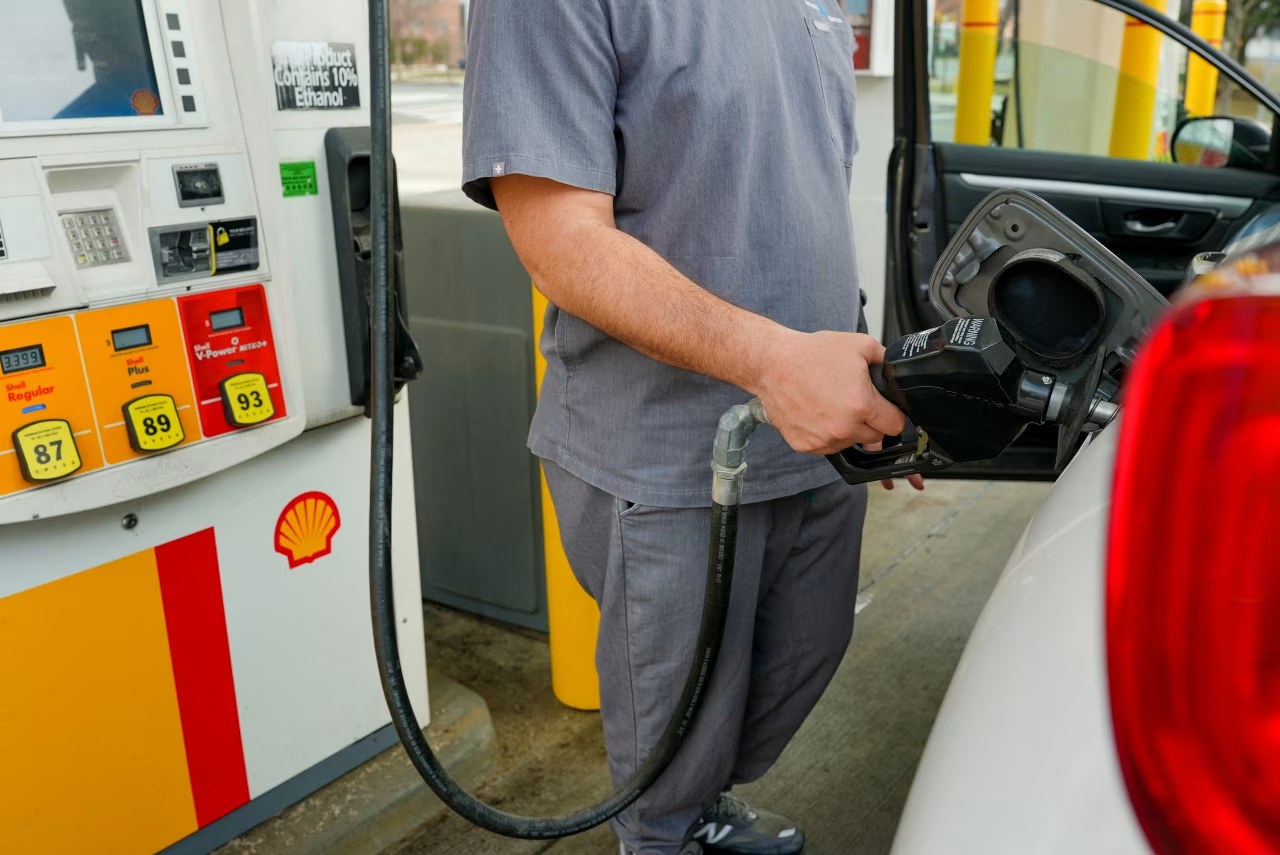
Oil Price Near $120 a Barrel, Triggering Recession Risk
- Brent crude peaked at $120 per barrel on Sunday.
- Prices slipped to around $100 on Monday, still above historic averages.
- Analysts warn demand erodes between $110‑$120, raising oil price recession risk.
- President Trump prefers $50 per barrel, but geopolitical shocks push prices higher.
Why a $120 oil price could tip the global economy into a slowdown
BRENT CRUDE—Brent crude surged to $120 a barrel late Sunday, a level that energy analysts associate with the onset of demand contraction. The price dip to $100 on Monday offers only a brief reprieve; the market remains perched near the threshold where consumers and businesses begin to curb fuel consumption.
President Trump’s public preference for a $50 barrel price underscores a political desire for cheap energy, yet the ongoing war with Iran and other geopolitical risks are driving the market toward figures that historically have sparked recessionary pressures.
Between $110 and $120 a barrel, the elasticity of demand sharpens, and the ripple effects spread across transportation, manufacturing, and household budgets, setting the stage for a broader economic slowdown.
The Anatomy of a Surge: How Brent Reached $120
When Brent crude breached the $120 mark, it was not a random spike but the culmination of several market forces aligning. First, the war with Iran reignited fears of supply disruptions in the Persian Gulf, a region that supplies roughly 30% of global oil exports. Even the prospect of a naval blockade can trigger speculative buying, pushing futures contracts higher.
Price Mechanics and Market Sentiment
Speculators in the futures market responded to the geopolitical shock by loading up on contracts, a behavior that historically amplifies price movements. At the same time, OPEC+ production cuts, announced earlier in the year, reduced the available supply cushion, leaving the market with less flexibility to absorb sudden demand spikes.
Energy analysts note that the $120 peak is significant because it sits at the upper edge of the demand‑erosion band identified in multiple studies. While the price later fell to $100, the brief breach sent a clear signal: the market is vulnerable to further upward pressure if tensions escalate.
Historically, similar surges have preceded periods of slower growth. For example, the 2008 oil price spike to $147 per barrel coincided with a global financial crisis, illustrating the tight link between high oil prices and recession risk. The current $120 level, though lower, sits within a range that can still strain economies, especially those heavily dependent on oil imports.
Beyond geopolitics, seasonal factors played a role. Summer travel demand in the Northern Hemisphere typically lifts gasoline consumption, while refinery maintenance schedules in Europe and Asia tighten supply. These structural constraints compounded the price impact of the Iran conflict.
The implication for policymakers is stark: without coordinated action to stabilize supply, the market could see repeated breaches of the $110‑$120 band, eroding demand and nudging economies toward recession.
Looking ahead, the next chapter examines how this price band translates into real‑world demand shifts across sectors.
What Does $110‑$120 Mean for Global Demand?
The $110‑$120 per barrel corridor is more than a price range; it is a demand‑elasticity threshold identified by energy analysts. When crude prices climb above $110, the cost of gasoline and diesel rises proportionally, prompting consumers to drive less, airlines to reconsider route profitability, and manufacturers to delay capital projects.
Case Study: U.S. Consumer Fuel Expenditure
In the United States, a $10 rise in gasoline price typically reduces average weekly miles driven by 2‑3%. Extrapolated across the nation’s 250 million drivers, this translates into a reduction of roughly 15 billion vehicle‑miles per month, directly curbing oil demand.
European nations, where fuel taxes already push retail prices higher, experience an even sharper elasticity. A study by the International Energy Agency (IEA) shows that a $20 increase in gasoline price can cut demand by up to 5% in the EU, a figure that aligns with the $110‑$120 band’s impact.
Emerging economies are not immune. In India, where per‑capita fuel consumption is rising, a $15 jump in gasoline price can shrink demand growth by half, slowing the country’s overall energy transition.
The implication is clear: sustained pricing within the $110‑$120 window can erode global oil demand by an estimated 2‑3 million barrels per day, a volume that would reverberate through the entire supply chain.
Beyond immediate consumption, higher oil prices feed into inflationary pressures. The U.S. Consumer Price Index (CPI) assigns a weight of roughly 3% to gasoline, meaning a $20 increase can add 0.6 percentage points to headline inflation, nudging central banks toward tighter monetary policy.
These dynamics set the stage for the next discussion: how political preferences, such as President Trump’s $50 target, clash with market realities.
Will Trump’s $50 Preference Hold?
President Trump’s public endorsement of a $50 per barrel oil price reflects a political narrative that cheap energy fuels economic growth. However, the market’s current trajectory toward $120 underscores a stark disconnect between political rhetoric and geopolitical reality.
Historical Context of Politically Desired Prices
During the early 2000s, U.S. administrations advocated for sub‑$40 oil prices to support manufacturing competitiveness. Those goals were repeatedly undercut by supply shocks, most notably the 2003 Iraq invasion, which sent prices soaring above $70.
In the present case, the war with Iran introduces a supply risk that cannot be mitigated by domestic policy alone. Even if strategic reserves are released, the volume needed to offset a $70 price differential would be insufficient to sustain a $50 target for more than a few weeks.
Furthermore, the global nature of oil markets means that a unilateral U.S. price preference cannot reshape the Brent benchmark, which is set in London and reflects worldwide supply‑demand balances.
The economic implication is that policymakers must reconcile aspirational price levels with the cost of geopolitical stability. Ignoring the $120 reality could lead to under‑investment in alternative energy, prolonging dependence on volatile fossil fuels.
As the market tests the $110‑$120 band, the next chapter asks whether governments can deploy policy tools effectively to dampen the recession risk posed by high oil prices.
Policy Responses When Oil Hits $120 – A Question
When oil prices breach the $120 threshold, governments face a dilemma: intervene to protect consumers or risk market distortion. The question is whether policy tools can lower prices fast enough to avert a recession.
Strategic Reserves and Fiscal Measures
Many nations maintain strategic petroleum reserves (SPR) precisely for such spikes. The United States, for example, can release up to 30 million barrels in a short window, which historically has softened price spikes by $5‑$10 per barrel.
Fiscal measures, such as temporary fuel tax rebates, provide direct relief to households. In Europe, a 5‑cent per liter gasoline rebate during the 2011 price surge helped limit demand contraction, though it added €2 billion to national budgets.
However, these tools have limits. The $120 level is still above the $110‑$120 erosion band, meaning that even with SPR releases, demand may continue to fall. Moreover, repeated use of reserves can deplete them, reducing future policy flexibility.
Central banks also watch oil‑driven inflation closely. A sustained $120 price can push core inflation above 3%, prompting interest‑rate hikes that further dampen economic activity.
International coordination is another avenue. The International Energy Agency (IEA) can recommend coordinated production increases among OPEC+ members, but geopolitical tensions often undermine such cooperation.
In sum, while policy levers exist, their effectiveness diminishes as prices linger near $120. The next chapter explores the longer‑term outlook: can markets stabilize below the recession‑risk band?
Looking Ahead: Can the Market Stabilize Below $110?
Forecasting whether Brent can settle below the $110‑$120 erosion band hinges on three variables: geopolitical stability, production adjustments, and demand elasticity.
Scenario Analysis
If the Iran conflict de‑escalates within the next quarter, supply risk premiums could evaporate, pulling Brent back toward $95‑$100. In that scenario, demand erosion would be modest, and the recession risk would recede.
Conversely, if new sanctions or a broader regional conflict emerge, speculative pressure could drive prices back above $120, reigniting demand contraction and amplifying inflationary pressures.
On the supply side, OPEC+ could increase output by up to 1 million barrels per day, a move that historically trims prices by $5‑$7 per barrel. However, coordination challenges and internal disagreements often delay such decisions.
Demand‑side factors, such as accelerating electric‑vehicle adoption, could also blunt the impact of high oil prices over the medium term, reducing the elasticity of demand and allowing higher price levels without proportionate recession risk.
Policymakers must therefore adopt a multi‑pronged approach: diplomatic engagement to reduce geopolitical risk, strategic reserve management to smooth short‑term spikes, and investment in alternative energy to lessen long‑term demand sensitivity.
Ultimately, the market’s ability to stay under $110 will determine whether the current oil price recession risk materializes or fades. The next steps will be watched closely by economists, investors, and everyday consumers alike.
Frequently Asked Questions
Q: Why does oil price recession risk increase when Brent hits $120?
When Brent climbs to $120 a barrel, it pushes gasoline and diesel costs higher, squeezing household budgets and reducing industrial demand, a classic trigger for recessionary pressure.
Q: What price range typically erodes global oil demand?
Energy analysts say demand starts to erode sharply between $110 and $120 per barrel, a band where consumers and governments begin cutting back on fuel use.
Q: Can policy actions keep oil prices below $110?
Governments can intervene with strategic reserves, subsidies, or diplomatic moves, but sustained geopolitical tensions like the Iran war often limit their effectiveness.
