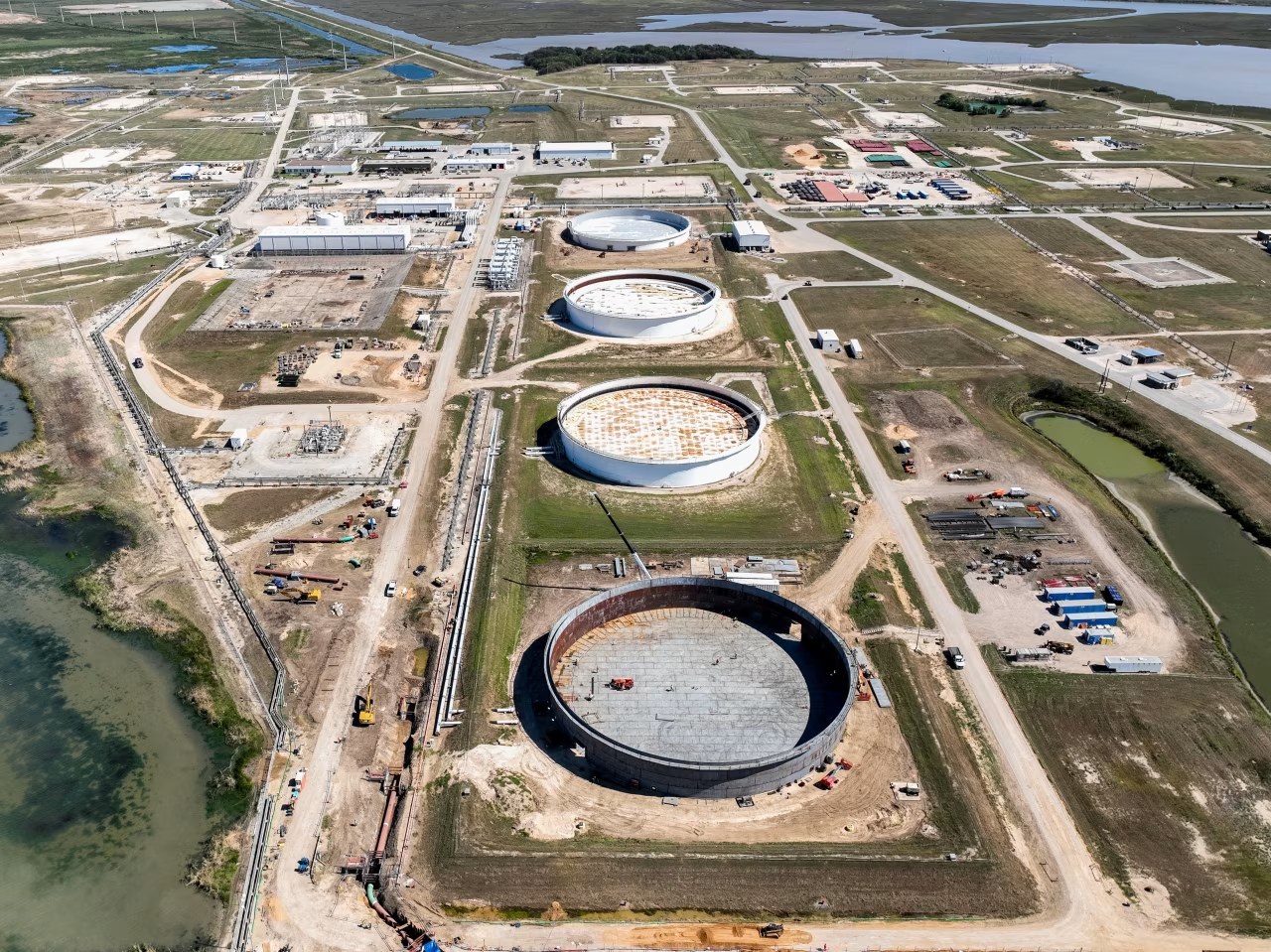
180 Million Barrels Gone: Schumer’s SPR Demand Ignores Biden Drawdown That Halved Emergency Oil Buffer
- Strategic Petroleum Reserve fell from 638M to 347M barrels under Biden, a 46 % plunge.
- Current 347M barrels cover only 44 days of net imports, lowest ratio since 1983.
- Schumer urges Trump to sell more; DOE projects SPR could hit 290M by Dec 2025.
- Gasoline at $3.72/gal is 7¢ below 2022 peak, but SPR politics again dominate headlines.
Democrats revive a 2022 playbook—pressuring the White House to flood the market—while glossing over their own record drawdown that limits today’s options.
STRATEGIC PETROLEUM RESERVE—Washington, May 27—Senate Minority Leader Chuck Schumer stood on the Capitol steps Monday and accused President Donald Trump of “refusing to act” as summer gasoline prices climb toward $3.72 a gallon. His solution: tap the Strategic Petroleum Reserve, the 368-million-barrel emergency stockpile Congress created after the 1973 oil embargo.
The only problem is that the reserve Schumer wants Trump to raid is half-empty. Between 2021 and 2023 the Biden administration sold 180 million barrels—more than any president in the 50-year history of the program—leaving the lowest import-cover ratio on record and sharply reducing Washington’s ability to bluff markets.
— The Great Drawdown: How Biden Emptied the Barrel
When President Joe Biden ordered the Department of Energy to sell one million barrels a day for six months starting May 2022, he billed it as a wartime measure to blunt Vladimir Putin’s energy leverage. By the time the last cargo left the Louisiana storage caverns in December 2023, the U.S. had shipped 180 million barrels to refiners from Texas to India.
The numbers are stark. On 20 January 2021 the SPR held 638 million barrels; by 20 January 2024 the tally was 347 million, according to weekly Energy Information Administration (EIA) data. That 46 % shrinkage exceeds every previous drawdown combined, including the 30 million barrels released during the 1991 Gulf War and the 60 million after Hurricane Katrina in 2005.
Congress quietly aided the selloff
Legislators mandated another 147 million barrels in sales between 2022 and 2027 to fund deficit reduction, leaving little room for replenishment. By April 2025 the reserve covers just 44 days of net crude imports, down from 106 days in 2010. “The SPR was designed for supply disruption, not price management,” said Robert McNally, former George W. Bush energy adviser. “Using it as a political shock absorber has degraded the insurance policy.”
Energy Secretary Jennifer Granholm testified last year that replenishment purchases would begin once West Texas Intermediate crude fell to $67–$72; it has averaged $78 since, keeping the caverns thin. Meanwhile, China expanded its own strategic stocks to 926 million barrels, according to customs data, giving Beijing more cushion than Washington for the first time on record.
— Schumer Gambit Revives 2022 Playbook
Standing beside a Chevron station price board reading $3.72, Schumer declared that “when wars and global crises disrupt energy markets, the United States has the ability to act.” He omitted that the last large-scale release he championed—the 2022 Biden drawdown—failed to dent prices sustainably. Gasoline peaked at $5.01 in June 2022, two months after the sales began, and remained above $3.50 for another 18 months.
Republicans quickly circulated a 2022 clip in which Schumer called the SPR “a precious national-security asset” that should not be used to “fix a political problem.” Senator John Barrasso labeled the reversal “cynical even for Washington.”
Market analysts see limited upside
An additional 30-million-barrel release—roughly the size Schumer floated—would add 1.3 million barrels a day for 23 days, barely 1 % of global supply. “The price effect would be measured in pennies, not dimes,” said ClearView Energy Partners managing director Kevin Book. Hedge funds have built a record 600 million barrels in net-long Brent crude futures, betting any SPR sale will be short-lived.
— What Happens to the SPR If Trump Obliges?
Department of Energy modelling shows that if the White House authorised a 30-million-barrel sale this summer, the SPR would end 2025 at 290 million barrels, the lowest absolute level since 1983. Under existing congressional sale mandates, another 40 million barrels must leave the caverns by 2027, pushing the stockpile toward 250 million—barely six weeks of import cover.
That matters because the Gulf Coast storage hubs also supply refineries during hurricanes. Hurricane Laura shut 1.5 million barrels a day of refining capacity in 2020; a direct hit on Lake Charles today would leave 40 % less SPR cushion than three years ago.
Replenishment costs soar
The Government Accountability Office estimates every 50-million-barrel restock cycle costs $3.5 billion at today’s prices, plus $600 million for cavern maintenance deferred during drawdowns. With interest on federal debt at 5 %, the carrying cost alone adds $200 million a year—money Congress has not appropriated.
— Is the SPR Still a Strategic Asset—or a Political Tool?
Created after the Arab embargo, the SPR’s statutory purpose is to offset “severe energy supply interruptions.” Yet presidents of both parties have used it to quell voter anger. Bill Clinton released 30 million barrels ahead of the 2000 election; George W. Bush resisted calls during the 2008 price spike, arguing the reserve is “not a price-management mechanism.”
The 2022 Biden sales marked the first time a release coincided with a mid-term election and followed private polling that showed gasoline prices were eroding Democrats’ congressional prospects. Republicans claim the playbook is now repeating itself. “Schumer wants Trump to do what Biden did—treat the SPR like an ATM,” said Senator Ted Cruz.
Experts push structural reform
The Bipartisan Policy Center proposes shifting 100 million barrels into a gasoline-specific reserve on the East Coast, where pipeline bottlenecks amplify price spikes. Others advocate banning non-emergency sales unless Congress approves. “Every president faces the temptation,” said former EIA administrator Adam Sieminski. “The only fix is to take the keys away.”
— Could Shrinking the SPR Threaten National Security?
Pentagon war-games simulate a simultaneous closure of the Strait of Hormuz and a cyber-attack on Saudi Aramco, removing 12 % of global supply. Under such scenarios, the U.S. would need 600 million barrels to keep refineries running for 90 days while the Navy escorts tankers. At 347 million barrels, today’s SPR falls 43 % short.
China’s strategic petroleum reserve, by contrast, can meet 92 days of net imports, according to Platts estimates. Beijing has added 200 million barrels since 2020 while Washington sold its own. “We are ceding leverage to our adversaries,” said General Jack Keane, retired vice chief of staff of the Army.
Allies notice the shift
Under International Energy Agency treaties, members must hold 90 days of import cover. The U.S. meets the threshold only by counting private inventories, a fudge that irritates Tokyo and Brussels. Japanese officials privately warn that if the SPR drops below 300 million barrels, coordination during future emergencies could fracture.
— What Are the Alternatives to Another SPR Sale?
Rather than raid the emergency stockpile, analysts say Trump could waive the Jones Act, allowing foreign-flagged tankers to move cheaper Gulf Coast crude to East Coast refineries, cutting gasoline logistics costs by roughly 12 cents a gallon. He could also speed up pending pipeline permits in the Permian Basin, adding 300,000 barrels a day of domestic supply within 18 months.
Another lever is ethanol. The EPA currently caps summer E15 sales; lifting the restriction would add 130,000 barrels a day of octane, equivalent to a 20-million-barrel SPR release over three months, according to the Renewable Fuels Association.
Oil traders favour a calm message
Goldman Sachs notes that implied volatility in gasoline futures has doubled since Schumer’s press conference, adding 5 cents to the national price. “Just talking about an SPR sale can backfire,” said consultant Helima Croft. “Markets price the headline risk.”
— Will Congress Finally Reform the SPR?
Senator Joe Manchin and John Barrasso have teamed on a bill requiring any non-emergency SPR sale to be matched barrel-for-barrow with new drilling permits on federal lands. The legislation, scheduled for a Senate Energy Committee vote next month, would also ban releases within 60 days of an election. A companion House bill goes further, mandating the reserve stay above 400 million barrels.
Industry lobbyists give the package a 40 % chance of passage this year, citing bipartisan unease over the reserve’s depletion. “We cannot mortgage energy security for political convenience,” Manchin said. Whether Schumer’s latest demand helps or hurts that cause will be clear by August, when driving season—and the rhetoric—peaks.
Frequently Asked Questions
Q: How many barrels did Biden withdraw from the Strategic Petroleum Reserve?
Between 2021 and 2023 the Biden administration sold 180 million barrels, cutting the stockpile from 638 million to 347 million barrels—the steepest three-year drawdown in SPR history.
Q: What is the current SPR level under Trump in 2025?
As of May 2025 the SPR holds 347 million barrels, equal to just 44 days of net crude imports, the lowest buffer since the reserve was created in 1975.
Q: Can a president legally refuse to use the SPR?
Yes. The Energy Policy and Conservation Act gives the president discretion; there is no statutory duty to release oil when prices rise, only authority to do so if an emergency is declared.
