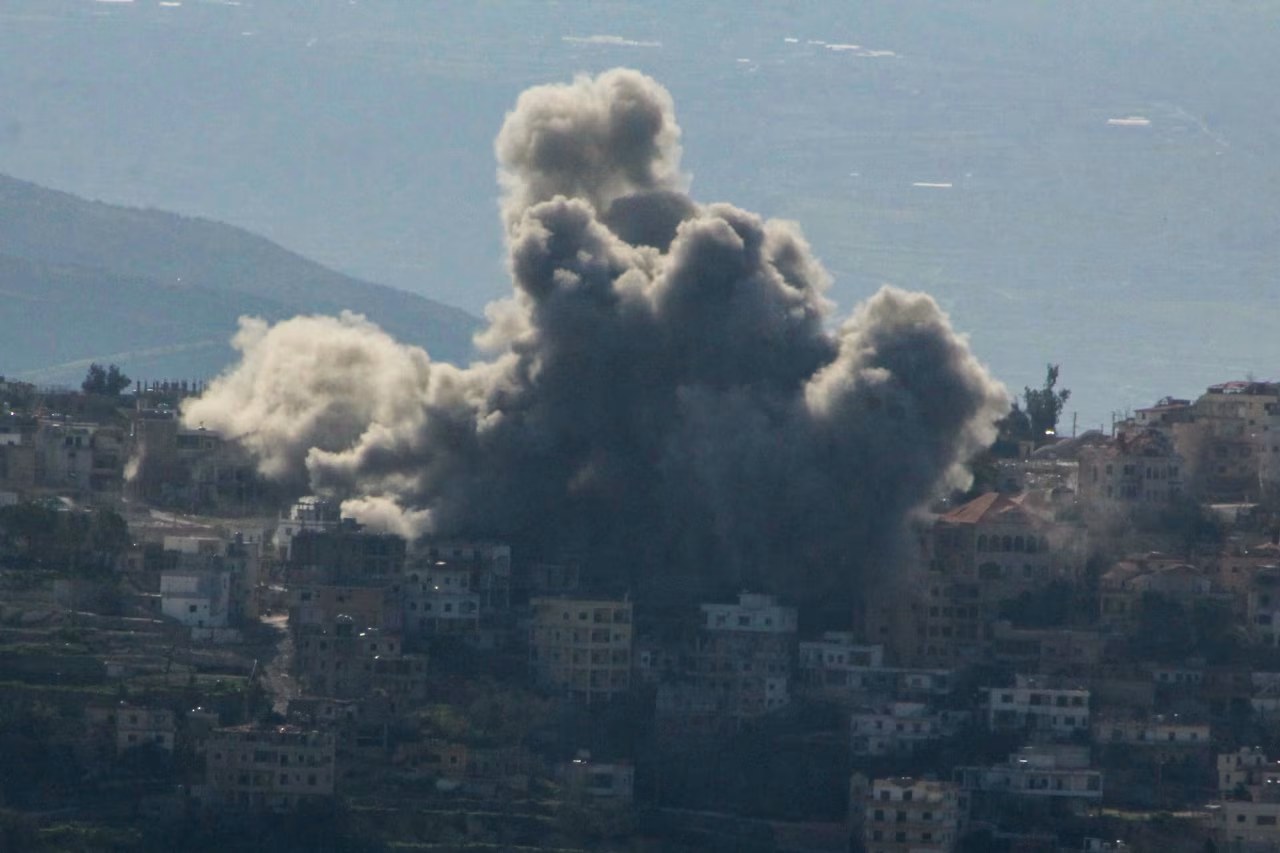
Strait of Hormuz Closure Threatens 20% of Global Oil Supply Amid Middle East Tensions
- Trump is reportedly seeking unconditional surrender from Iran for any future deal.
- Russia is secretly sharing the locations of U.S. targets with Iran, according to U.S. officials.
- The Strait of Hormuz, a chokepoint for around a fifth of global oil supply, is now effectively shut.
- Fears of a stagflationary spiral for the U.S. economy are fueled by rising oil prices, protracted conflict, and a shrinking labor force.
Escalating tensions in the Middle East drive global economic and geopolitical uncertainty. This is a developing story.
MIDDLE EAST TENSIONS—Recent developments in the Middle East indicate a significant increase in geopolitical instability, impacting international relations, oil markets, and the global economic outlook. Former President Trump has articulated a hardline stance towards Iran, while U.S. officials report covert actions by Russia that further complicate regional dynamics. The critical Strait of Hormuz, a vital artery for global energy flows, is experiencing severe disruptions, directly contributing to heightened fears for the U.S. economy.
Amid these rising tensions, the broader implications stretch beyond the immediate battlefield. The confluence of military actions, diplomatic maneuvering, and strategic chokepoint closures is creating a volatile environment, prompting concerns about long-term economic stability and energy security worldwide. The uncertainty is reflected in market reactions and policy discussions regarding national interests and international cooperation.
Trump’s Stance and Growing International Tensions Around Iran
U.S. and Russia actions heighten regional complexity and raise ethical questions
Former President Trump has outlined a multifaceted and at times contradictory approach to Iran, publicly advocating for the nation’s unconditional surrender in any future deal. This firm demand stands in apparent contrast to a statement he made on Truth Social, where he indicated that the United States and its allies would simultaneously ‘work tirelessly’ to strengthen Iran’s economy. This dual perspective suggests a policy framework that combines stern negotiation tactics with potential avenues for economic engagement, adding layers of complexity to future diplomatic efforts and international relations with Tehran.
The regional landscape is further complicated by recent intelligence disclosures. According to U.S. officials, Russia has been secretly sharing the precise locations of American targets with Iran. This covert collaboration poses a significant escalation risk, potentially endangering U.S. personnel and assets in the region and deepening the strategic partnership between Moscow and Tehran. The implications of such intelligence sharing are far-reaching, potentially influencing military strategy and heightening the stakes for U.S. operations in the Middle East.
Adding to the volatile situation are revelations concerning a past incident involving civilian casualties. American military investigators now believe that U.S. forces were likely responsible for a strike in Iran that tragically killed dozens of children at a girls’ elementary school. This finding, reported by a U.S. official, underscores the profound ethical challenges and potential for unintended consequences in military operations. Such incidents can significantly impact international perceptions of U.S. conduct and complicate diplomatic efforts in the region, demanding accountability and potentially shaping future engagement rules.
Meanwhile, the ongoing strategic operations linked to regional stability have seen shifts in leadership. Defense Secretary Pete Hegseth has reportedly “found his footing” in a key operational role, emerging as Epic Fury’s front man. This development highlights the continuous adaptation of military and defense postures in response to the dynamic security environment in the Middle East. Hegseth’s prominent role suggests a focused effort on specific initiatives that are likely integral to U.S. strategy amidst the broader international tensions surrounding Iran and its allies.
Why the Strait of Hormuz Is Choking Global Oil Supply
Closure of vital waterway threatens global energy security and supply chains
The Strait of Hormuz, a maritime chokepoint of immense strategic importance, is currently characterized as ‘effectively shut,’ a development with severe repercussions for international energy markets. This vital waterway serves as the transit point for approximately a fifth of global oil supply every day, making its disruption a critical concern for economies worldwide. The effective closure implies significant impediments to the free flow of oil, directly impacting supply chains and contributing to the instability of global crude prices.
The cessation of normal operations through the Strait of Hormuz forces a re-evaluation of shipping routes and energy security strategies. The closure not only creates immediate supply challenges but also introduces a heightened element of risk for any vessel attempting passage. The phrase ‘effectively shut’ suggests that while some activity might persist, the primary function of uninterrupted high-volume transit has been severely curtailed, leading to widespread ramifications for importers and exporters reliant on this route for crucial energy resources.
Despite the perilous conditions, including reports of Iranian missile threats, certain commercial interests continue to navigate the perilous waters. A specific billionaire has ships that are reportedly ‘braving Iranian missiles’ in the Strait of Hormuz, underscoring the extraordinary risks and economic imperatives driving some operators. This defiance highlights the intense pressure on global supply chains and the willingness of some to undertake extreme measures to maintain oil flows, even in the face of direct military threats. Such actions further emphasize the volatile and unpredictable nature of the current situation in the region, where economic necessity clashes with geopolitical hazards.
The ripple effects of the Strait’s closure are already being observed in oil-producing nations. Kuwait began cutting production at some of its oil fields, a direct consequence of running out of storage space. This scenario indicates that with the primary export route severely constrained, producers are unable to offload their crude, leading to a build-up of inventories. The inability to export readily through the Strait effectively bottlenecks the entire production process for some regional producers. This forced reduction in output from a significant oil-producing nation like Kuwait further exacerbates global supply concerns, reinforcing the critical role the Strait of Hormuz plays in maintaining market equilibrium. The economic consequences extend beyond price increases, affecting the operational capacity and financial health of major oil industry players.
Economic Fallout: Fears of Stagflation and Market Reactions
Triple threat of rising oil, prolonged conflict, and labor contraction fuels U.S. economic anxiety
The U.S. economy is currently grappling with a confluence of adverse factors that are collectively fueling widespread fears of a stagflationary spiral. This concerning economic outlook is primarily driven by three critical developments: a significant increase in oil prices, the looming ‘specter of a protracted Middle East war,’ and a persistent ‘shrinking labor force.’ Each of these elements individually poses a challenge, but their combined effect creates a potent threat to the nation’s economic stability and growth trajectory.
The sharp rise in global oil prices acts as a direct inflationary pressure, increasing costs across various sectors from transportation to manufacturing, and ultimately impacting consumer purchasing power. This commodity price surge is exacerbated by geopolitical tensions, particularly the ‘specter of a protracted Middle East war.’ An extended conflict in such a critical region for energy production guarantees continued volatility and upward pressure on crude oil, embedding inflation deeper into the economic fabric and making it harder for central banks to manage.
Compounding these external pressures is an internal economic challenge: a shrinking labor force. A contraction in the available workforce can constrain economic output, reduce productivity, and lead to upward wage pressure without corresponding increases in efficiency, a classic ingredient for stagflation. The combination of high inflation driven by energy costs and supply chain issues, alongside stagnant or declining economic growth due to labor market constraints, defines the core risk of a stagflationary environment. This perilous situation, according to analysts, ‘threatens to derail the U.S. economy’ by eroding purchasing power, deterring investment, and potentially leading to a period of sustained economic hardship.
Investor sentiment has already reflected these growing anxieties. The Dow Jones Industrial Average experienced its worst week since April, a clear indicator of market apprehension. Such a significant decline suggests that investors are reacting to the perceived heightened risks of both inflation and economic slowdown, opting for caution and shedding assets. This market reaction underscores the gravity of the economic forecast, as financial markets often act as a leading indicator of broader economic health. The collective worries about global stability, energy prices, and domestic labor dynamics are converging to create a challenging period for the U.S. economic outlook.
U.S. Policy Beyond Iran: The Approach to Cuba and Transnational Crime
Aggressive enforcement and regime change strategies extend beyond traditional conflicts
Beyond the immediate focus on Iran, U.S. policy initiatives under previous administrations have shown a pattern of aggressive engagement aimed at regime change, often leveraging legal and financial instruments. Former President Trump has openly indicated that another ‘country’ could become his next target for such political upheaval. This approach mirrors actions taken during his administration, specifically the use of criminal charges as a primary justification for the ouster of Venezuelan leader Nicolás Maduro. This tactic signifies a strategic shift, where law enforcement tools are integrated into broader foreign policy objectives to achieve political transitions in targeted nations.
The infrastructure for such international enforcement efforts is notably robust. A working group, established by Jason Reding Quiñones, a Trump appointee, exemplifies this integrated approach. This group is specifically designed to gather evidence that supports actions against foreign leaders or entities deemed illicit. Its composition underscores the comprehensive nature of these investigations, as it includes high-level officials from the U.S. Treasury, the Federal Bureau of Investigation (FBI), and the Drug Enforcement Administration (DEA). The involvement of these diverse agencies ensures a multi-pronged attack on targets, combining financial sanctions capabilities, criminal intelligence gathering, and narcotics enforcement expertise to build cases for potential legal or political action.
The mandate of this working group is to gather evidence that can be used to justify interventions or sanctions, as seen with the case of Nicolás Maduro. By focusing on transnational crime, drug trafficking, and financial malfeasance, the U.S. government seeks to dismantle networks that may support adversarial regimes or undermine American interests abroad. The Department of Justice (DOJ) has affirmed this broader mission, stating that ‘Federal prosecutors from across the country work every day to pursue justice, which includes efforts to combat transnational crime.’ This public statement frames such actions as part of a continuous and nationwide commitment to justice, extending its reach to international targets.
The lack of a response from a Reding Quiñones spokesperson regarding specific inquiries further indicates the sensitive nature of these operations. The strategic use of criminal charges and evidence gathering as a means to effect political change highlights a powerful, albeit controversial, tool in the U.S. foreign policy arsenal. This approach demonstrates a willingness to employ legal frameworks not only for traditional law enforcement but also as a mechanism for international influence and control, particularly in regions where U.S. strategic interests are deeply involved.
Frequently Asked Questions
Q: What is Trump’s stated position regarding Iran?
Trump has indicated a desire for Iran’s unconditional surrender in any future deal. He also stated on Truth Social that the U.S. and its allies would actively work to strengthen Iran’s economy. These positions highlight a dual approach of strong demands coupled with potential economic engagement, as reported in recent news.
Q: Why are there concerns surrounding the Strait of Hormuz?
The Strait of Hormuz is currently described as ‘effectively shut,’ which is a major concern because around a fifth of the world’s global oil supply typically transits through this vital waterway daily. Its closure significantly disrupts international oil flows and contributes to rising oil prices and economic uncertainty.
Q: What factors are contributing to U.S. economic concerns?
Fears of a stagflationary spiral are being fueled by several factors. These include a notable increase in oil prices, the specter of a prolonged Middle East war, and a shrinking labor force. These combined elements pose a significant threat to the stability and growth of the U.S. economy, as indicated by recent market performance.
Q: How is the U.S. government pursuing transnational crime abroad?
A working group, created by Trump appointee Jason Reding Quiñones, is actively gathering evidence. This group comprises officials from the Treasury, FBI, and DEA, and focuses on combating transnational crime. This initiative follows the administration’s use of criminal charges to justify the ouster of Venezuelan leader Nicolás Maduro.
Sources & References
