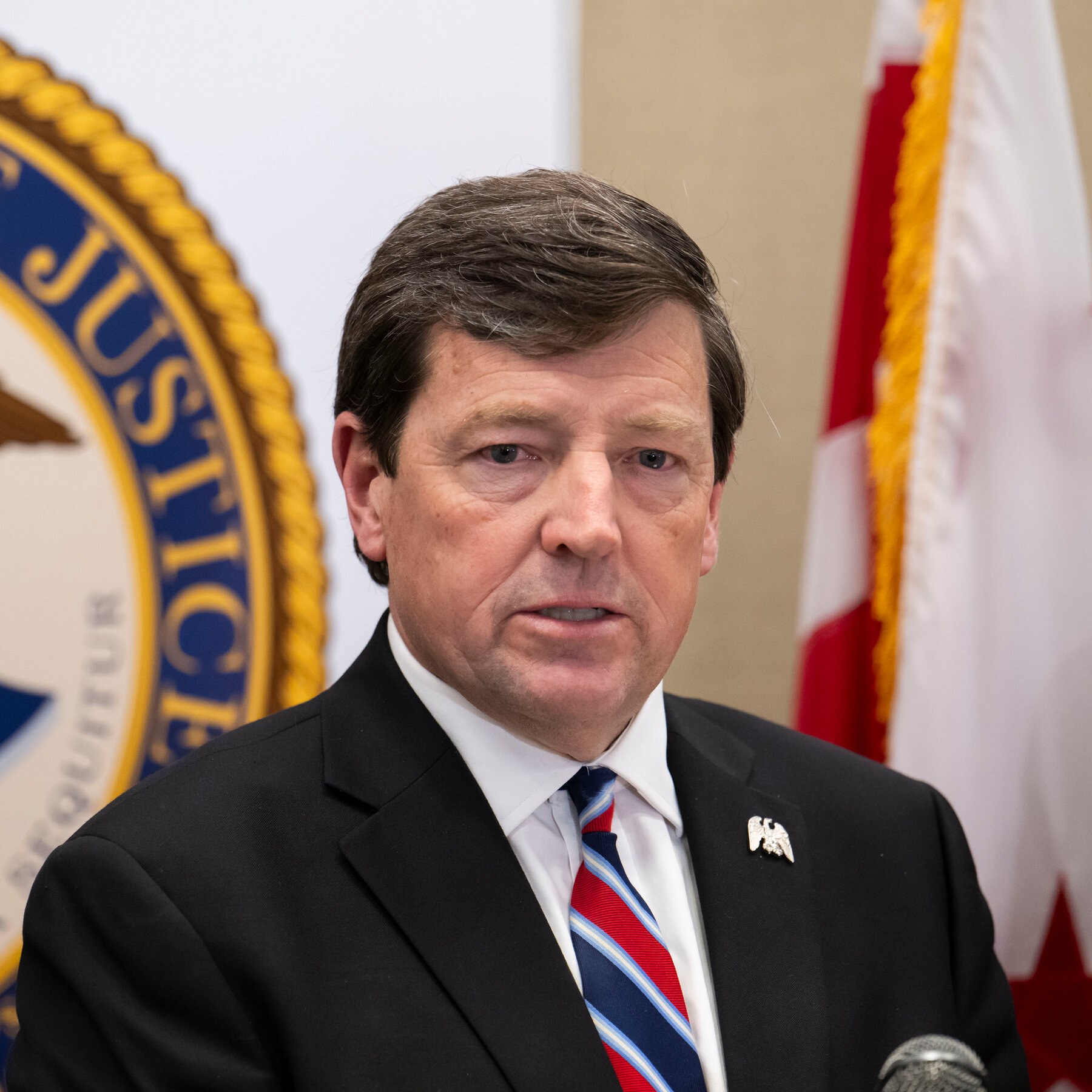
D.C. Bar Files Two Ethics Counts Against Trump DOJ Pardon Attorney Ed Martin
Complaint accuses him of targeting Georgetown Law and violating constitutional oath
ED MARTIN—The District of Columbia’s attorney-discipline body has opened a formal ethics case against Ed Martin, the Trump administration’s pardon attorney and former acting U.S. attorney for D.C., alleging he abused his position to punish Georgetown Law School. The filing, submitted Friday by disciplinary counsel Hamilton P. Fox III, escalates a growing confrontation between state bar associations and ex-Trump Justice Department officials.
- Two-count complaint lodged with D.C. Court of Appeals Board on Professional Responsibility
- Martin accused of violating oath to support Constitution and conducting unauthorized ex parte communications with judge
- Justice Department counters that bar is applying ethics rules unevenly for political ends
- Attorney General Pam Bondi floated new rule last week to curb bar probes of DOJ lawyers
Martin, who once led the U.S. Attorney’s Office in Washington before stepping aside over confirmation troubles, has become a central figure in President Trump’s drive to deploy federal law enforcement against perceived political adversaries. The D.C. Bar’s action marks the latest attempt to use professional-conduct rules to police that strategy.
The Charges
Bar alleges constitutional-oath breach and improper judge contacts
According to the complaint, Martin violated several ethics rules: failing to uphold his sworn duty to support the Constitution, engaging in unauthorized one-sided conversations with a judge, and committing “conduct that seriously interferes with the administration of justice.” The document does not detail every factual allegation but makes clear the underlying dispute involves Martin’s efforts to retaliate against Georgetown Law School. If the board finds probable cause, the case will proceed to a public hearing where sanctions could range from a reprimand to disbarment in the District.
The filing signals a significant escalation in the efforts to use state and local bars to punish lawyers in the Trump administration for purported violations of ethics rules in pursuit of the president’s aims. While the complaint is framed as a civil proceeding, the stakes are high: a public finding of misconduct could derail Martin’s career and embolden similar disciplinary actions against other former Trump officials across the country.
Martin’s alleged targeting of Georgetown Law is not described in granular detail, but the reference to interfering with the administration of justice suggests the bar believes he attempted to leverage his prosecutorial or pardon-related authority to punish the school for political reasons. Such an approach, if proven, would cross traditional boundaries that separate legal advocacy from partisan score-settling.
The two-count structure is lean but potent. Count one centers on the constitutional oath, a pledge every D.C. bar member must swear to uphold the laws and the Constitution. Count two bundles the ex parte allegation and the catch-all claim of disrupting judicial process. Together they paint a picture of a senior government lawyer who used his office to pursue personal or political vendettas rather than neutral enforcement of the law.
Hamilton P. Fox III, the disciplinary counsel, signed the filing personally, underscoring the high-profile nature of the matter. Fox’s office has broad subpoena power and can compel testimony from Justice Department employees, White House aides, and even federal judges. If the Board on Professional Responsibility finds probable cause, the case will move to a hearing panel composed of volunteer lawyers and public members appointed by the D.C. Court of Appeals.
A hearing would be public, transcribed, and could feature exhibits such as emails, text messages, and sworn affidavits. Witnesses could be called from Georgetown, the bench, and the Justice Department. The panel can recommend sanctions that range from an admonition—public but non-judicial—to suspension or revocation of Martin’s D.C. law license. Any adverse decision can be appealed to the D.C. Court of Appeals and, ultimately, to the Supreme Court of the United States.
Key Facts in the D.C. Bar Complaint
| Filing Date | Counts | Complainant | Next Step |
|---|---|---|---|
| Friday, March 7, 2026 | 2 | Hamilton P. Fox III | Probable-cause review |
From U.S. Attorney to Pardon Power Broker
Failed confirmation forced shift to influential White House-facing role
Martin initially served as acting U.S. attorney for the District of Columbia, a post that oversees many high-profile federal prosecutions. When it became clear he lacked the Senate support needed for permanent appointment, he moved to the Office of the Pardon Attorney, a smaller unit that traditionally processes clemency petitions. The switch gave him closer day-to-day contact with the White House than most prior pardon attorneys, allowing him to shape clemency decisions and broader Justice Department policy from inside the West Wing orbit.
The trajectory is unusual. Historically, the U.S. attorney for D.C. is confirmed by the Senate and serves as the chief federal prosecutor for the district. When Martin’s nomination stalled, rather than leave government, he accepted the pardon post—an office that had been relatively obscure. Under Trump, however, the role has expanded in visibility and influence. Martin has had far more access and influence in the White House than many of his predecessors, according to people familiar with the matter.
That proximity has translated into policy clout. Martin has reportedly weighed in on high-profile clemency decisions, advised on potential pardons for individuals connected to the January 6 riot, and participated in broader discussions about using presidential clemency as a political tool. The combination of his prior prosecutorial role and current pardon portfolio places him at the intersection of law enforcement and political patronage.
Critics argue the expanded role blurs traditional boundaries. The pardon attorney is supposed to provide neutral recommendations based on merit and DOJ policy, not to advance partisan objectives. Supporters counter that every administration is entitled to appointees who share the president’s philosophy. Either way, Martin’s presence in the West Wing has made him a lightning rod for disciplinary complaints, congressional inquiries, and now bar charges.
His biography helps explain why. Before entering government, Martin was a conservative activist and talk-radio host in Missouri. He served as a state GOP official and ran unsuccessfully for state attorney general. Those partisan roots, allies say, make him a target for liberal legal groups and bar officials who disagree with Trump’s agenda. Detractors counter that bar rules apply regardless of political affiliation, and senior lawyers must be held to objective standards of conduct.
Ed Martin’s Recent Career Path
2025
early 2026
March 7, 2026
DOJ Fires Back at Bar Investigations
Department leadership calls discipline effort politically motivated
The Justice Department quickly criticized the D.C. Bar’s move, arguing the body is targeting Trump-administration lawyers for partisan reasons. Last week Attorney General Pam Bondi floated a proposed regulation designed to slow or block bar associations from investigating department attorneys for actions taken in their official capacity. The clash highlights a broader conservative pushback against what they see as weaponization of professional-conduct rules against Trump-aligned attorneys.
Bondi’s proposal, still in draft form, would require bar investigators to obtain written certification from the deputy attorney general that any conduct under review falls outside the scope of official duties before proceeding. Critics say such a rule would effectively immunize federal prosecutors from state-level discipline, undermining a century-old system of lawyer self-regulation. Supporters argue it merely clarifies that bar associations should not second-guess prosecutorial decisions made under color of federal law.
The department’s statement on Martin’s case was swift and pointed. A spokesperson accused the D.C. Bar of “unevenly applying its standards” and engaging in “selective enforcement” against lawyers aligned with the current administration. The statement noted that no similar disciplinary actions have been filed against former officials from prior administrations who engaged in controversial prosecutions, implying a double standard.
The standoff is part of a wider pattern. Across the country, state bars have faced pressure to investigate Trump-era lawyers who played roles in policies ranging from family separation to election challenges. Conservative legal groups have responded by filing counter-complaints against Democratic prosecutors, creating a tit-for-tat dynamic that threatens to politicize bar discipline. The Martin case is likely to become a test of whether professional-conduct rules can serve as a check on political prosecutions or whether they themselves will become another battleground in the culture wars.
Hamilton Fox, the D.C. disciplinary counsel, declined to comment on the department’s criticism. His office is statutorily independent and funded by bar dues, not federal appropriations. Still, any attempt by DOJ to stall the investigation could trigger a separation-of-powers fight. The D.C. Court of Appeals, which oversees the bar, has previously upheld the board’s authority to subpoena federal officials and to sanction them for conduct unrelated to bona fide prosecutorial discretion.
For Martin, the stakes are both personal and symbolic. A public hearing would force him to defend his conduct under oath, with transcripts that could be used in congressional investigations or civil litigation. A reprimand or suspension would mark the first time a former U.S. attorney and sitting pardon attorney has been disciplined by a state bar for actions taken while in office. An acquittal, by contrast, would embolden Bondi’s effort to curtail bar oversight and could deter similar complaints in other jurisdictions.
Frequently Asked Questions
Q: What specific rules is Ed Martin accused of breaking?
The D.C. Bar charges him with violating his oath to support the Constitution, conducting unauthorized ex parte communications with a judge, and engaging in conduct that seriously interferes with the administration of justice.
Q: Why did Martin leave the U.S. attorney post?
He lacked the Senate votes needed for confirmation, stepped down, and was reassigned as the Justice Department’s pardon attorney—a role that has given him unusually broad White House access.
Q: How has the Justice Department responded to the bar’s action?
Department leadership, including Attorney General Pam Bondi, accused the D.C. Bar of political bias and last week proposed a new rule aimed at slowing or blocking bar investigations into DOJ lawyers.
Sources & References
- Primary SourceD.C. Bar Begins Disciplinary Proceedings Against Ed MartinMar 10, 2026nytimes.com
