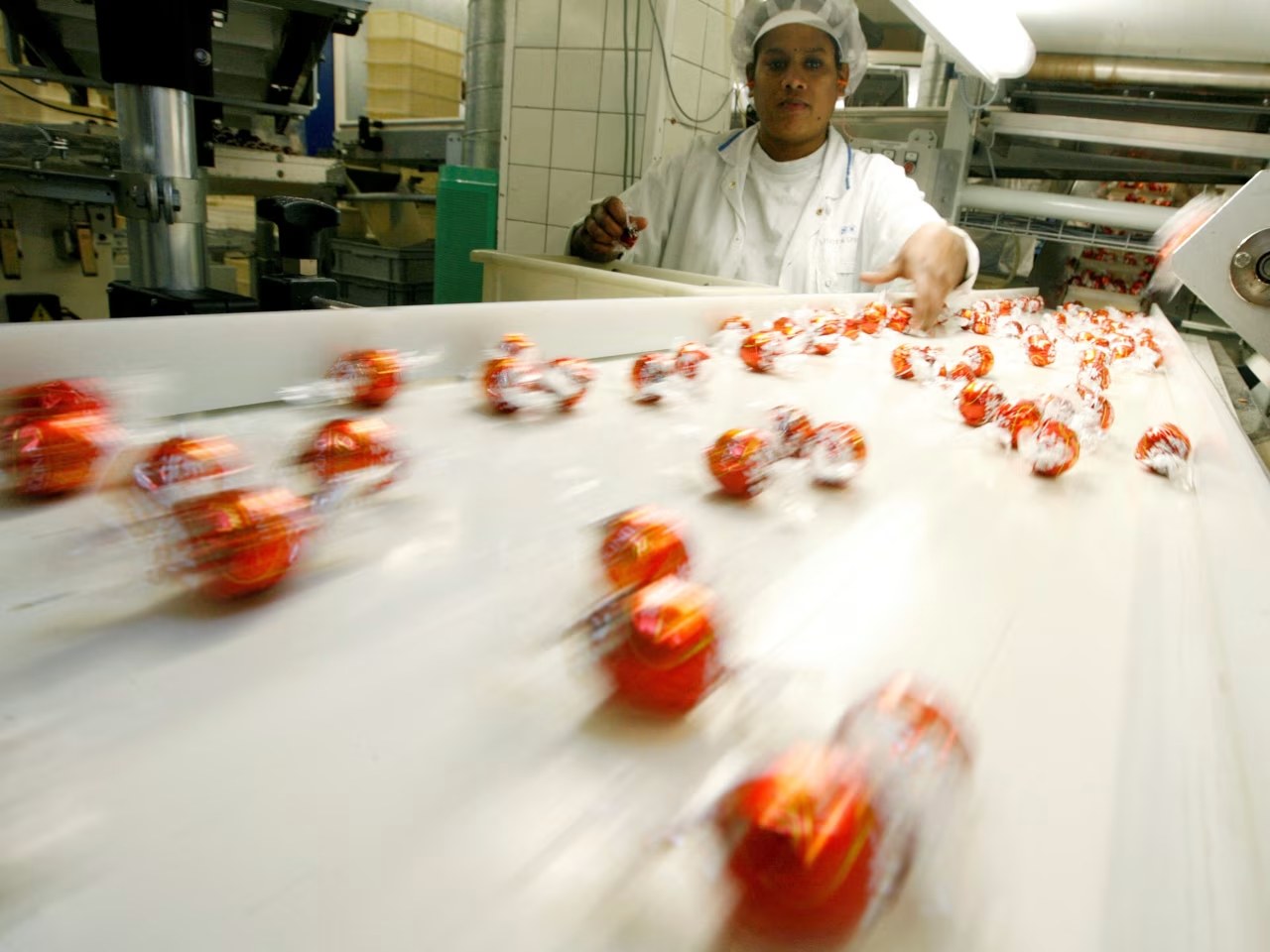
Lindt Shares Tumble 10.29% After 2026 Guidance Cut on Middle East Fallout
Swiss chocolatier blames bleak consumer mood and weak holiday sales
LINDT—This is a developing story. Lindt & Spruengli shares closed down 10.29% after the company lowered its 2026 growth forecast, citing a bleak consumer mood exacerbated by conflict in the Middle East and lackluster Christmas sales.
- Stock fell 10.29%, the worst session since early 2025 Lindt & Spruengli
- CEO Adalbert Lechner cited ‘suppressed appetite’ amid regional unrest
- Guidance cut follows disappointing holiday-season revenue
- Investors worry luxury chocolate is next discretionary casualty
What Lindt Told Investors
CEO flags ‘continued gloomy mood’ as order books soften
Chief Executive Officer Adalbert Lechner said uncertainty tied to the Middle East conflict has dampened consumer sentiment, leading the company to trim expectations for 2026. The guidance reduction comes only weeks after Lindt reported underwhelming Christmas sales, a period that typically drives more than a quarter of annual revenue for European confectioners.
Management did not quantify the size of the guidance cut, but the market reaction—wiping more than a tenth off the equity value in one session—signals investors fear profit warnings could follow if regional tensions persist. Lindt had previously guided for mid-single-digit organic growth this year; analysts now expect that figure to be revised closer to low-single-digit expansion.
The Swiss group, best known for its gold-foil Easter bunnies and premium pralines, has spent the past decade expanding beyond its home market into North America and Asia. That globalization strategy hinged on rising disposable incomes and a willingness to pay up for perceived indulgence. When geopolitical headlines turn negative, however, discretionary food items are among the first categories shoppers prune from baskets, a dynamic Lechner acknowledged in the company’s brief statement.
Investors had already been jittery about cocoa prices, which have swung wildly as Red Sea shipping delays raise insurance premiums and lengthen transit times for key bean shipments. Lindt sources much of its specialty cocoa through ports that skirt the Arabian Peninsula, so even modest disruptions can ripple through supply chains. The firm has long touted its direct relationships with farmers in Ecuador and Ghana, yet those beans still travel through the Suez Canal before reaching European grinding facilities.
Compounding the headache, European retail surveys released earlier this month show consumers plan to trim non-essential food spending by mid-single-digit percentages if regional tensions persist into spring. That metric matters for Lindt because gift-box purchases—think hazelnut pralines wrapped in red ribbon—are precisely the kind of impulse buy that evaporates when shoppers feel uncertain about the year ahead.
One-Day Share Drop
-10.29%
Source: WSJ market data
Why Chocolate Is Sensitive to Geopolitics
Luxury treats are among first items shoppers skip when anxious
Confectionery executives have long observed that premium chocolate behaves like a discretionary luxury: when headlines turn negative, shoppers trade down to private-label bars or skip indulgence altogether. The current Middle East conflict has pushed cocoa futures higher on supply-route worries, while also denting consumer confidence in Europe, Lindt’s largest market.
Analysts note that Lindt’s exposure is twofold: higher input costs and weaker volumes. The company sources specialty cocoa through Red Sea shipping lanes that have seen increased insurance premiums and rerouting delays. At the same time, German and French retail surveys show shoppers plan to cut non-essential food spending by mid-single-digit percentages if regional tensions persist into spring.
The mechanics are straightforward. When tanker rates spike, freight forwarders pass along surcharges that can add tens of basis points to ingredient costs. Lindt hedges roughly two-thirds of its annual cocoa needs a year in advance, but the remaining third floats with spot markets, leaving a tail of exposure that investors tend to overlook until volatility erupts.
Demand destruction can be just as powerful. Academic studies of European grocery data during prior Middle East conflicts show unit sales of premium confectionery fall two to three times faster than private-label candy once consumer-confidence indices drop below 100. Lindt’s average selling price is roughly triple that of mainstream chocolate tablets, so the brand sits squarely in the cross-hairs when belts tighten.
Finally, there is the gift-channel risk. Roughly 40% of Lindt’s annual revenue is tied to seasonal occasions—Valentine’s hearts, Easter bunnies, Santa figurines—often purchased while consumers browse airports, train-station kiosks, or downtown department stores. Travel dips whenever geopolitical tension rises, footfall evaporates, and with it the impulse purchases that underpin Lindt’s high-margin business model.
Broader Market Ripple Effects
Sector peers watch Lindt as bellwether for premium food demand
The 10.29% slide makes Lindt the worst performer in the Stoxx 600 food & beverage sub-index this week, dragging valuations for Barry Callebaut and Nestlé’s chocolate division lower in sympathy. Portfolio managers say the move highlights how quickly sentiment can flip for high-multiple staples names once growth narratives break.
Options markets now price a 30% chance of another 5% drop in Lindt shares before month-end, up from 12% last week. Short interest remains low at 1.4% of free float, suggesting the sell-off has been driven by long-only holders reducing exposure rather than speculative bears.
The episode also feeds into a wider debate about whether European consumer staples still deserve valuation premiums. Lindt has historically traded north of 20× forward earnings on the assumption that brand loyalty and rising per-capita chocolate consumption in emerging markets would sustain mid-single-digit organic growth. When that narrative cracks, as it did Tuesday, multiple compression can be brutal.
Fund flows illustrate the pain. European large-cap consumer exchange-traded products saw net outflows of $340 million last week, the largest weekly redemption since last autumn, according to data provider TrackInsight. Within that universe, chocolate and coffee names experienced the heaviest redemptions, suggesting Lindt’s profit warning is reinforcing a broader rotation away from discretionary staples.
Smaller Swiss peers are feeling the chill. Shares in chocolate manufacturer Barry Callebaut, which supplies industrial couverture to Lindt and other brands, slipped 4% even though it did not alter guidance. Analysts attribute the decline to fears that Lindt’s volume weakness could ripple through Barry’s premium-ingredient segment, where margins are already thin after last year’s cocoa price surge.
What Happens Next?
Investors await updated margin targets and volume guidance
Management promised a fuller strategy update at the annual general meeting in late April, when it will publish detailed 2026 assumptions. Until then, analysts will scrutinize weekly scanner data for evidence that the gloomy mood cited by Lechner is translating into outright volume declines across Lindt’s praline gift boxes and gold-bunny Easter lines.
Some fund managers see opportunity: if the stock retreats another 5–7%, Lindt would trade below 20× forward earnings, a level that historically attracts consumer-staples specialists betting on brand resilience. Others caution that further escalation in the Middle East could keep cocoa prices elevated and consumer sentiment subdued, leaving little room for near-term relief.
The next catalyst is the release of first-quarter sales figures in early May. Lindt typically reports only headline organic growth, but investors will parse regional splits for signs that North America is offsetting European weakness. Last year the company opened its first U.S. production line for gold bunnies, a move designed to shorten supply chains and capitalize on dollar strength; any hint that American demand is also softening would intensify downside pressure.
Margin commentary will be equally critical. Lindt has long targeted an adjusted EBIT margin of roughly 15%, among the highest in packaged food. If cocoa futures remain above $4,000 per metric ton and promotional activity ramps up to shore up volumes, that goal could slip, forcing analysts to pencil in mid-teens earnings downgrades for 2026.
Finally, watch the buyback calculus. Lindt generates robust free cash flow and has periodically returned funds via special dividends. A prolonged share-price slump could prompt management to accelerate repurchases, but only if balance-sheet leverage stays below the self-implied net-debt-to-Ebitda ceiling of 2×. With consumer mood fragile and input costs elevated, the company may prefer to hoard cash, leaving valuation support dependent on operational improvements rather than financial engineering.
Forward P/E vs Sector Average
Lindt current
21.5×
Stoxx food & bev avg
17.2×
▼ 20.0%
decrease
Source: FactSet
Frequently Asked Questions
Q: Why did Lindt shares fall?
The stock dropped 10.29% after the chocolatier trimmed its 2026 guidance, blaming a gloomy consumer mood linked to Middle East conflict and disappointing holiday sales.
Q: What did Lindt say about consumer behavior?
CEO Adalbert Lechner said a ‘continued gloomy mood among consumers and suppressed appetite for the company’s wares’ is now a central concern.
Q: How did Christmas sales perform?
Lindt described its Christmas-period sales as ‘lackluster,’ contributing to the reduced growth outlook for 2026.
Sources & References
- Primary SourceLindt Shares Sink as Iran Conflict Deepens Consumer Gloomwsj.com
