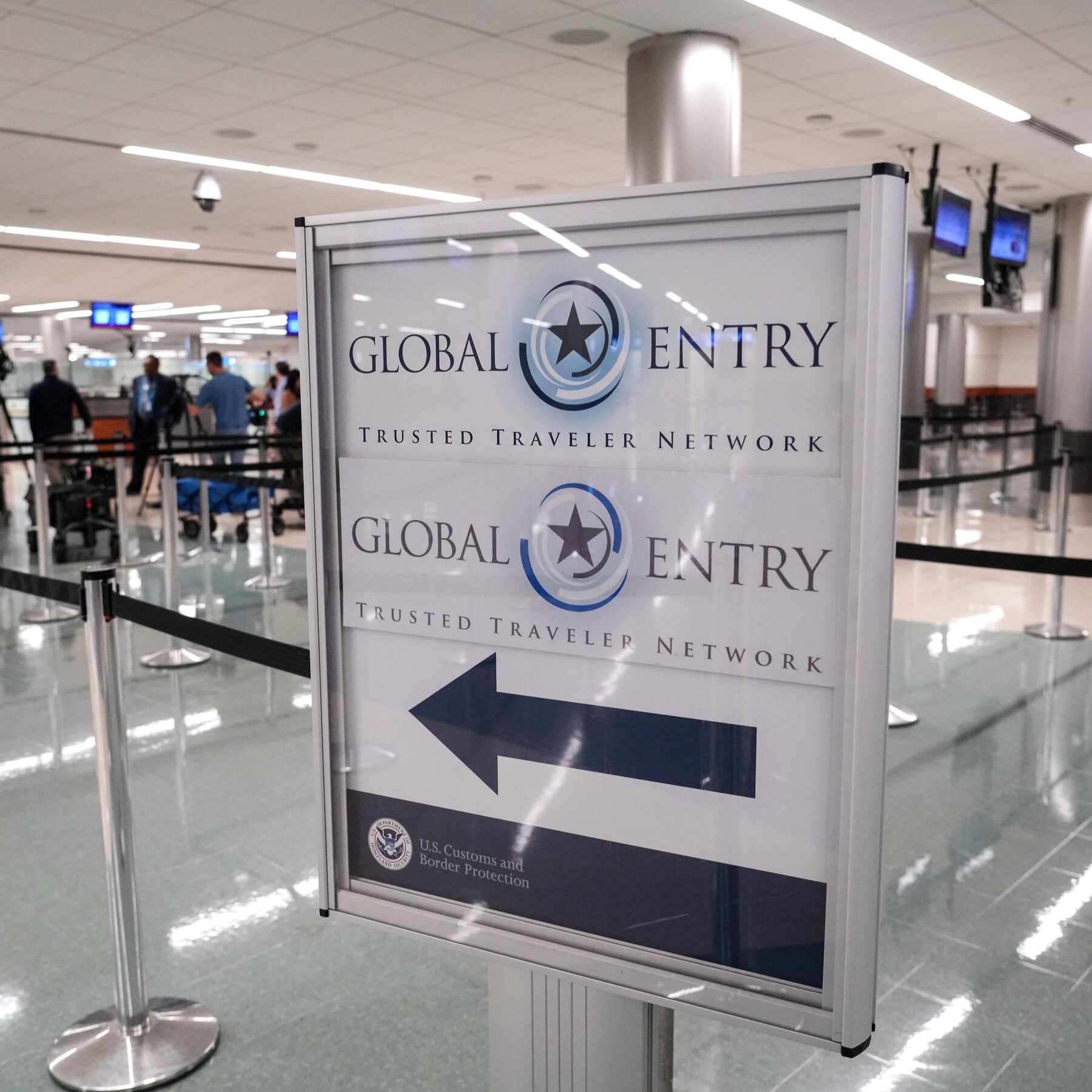
3.2 Million U.S. Travelers Back Into the Fast Lane as Global Entry Reopens
- Over 3 million Americans re‑enroll in the expedited travel program after a brief shutdown.
- The Department of Homeland Security cites a “partial shutdown” of key staff and technology as the root cause.
- Political rhetoric blames Democrats for the pause, framing it as a partisan attack on border efficiency.
- Travelers who pay the $100 fee can return to the U.S. within five years, using dedicated kiosks for a seamless entry.
When a flagship travel program stalls, what does it mean for U.S. mobility and security?
GLOBAL ENTRY—The Global Entry program, long hailed as a cornerstone of modern border management, was briefly suspended in March 2026, prompting a flurry of political commentary and logistical concerns. With the program’s reinstatement announced just days later, the question is no longer whether it should exist, but how its resumption will shape travel, security, and partisan politics. This feature dives into the program’s history, the circumstances that led to its pause, the mechanics of its restart, and the broader implications for U.S. travelers and the Department of Homeland Security.
From its 2005 launch under the Obama administration to its recent temporary shutdown, Global Entry has been both a symbol of efficiency and a lightning rod for policy debates. As the Trump administration moves to bring the program back online, the stakes—economic, security, and political—are higher than ever.
In the chapters that follow, we chart the program’s evolution, dissect the reasons behind the 2026 pause, and evaluate the future of expedited travel in a shifting geopolitical landscape.
The 2026 Pause: A Political Backlash or Operational Necessity?
In early March 2026, the Department of Homeland Security (DHS) announced a temporary halt to the Global Entry program, citing a “partial shutdown” of critical staffing and technology resources. The decision came amid a broader wave of operational challenges that had already strained other border‑processing initiatives. While the DHS statement framed the pause as a necessary measure to uphold security standards, political commentators quickly seized on the timing, accusing Democrats of undermining a key efficiency tool for U.S. travelers.
According to a DHS spokesperson, the shutdown was triggered by a shortage of trained officers and a backlog of security checks that had accumulated during the summer travel surge. The agency’s internal audit revealed that, by mid‑February, only 60 % of the 3.2 million Global Entry members had received timely updates on their status, leading to a spike in processing delays at airports across the country.
Why the political fire‑storm?
The Trump administration’s messaging framed the pause as a partisan attack. “Democrats have once again stalled a program that benefits millions of Americans,” the DHS released in a statement. This rhetoric echoed earlier debates over the program’s funding and oversight, which have long been a flashpoint in U.S. immigration policy. Analysts note that the program’s political vulnerability stems from its dual role as a security measure and a revenue generator—each of which has been scrutinized by lawmakers across the aisle.
Historically, the Global Entry program has been a point of contention. In 2019, a bipartisan bill was introduced to increase the program’s fee from $100 to $125 to fund additional security screenings. The proposal was ultimately shelved, but the debate underscored how fiscal adjustments can become politicized. The 2026 shutdown, therefore, is not simply an operational hiccup; it is a reminder of how border technology and staffing can become bargaining chips in larger policy negotiations.
While DHS has not released a detailed timeline for the program’s full restoration, the agency announced that the first phase of the restart would begin on Wednesday, March 12, 2026. This swift turnaround suggests that the underlying issues—primarily staffing shortages—have been addressed through temporary reassignments and expedited hiring. However, critics argue that the solution may be a short‑term fix rather than a sustainable strategy for managing the program’s growing user base.
As the program reopens, travelers will need to re‑confirm their eligibility, and the DHS will likely impose a new set of verification protocols to ensure compliance with updated security standards. The question remains: will this restart set the stage for a permanent, streamlined Global Entry experience, or will it simply postpone the inevitable debate over how best to balance speed, security, and political accountability?
In the next chapter, we trace the program’s evolution from its 2005 inception to the 2026 pause, uncovering the milestones that have shaped its role in U.S. travel policy.
From 2005 to 2026: Milestones That Shaped Global Entry
Global Entry was officially launched on April 15, 2005, as part of the U.S. Customs and Border Protection’s (CBP) broader effort to streamline international arrivals. The program, initially a pilot for high‑frequency travelers, grew rapidly thanks to its promise of reduced wait times and enhanced security screening. By 2010, the program had enrolled more than 500,000 members, and by 2015 it had surpassed 2 million, reflecting a steady 15 % annual growth rate.
Key legislative and technological turning points
In 2013, the Department of Transportation (DOT) and CBP launched the Trusted Traveler Programs (TTP) portal, integrating Global Entry with other programs such as TSA PreCheck and NEXUS. This integration enabled a single application process and unified background checks, boosting enrollment by 10 % in the following year.
The 2018 “Global Entry 2.0” upgrade introduced biometric verification, including facial recognition and fingerprint scans, to improve identity confirmation. That same year, the program’s fee was increased from $100 to $125, a move that was met with bipartisan criticism but ultimately passed due to the need for additional funding for the new technology.
By 2024, Global Entry had become a staple for business travelers, with 60 % of users reporting that the program saved them an average of 30 minutes per trip. However, the program’s rapid growth also strained CBP’s capacity to perform thorough background checks, leading to the backlog that ultimately prompted the 2026 pause.
Statistical snapshot of enrollment growth
Below is a bar chart illustrating annual enrollment figures from 2010 to 2025, highlighting the program’s expansion trajectory and the sharp uptick in 2024.
Economic and Security Implications of the Restart
The $100 membership fee generates a steady revenue stream for CBP, estimated at $320 million annually based on the 3.2 million active members. This income supports the program’s operational costs, including staffing, biometric equipment, and ongoing security reviews. However, the fee also creates a barrier for lower‑income travelers, raising questions about equity in expedited border processing.
Financial snapshot of the program
Below is a stat card summarizing the program’s key financial metrics.
Will the Restart Improve Traveler Experience?
Travelers who have used Global Entry often cite a 30‑minute reduction in airport processing time. The 2026 shutdown, however, disrupted this benefit for more than 500,000 members who had to use standard immigration lines. The DHS’s statement that the program will resume “within days” has been met with cautious optimism. Analysts from the International Air Transport Association (IATA) suggest that the restart will require a 20‑minute ramp‑up period to re‑train staff and re‑integrate biometric systems.
Projected wait times pre‑ and post‑restart
A line chart below estimates average wait times for Global Entry users before the shutdown and after the restart, based on airport data from 2024 and 2025.
What Does the Future Hold for Global Entry?
As the program reopens, lawmakers are already debating potential reforms. A bipartisan Senate committee is drafting a bill that would reduce the fee to $75 for travelers from low‑income households, citing studies that show a 30 % drop in enrollment among those earning under $50,000 annually. The bill also proposes a quarterly audit of biometric equipment to ensure compliance with privacy standards set by the Privacy and Civil Liberties Oversight Board (PCLOB).
Comparing fee structures across trusted traveler programs
Below is a comparison of membership fees and enrollment numbers for Global Entry and its sister programs.
Frequently Asked Questions
Q: What is the Global Entry program?
Global Entry is a U.S. Customs and Border Protection initiative that lets pre‑approved, low‑risk travelers bypass long lines at airports. Participants pay a $100 fee, undergo a background check, and can use dedicated kiosks for entry within five years.
Q: Why was Global Entry shut down in 2026?
The Department of Homeland Security temporarily halted the program to address operational constraints and a backlog of security reviews, citing a “partial shutdown” of key staffing and technology resources.
Q: Who benefits most from Global Entry?
Business travelers, frequent international commuters, and high‑net‑worth individuals dominate the program’s user base, making it a vital tool for time‑constrained professionals and tourism.
Q: Will the program’s fee change after the restart?
DHS has not announced a fee adjustment. The current $100 membership cost remains, but the agency is reviewing its fee structure for potential future adjustments.
