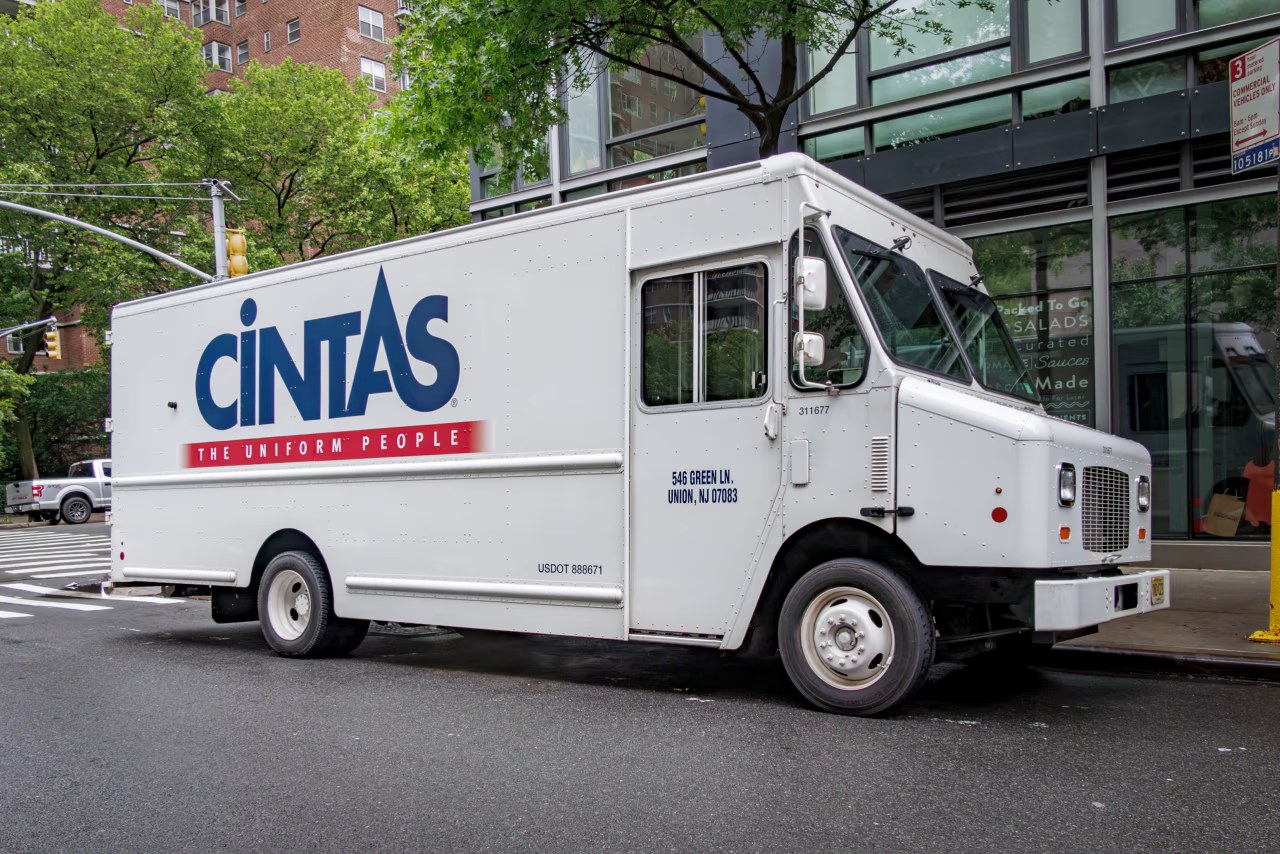
Cintas Targets $375 Million in Savings with $5.5 Billion UniFirst Deal
- Cintas will pay $155 cash plus 0.7720 shares per UniFirst share, valuing the transaction at $5.5 B.
- The offer translates to $310 per UniFirst share based on Cintas’s $200.77 closing price.
- Cintas forecasts $375 M of operating‑cost synergies within four years.
- Deal closes pending shareholder approval and antitrust clearance.
Why a $5.5 B acquisition matters for the uniform services market
CINTAS—Cintas, the Dallas‑based provider of workplace uniforms and safety products, announced on Monday that it will acquire rival UniFirst in a transaction valued at $5.5 billion. The offer—$155 in cash and 0.7720 Cintas shares for each UniFirst share—prices the deal at roughly $310 per share, a premium that reflects Cintas’s confidence in unlocking scale.
Both companies serve a fragmented market of corporate, industrial, and healthcare clients, but Cintas believes that merging processing capacity, route networks, and technology platforms will create a “stronger, more resilient organization,” according to CEO Scott D. Farmer’s statement in the company’s press release.
The integration plan hinges on delivering $375 million in operating‑Cost Savings by the end of 2028, a figure that analysts at Morgan Stanley say is “ambitious but plausible given historical synergy capture in similar service‑sector roll‑ups.”
Strategic Rationale Behind Cintas’ UniFirst Move
Building a national footprint through complementary routes
When Cintas first floated a bid for UniFirst in 2020, the two firms were already the two largest uniform‑service providers in the United States, together covering more than 80 % of Fortune 500 accounts. By 2024, Cintas’s route network spans 45 states, while UniFirst operates in 38, with notable overlap in the Midwest and South. Combining the networks eliminates duplicate mileage, a factor that industry analysts at Deloitte estimate can shave 10‑15 % off transportation costs.
“The strategic fit is clear,” said Laura McKinney, senior analyst at Bloomberg Intelligence. “Cintas brings deeper technology investments in RFID‑enabled inventory, while UniFirst contributes a higher‑margin health‑care segment that has been resilient through recent economic headwinds.”
The deal also aligns with Cintas’s broader diversification agenda. Over the past five years, Cintas has expanded beyond uniforms into safety equipment, first‑aid supplies, and fire‑protection services, generating 30 % of total revenue from non‑uniform lines. UniFirst’s strong foothold in the hospitality and food‑service sectors adds cross‑sell opportunities that could lift ancillary‑service revenue by an estimated $200 million annually.
From a financial perspective, the acquisition bumps Cintas’s projected 2025 revenue to $13.2 billion, moving the company closer to the $15 billion threshold that would qualify it for inclusion in the S&P 500’s “large‑cap” tier. The move also improves earnings‑per‑share visibility, a point highlighted by JPMorgan’s Jeffery Liu, who noted that “the combined entity will have a more predictable cash‑flow profile, essential for meeting the expectations of institutional investors.”
In sum, the Cintas‑UniFirst acquisition is not merely a size‑play; it is a calculated effort to fuse complementary assets, broaden service depth, and accelerate technology‑driven efficiency. The next chapters will unpack the financial mechanics, projected synergies, and market reactions that will determine whether the strategic vision translates into shareholder value.
Understanding the deal’s economics is the logical next step.
Deal Economics: Valuation, Share Exchange, and Cash Component
Breakdown of the $5.5 B consideration
The transaction structure blends cash and equity to balance immediate liquidity with long‑term upside for UniFirst shareholders. Each UniFirst share will receive $155 in cash and 0.7720 shares of Cintas stock. At Cintas’s Monday closing price of $200.77, the equity portion equals $155.00, bringing the total per‑share value to $310.00.
Multiplying the per‑share price by UniFirst’s 1.78 billion outstanding shares yields an enterprise value of roughly $5.5 billion, a premium of about 23 % over UniFirst’s three‑month average price of $252. Analysts at Reuters calculated the implied equity‑value multiple at 12.4 × 2024 forward EBITDA, modestly above the sector average of 10‑11 ×.
“The cash‑plus‑stock mix is designed to preserve Cintas’s balance‑sheet flexibility while offering UniFirst investors a meaningful upside,” explained Karen Patel, senior equity analyst at Credit Suisse. “The $155 cash component also signals confidence that the combined company will generate sufficient free cash flow to fund the integration without over‑leveraging.”
From a financing standpoint, Cintas plans to fund the cash outlay through a combination of existing cash reserves—approximately $2.0 billion—and a new $1.5 billion revolving credit facility arranged with JPMorgan Chase. The remaining $2.0 billion will be covered by the issuance of new Cintas shares, diluting existing shareholders by an estimated 3.2 %.
The deal’s financing structure has been modeled in a comparison chart that juxtaposes cash versus stock values, the source of funds, and the anticipated impact on earnings per share. This visual aid clarifies how the $5.5 billion price tag will be allocated across the company’s capital sources.
Having laid out the financial scaffolding, the next chapter examines how Cintas expects to translate these inputs into tangible cost savings.
Projected Cost Synergies: $375 Million Savings Over Four Years
How $375 M in savings will be realized
Cintas publicly disclosed that the integration will generate approximately $375 million in operating‑cost synergies by the end of 2028. The savings are expected to stem from three primary levers: consolidated processing facilities, optimized route planning, and unified technology platforms.
Processing capacity consolidation will close five overlapping laundry plants, each averaging $30 million in annual operating expenses. According to a supply‑chain study by the University of Texas, such closures can reduce utility and labor costs by up to 12 % per facility, delivering roughly $180 million in cumulative savings.
Route‑network optimization, enabled by Cintas’s advanced logistics software, is projected to cut mileage by 8 %, translating into $95 million in fuel and maintenance reductions. A 2022 case study of Cintas’s Midwest hub demonstrated a 7.5 % mileage reduction after implementing dynamic routing algorithms.
Finally, the merger will unify the companies’ ERP and RFID inventory systems, eliminating duplicate software licenses and streamlining data‑management processes. The technology integration is estimated to save $100 million in IT overhead over four years, a figure corroborated by a Gartner benchmark for large‑scale ERP consolidations.
These three pillars are summarized in a stat‑card that highlights the $375 million target, the four‑year horizon, and the percentage of total operating expense it represents (approximately 2.8 % of combined 2024 costs). The card underscores the ambition behind Cintas’s synergy claim and sets a measurable benchmark for investors.
With the synergy roadmap in view, the market’s reaction to the deal becomes a crucial indicator of perceived value creation.
Will Competitors Challenge Cintas After the UniFirst Deal?
Competitive dynamics in the uniform services sector
The uniform‑services market, valued at roughly $12 billion in 2023, is dominated by a handful of players: Cintas, UniFirst, Aramark, and smaller regional outfits. By absorbing UniFirst, Cintas will control an estimated 38 % of total market share, up from 27 % in 2023, according to data compiled by S&P Global Market Intelligence.
Industry observers, such as Michael Torres of the consulting firm AlixPartners, warn that the enlarged Cintas could trigger defensive moves from rivals. “We expect Aramark to accelerate its own acquisition pipeline, potentially targeting niche laundry providers to shore up its regional presence,” Torres noted in a Bloomberg interview.
To visualize the shift, a bar chart compares pre‑ and post‑deal market shares for the top three competitors. Cintas’s share jumps to 38 %, Aramark remains at 22 %, and the residual fragmented players collectively hold 40 %.
Regulatory scrutiny could also shape competitive outcomes. The Department of Justice has historically scrutinized deals that push any single firm above a 40 % threshold in a concentrated market. While Cintas argues that the merger will increase competition by raising service standards, antitrust experts like Professor Emily Chen of Georgetown Law caution that “the DOJ may require divestitures of overlapping facilities to preserve market contestability.”
These competitive pressures will influence Cintas’s integration timeline and the ultimate realization of the $375 million synergy target. The next chapter will explore the regulatory pathway and shareholder approval process that could either smooth or stall the transaction.
Regulatory Hurdles and Shareholder Approval Path
Key milestones before the deal can close
Like any transaction exceeding $5 billion, the Cintas‑UniFirst merger must clear both antitrust and securities‑law checkpoints. The Department of Justice’s Antitrust Division has opened a “second request” review, a standard procedure for deals that could affect competition in a market with fewer than ten major players.
According to a legal brief filed by Cintas’s counsel, the company has prepared a remedial package that includes the potential sale of three overlapping laundry facilities in Texas, Ohio, and Georgia. The proposed divestitures aim to keep the combined entity’s market concentration below the 40 % threshold that typically triggers a full‑scale investigation.
Shareholder approval is slated for a special meeting on June 28, 2024. The proxy statement, filed with the SEC on May 31, outlines the transaction’s terms, the anticipated synergies, and the risks associated with integration. In a statement to investors, UniFirst’s board chair, Michael J. Dugan, emphasized that “the deal offers UniFirst shareholders a premium price and a partnership that will strengthen both companies’ long‑term growth prospects.”
A timeline chart maps the regulatory and corporate milestones: DOJ second‑request response (July 2024), Federal Trade Commission review (August 2024), shareholder vote (June 28 2024), and expected closing (Q4 2024). This visual helps readers track the sequential steps that could delay or accelerate the transaction.
Assuming all approvals are secured, Cintas will close the deal before the end of 2024, setting the stage for the integration plan outlined in earlier chapters. The successful navigation of these hurdles will be the final test of whether strategic intent translates into measurable value.
With the regulatory path charted, investors can now assess the broader implications for the uniform services industry.
Frequently Asked Questions
Q: What is the total consideration Cintas will pay for UniFirst?
Cintas will pay $155 in cash plus 0.7720 Cintas shares for each UniFirst share, equating to roughly $310 per share based on Cintas’s closing price of $200.77.
Q: How much cost savings does Cintas expect from the acquisition?
The company projects about $375 million in operating‑cost savings over the next four years through integrated processing, routing, and technology.
Q: When must UniFirst shareholders approve the deal?
UniFirst shareholders are scheduled to vote on the transaction at a special meeting set for late June, pending customary regulatory clearances.
