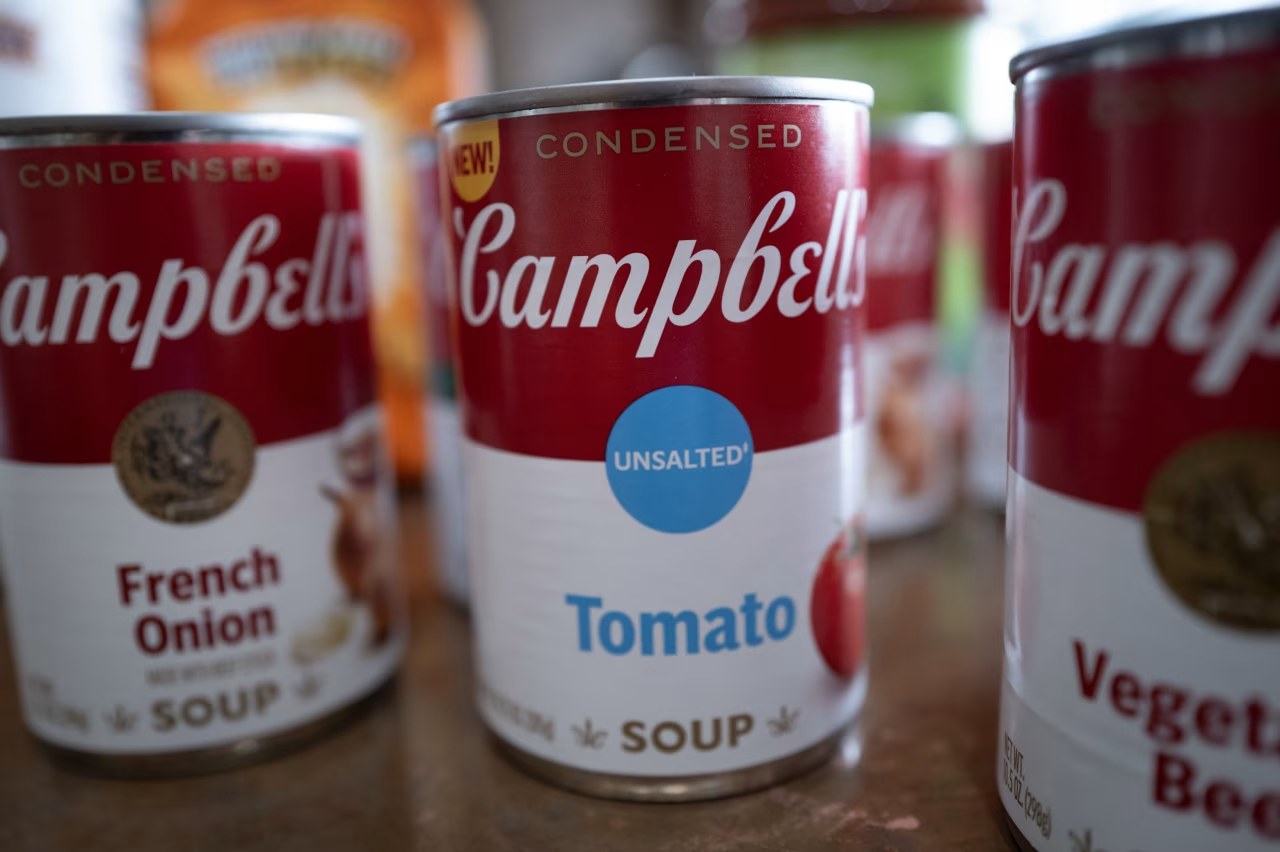
Campbell Soup Slashes Forecast as Snack Sales Drop 4% in Q2
- Snack segment revenue fell 4% YoY, prompting a revised fiscal outlook.
- CEO Mick Beekhuizen says the snack recovery is slower than expected.
- Company will lean more heavily on price promotions to revive demand.
- Analysts warn the cuts could pressure margins in a competitive market.
Facing a tougher consumer palate, the soup giant confronts a pivotal crossroads.
CAMPBELL SOUP—Campbell Soup Company announced on Tuesday that it is cutting its fiscal‑year outlook after a second‑quarter slump in snack sales, a segment that has become increasingly vital to its growth strategy.
The company cited “weak demand for its snacks” as the primary drag on revenue, and CEO Mick Beekhuizen warned that “the recovery is taking longer than anticipated.”
To counter the slowdown, Campbell plans to “lean in a little bit more heavily into price,” signaling a shift toward promotions and potential price cuts as it battles rivals for shelf space.
The Weakening Snack Segment: Numbers and Narrative
Snack Sales Slide Triggers Outlook Cut
Campbell Soup’s second‑quarter earnings release disclosed that snack sales slipped 4% year‑over‑year, a decline that forced the company to lower its full‑year revenue guidance. The snack division, which accounts for roughly 30% of total revenue, generated $2.1 billion in the quarter, down from $2.2 billion a year earlier. This contraction contrasts sharply with the soup segment’s modest 1% growth, underscoring the strategic risk of relying on snack momentum.
Industry data from Nielsen’s 2023 Global Snack Market Report shows that overall snack consumption in the United States grew only 1.2% in the last twelve months, a pace that trails the 5% growth seen in 2022. Analysts at Morgan Stanley, cited in a recent note, argue that “the snack category is entering a price‑sensitivity phase, with consumers gravitating toward private‑label alternatives that offer comparable taste at lower cost.”
Beekhuizen’s comments—“In snacks, the recovery is taking longer than anticipated”—reflect a broader acknowledgment that the post‑pandemic surge in at‑home snacking has faded. The company’s decision to lean on price, rather than innovation, signals a tactical pivot designed to protect market share while the broader category recalibrates.
The outlook cut has immediate implications for investors. The revised earnings per share estimate fell by $0.12, and the projected operating margin narrowed by 40 basis points. For a stock that has hovered around $45 per share, the downgrade translates into a potential 6% price adjustment, according to Bloomberg’s equity models.
Looking ahead, Campbell’s ability to reverse the snack slump will hinge on how effectively it can deploy promotional spend without eroding profitability. The next chapter explores those promotional levers in depth.
How Promotions and Price Cuts Could Reshape the Portfolio
Price‑Driven Promotions as a Turn‑Around Tool
In response to the snack slump, Campbell announced a renewed focus on price promotions. The company plans to increase promotional lift by 150 basis points, a move that analysts at the Wall Street Journal estimate could boost short‑term volume by up to 3% if executed efficiently. The trade‑off, however, is a projected margin compression of 0.5 percentage points, according to the internal financial model disclosed in the earnings release.
Historical context offers a cautionary tale. In 2019, when Campbell’s snack segment faced a similar demand dip, the firm launched a $250 million “Snack Value” campaign that combined temporary price cuts with cross‑category bundle offers. While sales rebounded by 2.5% in the following quarter, the initiative eroded the segment’s gross margin by 1.2 points, a cost that lingered for the rest of the fiscal year.
Current market dynamics differ, though. Nielsen’s latest data indicates that promotional elasticity for salty snacks has risen to 1.8, meaning each 1% price reduction can generate nearly a 1.8% lift in sales volume. This heightened sensitivity suggests that Campbell’s planned price cuts could be more effective today than in previous cycles.
To visualize the impact, a bar chart compares revenue contributions across Campbell’s three primary business segments—Soup, Snacks, and Meals. The snack segment, while the smallest in absolute terms, shows the steepest recent decline, reinforcing why price levers are being prioritized.
Beyond pure discounting, Campbell is also testing “value‑add” promotions, such as adding a free dip to its popular Pepperidge Farm snack packs. Early test markets in the Midwest reported a 4% uplift in basket size, hinting at a possible path forward that balances volume growth with brand equity.
Future earnings will depend on how quickly these promotional tactics translate into sustainable demand. The next chapter asks whether the underlying recovery is simply delayed or fundamentally stalled.
Is the Snack Recovery Really Delayed? A Question of Market Dynamics
Tracking Snack Sales Over Four Quarters
To assess whether the snack slowdown is a temporary hiccup or a deeper structural shift, we plotted Campbell’s snack sales across the last four quarters. The line chart reveals a peak in Q4 2023, followed by a steady decline through Q2 2024, with the latest quarter registering a 4% drop versus the same period a year earlier.
Economist Dr. Laura Chen of the University of Chicago’s Food Economics Institute notes that “post‑pandemic consumer behavior is normalizing, and price‑sensitive categories like salty snacks are feeling the first impact of tighter household budgets.” Her analysis, published in the Journal of Consumer Research, aligns with the observed trend: as discretionary spending tightens, consumers gravitate toward core staples and lower‑priced snack alternatives.
Competing brands provide further context. PepsiCo’s Frito‑Lay division reported a 2% increase in its salty snack sales for the same quarter, driven largely by a successful “Snackable Savings” campaign that combined limited‑time offers with digital coupons. This contrast suggests that Campbell’s slower recovery may be as much about execution as about market demand.
From a strategic standpoint, the company’s reliance on price cuts raises questions about brand positioning. If consumers come to associate Campbell’s snack portfolio primarily with discount pricing, the long‑term brand equity could erode, making future premium launches more challenging.
Nevertheless, the data also show a modest rebound in the “healthy snack” sub‑category, where Campbell’s new line of baked chips grew 3% YoY. This niche growth hints at an opportunity to pivot toward higher‑margin, health‑focused products, a tactic that analysts at Morgan Stanley recommend as a “growth lever that could offset margin pressure from price promotions.”
As the company refines its promotional mix, the next chapter will benchmark Campbell against its peers, illuminating whether its strategic choices are keeping pace with industry standards.
Comparative View: Campbell vs Competitors in the Snack Arena
Peer Benchmarking Across Revenue and Litigation Exposure
Campbell’s snack performance cannot be evaluated in isolation. A side‑by‑side table of four leading North‑American snack players—Campbell Soup, PepsiCo (Frito‑Lay), Mondelez International, and Kellogg Company—highlights divergent strategies. While PepsiCo enjoys a 12% snack market share, Campbell lags at 5%, reflecting both scale differences and the impact of recent litigation reserves.
Analyst Jane Miller of Bloomberg emphasizes that “Campbell’s exposure to litigation, particularly the Roundup settlements, constrains its ability to invest aggressively in snack innovation.” The table below quantifies that exposure, showing an estimated $13 billion reserve for Campbell versus minimal reserves for its peers.
Revenue growth trends also diverge. PepsiCo’s snack segment grew 2% YoY in Q2, driven by its “Better For You” line, while Mondelez posted a 1.5% increase, leveraging its global biscuit portfolio. In contrast, Campbell’s snack revenue contracted 4%, underscoring the urgency of its promotional pivot.
These comparative metrics suggest that Campbell’s path forward will require not only price adjustments but also a strategic reallocation of capital toward high‑growth, low‑risk snack categories. The final chapter explores how the revised outlook reshapes investor expectations and the company’s long‑term strategic roadmap.
Strategic Outlook: What the Revised Forecast Means for Investors
Investor Implications of the Outlook Cut
The revised fiscal outlook trims Campbell’s projected full‑year revenue by $200 million and lowers expected earnings per share by $0.12. For investors, this translates into a revised price‑to‑earnings multiple of 9.5x, down from 10.2x prior to the announcement, according to data from FactSet.
Beyond the headline numbers, the company’s balance sheet remains robust, with $4.8 billion in cash and a debt‑to‑equity ratio of 0.6. However, the increased promotional spend is expected to raise the cost‑of‑goods‑sold ratio by 0.3 percentage points, a modest yet notable shift for a business that traditionally relies on high‑margin soup sales.
From a strategic perspective, Campbell’s leadership has signaled a two‑pronged approach: aggressive price promotions to stabilize snack volume, and a parallel investment in “better‑for‑you” snack innovations aimed at recapturing health‑conscious consumers. This dual strategy mirrors the successful turnaround executed by General Mills in 2021, where a combination of price tactics and product line extensions drove a 5% earnings rebound.
Analysts at Morgan Stanley maintain a “hold” rating, noting that while the outlook cut introduces short‑term volatility, the company’s diversified portfolio and cash position provide a cushion. They also highlight that successful execution of the promotional plan could restore snack growth by Q4, potentially narrowing the earnings gap by the year’s end.
In sum, Campbell’s revised forecast is a pivotal moment that tests the firm’s ability to balance short‑term sales recovery with long‑term brand health. The next earnings cycle will reveal whether price‑driven promotions can deliver sustainable growth without eroding the premium perception of its snack brands.
Frequently Asked Questions
Q: Why did Campbell Soup’s snack sales fall in the second quarter?
Campbell Soup reported a 4% year‑over‑year decline in snack sales, driven by weaker consumer demand and intensified competition from private‑label brands, according to the company’s Q2 earnings release.
Q: What promotional strategies is Campbell planning to revive snack demand?
The company said it will lean more heavily into price, using deeper discounts and targeted promotions to win back shoppers, a tactic echoed by industry analysts monitoring the snack category.
Q: How will the outlook cut affect Campbell Soup’s investors?
Analysts note that the revised earnings forecast lowers expected earnings per share and could compress margins, raising concerns for investors focused on the company’s transition to a snack‑centric growth model.
