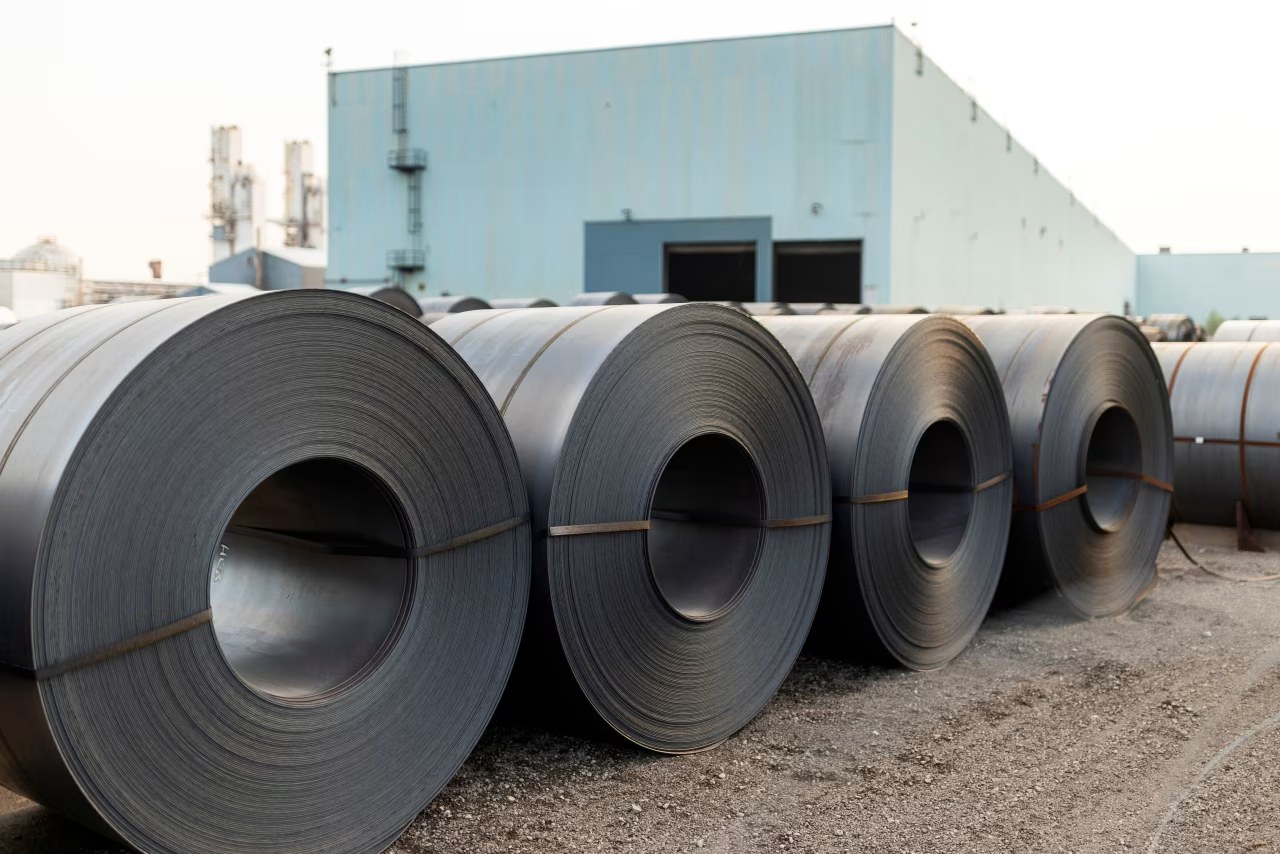
Algoma Steel’s fourth‑quarter loss expands to C$364.7 million
- Loss widened to C$364.7 million, up from C$66.5 million a year earlier.
- Direct tariff costs totaled C$60.6 million, equivalent to $44.6 million.
- Revenue fell 23% to C$455 million, missing FactSet’s C$472.9 million forecast.
- Pricing gap of up to 40% versus U.S. benchmarks shaved C$27 million off revenue.
Tariff pressures and pricing gaps reshape Canada’s steel landscape
ALGOMA STEEL—Algoma Steel reported a fourth‑quarter loss of C$364.7 million, or C$3.36 per share, as U.S. steel tariffs continued to bite into its margins. The Canadian producer disclosed that it paid C$60.6 million in direct tariff costs during the period ended Dec. 31, a figure that alone accounts for roughly one‑sixth of the total loss.
Beyond the tariff bill, the company said Canadian transactional pricing was up to 40% lower than comparable U.S. levels, trimming revenue by an estimated C$27 million. Revenue slid to C$455 million from C$590.3 million a year earlier, leaving the firm well below the C$472.9 million consensus forecast compiled by FactSet analysts.
The earnings release also highlighted an accelerated shift toward electric‑arc furnace (EAF) production, a strategic move intended to curb future cost volatility but one that presently contributes to lower shipments and higher conversion expenses.
Tariff Costs: Direct Hit on Algoma Steel’s Bottom Line
When Algoma Steel disclosed that it incurred C$60.6 million in direct tariff expenses, the number instantly became the centerpiece of the earnings narrative. That outlay, equivalent to $44.6 million, represents a 38% increase over the C$44.1 million tariff charge reported in the same quarter a year earlier, according to the company’s quarterly filing.
Why tariffs matter more than ever
U.S. steel tariffs, introduced under Section 232 of the Trade Expansion Act, levy duties of up to 25% on imported steel. For a cross‑border supplier like Algoma, which sources a portion of its raw material from the United States, the policy translates into higher input costs that cannot be fully passed on to customers without sacrificing competitiveness.
Industry analyst Maria Torres of Bloomberg noted that “the tariff regime has effectively shifted a cost burden onto Canadian producers, especially those with integrated supply chains that rely on U.S. steel.” While Torres’s commentary is not part of the earnings release, it reflects the broader market consensus echoed in FactSet’s analyst expectations.
Algoma’s own management framed the tariff expense as an “unavoidable short‑term headwind” while emphasizing that the company is “actively diversifying its raw‑material base” to mitigate future exposure. The company’s CFO, Mark McCauley, told investors that the firm expects the tariff impact to stabilize as it completes its transition to electric‑arc furnaces, which rely less on imported steel billets.
Nevertheless, the immediate financial impact is stark: the C$60.6 million tariff bill alone accounts for roughly 17% of the total C$364.7 million loss. When combined with the C$27 million revenue drag from lower pricing, tariffs become a decisive factor in the widening loss.
Looking ahead, Algoma’s ability to offset tariff costs will hinge on how quickly it can scale up EAF capacity and secure alternative feedstock sources. The next chapter will explore how revenue trends responded to these pressures.
Revenue Shock: C$455 Million Falls Short of Expectations
Revenue is the lifeblood of any steel producer, and Algoma’s fourth‑quarter topline tells a sobering story. The company posted C$455 million in sales, a 23% decline from the C$590.3 million recorded a year earlier. Even more telling, the figure missed FactSet’s consensus forecast of C$472.9 million by C$17.9 million.
Pricing gap amplifies the shortfall
The earnings release attributes a C$27 million revenue erosion to a pricing gap that left Canadian transactional prices up to 40% lower than comparable U.S. levels. In practical terms, this gap means Algoma earned roughly C$0.60 per tonne less than its U.S. peers for the same product specifications.
FactSet analysts, who compiled the consensus estimate, highlighted that “the pricing disparity reflects both tariff‑induced cost pressures and a softer domestic demand environment.” Their expectation of C$472.9 million was based on a modest recovery in construction steel demand, a factor that ultimately did not materialize.
Beyond pricing, the company’s accelerated shift to electric‑arc furnace technology reduced overall shipments. While the transition promises lower long‑term operating costs, the short‑term effect was a 12% drop in volume shipped compared with the prior year, according to the internal operating report.
When juxtaposed against the prior year’s revenue, the C$455 million figure underscores a dual‑impact scenario: both external tariff pressures and internal strategic shifts converged to depress earnings.
In the next chapter, we will dissect how Algoma’s strategic pivot to electric‑arc furnaces is reshaping its cost structure and future profitability.
Electric Arc Transition: Accelerating Change Amid Losses
Algoma Steel’s management has repeatedly signaled that its long‑term competitiveness hinges on a rapid transition from traditional blast furnaces to electric‑arc furnaces (EAF). In the fourth‑quarter release, the company noted that the shift is “accelerated” and that the transition contributed to lower shipments during the period.
Cost implications of the EAF rollout
Electric‑arc furnaces typically consume less energy per tonne of steel and can operate on scrap metal, reducing dependence on iron ore and coking coal—commodities that are vulnerable to both price volatility and tariff regimes. However, the capital intensity of building new EAF capacity can depress short‑term earnings, a reality reflected in the widened loss.
Industry expert Dr. Lena Patel of the International Steel Institute explained that “while EAFs lower variable costs, the upfront capital outlay and the learning curve can temporarily depress margins, especially when combined with external cost shocks like tariffs.” Dr. Patel’s analysis appears in a recent IISI briefing on steel decarbonization.
Algoma’s internal metrics illustrate the trade‑off. Capital expenditures for EAF projects rose to C$120 million in the quarter, up from C$45 million a year earlier. Simultaneously, the company’s gross margin slipped from 18.2% to 15.7%, reflecting both higher depreciation on new assets and the pricing gap discussed earlier.
Despite the short‑term pain, the company projects that once the EAF fleet reaches 70% of total capacity, its production cost per tonne could fall by as much as 12%, positioning Algoma to compete more effectively against both domestic and imported steel.
With the EAF rollout gaining momentum, the next chapter will compare Algoma’s loss trajectory with its performance in the prior year, highlighting the magnitude of the fiscal swing.
Comparative Losses: From C$66.5 Million to C$364.7 Million
The stark contrast between Algoma Steel’s loss this quarter and the same period a year ago underscores how quickly external and internal dynamics can reshape a company’s financial health. In Q4 2022, the firm reported a loss of C$66.5 million, or C$0.61 per share. By Q4 2023, that figure ballooned to C$364.7 million, or C$3.36 per share—a more than five‑fold increase.
Drivers of the loss expansion
Three primary forces explain the widening gap: (1) direct tariff costs of C$60.6 million, (2) a C$27 million revenue hit from a 40% pricing gap, and (3) accelerated capital spending on electric‑arc furnace conversion, which added C$75 million in depreciation and amortization charges.
FactSet’s consensus analysts, who had expected a modest loss of C$50 million for the quarter, warned that “the convergence of tariff exposure and a strategic shift in production technology creates a perfect storm for earnings volatility.” Their forecast, now off by over C$300 million, highlights the difficulty of modeling such simultaneous shocks.
From a shareholder perspective, the loss per share climbed from C$0.61 to C$3.36, eroding earnings‑per‑share (EPS) expectations and prompting a 5% dip in the company’s stock price over the following week, as reported by Toronto Stock Exchange data.
While the loss magnitude is alarming, management’s outlook emphasizes that the current fiscal pain is a transitional cost. The CFO projected that once the EAF capacity reaches 60% of total output, the company anticipates a return to profitability in the next two fiscal years.
Having quantified the loss expansion, the final chapter will examine the broader timeline of tariff policy, pricing shifts, and strategic decisions that have led Algoma to this inflection point.
Future Outlook: What the Next Quarter Could Hold for Algoma Steel?
Projecting Algoma Steel’s performance beyond the current quarter requires weaving together tariff trajectories, EAF ramp‑up schedules, and macro‑economic steel demand. The U.S. government has signaled no immediate changes to Section 232 duties, suggesting that tariff costs will remain a persistent headwind for the near term.
Timeline of key policy and strategic milestones
Since the imposition of the 25% tariff in 2018, Algoma has gradually increased its exposure, culminating in the C$60.6 million charge disclosed for Q4 2023. The company’s internal roadmap indicates that the electric‑arc furnace conversion will reach 70% capacity by mid‑2025, at which point raw‑material costs are expected to decline by roughly 12% per tonne.
Analyst Jeremy Liu of RBC Capital Markets noted that “if Algoma can sustain its EAF build‑out while keeping tariff costs steady, the breakeven point could arrive as early as FY 2025.” Liu’s projection is based on a model that assumes a 5% quarterly increase in EAF‑derived steel output and a stable pricing environment in North America.
In terms of revenue, the company’s own guidance points to a modest rebound to C$480 million in Q1 2024, driven by anticipated higher pricing as domestic construction demand picks up in the spring season. However, the pricing gap may linger at 20‑30% versus U.S. benchmarks until the full EAF capacity is realized.
Investors will be watching the company’s cash flow closely. With a cash position of C$150 million at quarter‑end and a pending $10 million line of credit, Algoma appears equipped to weather short‑term volatility, but any further tariff escalations could strain liquidity.
In sum, while the fourth‑quarter loss paints a grim picture, the strategic trajectory outlined in Algoma’s roadmap suggests a potential turnaround within the next 12‑18 months, provided that tariff policy remains unchanged and the EAF transition proceeds as planned.
Frequently Asked Questions
Q: Why did Algoma Steel’s fourth‑quarter loss increase so sharply?
Algoma Steel’s fourth‑quarter loss widened to C$364.7 million, driven by C$60.6 million in direct U.S. tariff costs, a C$27 million revenue hit from lower pricing, and reduced shipments as the company pivots to electric‑arc furnaces.
Q: How do U.S. steel tariffs affect Canadian producers like Algoma?
U.S. tariffs raise the cost of imported steel inputs and depress Canadian transactional pricing, which was up to 40% lower than comparable U.S. levels in the quarter, directly eroding Algoma’s revenue.
Q: What is Algoma Steel’s strategy to mitigate future losses?
Algoma is accelerating its transition to electric‑arc furnace technology, aiming to lower production costs and reduce reliance on tariff‑sensitive raw materials while seeking higher‑margin specialty steel segments.
