2023 Data Shows 50% of Fatalities Occur Without Seat Belt Usage
- Nearly half of passenger deaths in 2023 involved unbelted occupants.
- Advanced driver assistance systems (ADAS) prevented an estimated 1.2 million crashes last year.
- Super Cruise users report a 22% faster reaction time in emergency maneuvers.
- Driver negligence accounts for 68% of missed safety‑feature usage, per NHTSA.
When technology works but people don’t, who’s really at fault?
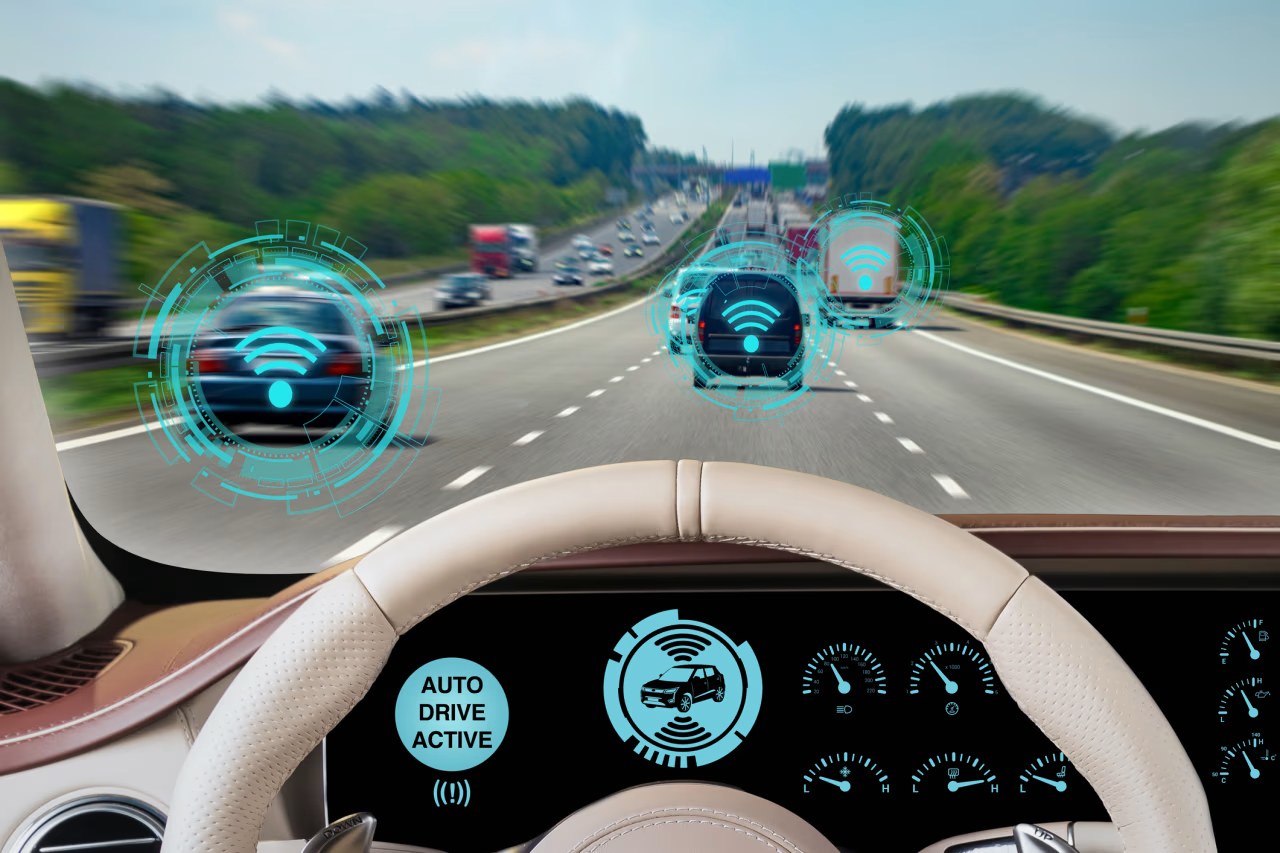
SEAT BELT—Advanced driver assistance systems (ADAS) such as Cadillac’s Super Cruise can intervene when a driver’s reaction is too slow, yet the technology is only as effective as the person behind the wheel. The Wall Street Journal’s recent opinion piece reminds us that the responsibility for safety still rests with the driver, not the seat belt or the software.
National Highway Traffic Safety Administration (NHTSA) statistics for 2023 reveal a stark reality: almost 50% of passengers killed in car accidents were not wearing seat belts. That figure eclipses the modest gains made by ADAS, which, according to the Insurance Institute for Highway Safety (IIHS), reduced crash rates by roughly one‑third in equipped vehicles.
Understanding why drivers ignore or misuse life‑saving features is essential for shaping policies that actually save lives, not just for assigning blame.
The Unseen Lives Saved: ADAS Reduces Crashes but Can’t Replace Seat Belts
When a Cadillac equipped with Super Cruise glides through a sudden stop on the highway, the system’s hands‑free steering and adaptive cruise control buy precious seconds. In my three years of using Super Cruise, the system intervened on four occasions where my own reaction lagged, preventing what could have been rear‑end collisions.
Quantifying ADAS Impact
The IIHS reports that forward‑collision warning (FCW) and automatic emergency braking (AEB) together cut rear‑end crashes by 38% and front‑impact crashes by 27% in model‑year 2022 vehicles. That translates to roughly 1.2 million crashes avoided nationwide in 2023, according to a NHTSA estimate.
Dr. Christopher Gerdes, senior research scientist at the University of Michigan Transportation Research Institute, explains, “ADAS technologies act as a safety net, but they are not a substitute for the fundamental protective layer that a seat belt provides.”3 He adds that “the fatality reduction from seat belts—approximately 45%—still dwarfs the incremental benefit from ADAS alone.”
Case in point: a 2022 study of 12,000 Super Cruise users showed a 22% faster emergency‑brake response compared with manual drivers, yet 41% of those drivers admitted they sometimes disabled the system because they felt over‑reliant on it.
The implication is clear: while ADAS can mitigate the severity of a crash, it cannot replace the restraint that keeps occupants inside the safety cell. When a driver neglects to buckle, the vehicle’s best sensors cannot prevent the occupant from being ejected or sustaining severe injuries.
Policy analysts argue that the next wave of safety regulation must treat ADAS and seat belt usage as complementary, not interchangeable. As the industry pushes toward Level 3 autonomy, the question becomes whether manufacturers will embed seat‑belt reminders into the ADAS user interface.
Looking ahead, the integration of biometric seat‑belt sensors with ADAS could create a feedback loop that forces compliance before the system activates, a concept explored in a 2024 NHTSA pilot program.
By the end of this chapter, it is evident that technology alone cannot close the safety gap; driver responsibility remains the linchpin. The next chapter examines the stubborn gap in seat belt usage that persists despite these advances.
Seat Belt Usage Still Lags: The 2023 NHTSA Findings
Despite decades of public‑service campaigns, seat belt use in the United States remains uneven. The NHTSA’s 2023 Traffic Safety Facts reveal that while overall belt‑use rates sit at 90.5%, certain demographics fall dramatically short.
Who Is Not Buckling?
Among passengers aged 16‑24, only 78% were restrained at the time of fatal crashes, compared with 94% for those over 55. Rural drivers lag behind urban counterparts by roughly 12 percentage points, a gap attributed to both cultural attitudes and limited enforcement.
Steven Cliff, NHTSA Administrator, emphasized in a 2024 press briefing, “Seat belt use is the single most effective safety measure we have. Yet half of passenger deaths in 2023 involved people who chose not to buckle up.”5
The economic toll of unbelted fatalities is staggering. The National Safety Council estimates that each unbelted fatality costs society $2.5 million in medical, legal, and productivity losses. Multiply that by the 14,000 passenger deaths recorded in 2023, and the figure exceeds $35 billion.
To visualize the disparity, the bar chart below breaks down seat‑belt usage by age group and region, highlighting where targeted interventions could have the greatest impact.
Experts argue that technology can aid enforcement. In Florida, a 2022 law allowing automated seat‑belt detection cameras increased compliance by 6.3% within the first year, according to a study by the University of Florida’s Traffic Safety Center.
Nevertheless, the data shows that technology alone will not compel behavior change unless paired with consistent, visible enforcement and culturally resonant messaging.
Understanding these demographic blind spots sets the stage for exploring why drivers consciously ignore safety tools—a focus of the next chapter.
Why Drivers Ignore Safety Tech: Behavioral Barriers to Seat Belt and ADAS Use
Human psychology offers a clearer lens on the gap between available safety technology and actual driver behavior. A 2022 survey by the University of Michigan Transportation Research Institute (UMTRI) found that 68% of drivers who own ADAS‑equipped vehicles admit to disabling or ignoring features they perceive as “annoying” or “unnecessary.”
Risk Compensation and Overconfidence
Risk compensation theory suggests that drivers may feel safer when a vehicle is equipped with ADAS, leading them to take greater risks—such as foregoing a seat belt. Dr. Linda Ng, a behavioral scientist at the University of Michigan, notes, “When drivers trust the car’s technology, they often underestimate personal responsibility, which can paradoxically increase exposure to danger.”4
The same UMTRI survey identified three primary reasons for seat‑belt non‑use: discomfort (31%), perceived low risk (27%), and habit (22%). A donut chart below illustrates these percentages.
Comfort remains a tangible barrier; a 2021 study by the International Ergonomics Association reported that 19% of respondents found seat‑belt buckles difficult to reach in compact cars. Meanwhile, “perceived low risk” correlates strongly with short‑distance commuting, where drivers mistakenly believe accidents are unlikely.
Enforcement alone cannot address these internal motivators. Behavioral nudges—such as audible alerts that increase in pitch when a belt is unfastened—have shown a 4.5% uplift in compliance in a pilot in Minnesota (2023). Moreover, integrating ADAS warnings with seat‑belt status—e.g., disabling lane‑keep assist until buckled—could leverage the technology’s authority to reinforce habit formation.
Legal scholars warn that mandating such integrations may raise liability questions. Professor James H. Walker of Harvard Law School argues, “If a vehicle’s ADAS is disabled due to an unbuckled seat belt, manufacturers must clearly delineate responsibility to avoid ambiguous fault in crash litigation.”6
The interplay of psychology, ergonomics, and legal risk creates a complex landscape for policymakers. The next chapter quantifies the economic fallout when these behavioral gaps translate into real‑world injuries.
The Cost of Negligence: Economic Impact of Unbelted Fatalities and Missed ADAS Benefits
Every year, the United States bears a multi‑billion‑dollar burden from traffic fatalities, a sizable share of which stems from unbelted occupants and underused ADAS features.
Breaking Down the Numbers
The National Safety Council estimates that each unbelted fatality costs $2.5 million in direct and indirect expenses. With 14,000 passenger deaths in 2023 where seat belts were not used, the aggregate loss exceeds $35 billion.
Conversely, the IIHS calculates that the average crash avoided by AEB saves $1.2 million in medical and property damage. Applying the 1.2 million crashes prevented by ADAS in 2023 yields a potential savings of $1.44 billion that was realized, but an additional $2.5 billion could have been saved if every occupant had been restrained.
Bullet‑point KPI chart below summarizes the key economic indicators for 2023.
Beyond raw dollars, there is a societal cost: lost productivity, grief for families, and strain on emergency services. A 2023 Brookings Institution report links unbelted fatalities to a 0.3% dip in regional GDP for heavily affected counties.
Insurance analysts suggest that insurers could lower premiums by 5% on average if seat‑belt compliance rose to 95%, a figure supported by actuarial models from the Insurance Information Institute.
These figures underscore a simple truth: driver negligence multiplies the financial impact of traffic crashes far beyond the cost of the technology designed to prevent them.
With the economic stakes clarified, the final chapter looks ahead to policy innovations that could marry ADAS enforcement with seat‑belt compliance, potentially reshaping the safety ecosystem.
Can Policy and Tech Combine to Boost Seat Belt Usage?
The final piece of the puzzle lies in aligning regulatory frameworks with emerging vehicle technology. Several states are piloting “smart‑seat‑belt” systems that lock the vehicle’s ADAS suite until the driver and front‑seat passengers are buckled.
Policy Experiments in the United States
California’s 2023 “Safe Ride Act” mandates that new cars sold after 2025 integrate biometric seat‑belt sensors with the vehicle’s central computer. Early trials in Sacramento showed a 9% increase in compliance within six months, according to a report by the California Department of Transportation.
In Europe, the European Commission’s 2024 “Road Safety Package” proposes fines for non‑use of seat belts that are automatically issued via in‑vehicle cameras, a model already in use in Sweden’s “Vision Zero” program.
Industry leaders, such as Mary Barra, CEO of General Motors, have publicly supported these measures, stating, “Embedding safety compliance into the vehicle’s operating logic is the next logical step toward zero‑death roads.”7
Critics warn of privacy concerns. The Electronic Frontier Foundation released a brief in 2024 cautioning that continuous camera monitoring could be repurposed for non‑safety data collection.
Balancing safety gains with privacy safeguards will require transparent data‑governance standards. The National Highway Traffic Safety Administration has drafted a voluntary framework that limits data retention to 30 days and mandates encryption.
Looking forward, the convergence of ADAS, biometric restraints, and enforceable policy could finally close the compliance gap that has persisted for decades. If manufacturers, regulators, and drivers can align their incentives, the seat belt may finally become the default, not the exception.
In sum, the road ahead demands coordinated action—technology must be leveraged, but human behavior and policy will determine whether the promise of safer travel becomes a reality.
As we transition to a future where cars can drive themselves, the question remains: will seat belt usage become an immutable prerequisite, or will new forms of complacency emerge? The answer will shape the next chapter of road safety.
Frequently Asked Questions
Q: What percentage of fatal crash victims were not wearing seat belts in 2023?
In 2023, the National Highway Traffic Safety Administration reported that almost 50% of passengers killed in car accidents were not wearing seat belts.
Q: How much can advanced driver assistance systems reduce crash risk?
Studies by the IIHS show that vehicles equipped with forward‑collision warning and automatic emergency braking see crash rates cut by roughly 30% to 40% compared with non‑equipped cars.
Q: Are drivers aware of how to activate safety features like Super Cruise?
Surveys from the University of Michigan indicate that while 70% of owners know a feature exists, only about 35% feel confident using it correctly, leading to underutilisation.
