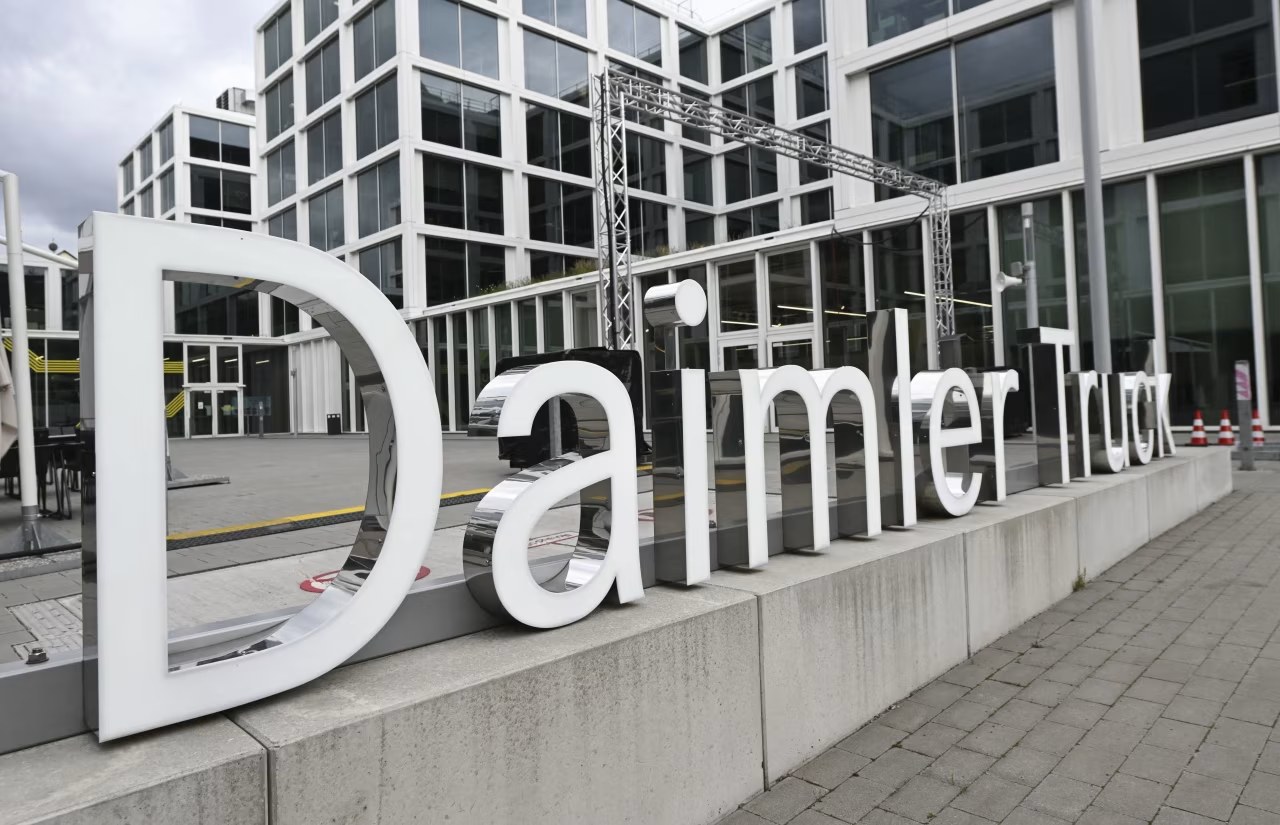
Daimler Truck Posts 29% Q4 Profit Drop on $1.3B North America Revenue Slump
- Adjusted EBIT fell 29% to €780M as revenue slid 11% to €12B in Q4.
- Trucks North America revenue tumbled 29%, the steepest regional decline.
- Mercedes-Benz Trucks revenue dipped only 1%, cushioning overall fall.
- Full-year unit sales fell 8% to 422,510 trucks and buses.
- Q4 order intake rose 13%, hinting at a rebound in 2026.
Record order backlog clashes with falling deliveries, pressuring margins.
DAIMLER TRUCK—STUTTGART—Daimler Truck Holding closed 2025 with a paradox: a double-digit surge in new orders and a double-digit plunge in quarterly profit. Fourth-quarter adjusted earnings before interest and taxes dropped to €780 million, the company said Thursday, down from €1.1 billion a year earlier. Revenue retreated 11% to €12 billion as Trucks North America—its largest unit by volume—suffered a 29% revenue collapse.
The earnings disappointment underscores how quickly demand can evaporate in cyclical commercial-vehicle markets. While fleet operators rushed to place orders ahead of stricter emissions rules, actual deliveries slowed across the United States and Europe, leaving the world’s largest truck maker with thinner margins and rising inventory.
Yet incoming orders jumped 13% in the final quarter, lifting the company’s backlog to a record high and giving management confidence that 2026 volumes will recover. Investors will scrutinize cash-conversion and pricing power when the group publishes detailed guidance next month.
North America Revenues Collapse 29%, Erasing Prior Year Gains
Trucks North America generated roughly €4.2 billion in fourth-quarter revenue, down from €5.9 billion a year earlier, according to internal figures confirmed by CFO Jochen Goetz. The 29% slide erased all gains achieved during the 2024 rebound, returning the unit to 2022 levels. Management blamed a 24% drop in Class 8 retail registrations across the United States and a sharp slowdown in refuse and vocational segments.
Dealers have reported swelling inventories—particularly of unsold sleeper cabs—forcing Daimler to idle its Cleveland, North Carolina, plant for two weeks in December and offer targeted incentives. “We are aligning production with demand; we will not build ahead,” Goetz told analysts on Thursday’s call. The company also trimmed its 2026 North America retail forecast to 280,000 units, down from 310,000 projected last summer.
Margin compression accelerates
Lower fixed-cost absorption and discounting pushed Trucks North America’s return on sales below 7%, down from 10.5% a year ago. By contrast, Mercedes-Benz Trucks held its margin at 9.8% despite a 1% revenue dip, helped by richer specifications and stronger after-sales penetration in Europe.
The diverging regional performance highlights how exposed Daimler Truck remains to U.S. freight cycles. “North America is the swing factor,” said Timm Schulze-Melander, industrials analyst at Redburn Atlantic. “Every 10,000-unit variance swings group EBIT by roughly €180 million.”
Looking ahead, management expects U.S. freight rates to trough in mid-2026, setting up a potential volume recovery in the second half. Until then, cost flexing and inventory normalization will determine whether Trucks North America can avoid further red ink.
Global Unit Sales Sink 8% to 422,510 Vehicles in 2025
Daimler Truck delivered 422,510 trucks and buses worldwide in 2025, down from 459,400 the previous year. The decline was broad-based: North America fell 14%, Europe dropped 6%, and even resilient Asian markets slipped 2%. Only Latin America grew, up 9% on Brazilian agri-logistics demand. The 8% global contraction exceeded management’s initial guidance of a 3-5% reduction, prompting a €300 million restructuring provision booked in Q4.
CEO Martin Daum called the volume miss “disappointing but not structural,” pointing to customers deferring purchases while awaiting clarity on Euro VII emissions standards and U.S. EPA nitrogen-oxide rules. Fleet renewal cycles, he argued, have merely been postponed, not cancelled.
Inventory overhang clouds pricing
Days-of-inventory on hand rose to 72 across the group, up from 58 a year ago. Analysts at Bernstein warn that bloated dealer stocks could trigger competitive discounting through 2026, undermining the company’s 10% medium-term margin target. Daimler Truck’s own data show average selling prices flat in Europe and down 2% in North America year-on-year.
To protect margins, the company will cut 2,500 temporary workers in 2026, freeze external hires, and trim R&D spend on autonomous-truck prototypes. Yet Daum insists electrification remains priority: “We will not compromise on battery-electric and hydrogen investments; they are our ticket to long-term leadership.”
Whether investors accept near-term pain for long-term gain depends on how quickly order books convert into actual deliveries.
Order Intake Jumps 13%: A Signal of 2026 Rebound?
Despite weak deliveries, incoming orders surged 13% in Q4, lifting the group’s backlog to 181,000 vehicles worth €25 billion, the highest since the 2020 spin-off from Mercedes-Benz Group. Trucks North America orders soared 18%, while Europe rose 11%. Fleet operators are front-loading purchases to beat stricter EU carbon-dioxide targets that take effect January 2026 and to pre-buy ahead of potential U.S. tariff changes.
Management now expects 2026 unit sales to rebound 6-8%, implying roughly 455,000 deliveries. “The order quality is excellent—80% are firm, dated orders, not soft letters-of-intent,” CFO Goetz emphasized. If achieved, that volume recovery would restore group revenue to around €55 billion and push adjusted EBIT back above €4 billion.
Execution risks remain
Suppliers still face component bottlenecks for battery-electric trucks, and European foundry capacity is tight. Daimler Truck has locked in semiconductor supplies through a strategic pact with Infineon, yet wiring-harness availability could cap upside. Analysts at Barclays model only a 4% volume increase, citing macro headwinds.
Moreover, pricing discipline will be tested. Competitors Paccar and Volvo Group also report swollen backlogs and could compete aggressively on price once supply chains normalize. Daimler’s ability to convert orders into profitable sales will hinge on contract clauses that allow raw-material cost pass-through and currency hedging.
For now, investors appear cautiously optimistic: the stock has rebounded 12% since the earnings release, though it remains 28% below its 2024 peak.
Can Cost Cuts Offset Pricing Pressure in 2026?
To defend margins, Daimler Truck launched a €1 billion fixed-cost reduction program through 2026, targeting procurement, manufacturing footprint, and overhead. CFO Goetz confirmed €400 million of savings have already been secured via renegotiated steel and lithium-iron-phosphate battery contracts. A further €350 million will come from footprint optimization, including integrating bus bodyshell production at Mannheim and shifting some aftermarket warehousing to third-party logistics providers.
Yet labor inflation in Germany is running at 5%, eroding roughly €120 million of the gains. Management aims to offset this through a 4% workforce reduction at administrative sites in Stuttgart and Portland, Oregon, impacting 1,100 salaried positions. Works council representatives have already signaled resistance, raising strike risk.
Procurement tailwinds
Copper and aluminum prices have fallen 11% and 8% respectively since mid-year, enabling Daimler to lock in 2026 input-cost savings of €150 million. More importantly, the company secured European battery-cell supply at €85 per kilowatt-hour, down from €105 in 2024, narrowing the cost gap with Chinese rivals BYD and CATL.
Still, pricing headwinds loom. Average selling prices for heavy-duty trucks in North America are forecast to decline 2-3% in 2026 as inventory clears. Management insists value-added services—digital fleet management, over-the-air updates, and predictive maintenance—will keep blended pricing flat. “We are selling uptime, not just iron,” Daum said.
Whether cost cuts outrun pricing erosion will determine if Daimler can reclaim its 10% margin goal—or settle for a structurally lower mid-cycle baseline.
What’s Next for Investors as Daimler Truck Enters 2026?
Management will publish detailed 2026 guidance on March 12, but early signals suggest a revenue range of €54-€56 billion and adjusted EBIT of €3.8-€4.2 billion, implying a 7-7.5% return on sales. Free cash flow before acquisitions is targeted at €2.5 billion, supporting a promised 45% dividend payout ratio. Analysts at Goldman Sachs model net debt falling to €7 billion by year-end, giving the group headroom for bolt-on electrification acquisitions.
Key catalysts include the March investor day, when Daum will unveil a partnership to build a European charging corridor for battery-electric trucks, and the June capital-markets update on software-defined-vehicle strategy. Success could re-rate the stock toward Volvo’s 9x EV/EBITDA multiple; failure risks cementing a permanent discount.
Risk matrix
Downside risks include a 15% tariff on Mexican-built trucks if U.S. trade policy tightens, potential €1 billion additional provisions for EU antitrust fines, and a lithium price spike that could erase €200 million of battery-cost savings. Upside scenarios hinge on faster-than-expected adoption of hydrogen-fuel-cell trucks, where Daimler holds a 30% patent share.
Option markets price a 28% swing around earnings, implying elevated volatility. Long-term funds have trimmed holdings to 68% of free float, while short interest rose to 3.4%, the highest since listing. For investors, the question is no longer whether cyclical recovery arrives—it is whether Daimler Truck can capitalize without repeating past margin missteps.
Frequently Asked Questions
Q: Why did Daimler Truck’s adjusted earnings fall 29% in Q4?
Adjusted EBIT declined to €780M because revenue dropped 11% to €12B, driven by a 29% revenue slide in Trucks North America and weaker demand in key markets.
Q: How many trucks and buses did Daimler Truck sell in 2025?
The group sold 422,510 units in 2025, down 8% from the prior year, reflecting softer market conditions across regions.
Q: Did Daimler Truck’s order intake improve despite lower sales?
Yes, incoming orders rose 13% in Q4, signaling potential recovery ahead even as full-year volumes declined.
