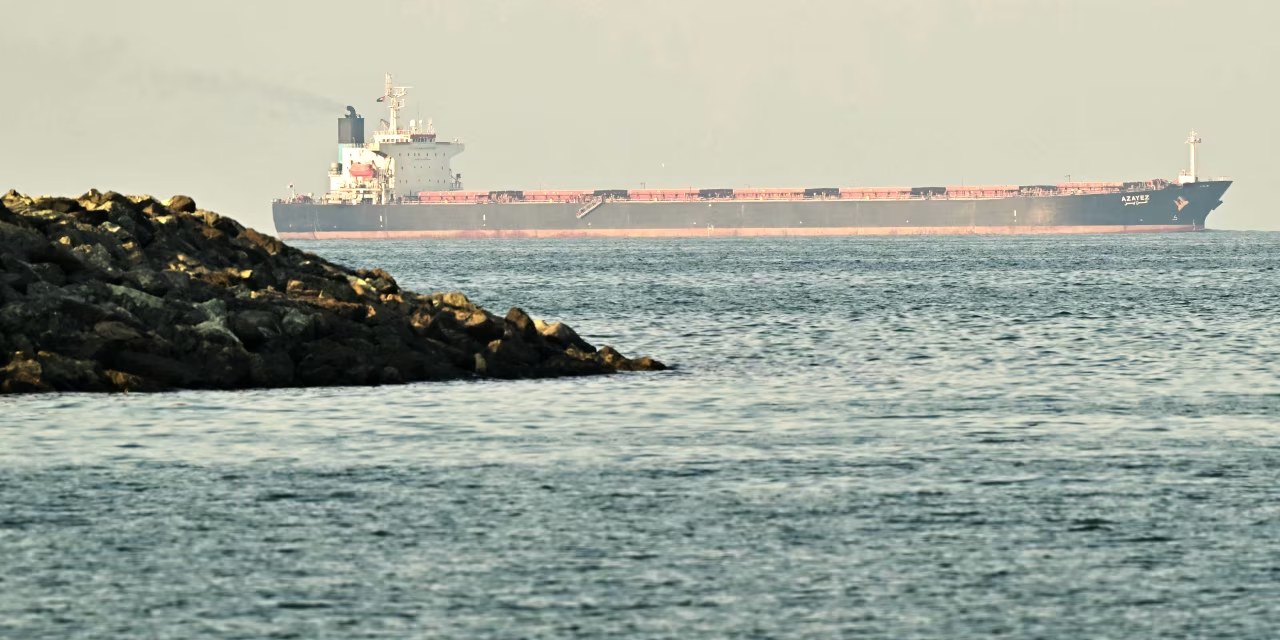
Trump’s $20B Gulf Tanker-Insurance Scheme Faces 90% Overseas Market Share Held by London
- President Trump vows U.S. political-risk cover for all shipping in the Strait of Hormuz backed by Navy escorts.
- Washington’s $20 billion proposal runs counter to a London-centred war-risk insurance ecosystem.
- Lloyd’s of London syndicates control 60-70% of marine war premiums and set global pricing benchmarks.
- U.S. insurers historically avoid the niche, leaving a market gap Washington now wants to fill.
A choke-point vital to 20% of seaborne oil is at the centre of a geopolitical insurance experiment.
STRAIT OF HORMUZ—When President Donald Trump announced a cut-rate U.S. insurance programme for tankers braving the Strait of Hormuz, he framed it as a quick fix for a war-jittery oil market. Industry executives say the reality is more complex: the global marine war-risk business is stitched together in London underwriting rooms, not Washington agencies.
The plan tasks the U.S. International Development Finance Corp. with lining up American insurers to underwrite up to $20 billion in cover—triple the annual worldwide premium pool—while dangling U.S. Navy escorts as back-stop protection. Foreign ship-owners, however, already buy bespoke war policies from Lloyd’s syndicates and European mutual clubs that price Iranian-exclusion zones daily.
Insiders warn that without London market data feeds and shared intelligence on naval incidents, a parallel U.S.-only scheme could fragment rather than stabilise rates for the 21-mile-wide waterway through which roughly one-fifth of seaborne crude passes.
A Waterway That Moves 21 Million Barrels a Day
The Strait of Hormuz is the petroleum world’s aorta. Tankers exiting the Persian Gulf must thread a lane barely two miles wide in each direction, making insurance against missile strikes, mine damage or vessel seizure a non-negotiable cost of doing business.
Data from the U.S. Energy Information Administration show daily flows averaged 21 million barrels in recent years—about one-fifth of global seaborne oil and one-quarter of liquefied-natural-gas trade. Any prolonged disruption would ripple through Brent futures within hours.
That precarious math underwrites a niche but lucrative insurance segment: marine war risk. Premiums can jump ten-fold overnight when rockets target vessels or Iran’s Revolutionary Guards detain tankers. The market’s pulse, however, beats 3,000 miles away in London.
‘Ninety percent of foreign-flagged ship-owners already have war cover via Lloyd’s or European mutuals,’ said Neil Roberts, head of marine and aviation at the London & International Insurance Brokers’ Association. ‘Policies are written in U.S. dollars but placed in London because that is where the data, the expertise and the reinsurance capacity sit.’
Trump’s proposal would inject a subsidised American alternative. The concept is to sell political-risk insurance—covering confiscation, sabotage or war—at ‘very reasonable’ prices, with U.S. Navy escorts pledged as deterrent. Yet the scale dwarfs existing supply: the entire global marine war premium pool is roughly $7 billion a year, according to advisory Willis Towers Watson, making the $20 billion U.S. backstop a potential market flood.
Industry executives question whether Washington can price risk competitively without access to Lloyd’s real-time intelligence network, which tracks naval deployments, drone sightings and sanctions breaches. ‘You can’t underwrite a moving conflict zone with static political slogans,’ Roberts added.
Fragmenting the market might also push existing London rates higher for non-U.S. buyers, ironically tightening the oil-supply cushion the White House wants to loosen. The next chapter explores how Lloyd’s syndicates turned war risk into a data-driven specialty after the 1980s Tanker Wars.
How Lloyd’s Cornered the War-Risk Market After the Tanker Wars
Today’s marine war-risk ecosystem was forged in the mine-strewn Gulf of the 1980s. During the Iran-Iraq Tanker Wars, Lloyd’s underwriters learned to price hull and liability exposure while tankers transited under escort from U.S. and European navies.
That legacy endures. The Lloyd’s Market Association estimates its syndicates write 60-70% of the world’s marine war premiums, with the remainder split among Norwegian, Japanese and continental European mutual clubs. Policies are renewed every seven days, allowing underwriters to re-rate zones within hours of a drone attack or sanctions tweak.
‘London’s edge is the intelligence room,’ said David Smith, head of marine at broker McGill and Partners, quoted in the original report. ‘Underwriters sit next to ex-naval officers and sanctions lawyers. You can’t replicate that ecosystem inside a federal agency that normally finances power plants in Africa.’
The Development Finance Corp. has never before sponsored a shipping insurance scheme. Its traditional mandate is development finance—power, telecoms, health—in emerging markets. Staff would need to craft policy wordings that dovetail with existing hull clauses, obtain reinsurance and satisfy U.S. Treasury sanctions lawyers, all while competing on price with a London market already comfortable with Gulf volatility.
Experts warn of legal friction. ‘If a Liberian-flag tanker carrying Qatari crude for a Chinese charterer hits an Iranian mine, which court has jurisdiction—U.S. federal court or English commercial court?’ asked Rhys Diggins, a partner at law firm HFW. ‘Most charter-parties specify London arbitration. A U.S. policy could end up duplicating rather than replacing existing cover, raising costs.’
Historical precedent is thin. The last large-scale U.S. political-risk intervention, the 1993 Overseas Private Investment Corp. expansion, focused on expropriation of fixed assets, not mobile vessels in conflict zones. Without a track record, actuaries say pricing will be guesswork, exposing taxpayers to open-ended liabilities if escorts fail to deter attacks.
Can a Federal Agency Price War Risk Faster Than London Underwriters?
Speed matters in war-risk underwriting. When a missile struck the tanker Mercer Street off Oman in 2021, Lloyd’s syndicates repriced the ‘Omani exclusion zone’ within 12 hours, pushing daily premiums from $30,000 to $300,000 per voyage, according to broker reports.
The U.S. plan must match that velocity. The Development Finance Corp. would rely on third-party administrators—likely surplus-lines carriers in Delaware or New York—to issue policies, file claims and adjust rates. Yet those administrators still need London market data feeds, which are proprietary and expensive.
‘You can’t underwrite a hot war with quarterly board meetings,’ said Michel Léonard, senior economist at the Insurance Information Institute. ‘London syndicates can re-rate a zone overnight because they share loss data in real time. A federal backstop would require similar agility or it will mis-price risk, either crowding out private capital or leaving taxpayers footing massive claims.’
Another hurdle is capital relief. Lloyd’s syndicates offset exposure with reinsurance in Bermuda and Zurich. The DFC’s proposed $20 billion ceiling equals the agency’s entire statutory lending authority, meaning Congress would need to raise the cap or Treasury would supply a supplemental appropriation—politically fraught months before a presidential election.
Finally, the U.S. proposal must harmonise with Navy escort rules. Insurers typically void cover if a vessel deviates from agreed security protocols. If a tanker under U.S. insurance declines an escort to save time, who bears the loss? Industry executives say such grey zones could deter rather than attract buyers.
Despite the obstacles, some U.S. underwriters see opportunity. ‘We’re not starting from zero—American surplus-lines carriers already write political violence for ports and pipelines,’ said John Koegel, head of marine at Philadelphia-based insurer Liberty Specialty Markets. ‘The question is whether Washington can aggregate enough capacity fast enough to move the oil market needle.’
What Happens Next If Washington and London Compete on Premiums?
Market fragmentation is the nightmare scenario for ship-owners. If the U.S. launches a subsidised product while London syndicates keep pricing Gulf voyages at market rates, owners could game the system—buy cheap U.S. cover, pocket the savings, and still transit under existing London clauses as double insurance.
That could trigger a race to the bottom. ‘Subsidised premiums distort risk signals,’ warned Howard Mills, global insurance regulatory leader at Deloitte. ‘If owners pay below-market rates, they may accept riskier voyages, increasing losses and ultimately forcing taxpayers to bail out the programme.’
Alternatively, London underwriters could abandon the Gulf, ceding the field to Washington. Historical precedent exists: after the 1989 Exxon Valdez spill, U.S. pollution liabilities soared and many London syndicates exited American waters, pushing up domestic rates for decades.
Regulators on both sides of the Atlantic are watching. The U.K. Prudential Regulation Authority has signalled it will not loosen capital requirements for war risk, meaning London prices are unlikely to fall sharply. Meanwhile, the U.S. Government Accountability Office is preparing a review of DFC’s legal authority to insure mobile vessels, results expected this summer.
For oil traders, the key metric is delivered cost. A VLCC supertanker hauling two million barrels pays roughly $0.15 per barrel in war-risk premium at today’s rates. If Washington undercuts that by 50%, the savings amount to one cent per barrel—too small to sway global crude benchmarks, but large enough to unsettle private underwriters.
Ultimately, the success of Trump’s plan hinges on whether U.S. Navy deterrence reduces attack frequency faster than subsidised insurance distorts pricing. If escorts eliminate incidents, rates collapse and private capital returns. If attacks persist, taxpayers could face multibillion-dollar claims while geopolitical tensions keep climbing.
Frequently Asked Questions
Q: What is political risk insurance for ships?
It covers losses from government action, war, seizure, or terrorism. Tankers transiting choke-points like the Strait of Hormuz buy it on top of standard hull policies.
Q: Why is Lloyd’s of London central to maritime war risk?
Lloyd’s syndicates write 60-70% of global marine war premiums, set pricing benchmarks, and coordinate naval intelligence that U.S. insurers historically rely on.
Q: How big is the proposed U.S. backstop?
The Development Finance Corp. plan envisions up to $20 billion in U.S.-backed cover—triple the annual global marine war premium pool.
