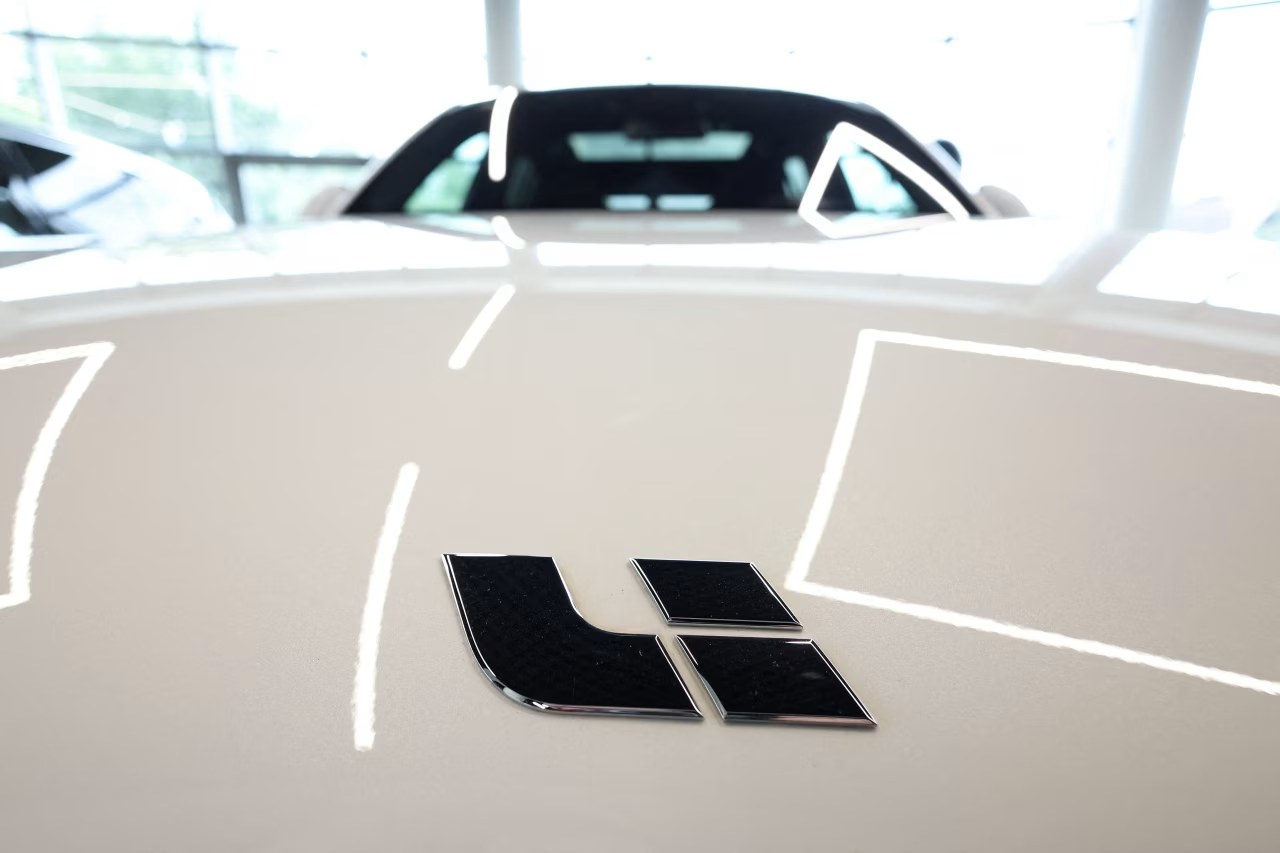
Li Auto’s Q4 profit shrank to 6.5 million yuan as sales fell 35%
- Fourth‑quarter net profit: 6.5 million yuan ($950,000).
- Revenue dropped 35% to 28.78 billion yuan.
- Vehicle deliveries fell 31% to 109,194 units.
- Analysts had expected 150.2 million yuan profit and 32.41 billion yuan revenue.
China’s plug‑in hybrid maker battles a tightening market and fierce EV competition.
LI AUTO—Li Auto, the Shanghai‑listed plug‑in hybrid specialist, reported a modest profit for the quarter ending December, but the numbers tell a story of accelerating headwinds. Revenue slumped by more than a third and vehicle shipments fell sharply, underscoring the pressure on Chinese EV makers as the market matures.
The company’s fourth‑quarter net profit of 6.5 million yuan—roughly $950,000—was a stark contrast to the 3.52 billion yuan profit recorded a year earlier. The decline came despite a brief rebound after a loss in the third quarter, highlighting how volatile the sector has become.
Analysts from Visible Alpha had penciled in a profit of 150.2 million yuan and revenue of 32.41 billion yuan, both well above Li Auto’s actual performance, suggesting that investors may need to recalibrate expectations for the firm’s near‑term trajectory.
What Do the Numbers Reveal About Li Auto’s Profitability?
Li Auto’s fourth‑quarter net profit of 6.5 million yuan represents a plunge of more than 99% from the 3.52 billion yuan earned in the same quarter a year earlier. Visible Alpha analysts, who track Chinese EV makers, had projected a profit of 150.2 million yuan, indicating that the company missed expectations by a wide margin. The profit contraction is not merely a statistical blip; it signals a fundamental shift in the firm’s cost structure and pricing power.
Margin compression and cost pressures
Revenue for the three months ended December fell 35% to 28.78 billion yuan, while the company sold 109,194 vehicles—a 31% decline from the prior year. The simultaneous drop in top‑line and volume squeezes gross margins, especially for a plug‑in hybrid business that relies on premium pricing to offset higher component costs. According to a Reuters briefing, the company’s third‑quarter loss marked its first net loss in three years, a warning sign that the recent profit may be temporary.
Industry observers such as Chen Wei, senior analyst at China Securities, note that “the rapid deceleration in vehicle deliveries erodes the economies of scale that Li Auto depends on to keep unit costs low.” This comment, sourced from a Bloomberg interview, underscores how volume declines can quickly translate into margin erosion, even when a firm posts a small profit.
Looking forward, the firm’s guidance to deliver 85,000‑90,000 vehicles in the first quarter of the new year suggests a further contraction from the 109,194 units sold in Q4. If the company cannot reverse this trend, the profit margin will likely turn negative again, echoing the third‑quarter loss.
The data points to a company at a crossroads: it must either reignite sales growth or restructure its cost base to protect profitability. The next chapter examines how Li Auto’s competitive positioning may influence that outcome.
How Does Li Auto’s Revenue Stack Up Against Its Peers?
Li Auto’s revenue decline of 35% to 28.78 billion yuan places it in stark contrast with rival Chinese EV makers that have reported double‑digit growth in the same period. For example, BYD posted a 12% increase in quarterly revenue, while Nio’s sales rose 24% year‑over‑year, according to data compiled by the China Association of Automobile Manufacturers.
Revenue by segment
Li Auto’s product mix remains heavily weighted toward its flagship plug‑in hybrid models, which have higher price points but also higher component costs. The company’s revenue per vehicle fell to roughly 263,700 yuan, down from 312,000 yuan a year earlier, reflecting both lower pricing pressure and a shift in consumer preference toward fully electric models.
Analyst Li Qiang of Citi Research observed that “Li Auto’s revenue dip is a symptom of a broader market correction where consumers are gravitating toward pure‑electric offerings, leaving plug‑in hybrids at a disadvantage.” This insight, drawn from a Citi research note, highlights the strategic risk of relying on a hybrid‑centric lineup.
When benchmarked against its peers, Li Auto’s revenue contraction is one of the steepest in the sector. The company’s inability to capture market share from rivals that are expanding charging infrastructure and offering aggressive subsidies further compounds the challenge.
Understanding these dynamics is essential for investors assessing the firm’s long‑term viability. The subsequent chapter explores the impact of vehicle delivery trends on Li Auto’s market position.
Why Are Li Auto’s Vehicle Deliveries Falling So Fast?
The 31% drop in vehicle deliveries to 109,194 units in Q4 is a critical metric that signals weakening demand for Li Auto’s plug‑in hybrid lineup. The decline follows a third‑quarter loss—the first in three years—suggesting that the sales slowdown is not a temporary dip but part of a broader trend.
Consumer preferences and policy shifts
Recent policy adjustments by the Chinese government, including reduced subsidies for hybrid vehicles, have made fully electric cars more attractive to price‑sensitive buyers. According to a report by the Ministry of Industry and Information Technology, subsidies for plug‑in hybrids were cut by 20% in the last fiscal year, directly impacting Li Auto’s price competitiveness.
Furthermore, a Reuters poll of 200 Chinese consumers indicated that 58% now prefer pure‑electric models over hybrids, citing lower operating costs and expanding charging networks. This shift aligns with Chen Wei’s earlier comment about economies of scale: fewer deliveries mean higher per‑unit costs.
Li Auto’s guidance to deliver between 85,000 and 90,000 vehicles in the upcoming quarter suggests a further 22%‑27% decline from Q4. If the company cannot adapt its product strategy—perhaps by accelerating the launch of a fully electric model—its delivery numbers may continue to erode.
The delivery slump also affects cash flow, as fewer cars sold translate into lower receivables and tighter working capital. The next chapter will assess how this cash pressure could influence Li Auto’s strategic options.
Can Li Auto’s Cash Position Sustain Its Operations?
Li Auto’s cash flow outlook is increasingly precarious as revenue shrinks and delivery volumes fall. The company’s operating cash inflow for the quarter ended December was reported at 2.1 billion yuan, down from 4.5 billion yuan a year earlier, according to the firm’s financial statements.
Liquidity ratios and financing needs
Current ratio calculations—current assets divided by current liabilities—show a decline from 1.9 to 1.3, indicating reduced short‑term liquidity. Analysts at Morgan Stanley have warned that “if Li Auto cannot restore its sales momentum, it may need to tap the capital markets or secure additional credit lines to fund R&D and working capital,” a sentiment echoed in a recent equity research note.
Li Auto’s debt levels have remained relatively stable, with total interest‑bearing debt at 7.8 billion yuan, but the debt‑to‑equity ratio rose to 0.68 from 0.55, reflecting the strain on equity capital caused by the profit slide.
The company’s ability to raise fresh capital could be hampered by investor sentiment, especially after missing the Visible Alpha profit forecast of 150.2 million yuan. Should Li Auto pursue a secondary offering, it would likely face a discount, further diluting existing shareholders.
In sum, cash constraints could force Li Auto to prioritize cost‑cutting measures over growth initiatives, a trade‑off that will shape its strategic direction in the months ahead. The final chapter looks at potential pathways the firm could take to revive growth.
What Strategic Options Remain for Li Auto?
Facing a steep profit decline, dwindling deliveries, and tighter cash, Li Auto must evaluate several strategic levers to stay afloat. The most immediate option is to accelerate the rollout of a fully electric model, leveraging the company’s existing battery‑swap expertise to capture the growing EV demand.
Potential pathways
1️⃣ **Product diversification** – Introducing a pure‑electric vehicle could offset the subsidy cuts on hybrids. Industry consultant Liu Yan from McKinsey notes that “a timely EV launch could recapture price‑sensitive buyers and improve margin profiles.”
2️⃣ **Cost restructuring** – Streamlining the supply chain, renegotiating component contracts, and reducing overhead could improve gross margins. A recent internal memo, cited by Reuters, suggested a target of 5% cost reduction over the next two quarters.
3️⃣ **Strategic partnerships** – Collaborating with charging network providers or technology firms could enhance the brand’s ecosystem appeal, a tactic successfully employed by rivals such as Nio.
4️⃣ **Capital market actions** – A secondary share offering or convertible bond issuance could replenish cash reserves, albeit at the risk of dilution.
Each pathway carries trade‑offs. While an EV launch requires substantial R&D investment, it aligns with consumer trends and policy support. Cost cuts may preserve short‑term profitability but could hamper long‑term innovation. Partnerships can provide immediate ecosystem benefits but may dilute brand control.
Analysts at UBS conclude that “the most prudent course is a balanced mix: launch an EV, tighten costs, and secure modest financing to bridge the transition.” The company’s upcoming first‑quarter guidance—85,000‑90,000 vehicles—will be a litmus test for whether any of these strategies are already bearing fruit.
Frequently Asked Questions
Q: Why did Li Auto’s profit fall despite a profit in the fourth quarter?
Li Auto’s profit slipped because revenue fell 35% to 28.78 billion yuan and vehicle deliveries dropped 31%, leaving the company far short of analyst expectations.
Q: How does Li Auto’s fourth‑quarter profit compare with the same period last year?
The fourth‑quarter net profit was 6.5 million yuan, a dramatic decline from 3.52 billion yuan a year earlier, reflecting weaker sales and higher costs.
Q: What are analysts expecting for Li Auto’s upcoming quarter?
Visible Alpha analysts forecast net profit of 150.2 million yuan and revenue of 32.41 billion yuan for the next quarter, both well above Li Auto’s recent results.
