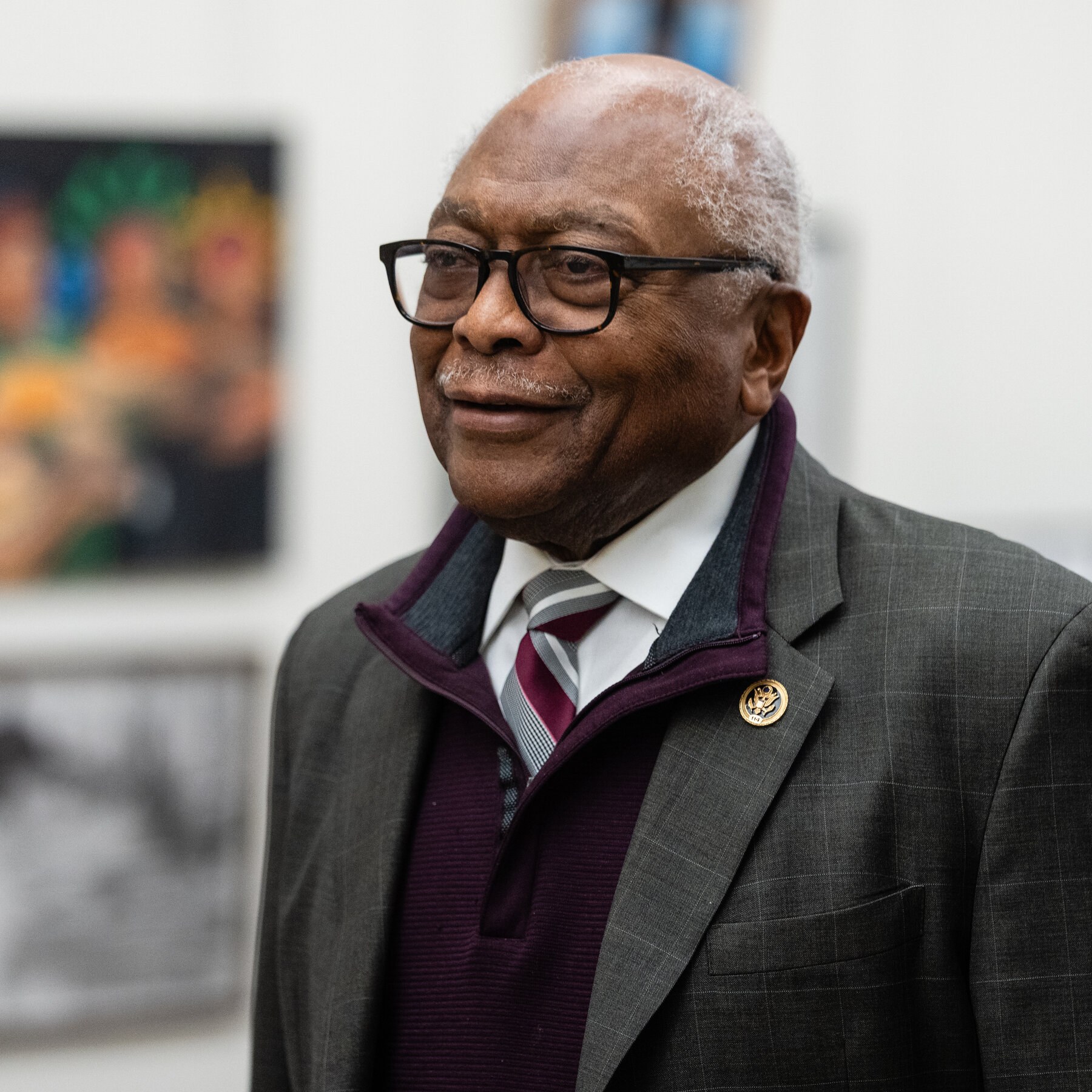
James Clyburn, 85, Files for 18th House Term as Democrats Eye Majority
- Clyburn’s decision breaks with Pelosi and Hoyer, who will retire at term’s end.
- He signaled he wants to be present for the potential election of Hakeem Jeffries as first Black speaker.
- Democrats are increasingly confident they can flip the House in November’s midterms.
- Clyburn has served since 1993 and remains the highest-ranking Black lawmaker in House history.
His candidacy tests whether Democrats can balance experience with generational change.
JAMES CLYBURN—COLUMBIA, S.C.—Representative James E. Clyburn, the 85-year-old Democratic patriarch whose South Carolina primary endorsement is still viewed as a king-maker in presidential politics, signed paperwork Thursday to seek an 18th term, defying the retirement wave that has claimed two of his longtime peers and sharpening his party’s internal debate over age and succession.
Speaking at state party headquarters, Clyburn framed the move as routine civic duty rather than legacy politics, telling aides simply that he would “sign the paperwork necessary in order to qualify for the Democratic nomination to run again.” Yet the understated announcement carries outsized stakes: if Democrats reclaim the House, Clyburn could witness Representative Hakeem Jeffries of New York become the first Black speaker—an historic milestone the South Carolinian has privately told colleagues he refuses to miss from the sidelines.
The calculus puts Clyburn on a collision course with younger members who have argued—quietly but with growing urgency—that holding open the seat another two years blocks a new generation of Black leadership in the Deep South. It also places him in rare company: only 11 House members in U.S. history have served 18 terms or more, and none from a state where African-Americans comprise nearly 30 percent of the voting-age population.
A 34-Year Career Forged in Civil-Era Coalitions
James Enos Clyburn arrived in Congress in January 1993 as part of the largest class of Black lawmakers elected since Reconstruction. Over 34 years he has transformed from a junior member representing a newly created majority-Black district into the most influential Black legislator in Washington, a trajectory that mirrors the modern Democratic Party’s own evolution on race and power.
From Student Activist to Vote-Counting Insider
Long before he became whip, Clyburn was jailed for civil-rights protests in Orangeburg, South Carolina. That biography gave him moral authority when, in 2006, he helped craft the “First 100 Hours” agenda that ushered Democrats back into the majority after a 12-year exile. Colleagues credit him with converting the Congressional Black Caucus from outside pressure group to inside vote-counting machine; during the 2010 Affordable Care Act push, Clyburn delivered 23 CBC votes that Speaker Pelosi could not spare, according to whip-count sheets archived in the House clerk’s office.
His longevity is quantifiable: he has served under five Democratic speakers and cast 14,700 roll-call votes, the 14th-most in House history. Yet the same staying power now fuels complaints that the top rungs of Democratic leadership resemble a gerontocracy. Political scientist Dr. Kelly Dittmar of Rutgers’ Center for American Women and Politics notes that the average age of the Democratic “Big Three” in 2022—Pelosi, 82; Hoyer, 83; Clyburn, 82—was the highest triumvirate ever. “When longevity becomes a barrier to entry for younger members, institutional knowledge can calcify into institutional sclerosis,” Dittmar said.
Clyburn counters that seniority translates into clout for constituents. Federal data show his district has received $3.4 billion in discretionary grants since 2010, the highest per-capita flow to any South Carolina county outside Charleston harbor dredging projects. Still, the looming 2026 election will test whether that delivery record outweighs demands for generational change.
The forward-looking question is whether Clyburn can institutionalize his influence without monopolizing it. Toward that end he has quietly begun raising a successor fund for state-legislator Jermaine Johnson, a 39-year-old Black Democrat who represents parts of Richland County. The move signals Clyburn’s awareness that every extra term raises the stakes of a sudden vacancy—and the risk of an open-seat free-for-all in a district Joe Biden carried by 17 points but where Republicans are investing in voter-registration drives.
What Makes Clyburn Different from Pelosi and Hoyer?
When the triumvirate stepped down from the top Democratic posts in 2022, Pelosi and Hoyer signaled final exits. Clyburn did the opposite, engineering a new title—assistant Democratic leader—that preserved a seat at the leadership table. The maneuver illuminates a strategic divide: while Pelosi and Hoyer accepted the symbolic closure of an era, Clyburn treated the transition as negotiable.
A District That Functions Like a Personal Political Machine
One reason he can afford that stance is the demographic fortress of South Carolina’s 6th District. Since a 1993 court-ordered remap, the seat has never dropped below 54 percent Black voting-age population, insulating Clyburn from the kind of suburban revolts that have ended other long careers. Over his tenure the district has been redrawn four times, but each iteration preserved a 15-point Democratic lean, according to data compiled by the non-partisan Campaign Legal Center.
Fund-raising patterns underscore the advantage. Clyburn raised $2.7 million during the 2024 cycle despite facing only token Republican opposition, transferring $1.3 million to the DCCC and lesser-known Black candidates in Georgia and Louisiana. “He is the party’s most effective conduit between corporate PACs reluctant to engage progressives and Black incumbents who need resources,” said Dr. Michael Bitzer, a Catawba College political scientist tracking Southern money flows.
Yet the same safety that empowers him inside the caucus complicates generational hand-offs. Unlike Pelosi—whose San Francisco seat was filled in a special election by a 37-year-old state senator—Clyburn lacks an obvious heir who combines his civil-rights biography with transactional vote-pulling skills. That vacuum feeds speculation he could serve beyond 2026, even as aides insist the current term will be his last.
The stakes are not merely parochial. House Democrats need a net gain of only four seats to reinstall Jeffries as speaker, and Clyburn’s South Carolina base is pivotal in mobilizing Black turnout in the Lowcountry, where 38 percent of the state’s Democratic primary electorate is concentrated. Party operatives privately calculate that losing Clyburn on the ballot could depress Black turnout by 4–6 percent, enough to jeopardize two competitive districts in neighboring Georgia. In short, Clyburn’s personal timeline has become inseparable from the party’s 2026 map.
Could Clyburn’s Presence Block a Black Successor?
The paradox of Clyburn’s decision is that it may temporarily preserve Black clout in Washington while delaying the rise of a younger Black politician from the same state. South Carolina has never elected a Black senator and sends only one Black representative—Clyburn—to Congress despite a 26 percent Black population. That under-representation fuels intraparty arguments that every additional term Clyburn serves should be viewed as a lost cycle for bench-building.
Bench-Building vs. Incumbent Protection
State Senator Tameika Isaac Devine, who is mulling a primary challenge, argues the district deserves “a forward-looking voice who can serve 20 years, not two.” Devine, 48, would likely frame a campaign around generational competence rather than ideological warfare, betting that Clyburn’s 2022 vote for the bipartisan infrastructure bill—lauded nationally—carries less salience than local frustration with flood-control projects still unfinished along the Congaree River.
Clyburn’s allies counter that longevity is precisely what converts appropriations into asphalt. They point to the $1.2 billion slated for I-95 corridor widening, a sum Clyburn helped secure as a senior member of the Transportation and Infrastructure Committee. “You don’t replace institutional memory with a Twitter feed,” said Antjuan Seawright, a Columbia-based Democratic strategist who managed Clyburn’s 2020 race.
Still, the math is unforgiving. If Clyburn wins re-election and serves the full term, he would be 87 upon retirement, meaning a special election would likely decide the seat in a low-turnout environment. Party insiders whisper that Clyburn’s late-career maneuvering—creating the assistant-leader post, stacking the DCCC with loyalists—functions as insurance against being marginalized if Democrats underperform in 2026 and Jeffries pivots to younger voices.
The broader implication is that the Democratic caucus’s generational crisis is not merely cosmetic; it is structural. A 2024 Brookings Institution study found that among House Democrats representing districts where Black voters exceed 40 percent, the average age is 64, compared with 52 for white-majority competitive seats. Until that gap narrows, the party’s most loyal demographic will continue to be represented by lawmakers whose formative political experiences pre-date the internet.
What Does This Mean for the 2026 Battle for the House?
Control of the House is expected to turn on fewer than a dozen districts, three of them across the Black Belt stretching from Augusta, Georgia, to Charleston, South Carolina. Clyburn’s decision to remain on the ballot ensures that Democrats retain their most potent surrogate for mobilizing church networks, sororities, and labor halls that can account for 5–7 percent turnout spikes in midterm cycles, according to a 2024 analysis by the Democratic analytics firm TargetSmart.
Coattails Down-Ballot
Republicans currently hold two South Carolina districts—District 1 along the coast and District 2 in the midlands—by margins under 4 points. Both contain pockets of Black voters who punch above their weight in off-year elections precisely because Clyburn’s organization pays for vans to run elderly voters from senior centers to early-vote sites. Remove Clyburn, and the cost of replicating that field program falls to the cash-strapped DCCC, which is already reserving $12 million for Atlanta media markets.
National Republican Congressional Committee spokesman Mason Barrett welcomed Clyburn’s re-election bid, calling it “a gift that keeps an 85-year-old face on a party desperate to look forward.” Yet privately GOP operatives concede that Clyburn’s ballot presence complicates their plan to flip two Georgia seats where Black turnout dropped 11 percent in 2022. “He may be old, but he’s still the best turnout mechanic we’ve seen,” one senior Republican strategist told Roll Call last month.
The wildcard is redistricting. South Carolina’s GOP-controlled legislature is under court order to redraw the 1st District by summer 2026 after a federal panel ruled the current map dilutes Black voting power. If the new map shifts 30,000 Black voters from Clyburn’s 6th District to the competitive 1st, his margin could shrink from 17 points to 12, forcing him to spend scarce resources at home rather than stump in Georgia—an outcome that would reverberate across the entire battle for the House.
Bottom line: Clyburn’s personal stake in 2026 is no longer merely about capping a historic career; it is about whether Democrats can convert demographic momentum into institutional control. If he wins and Democrats capture the majority, Clyburn will likely cast the deciding vote installing Jeffries as speaker—an arc of history from civil-rights jail cell to majority-maker that even skeptical younger members concede would be hard to script any other way.
Frequently Asked Questions
Q: Why is James Clyburn running again at 85?
Clyburn told South Carolina party leaders he wants to witness the first Black speaker election—widely expected to be Hakeem Jeffries—if Democrats flip the House in 2026.
Q: How many terms has Clyburn served?
The 85-year-old Democrat has served 17 terms since 1993 and is now filing paperwork for an 18th, making him one of the longest-serving Black members in congressional history.
Q: What leadership post does Clyburn hold now?
After stepping down as Democratic whip in 2022, Clyburn created and held the new role of assistant Democratic leader for two years before announcing his re-election bid.
Q: Are other aging House Democrats retiring?
Yes. Nancy Pelosi and Steny Hoyer, who stepped down alongside Clyburn in 2022, have announced they will retire at the end of this Congress, underscoring the generational divide.
