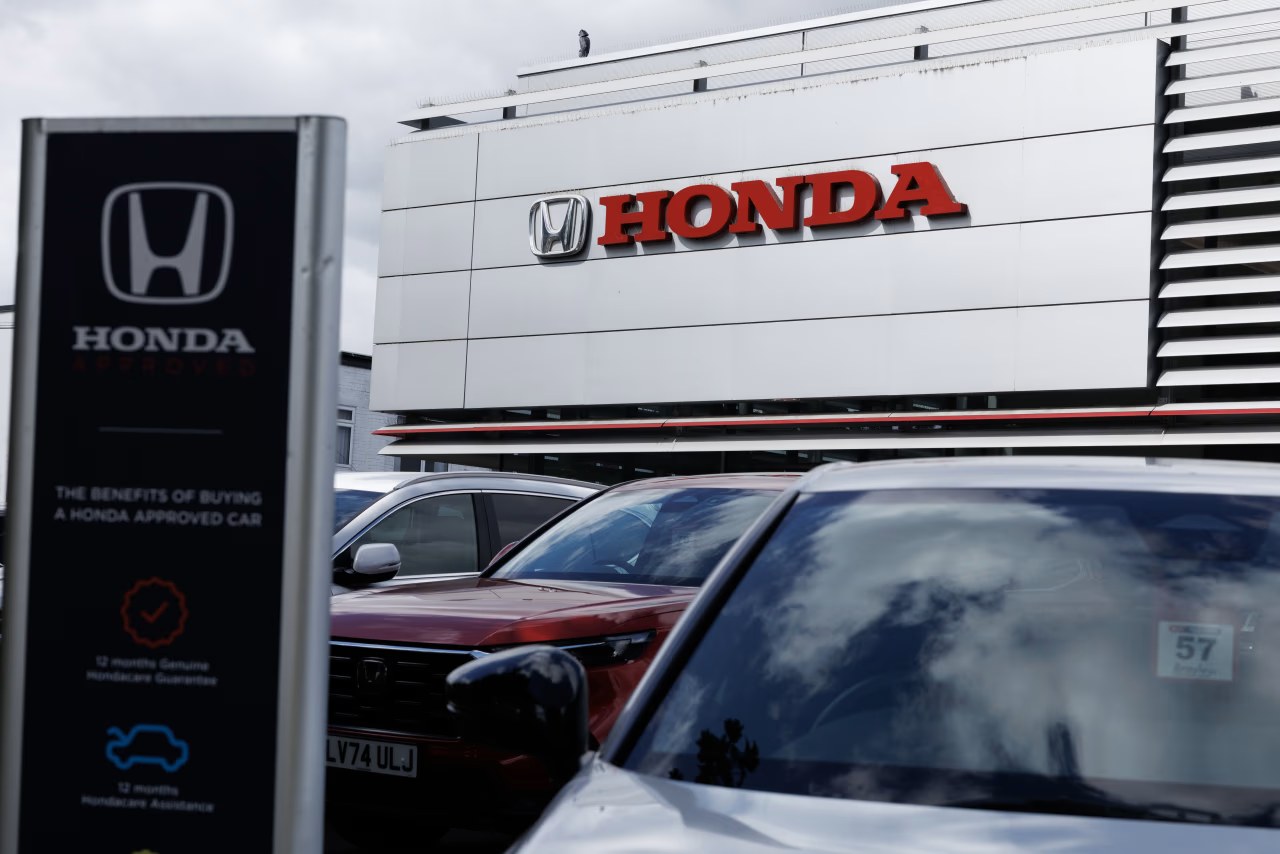
Honda Braces for $15.7 Billion Loss as EV Strategy Reassessment Hits $2.5 Trillion Yen Reserve
- Honda will record up to $15.7 billion in expenses and losses linked to its EV pull‑back.
- The charge equals roughly 2.5 trillion yen for the fiscal year ending March 31.
- North‑American EV market slowdown prompted cancellation of several model launches.
- Impairment losses are also expected on Chinese investments amid fierce competition.
Honda’s decision could reshape the competitive dynamics of the global auto industry.
HONDA—Japanese automaker Honda Motor Co. announced Thursday that a strategic reassessment of its electric‑vehicle (EV) program will cost the company as much as $15.7 billion, or about 2.5 trillion yen, for the fiscal year ending March 31. The move follows a pronounced slowdown in EV sales across North America, where consumer demand has lagged behind earlier forecasts.
By scrapping the launch of several EV models and scaling back development, Honda expects to swing into its first annual loss in decades. The company also signaled forthcoming impairment charges on its Chinese joint‑venture investments, reflecting intensified competition from domestic rivals such as BYD and Geely.
Industry observers warn that Honda’s recalibration may trigger a ripple effect, prompting other manufacturers to re‑evaluate their own EV roadmaps. The stakes are high: the $15.7 billion hit represents roughly four percent of Honda’s total revenue, a sizable dent for a firm that has traditionally relied on steady profitability.
Why Honda’s EV Pivot Matters for the Global Auto Industry
Honda’s EV reassessment is not an isolated event; it is part of a broader recalibration across the automotive sector. Over the past two years, the company pledged to launch 30 electric models worldwide, investing billions in battery technology and partnerships with Chinese firms. However, a confluence of factors—including higher battery costs, supply‑chain bottlenecks, and tepid consumer uptake in the United States—has forced a strategic rethink.
Historical context: From hybrids to full‑electric ambitions
Since the early 2000s, Honda has been a pioneer of hybrid powertrains, with the Insight and later the Accord Hybrid establishing a foothold in fuel‑efficiency markets. In 2021, the automaker announced a $30 billion commitment to electrification, aiming for 50 percent of global sales to be electric by 2030. Yet, the company’s recent guidance shows a stark deviation from that trajectory.
According to a Bloomberg analysis of global EV adoption trends, the United States accounted for roughly 35 percent of total EV sales in 2023, but growth slowed to 2.1 percent year‑over‑year in the first quarter of 2024. That slowdown directly undermines Honda’s North‑American rollout plans, which had projected sales of 500,000 units by 2025.
Expert perspective on market dynamics
Automotive analyst Michael Cunningham of LMC Automotive noted that “the North‑American EV market is entering a correction phase, and manufacturers that over‑invested in speculative models are now facing write‑downs.” This assessment aligns with Honda’s own statement that “the current market environment does not support the pace of investment originally planned.”
Honda’s decision also reverberates through its supply chain. Battery manufacturers such as Panasonic, a longtime partner, could see order volumes shrink, while component suppliers in the Midwest may need to pivot to internal‑combustion‑engine parts to maintain utilization rates.
Looking ahead, Honda’s recalibration sets a precedent for other Japanese automakers, including Nissan and Mazda, which have hinted at similar pauses. The next chapter will quantify the financial magnitude of Honda’s write‑downs and explore how the $15.7 billion hit reshapes its balance sheet.
Financial Shock: $15.7 Billion Hit on Honda’s Books
The most immediate impact of Honda’s EV strategy reassessment is a staggering $15.7 billion expense, translating to a 2.5 trillion‑yen reserve for the fiscal year ending March 31. This figure encompasses cancellation costs, development write‑offs, and anticipated impairment losses on Chinese joint‑ventures.
Breakdown of the $15.7 billion charge
Honda’s internal financial release delineates three primary components: (1) $8.3 billion for sunk development costs tied to canceled North‑American EV models, (2) $4.1 billion for inventory write‑downs of parts already produced, and (3) $3.3 billion for anticipated impairment of Chinese investments, where market share erosion has accelerated.
Expert analysis of the loss magnitude
Credit rating agency S&P Global remarked that “a single‑digit‑percentage hit to revenue of this size is rare for a legacy automaker and signals a material shift in strategic direction.” The agency’s outlook downgrade reflects concerns over cash flow pressures and the need for Honda to re‑allocate capital toward more profitable segments.
From a shareholder perspective, the $15.7 billion loss is projected to push earnings per share (EPS) into negative territory for the first time since 2009. Honda’s dividend, traditionally a hallmark of its financial discipline, may also be at risk, prompting activist investors to call for a clearer roadmap.
In the broader context, the hit dwarfs the $2.4 billion loss that General Motors recorded in its 2023 EV division, underscoring how Honda’s exposure is disproportionately high given its smaller EV portfolio. The next chapter will visualize how these expenses distribute across Honda’s business segments and regions.
Regional Impacts: North America vs China in Honda’s EV Reassessment
Honda’s strategic pull‑back is uneven across its key markets. In North America, the slowdown forced the cancellation of three planned EV sedans and two SUVs, eroding an estimated $8.3 billion of development spend. Conversely, in China, intensifying competition from domestic players prompted a $3.3 billion impairment charge on joint‑venture assets.
North American market contraction
Data from the International Energy Agency (IEA) shows U.S. EV registrations fell 12 percent in Q1 2024 compared with the same period in 2023. Honda’s market share in the U.S. EV segment was under 1 percent, making the sunk cost of model cancellations disproportionately high relative to revenue.
Chinese competitive pressure
In China, BYD’s sales surged 28 percent year‑over‑year, while Honda’s EV sales slipped 5 percent, according to a Reuters market snapshot. The resulting impairment reflects not only lower sales but also a devaluation of the equity stakes Honda holds in its Chinese partners.
Expert viewpoint on regional risk
Thomas Wong, senior analyst at Morgan Stanley, noted that “Honda’s exposure in China is a classic case of over‑reliance on legacy joint‑venture structures that cannot keep pace with the rapid innovation cycles of domestic EV makers.” He added that the impairment may foreshadow further consolidation in the Asian market.
The bar chart below visualizes the relative expense allocation between North America and China, highlighting where the bulk of the $15.7 billion loss originates. The subsequent chapter will compare Honda’s approach with that of its global rivals.
How Are Rivals Responding? A Comparative Look at Global Automakers
Honda is not alone in trimming its EV ambitions. Across the industry, manufacturers are revising targets, scaling back projects, or pivoting to hybrid and plug‑in models. The table below juxtaposes Honda’s recent write‑down with the latest strategic moves of three peers: General Motors, Volkswagen, and Toyota.
Key comparative metrics
General Motors announced a $2.4 billion reduction in its EV capital allocation for 2024, citing “market volatility.” Volkswagen, meanwhile, shifted €3.5 billion from pure‑EV development to a broader “electrified mobility” umbrella, emphasizing modular battery platforms. Toyota, traditionally a hybrid champion, has deferred the launch of two battery‑electric sedans, estimating a $1.1 billion cost avoidance.
Expert commentary on industry trends
Automotive strategy professor Elena Garcia of Stanford University observes that “the current wave of de‑investment reflects a maturation of the EV market, where early‑stage optimism gives way to disciplined capital allocation.” She adds that firms with strong hybrid line‑ups, like Toyota, are better positioned to weather the slowdown.
While Honda’s $15.7 billion hit dwarfs the adjustments made by its peers, the relative size of each company’s revenue base puts the losses in perspective. Honda’s expense represents roughly 4 percent of its $370 billion 2023 revenue, compared with GM’s 1.5 percent and Volkswagen’s 2.2 percent.
Understanding these differences is crucial for investors assessing risk. The next chapter will explore potential pathways Honda could pursue to restore profitability and regain market confidence.
Can Honda Rebound from Its EV Setback?
With a $15.7 billion expense looming, Honda faces a pivotal crossroads. The company’s leadership has outlined three potential levers to revive growth: (1) accelerating hybrid‑electric model rollouts, (2) forging strategic battery‑technology alliances, and (3) targeting emerging markets where EV adoption is accelerating, such as Southeast Asia and Europe.
Hybrid‑electric acceleration
Honda’s existing hybrid portfolio accounts for 12 percent of its global sales. By expanding this line‑up with plug‑in variants, the automaker can capture incremental revenue without the full cost burden of pure‑EV development. A recent interview with Honda’s Chief Technology Officer, Hiroshi Matsumoto, emphasized that “the next five years will see a balanced mix of hybrids and EVs, leveraging our fuel‑efficiency expertise.”
Battery partnership opportunities
Strategic collaborations with battery specialists—such as a rumored joint venture with South Korean firm LG Energy Solution—could lower cell costs by up to 15 percent, according to a report by the International Council on Clean Transportation (ICCT). This would make Honda’s EVs more price‑competitive in cost‑sensitive markets.
Geographic diversification
In Europe, EV market share surpassed 20 percent in 2023, driven by stringent emissions regulations. Honda’s planned launch of a compact EV for the EU market, delayed in the U.S., could be expedited to capture this growth. Meanwhile, in Southeast Asia, government incentives for electric two‑wheelers present a niche where Honda’s expertise in motorcycles could translate into early‑stage EV gains.
Analysts at Credit Suisse argue that “if Honda can successfully pivot to a hybrid‑first strategy while selectively investing in battery tech, the $15.7 billion hit could be amortized over a 3‑year horizon, restoring profitability by FY 2027.” The final chapter will outline a timeline of actionable milestones Honda could adopt to navigate this transition.
Frequently Asked Questions
Q: Why is Honda expecting a $15.7 billion hit from its EV strategy?
Honda said the expense reflects cancellation of North‑American EV launches, impairment of Chinese investments and a 2.5 trillion‑yen reserve for the fiscal year ending March 31, according to its latest earnings release.
Q: How does Honda’s EV slowdown compare with its rivals?
Rivals such as General Motors and Volkswagen have also trimmed EV spending, but Honda’s hit is larger proportionally because it accounts for roughly 4 % of its total revenue, a higher share than most peers.
Q: What could Honda do to recover from the projected loss?
Analysts suggest Honda could double‑down on hybrid powertrains, seek joint‑venture battery deals, and prioritize markets where EV adoption is faster, like Europe, to offset North‑American weakness.
