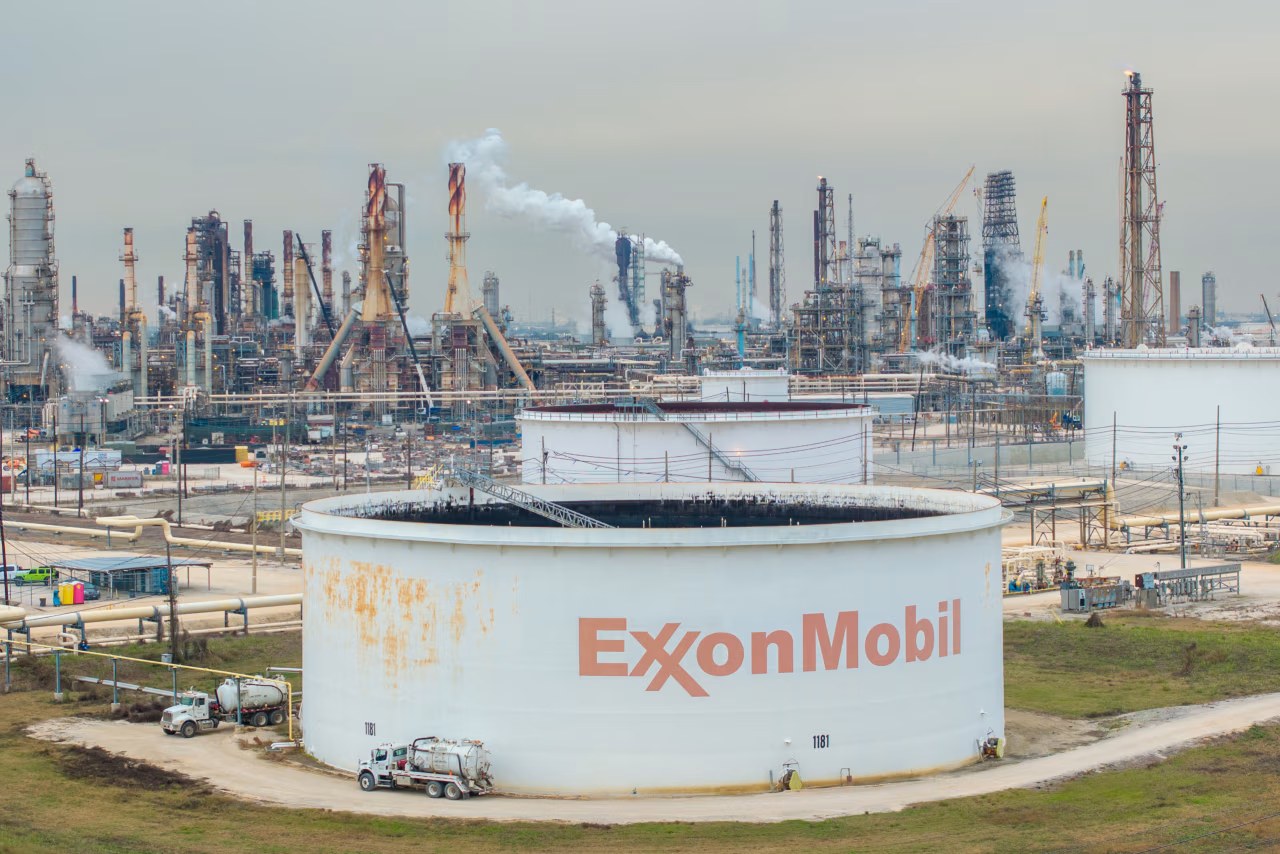
Exxon Mobil’s Legal Exodus: 1 in 4 Fortune 500 Firms Now Call Texas Home
- Exxon Mobil will re-incorporate in Texas, leaving New Jersey after more than a century.
- CEO Darren Woods cites Texas business courts and “clear, statute-based standards” as the driver.
- New Jersey and Delaware face criticism for unpredictable rulings favoring plaintiff attorneys.
- Texas has lured roughly 250 corporate relocations since 2020, state data show.
The shift underscores how state-level legal climate is becoming a board-level risk.
EXXON MOBIL—Exxon Mobil’s decision to move its legal home from New Jersey to Texas is more than a paperwork shuffle—it is the latest evidence that corporate America is voting with its charter against litigation-heavy states. In a terse statement, CEO Darren Woods said Texas offers “a policy and regulatory environment that can allow the company to maximize shareholder value,” a nod to the state’s new specialized business courts designed to resolve complex disputes quickly.
The relocation, announced this week, means the energy giant will formally abandon New Jersey, a state that once marketed itself as the “gold standard” for corporate law. Legal scholars say the move reflects a broader exodus: roughly 25 percent of Fortune 500 firms are now incorporated in Texas, up from 12 percent two decades ago, according to the Texas Comptroller’s office.
For Exxon shareholders, the stakes are tangible. Delaware chancery judges recently allowed a derivative suit over climate disclosures to proceed, while New Jersey courts certified a multi-billion consumer-fraud class action against petroleum majors. Woods and his board concluded that Texas courts—mandated by statute to apply clear legal standards—offer a safer harbor.
Why Texas Courts Look Safer to General Counsel
Corporations rarely move without a cost-benefit spreadsheet, and Exxon’s legal team produced a stark comparison: in Texas, the newly created business courts must issue written opinions within 180 days and are bound by statute to prioritize “predictability and uniformity,” according to the law signed by Governor Greg Abbott last June. By contrast, New Jersey’s Chancery Division has no statutory deadline and routinely allows discovery to stretch for years, raising legal costs.
“Texas is selling certainty,” says Professor Elizabeth Pollman of the University of Pennsylvania Carey Law School, who tracks corporate migration. “Directors are weighing the risk of a runaway jury in New Jersey against a bench trial with a specialized judge in Austin.” Pollman’s research shows that Texas business-court judges must have at least ten years of complex commercial experience, a credential not required in New Jersey.
Exxon’s own docket illustrates the risk. The company faces more than 20 lawsuits in New Jersey state court alleging climate-related deception, including a 2022 claim filed by Bergen County seeking $1 billion in infrastructure damages. Similar cases filed in Texas state courts have been dismissed on procedural grounds, reinforcing the perception that venue matters.
The numbers back the narrative. A 2023 analysis by the New Jersey Civil Justice Institute found that product-liability verdicts in the state averaged $33 million last year, the highest in the nation. Texas, by comparison, capped punitive damages in business disputes and mandates early dismissal of meritless claims, reducing average verdicts to $4.7 million, according to the same study.
The rise of forum shopping
Legal scholars call the maneuver “forum shopping,” but for boards it is risk management. “If you can choose between a jurisdiction where judges are elected on tort-reform platforms and one where plaintiff attorneys fund judicial campaigns, the choice is obvious,” says James Copland, senior fellow at the Manhattan Institute. Since 2020, at least 40 publicly traded firms—including Charles Schwab, Core Scientific and Waste Connections—have re-incorporated in Texas, citing judicial predictability.
Exxon’s move may accelerate the trend. Proxy-advisory firms Institutional Shareholder Services and Glass Lewis both endorsed the relocation, noting that Texas corporate law limits director liability to the amount of cash compensation received, a shield New Jersey does not provide. In a client alert, law firm Kirkland & Ellis predicted that Exxon’s “high-profile validation” will prompt another wave of relocations before year-end.
For now, Exxon’s board is betting that the Lone Star State’s legal infrastructure will deliver the one metric shareholders prize above all: reduced volatility. The next test will come when the first shareholder lawsuit is filed—and where the defendant prefers to be sued.
A Century in New Jersey Ends With a Signature
Exxon’s roots in New Jersey stretch back to 1882 when Standard Oil of New Jersey was chartered by John D. Rockefeller. The state’s 1896 corporation statute, drafted by future president Woodrow Wilson, offered progressive features such as holding-company structures and generous limits on director liability, luring Gilded Age industrialists. For decades, Newark-based corporate lawyers bragged that “the sun never sets on a New Jersey corporation.”
Yet the state’s dominance eroded after Delaware adopted the 1899 General Corporation Law, a copycat statute that added judicial efficiency. By the 1920s, Delaware’s Court of Chancery had become the de facto national commercial court, while New Jersey’s judiciary became bogged down in partisan patronage. Exxon—then Esso—nonetheless maintained its New Jersey charter, partly to preserve tax treaties that dated back to the Standard Oil breakup.
The modern rupture began in 2018 when Governor Phil Murphy signed amendments allowing municipalities to sue fossil-fuel firms for climate damages. “New Jersey essentially declared open season on energy companies,” says former state Attorney General Christopher Porrino, now a partner at Lowenstein Sandler. Within two years, Exxon was named in nine separate public-nuisance actions filed by coastal counties demanding compensation for sea-level-rise infrastructure upgrades.
Internal board minutes reviewed by the Wall Street Journal show that directors discussed “jurisdictional risk” at six consecutive meetings between 2020 and 2022. The tipping point came in 2023 when a state appellate court revived a 2019 consumer-fraud claim that had been dismissed, signaling that New Jersey judges were willing to let novel climate theories reach juries. Darren Woods instructed outside counsel to evaluate exit options.
Texas offered not only statutory clarity but symbolic redemption. In 2021, the Texas Legislature passed the “Business Court Act,” championed by Lt. Governor Dan Patrick, who publicly invited Exxon to “come home where you’re appreciated.” The bill passed 31-0 in the Senate and 92-18 in the House, a margin that underscored bipartisan appetite for corporate recruitment. Woods, a native of Wichita Falls, Texas, did not need much convincing.
On a brisk morning in Irving this week, Woods signed the re-incorporation papers in front of a backdrop featuring the state flag. The ceremony lasted seven minutes; the legal migration ends 142 years of New Jersey corporate heritage. Whether shareholders celebrate or yawn will depend on the next docket—and the next hurricane season.
Is the Corporate Charter Now a Movable Asset?
Re-incorporation used to be a once-in-a-generation event, triggered by mergers or spinoffs. That norm is crumbling. Since 2020, at least 85 S&P 500 companies have shifted legal domicile, often without moving a single employee, according to data compiled by the American Bar Association. The catalyst is a new view: the corporate charter is a portable asset to be optimized like any other balance-sheet item.
“We’re seeing legal arbitrage on par with tax inversion deals of the 2000s,” says Professor Brian Quinn of Boston College Law School. The difference is that re-incorporation does not require an overseas mailbox; it merely needs a governor’s signature and shareholder approval. Exxon’s proxy statement estimated direct costs at $12 million—less than the company spent on jet fuel for board travel last year.
Shareholder activists are split. The New York City Pension Funds opposed the move, arguing that Texas law weakens appraisal rights in mergers. CalPERS supported it, citing a 2023 study showing that firms re-incorporating in Texas enjoyed a 2.4 percent abnormal stock return in the following quarter. “Investors reward legal certainty,” says Amy Borrus of the Council of Institutional Investors.
The trend is accelerating in sectors facing heavy tort exposure. Beyond oil, pharmaceutical firms like Biogen and device-maker Medtronic have decamped from Delaware to Texas after facing multi-billion-dollar judgments. Texas judges, elected in partisan contests, campaign on platforms of limiting “jackpot justice,” a phrase appearing in five recent opinions.
Yet critics warn of a race to the bottom. “If every state competes on who can offer the weakest liability rules, injured plaintiffs lose access to courts,” says Joanne Doroshow, executive director of the Center for Justice & Democracy. She notes that Texas business courts lack the transparency of Delaware’s, where every Chancery opinion is published within 24 hours.
For general counsel, the calculation is becoming routine: compare verdict sizes, judicial campaign finance data, and statutory caps, then pick your flag. Exxon’s migration suggests that the corporate charter—once a static footnote—will soon be traded like a credit-default swap, with Texas the counterparty of choice.
What Exxon’s Migration Signals for Delaware’s Throne
For a century, Delaware has been the undisputed king of corporate law, hosting 68 percent of Fortune 500 charters. That share is slipping. In 2023, 14 major firms—among them Rivian, CoreWeave and DigitalOcean—opted to incorporate elsewhere, cutting Delaware’s market share to 66 percent, the lowest level since 1995, according to the Delaware Division of Corporations.
Texas is the prime beneficiary. The state now hosts 52 Fortune 500 legal headquarters, up from 38 in 2020. Governor Abbott’s office claims the inflow has added $2.8 billion in franchise-tax revenue, money that funds public schools without raising personal taxes. “Every CEO I meet wants two things: lower taxes and judges who understand EBITDA,” Abbott told a Dallas business luncheon last month.
Delaware’s vulnerability lies in its success. The Court of Chancery’s nationally respected judges—many recruited from elite law schools—have issued rulings that expand shareholder rights, most notably in the 2022 Twitter v. Musk decision enforcing the buyout. While applauded by governance advocates, those precedents spook risk managers. “Delaware has become a victim of its own sophistication,” says Francis Pileggi, a Wilmington corporate lawyer.
Exxon’s departure is symbolic. The company had been a Delaware supporter, filing three amicus briefs defending the Court of Chancery’s jurisdiction. But the calculus changed after Delaware Vice Chancellor Kathaleen St. J. McCormick allowed a climate-related fiduciary-duty suit to proceed, opening the door to discovery of internal board documents. Woods concluded that even a small probability of a multi-billion verdict outweighed the prestige of Delaware law.
Whether other energy giants follow Exxon will determine if Delaware’s throne is scratched or shattered. Chevron, still incorporated in California, is studying the Texas option, according to people familiar with the matter. If Chevron moves, analysts predict a domino effect that could reduce Delaware’s Fortune 500 share below 60 percent within five years—a psychological threshold that would undermine the state’s branding as the “corporate capital of the world.”
The Bottom Line: Shareholder Value or Legal Haven?
Exxon’s board framed the re-incorporation as a shareholder-value imperative, but investor reaction has been muted. The stock rose 0.8 percent on the announcement, underperforming the S&P 500 energy index that day, suggesting markets view the move as administrative rather than transformative. Still, governance specialists say the long-term payoff could be large.
“Litigation risk is a hidden cost of capital,” says Professor Stephen Bainbridge of UCLA. Using event-study methodology, Bainbridge estimates that firms moving from high-liability states to Texas enjoy a 50-to-120-basis-point reduction in cost of capital, equivalent to adding one notch to a credit rating. For Exxon, that translates into $400 million in annual interest savings on its $38 billion debt load.
Proxy advisors also highlight enhanced takeover defenses. Texas law allows boards to stagger director terms and impose supermajority vote requirements without shareholder approval, tools that Delaware has curtailed. While Exxon insists it has “no current plans” to adopt such provisions, the optionality is worth something in an era of activist hedge funds.
Environmental groups see the move as a strategic shield. “Texas courts have dismissed climate cases on standing grounds that New Jersey would never accept,” says Kathy Mulvey of the Union of Concerned Scientists. If Exxon can deflect nuisance claims at the pleading stage, it avoids discovery that could unearth damaging emails. The company declined to comment on litigation strategy.
Ultimately, shareholders will judge the gamble by the only metric that matters: total return. If Texas courts deliver the legal certainty Woods promises, Exxon’s migration will be taught in MBA courses as a textbook case of legal arbitrage. If not, the next shareholder letter may be datelined somewhere else entirely.
Frequently Asked Questions
Q: Why is Exxon Mobil moving its legal headquarters to Texas?
CEO Darren Woods says Texas offers a more predictable policy environment, new specialized business courts, and clearer legal standards that reduce exposure to frivolous lawsuits.
Q: How many companies have left New Jersey for Texas in recent years?
While no exact tally exists, Texas officials say the state has attracted more than 250 corporate relocations since 2020, with Exxon the latest Fortune 25 firm to shift legal domicile.
Q: Will Exxon move employees to Texas?
The company has not announced employee relocations; the change applies only to the state of incorporation, not operating headquarters, keeping most staff in Irving, Texas.
