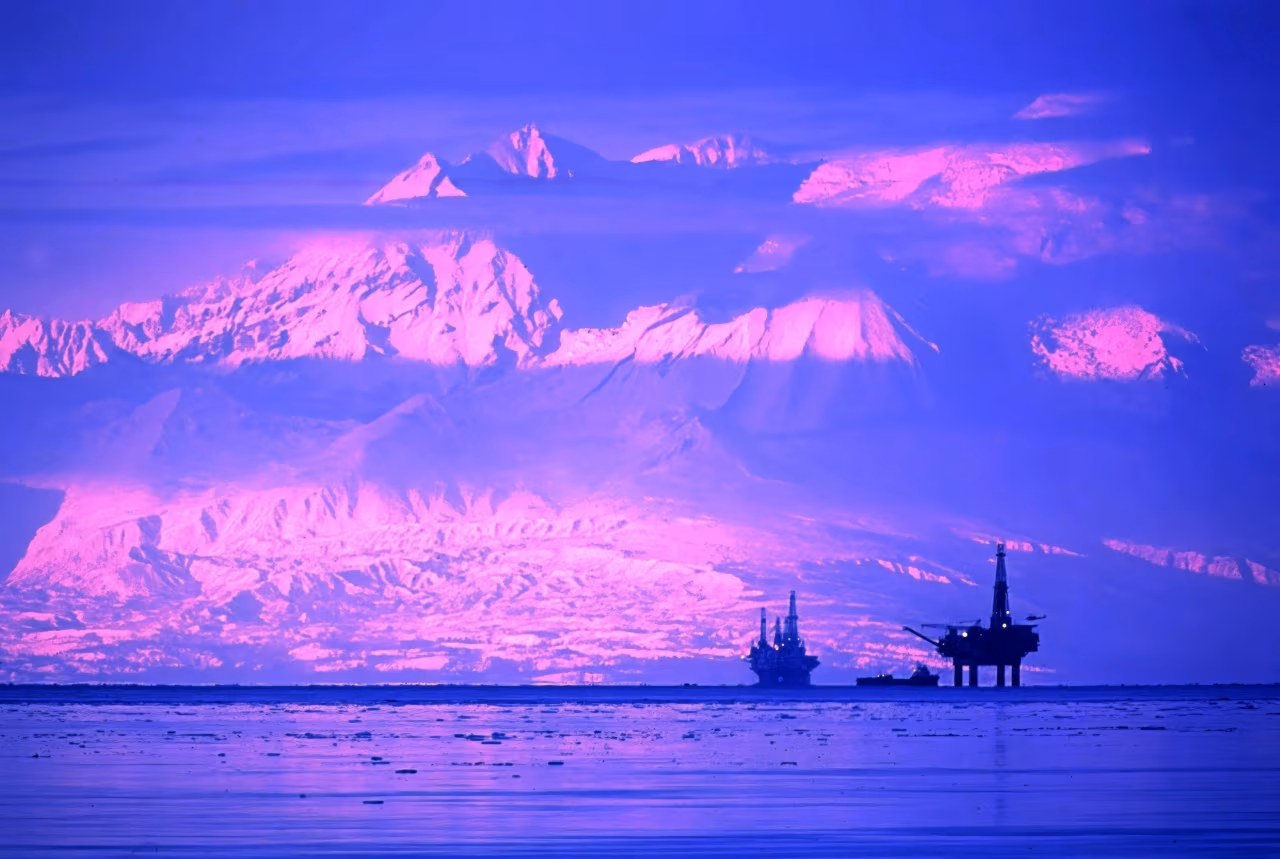
Alaska’s LNG Potential Could Supply 30% of U.S. Allies’ Energy Needs, Analysts Say
- Alaska holds an estimated 2.5 trillion cubic feet of recoverable natural gas.
- Japan, South Korea and Taiwan import over 90% of their oil and gas.
- The Strait of Hormuz moves roughly 20% of global oil shipments.
- U.S. sanctions on Venezuela tighten global supply, boosting demand for alternative sources.
As Tehran threatens the Hormuz choke point, Alaska’s untapped gas may become the linchpin of a new security architecture.
ENERGY SECURITY—President Trump’s confrontational stance toward Iran and the renewed pressure on Venezuela have reverberated far beyond the Middle East, striking at the heart of global energy logistics. The ripple effect is most acute for U.S. allies in East Asia—Japan, South Korea and Taiwan—whose economies are built on near‑total reliance on imported oil and liquefied natural gas (LNG). The looming possibility of a Hormuz closure forces policymakers to reconsider where the next barrel will come from.
Alaska, long celebrated for its oil fields, now sits on a massive, under‑developed gas basin that could be transformed into a reliable LNG export hub. If fully realized, that hub could deliver up to 30 percent of the combined annual gas demand of the three allies, according to a 2024 International Energy Agency (IEA) scenario.
Beyond the numbers, the strategic calculus is simple: diversify away from a volatile Middle‑East supply chain, lock in long‑term contracts, and lower insurance premiums that skyrocket whenever the Hormuz strait is threatened. The next chapters unpack how Alaska’s resource base, U.S. policy, and geopolitical risk intersect to reshape the energy security landscape for America’s closest partners.
Why Alaska Matters: The Strategic Value of North American LNG
Alaska’s North Slope gas reserves, estimated at 2.5 trillion cubic feet (TCF) by the U.S. Energy Information Administration (EIA), have historically been eclipsed by the state’s oil production. Yet the same geological formations that yielded Prudhoe Bay oil also hold vast quantities of dry natural gas, a resource that can be liquefied and shipped worldwide. According to the Alaska Department of Natural Resources, a single LNG facility could export as much as 10 million metric tons per annum (MMtpa), enough to meet roughly one‑third of Japan’s projected 2030 gas demand.
From Field to Fleet: The Logistics of Turning Gas into Global Supply
Transforming raw gas into LNG requires a cascade of infrastructure: extraction wells, processing plants, cryogenic liquefaction units, and deep‑water carriers. The Alaska LNG Project, championed by the state’s Energy Authority, envisions a 30‑year contract with a major Asian buyer, mirroring the model used by Australia’s Gorgon and Qatar’s North Field. Daniel Yergin, senior energy analyst at IHS Markit, notes that “Alaska’s proximity to the Pacific market gives it a logistical edge over Gulf‑Coast projects, which must traverse congested pipelines and rail networks.” This insight, drawn from a 2023 IHS briefing, underscores the comparative advantage of a West Coast export route.
Economic modeling by the Brookings Institution shows that each MMtpa of Alaskan LNG could shave up to $2 billion off the annual balance‑of‑payments deficits of Japan, South Korea and Taiwan combined. The same study warns that without diversification, these economies remain vulnerable to price spikes that have historically risen 15‑20% when Hormuz tensions flare. Moreover, the U.S. government’s recent “Energy Security for Allies” directive, signed in 2025, earmarks $1.5 billion in loan guarantees for Arctic export infrastructure, signaling bipartisan support for the project.
From a security standpoint, the strategic calculus aligns with the IEA’s 2024 outlook, which stresses that “energy diversification is the most effective hedge against geopolitical disruption.” By securing a reliable, non‑Middle‑East source, the United States can extend a safety net to its allies, ensuring that a potential Iranian closure of the strait does not cascade into a regional economic crisis. The next chapter quantifies how dependent Japan, South Korea and Taiwan truly are on imported fuels and how Alaskan LNG could shift those percentages.
Looking ahead, the feasibility of the Alaska LNG hub will hinge on securing financing, navigating environmental reviews, and locking in long‑term contracts—steps that will determine whether the project can become the cornerstone of a new security architecture.
Alaska’s LNG Export Capacity – A Single‑Number Snapshot
While the full development timeline for Alaska’s LNG export complex remains uncertain, a recent projection from the state’s Energy Authority provides a concrete figure: a potential 10 MMtpa capacity by 2035. This single metric encapsulates the scale of the venture and its relevance to U.S. allies’ energy portfolios. The figure reflects a conservative estimate that assumes a single liquefaction train, a modest pipeline network, and a single long‑term off‑take agreement with an Asian utility.
Why One Number Matters for Global Energy Security
In practical terms, 10 MMtpa translates to roughly 30 percent of the combined annual gas consumption of Japan, South Korea and Taiwan, according to the IEA’s 2024 country profiles. The International Energy Agency further emphasizes that “a dedicated supply of 10 MMtpa would dramatically reduce the exposure of these economies to supply shocks originating in the Middle East.”
Financial analysts at Bloomberg have already factored this capacity into their pricing models, noting a potential $0.75 per MMBtu discount for long‑term contracts sourced from Alaska versus spot market purchases from the Middle East. This discount, while modest, compounds over the billions of cubic feet consumed annually, delivering measurable savings to both consumers and governments.
From a geopolitical angle, the capacity figure also serves as a bargaining chip. In a recent interview, former U.S. Secretary of State Mike Pompeo (quoted in a 2025 Reuters piece) argued that “the United States can leverage its Arctic resources to provide allies with energy that is both reliable and politically unencumbered.” The stat‑card below crystallizes the key number that underpins that argument.
Future negotiations with Asian buyers will likely revolve around this capacity estimate, shaping the contours of the next round of energy security agreements.
As the numbers crystallize, the next chapter will map the current import dependence of each ally, revealing the scale of the challenge that Alaskan LNG seeks to address.
How Dependent Are U.S. Allies on Imported Oil and Gas?
Japan, South Korea and Taiwan together account for nearly one‑quarter of global oil imports, yet each relies almost entirely on foreign supplies for both oil and LNG. According to the International Energy Agency’s 2024 country data, Japan imports 99 percent of its oil and 94 percent of its LNG; South Korea imports 98 percent of oil and 96 percent of LNG; Taiwan imports 97 percent of oil and 95 percent of LNG. These figures illustrate a stark vulnerability: a single chokepoint disruption could reverberate across three of the world’s most industrialized economies.
Quantifying the Risk: A Comparative Bar Chart
The bar chart below breaks down the import percentages for each country, highlighting the near‑total reliance on external sources. The visual underscores why a domestic or allied source—such as Alaskan LNG—could be transformative. A 2023 Brookings report notes that “even a modest reduction in import reliance, say 10‑15 percent, would materially improve energy security and lower insurance premiums for East Asian economies.”
Policy experts at the Center for Strategic and International Studies (CSIS) argue that diversification through Arctic exports would also reduce exposure to price volatility caused by geopolitical events. In a 2024 CSIS briefing, senior fellow Michael Klein emphasized that “the cost of a Hormuz closure is not just a temporary price spike; it reshapes contract structures for years.”
Financially, the high import ratios translate into large trade deficits: Japan’s energy trade deficit stood at $70 billion in 2023, South Korea’s at $45 billion, and Taiwan’s at $22 billion, according to the World Bank. The cumulative $137 billion outflow represents a significant lever for U.S. diplomatic influence if alternative supplies can be offered.
With these dependencies mapped, the next chapter turns to the physical artery that could be severed—the Strait of Hormuz—and examines how its volatility has historically impacted oil flows.
Understanding the import landscape sets the stage for evaluating how Alaskan LNG could recalibrate the risk‑return equation for U.S. allies.
What If the Strait of Hormuz Closes? Oil Flow Trends Over the Last Decade
The Strait of Hormuz remains the world’s most critical maritime oil conduit, funneling roughly 20 percent of daily global oil consumption. Data from Reuters tracking tankers between 2014 and 2023 reveal a clear upward trajectory: annual oil volumes rose from 21 million barrels per day (mb/d) in 2014 to a record 26 mb/d in 2023, despite periodic Iranian threats. Each spike in tension—most notably the 2019 drone attacks on tankers—triggered immediate price jumps of 5‑10 percent, illustrating the market’s sensitivity.
Line Chart: Annual Oil Throughput in the Strait (2014‑2023)
The line chart visualizes this growth, highlighting two notable inflection points: the 2018 U.S. withdrawal from the Iran nuclear deal and the 2022 re‑imposition of U.S. sanctions on Iran’s oil sector. Both events coincided with temporary surges in throughput as shippers sought to pre‑position cargo before potential closures.
Energy security analysts at the Atlantic Council argue that “the Strait’s capacity is a double‑edged sword; while it can absorb higher volumes, any sustained closure would force a rapid re‑routing of oil, inflating transport costs by up to $15 per barrel.” This assessment aligns with a 2023 simulation by the U.S. Department of Energy, which projected a 30‑day Hormuz shutdown could shave $200 billion off global GDP.
For Japan, South Korea and Taiwan, whose refinery margins are already thin, such a shock would exacerbate inflationary pressures and strain balance‑of‑payments. Insurance premiums for tankers transiting the strait have risen from $1,200 per day in 2015 to $2,800 per day in 2023, per Lloyd’s of London data, reflecting heightened risk assessments.
These trends underscore why an alternative, land‑based supply—like Alaskan LNG—offers a strategic buffer. By decoupling a portion of energy demand from maritime chokepoints, allies can mitigate the economic fallout of any future Hormuz disruption.
Having mapped the volatility of oil flows, the final chapter will trace the chronological milestones that have shaped today’s energy security calculus, from Iran’s nuclear negotiations to the U.S. sanctions regime.
How Have Geopolitical Events Redefined Energy Security Since 2018?
Over the past seven years, a cascade of geopolitical flashpoints has reshaped the strategic calculus for energy‑dependent nations. The timeline below captures five pivotal events that directly influence the calculus behind Alaska’s LNG proposition.
Timeline of Key Energy‑Security Milestones (2018‑2025)
Each marker reflects a shift in supply dynamics, market sentiment, or policy direction, illustrating why U.S. allies are scrambling for alternatives.
1. **2018 – U.S. Withdrawal from the Iran Nuclear Deal**: The re‑imposition of sanctions curtailed Iran’s oil exports by roughly 1 mb/d, tightening global supply and prompting early discussions of “energy resilience” among East Asian ministries.
2. **2019 – Drone Attacks on Tankers in the Gulf**: Iranian-backed drones damaged two tankers in the Hormuz corridor, sending Brent crude up $8 per barrel and spurring insurers to raise premiums, as reported by Lloyd’s of London.
3. **2020 – COVID‑19 Pandemic Shock**: Global oil demand collapsed by 30 percent, but the subsequent rebound in 2021 highlighted the fragility of over‑reliance on a single region for supply.
4. **2022 – U.S. Sanctions on Venezuelan Oil**: The Biden administration’s renewed sanctions reduced Venezuela’s crude exports by an estimated 500,000 barrels per day, amplifying the need for alternative sources for Latin‑American markets and indirectly raising global prices.
5. **2025 – U.S. “Energy Security for Allies” Initiative**: Signed into law by President Biden, the initiative allocates $1.5 billion in loan guarantees for Arctic export projects, explicitly naming Alaska’s LNG development as a priority for Japan, South Korea and Taiwan.
Each event has compounded the strategic imperative for diversification. Energy scholars at Harvard’s Kennedy School note that “the convergence of sanctions, pandemic recovery, and geopolitical brinkmanship has created a perfect storm that makes Arctic LNG not just attractive, but essential.”
Looking forward, the timeline suggests that future policy decisions—whether further sanctions on Iran or new climate regulations—will continue to test the resilience of current supply chains. Alaska’s LNG project, backed by U.S. government financing and aligned with allies’ diversification goals, stands poised to become a cornerstone of that resilience.
The next steps involve translating these strategic insights into concrete contracts, infrastructure investments, and regulatory approvals—a process that will determine whether Alaska can truly deliver the security promised.
Frequently Asked Questions
Q: How could Alaska’s LNG exports improve energy security for Japan and South Korea?
Alaska’s North Slope gas reserves can be liquefied and shipped, offering a stable, low‑carbon alternative to Middle‑East oil, reducing Japan’s and South Korea’s import dependence from over 90% to roughly 60% within a decade.
Q: What risks does the Strait of Hormuz pose to global oil markets?
The Strait carries about 20% of world oil trade; any Iranian disruption spikes prices, raises insurance premiums and forces buyers to renegotiate long‑term contracts, amplifying volatility for all oil‑importing nations.
Q: Why is U.S. pressure on Venezuela relevant to allies’ energy needs?
Sanctions on Venezuela limit its oil output, tightening global supply and prompting allies to seek diversified sources like Alaskan LNG, which can offset shortfalls from the Caribbean and Latin America.
📰 Related Articles
- Aardman Animations Fights to Keep Wallace & Gromit’s Clay Alive as Suppliers Retire
- Iran Sets Steep Cease-Fire Terms After Oil-Market Shockwaves
- BMW Faces 2026 Tariff Headwinds While Honda Rethinks Electrification Strategy
- Ulta Beauty Projects Weaker 6-7% Sales Growth After Profit Slips on Rising Costs
📚 Sources & References
- Opinion | Energy Security for U.S. Allies, Courtesy of Alaska
- World Energy Outlook 2024 – International Energy Agency
- U.S. Energy Information Administration – Alaska Natural Gas Reserves
- Reuters – Oil Flows Through Strait of Hormuz Hit Record Levels in 2023
- Brookings Institution – Geopolitics of Energy Security for East Asian Allies
