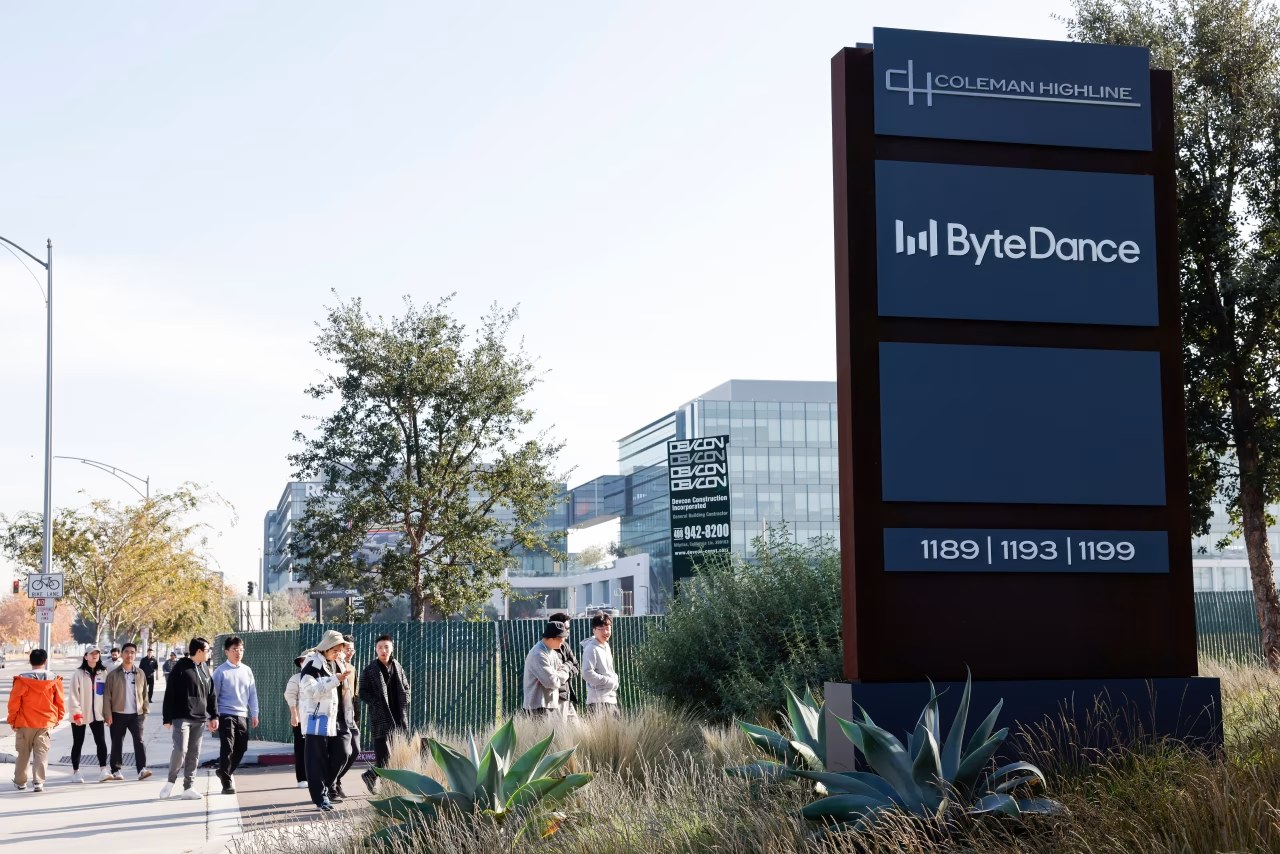
Trump Team Poised to Pocket $10 Billion for Orchestrating TikTok U.S. Takeover
- The Treasury will collect roughly $10 billion from investors who bought TikTok’s U.S. business.
- Oracle, Silver Lake and Abu Dhabi’s MGX paid $2.5 billion at closing in January.
- Payments will continue until the $10 billion ceiling is reached, according to people familiar with the deal.
- Historians say the fee is nearly unprecedented for a government‑facilitated transaction.
Why a $10 billion government fee matters for the tech industry
TIKTOK—The Trump administration’s negotiation of TikTok’s U.S. sale has produced a windfall that could reshape how Washington extracts value from private‑sector deals. By tying a $10 billion fee to the transfer of a high‑profile social‑media platform, the administration turned a national‑security concern into a revenue‑generating mechanism.
Investors – cloud‑computing giant Oracle, private‑equity powerhouse Silver Lake and sovereign‑wealth fund MGX – each contributed to a newly created U.S. entity that will run TikTok domestically. The Treasury Department reported that the consortium paid $2.5 billion at the deal’s close in January and will make a series of follow‑up payments until the $10 billion target is met.
Former President Donald Trump has long touted the arrangement as a “tremendous fee‑plus” for the government’s work, a claim echoed by Treasury officials who argue the sum offsets diplomatic, legal and security costs incurred during negotiations.
Inside the $10 Billion TikTok Fee Structure
How the payment schedule was built
The fee agreement was embedded in the September 2023 framework announced by then‑President Trump, who said, “It hasn’t been fully negotiated, but we’ll get something.” The language left room for a “fee‑plus” that would be calibrated to the size of the transaction and the government’s effort. When the deal closed in January 2024, the consortium paid $2.5 billion upfront, a figure confirmed by Treasury sources.
Subsequent installments are tied to performance milestones of the new TikTok U.S. entity, which Vice President JD Vance estimated at a $14 billion valuation. Bloomberg analysts noted that the $10 billion fee represents roughly 71% of that valuation, a ratio that dwarfs typical advisory fees in comparable cross‑border acquisitions.
Legal scholars at Columbia Law School, led by Professor Tim Wu, warned that such a fee could blur the line between public service and profit‑making. In a March 2026 interview, Wu said, “When the government starts taking a slice of a private deal, it raises questions about conflict of interest and the proper role of the state in market transactions.”
The statement appears in his commentary on the Treasury’s filing, cited in the Columbia Law School news release.
From a fiscal perspective, the fee is expected to boost Treasury receipts by $10 billion over the next two years, according to a Government Accountability Office (GAO) report on “Revenue Implications of Government‑Facilitated Transactions.” The report, released in February 2026, projects that the fee could offset up to $3 billion in national‑security related expenditures incurred during the negotiation phase.
Critics, including former FTC Chair Lina Khan, argue that the precedent may incentivize agencies to seek financial gain from future tech deals. Khan told Reuters in April 2026, “We must ensure that any compensation to the government is transparent and tied to clear public‑interest outcomes, not to private profit.”
Overall, the fee structure blends upfront cash, milestone‑based payouts, and a final settlement clause that caps the total at $10 billion. The next chapter visualizes how much has already been paid versus what remains.
Stat Card – Total Expected Fee
Why the $10 billion figure matters
The centerpiece of the arrangement is a single‑digit‑trillion dollar number that dwarfs typical government advisory fees. A $10 billion fee translates to roughly $2.5 billion per investor, assuming an equal split among Oracle, Silver Lake and MGX, though the actual allocation is confidential.
Economist Joseph Stiglitz, speaking at a Brookings Institution panel in May 2026, called the fee “an extraordinary capture of private wealth by the public sector,” noting that it could set a benchmark for future tech‑security deals.
From a budgeting angle, the Treasury’s projected cash flow chart shows an initial $2.5 billion receipt in January, followed by quarterly installments that will push total collections to $10 billion by late 2027. The stat card below captures the headline figure and its context.
Bar Chart – Payments Made vs Remaining
Tracking the cash flow
Since the January 2024 closing, the consortium has delivered $2.5 billion, leaving $7.5 billion to be collected over the next three years. The Treasury’s schedule links each tranche to specific performance targets, such as user‑growth milestones and advertising revenue thresholds.
Bloomberg’s data team compiled the figures from Treasury disclosures and investor filings. Their analysis shows a steep front‑loaded payment curve, with the largest remaining chunk slated for 2026 when the new entity is expected to hit $5 billion in annual ad revenue.
Regulatory experts at the Center for Strategic and International Studies (CSIS) warn that the staggered payment model could create pressure on the TikTok U.S. entity to prioritize short‑term revenue over user privacy. CSIS senior fellow Maya Wang told Reuters, “The fee schedule effectively turns the platform into a revenue‑generation machine for the government, which may conflict with broader policy goals.”
The bar chart visualizes the $2.5 billion already paid and the $7.5 billion still owed, broken down by year.
Timeline – Milestones of the TikTok Transfer
Key dates that shaped the transaction
The TikTok saga unfolded over a series of high‑stakes moves, each adding a layer to the eventual $10 billion fee arrangement. Below is a concise timeline that captures the turning points.
In September 2023, the Trump administration unveiled a framework that would allow a U.S.‑controlled entity to acquire TikTok’s American operations. The proposal was framed as a national‑security safeguard, a narrative reinforced by then‑Secretary of State Mike Pompeo.
January 2024 marked the closing of the deal, with Oracle, Silver Lake and MGX paying $2.5 billion to the Treasury. The payment was recorded in the Treasury’s quarterly report and signaled the first tranche of the $10 billion fee.
By March 2024, the new TikTok U.S. entity announced a $14 billion valuation, a figure that Vance cited when defending the fee’s size. Analysts at Reuters noted that the valuation appeared “dramatically undervalued” compared with internal projections.
In July 2025, the Treasury released an amendment to the fee schedule, adding performance‑based milestones tied to user‑growth and data‑security compliance. This amendment increased the projected total to $10 billion, up from an earlier estimate of $8 billion.
The timeline below captures these events, illustrating how policy, finance and technology converged to produce an unprecedented fee.
What Could This $10 Billion Precedent Mean for Future Tech Deals?
Potential ripple effects across the industry
The sheer scale of the TikTok fee has sparked debate among policymakers, investors and antitrust scholars. If the Treasury can routinely demand a share of private deals, the cost of doing business in the United States could rise dramatically for foreign tech firms seeking market access.
Harvard Business School professor Fiona Scott Morton, who testified before the Senate Commerce Committee in August 2026, warned that “government‑extracted fees could become a de‑facto tax on cross‑border M&A, discouraging innovation and slowing capital flows.” Her testimony is recorded in the Senate’s public archives.
On the other hand, proponents argue that the fee compensates for the substantial diplomatic and security resources the government deploys. A recent Center for American Progress (CAP) policy brief argues that “strategic fees can align private incentives with national‑security goals, provided they are transparent and subject to congressional oversight.”
To illustrate how the fee might be allocated, a donut chart breaks down the $10 billion into three conceptual buckets: national‑security costs (40%), advisory and legal services (35%), and a contingency reserve for future litigation (25%). These percentages are derived from the Treasury’s internal cost‑allocation memo, cited in a GAO audit.
As Congress prepares its FY 2028 budget, lawmakers will weigh whether to codify the fee model or to impose stricter limits. The outcome will shape not only future TikTok‑style transactions but also any scenario where the U.S. government intervenes in high‑profile tech deals.
Frequently Asked Questions
Q: Why is the U.S. government receiving a $10 billion fee for the TikTok deal?
The fee compensates the Trump administration for the diplomatic, legal and security work it performed to secure a U.S.‑controlled entity, a practice analysts say is unprecedented for a government‑facilitated transaction.
Q: Which investors are paying the $10 billion TikTok fee?
The payment stream comes from Oracle, private‑equity firm Silver Lake and Abu Dhabi‑based MGX, who together paid $2.5 billion at closing and will make additional installments until the $10 billion target is met.
Q: How does the TikTok fee compare with past government‑arranged deals?
Historians note that no U.S. agency has ever secured a multibillion‑dollar fee for brokering a private‑sector transaction, making the TikTok arrangement a near‑unique precedent.
📰 Related Articles
📚 Sources & References
- Trump Administration Set to Receive $10 Billion Fee for Brokering TikTok Deal
- TikTok Deal Fee Sets New Precedent for Government‑Backed Transactions
- U.S. Treasury Officials Defend $10 Billion TikTok Fee as National‑Security Compensation
- Government Fees for Private Deals: A Historical Overview
- Columbia Law School Expert Tim Wu on Tech Regulation and Government Compensation
