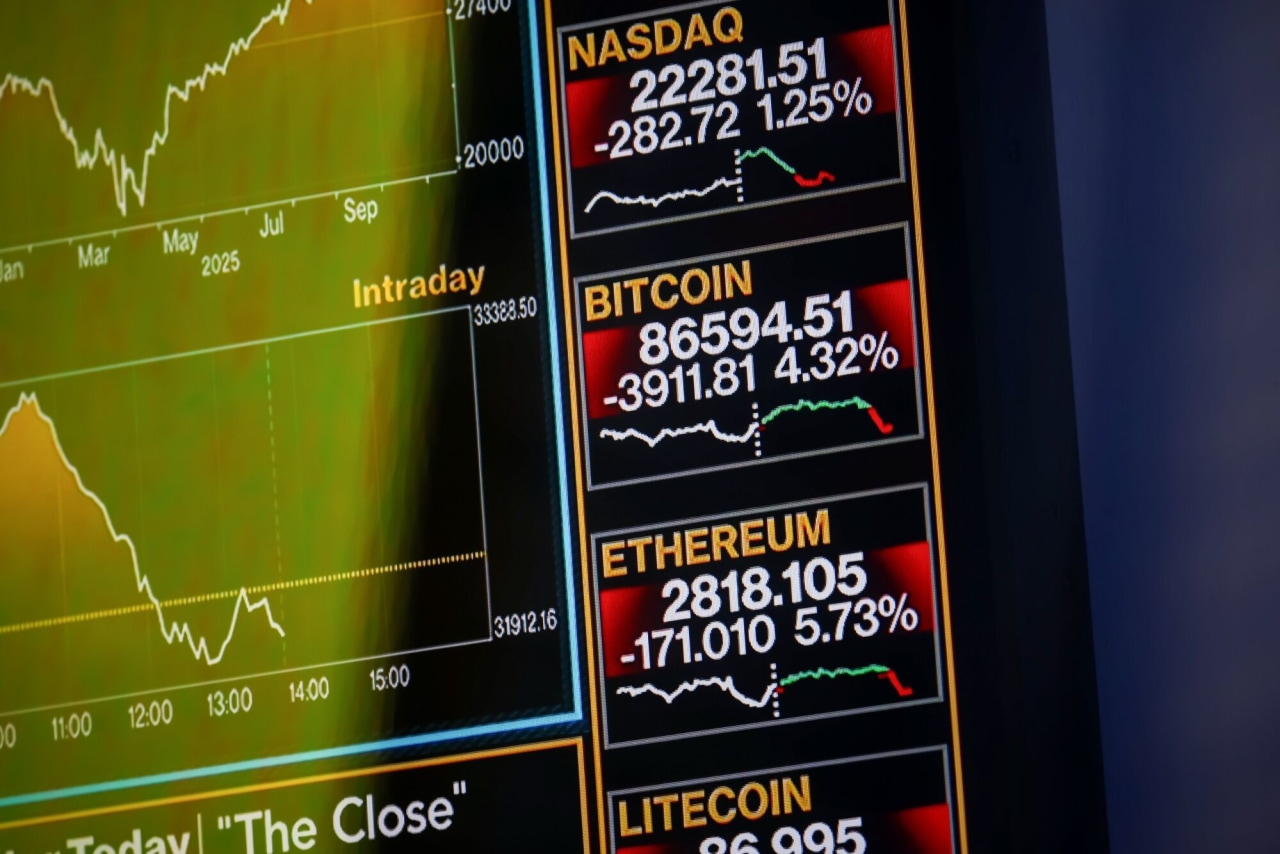
Understanding the Current Market Landscape
- The current market is characterized by high levels of volatility and unpredictability.
- Investors must be cautious and well-informed to navigate these conditions successfully.
- A combination of thorough research, diversification, and a long-term perspective is key to achieving profitability.
The Impact of Market Trends on Investors
[‘The ability to profit in a mad market is crucial for investors looking to grow their wealth over time.’, ‘A deep understanding of market trends, economic indicators, and investment strategies is essential for making informed decisions.’, ‘By staying informed and adapting to changing market conditions, investors can minimize risk and maximize returns.’]
Market Volatility: A New Normal?
The current market landscape is marked by unusually high levels of volatility, with prices fluctuating rapidly and unpredictably. This has created a challenging environment for investors, who must be able to adapt quickly to changing conditions in order to succeed. One of the primary causes of this volatility is the ongoing pandemic, which has disrupted global supply chains and led to widespread economic uncertainty. As a result, investors are becoming increasingly cautious, with many opting to pull their money out of the market altogether. However, this approach can be costly in the long run, as it means missing out on potential opportunities for growth. Instead, investors should focus on developing a robust investment strategy that takes into account the current market conditions. This can involve diversifying their portfolio, investing in a range of different asset classes, and being prepared to adapt quickly to changing circumstances.
The impact of market volatility on investors can be significant, with many experiencing substantial losses as a result of rapid price fluctuations. However, it is also possible to profit in a volatile market, provided that investors are well-informed and able to make quick decisions. One key strategy for achieving this is to focus on short-term trading, taking advantage of rapid price movements to generate quick profits. Another approach is to invest in assets that are less correlated with the overall market, such as commodities or real estate. By taking a diversified and flexible approach to investment, it is possible to minimize risk and maximize returns, even in the most turbulent of markets.
For example, during the 2020 pandemic, many investors opted to pull their money out of the stock market, fearing a prolonged downturn. However, those who stayed in the market and continued to invest were ultimately rewarded, as the market rebounded strongly in the latter half of the year. This highlights the importance of maintaining a long-term perspective, even in the face of short-term uncertainty. By doing so, investors can avoid making emotional decisions based on fear or greed, and instead focus on making rational, well-informed choices that are aligned with their overall investment goals.
In addition to the pandemic, other factors are also contributing to the current market volatility. These include geopolitical tensions, trade disputes, and concerns over climate change. Each of these factors has the potential to impact the market in significant ways, and investors must be aware of them in order to make informed decisions. For instance, the ongoing trade dispute between the US and China has had a major impact on global trade, leading to increased prices and reduced economic growth. Similarly, concerns over climate change are driving increased investment in renewable energy and sustainability, which is creating new opportunities for growth and profit.
Overall, the current market landscape is highly complex and unpredictable, with a wide range of factors contributing to volatility and uncertainty. However, by staying informed and adapting to changing conditions, investors can navigate these challenges and achieve their investment goals. This requires a combination of thorough research, diversification, and a long-term perspective, as well as the ability to make quick decisions in response to rapid price movements.
The long-term implications of the current market trends are significant, with the potential to shape the global economy for years to come. As such, investors must be aware of these trends and adapt their investment strategies accordingly. This may involve investing in new and emerging industries, such as renewable energy or technology, or diversifying their portfolio to include a range of different asset classes. By doing so, investors can minimize risk and maximize returns, even in the most turbulent of markets.
Furthermore, the current market volatility has also led to increased interest in alternative investment options, such as cryptocurrencies or real estate. These assets have the potential to provide high returns, but they also come with significant risks. As such, investors must be careful and well-informed before investing in these assets, and must ensure that they are aligned with their overall investment goals. By taking a cautious and informed approach, investors can navigate the challenges of the current market and achieve their investment objectives.
In conclusion, the current market landscape is highly complex and unpredictable, with a wide range of factors contributing to volatility and uncertainty. However, by staying informed and adapting to changing conditions, investors can navigate these challenges and achieve their investment goals. This requires a combination of thorough research, diversification, and a long-term perspective, as well as the ability to make quick decisions in response to rapid price movements.
A Brief History of Market Volatility
Market volatility is not a new phenomenon, and has been a feature of financial markets for centuries. However, the current level of volatility is unusual, and is driven by a unique combination of factors. One of the key drivers of market volatility is the rapid pace of technological change, which is transforming industries and disrupting traditional business models. This is creating new opportunities for growth and profit, but also increasing uncertainty and risk. Another factor is the rise of globalization, which has increased the interconnectedness of the global economy and created new channels for the transmission of economic shocks.
For example, during the 2008 financial crisis, the global economy was severely impacted by the collapse of the US housing market. This led to a credit crunch, which reduced access to finance and caused a sharp contraction in economic activity. However, the crisis also created opportunities for growth and profit, as investors who were able to navigate the challenges of the crisis were ultimately rewarded. This highlights the importance of maintaining a long-term perspective, even in the face of short-term uncertainty. By doing so, investors can avoid making emotional decisions based on fear or greed, and instead focus on making rational, well-informed choices that are aligned with their overall investment goals.
In addition to the 2008 crisis, there have been several other significant events that have contributed to market volatility in recent years. These include the European sovereign debt crisis, the Brexit referendum, and the ongoing pandemic. Each of these events has had a major impact on the global economy, and has created new challenges and opportunities for investors. For instance, the European sovereign debt crisis led to a significant increase in bond yields, which reduced the attractiveness of fixed income investments and drove investors towards riskier assets. Similarly, the Brexit referendum created uncertainty and volatility in the UK economy, which has had a knock-on impact on the global economy as a whole.
The impact of these events on investors has been significant, with many experiencing substantial losses as a result of rapid price fluctuations. However, it is also possible to profit in a volatile market, provided that investors are well-informed and able to make quick decisions. One key strategy for achieving this is to focus on short-term trading, taking advantage of rapid price movements to generate quick profits. Another approach is to invest in assets that are less correlated with the overall market, such as commodities or real estate. By taking a diversified and flexible approach to investment, it is possible to minimize risk and maximize returns, even in the most turbulent of markets.
Furthermore, the current market volatility has also led to increased interest in alternative investment options, such as cryptocurrencies or real estate. These assets have the potential to provide high returns, but they also come with significant risks. As such, investors must be careful and well-informed before investing in these assets, and must ensure that they are aligned with their overall investment goals. By taking a cautious and informed approach, investors can navigate the challenges of the current market and achieve their investment objectives.
The long-term implications of the current market trends are significant, with the potential to shape the global economy for years to come. As such, investors must be aware of these trends and adapt their investment strategies accordingly. This may involve investing in new and emerging industries, such as renewable energy or technology, or diversifying their portfolio to include a range of different asset classes. By doing so, investors can minimize risk and maximize returns, even in the most turbulent of markets.
In addition to the factors mentioned above, there are also several other trends that are driving market volatility. These include the rise of social media, which is increasing the speed and accessibility of information, and the growing importance of environmental, social, and governance (ESG) factors in investment decisions. Each of these trends has the potential to impact the market in significant ways, and investors must be aware of them in order to make informed decisions. For instance, the rise of social media has created new channels for the dissemination of information, which can impact market prices and sentiment. Similarly, the growing importance of ESG factors is driving increased investment in sustainable and responsible investments, which can provide high returns while also promoting positive social and environmental outcomes.
Overall, the background to the current market volatility is complex and multifaceted, with a wide range of factors contributing to uncertainty and risk. However, by understanding these factors and adapting to changing conditions, investors can navigate the challenges of the current market and achieve their investment goals. This requires a combination of thorough research, diversification, and a long-term perspective, as well as the ability to make quick decisions in response to rapid price movements.
Technical Analysis of Market Trends
From a technical perspective, the current market trends are driven by a combination of factors, including the overall market sentiment, the pace of economic growth, and the level of inflation. One of the key indicators of market sentiment is the moving average convergence divergence (MACD) indicator, which is used to gauge the strength and momentum of the market. This indicator is currently suggesting that the market is overbought, which could lead to a correction in the near term. Another indicator is the relative strength index (RSI), which is used to measure the magnitude of recent price changes. This indicator is currently suggesting that the market is due for a pullback, which could provide a buying opportunity for investors.
In addition to these indicators, there are also several other technical factors that are driving market trends. These include the level of volatility, the pace of trading activity, and the overall market momentum. Each of these factors has the potential to impact the market in significant ways, and investors must be aware of them in order to make informed decisions. For instance, the level of volatility is currently high, which is creating opportunities for profit but also increasing risk. Similarly, the pace of trading activity is rapid, which is driving price movements and creating new challenges for investors.
The impact of these technical factors on investors is significant, with many experiencing substantial losses as a result of rapid price fluctuations. However, it is also possible to profit in a volatile market, provided that investors are well-informed and able to make quick decisions. One key strategy for achieving this is to focus on short-term trading, taking advantage of rapid price movements to generate quick profits. Another approach is to invest in assets that are less correlated with the overall market, such as commodities or real estate. By taking a diversified and flexible approach to investment, it is possible to minimize risk and maximize returns, even in the most turbulent of markets.
Furthermore, the current market trends are also being driven by fundamental factors, such as the overall state of the economy and the level of corporate earnings. These factors have the potential to impact the market in significant ways, and investors must be aware of them in order to make informed decisions. For instance, the overall state of the economy is currently strong, with low unemployment and rapid economic growth. However, there are also concerns about the sustainability of this growth, and the potential for a downturn in the near term. By understanding these factors and adapting to changing conditions, investors can navigate the challenges of the current market and achieve their investment goals.
The long-term implications of the current market trends are significant, with the potential to shape the global economy for years to come. As such, investors must be aware of these trends and adapt their investment strategies accordingly. This may involve investing in new and emerging industries, such as renewable energy or technology, or diversifying their portfolio to include a range of different asset classes. By doing so, investors can minimize risk and maximize returns, even in the most turbulent of markets.
In addition to the factors mentioned above, there are also several other trends that are driving market volatility. These include the rise of artificial intelligence, which is increasing the efficiency and accuracy of investment decisions, and the growing importance of cybersecurity, which is creating new challenges and opportunities for investors. Each of these trends has the potential to impact the market in significant ways, and investors must be aware of them in order to make informed decisions. For instance, the rise of artificial intelligence is creating new opportunities for profit, but also increasing the risk of technological disruption. Similarly, the growing importance of cybersecurity is highlighting the need for investors to prioritize security and risk management in their investment decisions.
Overall, the technical analysis of market trends suggests that the current market is characterized by high levels of volatility and uncertainty. However, by understanding the technical and fundamental factors driving these trends, investors can navigate the challenges of the current market and achieve their investment goals. This requires a combination of thorough research, diversification, and a long-term perspective, as well as the ability to make quick decisions in response to rapid price movements.
Global Reactions to Market Volatility
The current market volatility has sparked a range of reactions from investors, policymakers, and other stakeholders around the world. Some have responded by pulling their money out of the market, fearing a prolonged downturn. Others have taken a more optimistic view, seeing the current volatility as a buying opportunity. For instance, the US Federal Reserve has responded to the current market volatility by cutting interest rates, in an effort to stimulate economic growth and reduce uncertainty. Similarly, the European Central Bank has launched a new round of quantitative easing, in an effort to support the eurozone economy and promote stability in the financial markets.
In addition to these policy responses, there have also been several other reactions to the current market volatility. These include increased investment in alternative assets, such as cryptocurrencies or real estate, and a growing focus on sustainability and environmental, social, and governance (ESG) factors in investment decisions. Each of these reactions has the potential to impact the market in significant ways, and investors must be aware of them in order to make informed decisions. For instance, the increased investment in alternative assets is creating new opportunities for growth and profit, but also increasing the risk of market instability. Similarly, the growing focus on ESG factors is driving increased investment in sustainable and responsible investments, which can provide high returns while also promoting positive social and environmental outcomes.
The impact of these reactions on investors is significant, with many experiencing substantial losses as a result of rapid price fluctuations. However, it is also possible to profit in a volatile market, provided that investors are well-informed and able to make quick decisions. One key strategy for achieving this is to focus on short-term trading, taking advantage of rapid price movements to generate quick profits. Another approach is to invest in assets that are less correlated with the overall market, such as commodities or real estate. By taking a diversified and flexible approach to investment, it is possible to minimize risk and maximize returns, even in the most turbulent of markets.
Furthermore, the current market volatility has also led to increased interest in international cooperation and coordination, as policymakers and investors seek to mitigate the risks and challenges associated with global economic uncertainty. This has led to a range of new initiatives and agreements, such as the G20’s efforts to promote international cooperation on economic issues. By working together, governments and investors can promote stability and reduce the risk of market instability, which can have positive impacts on the global economy and investors alike.
The long-term implications of the current market trends are significant, with the potential to shape the global economy for years to come. As such, investors must be aware of these trends and adapt their investment strategies accordingly. This may involve investing in new and emerging industries, such as renewable energy or technology, or diversifying their portfolio to include a range of different asset classes. By doing so, investors can minimize risk and maximize returns, even in the most turbulent of markets.
In addition to the factors mentioned above, there are also several other reactions to the current market volatility that are worth noting. These include the increased focus on risk management and portfolio diversification, as investors seek to mitigate the risks associated with market uncertainty. Each of these reactions has the potential to impact the market in significant ways, and investors must be aware of them in order to make informed decisions. For instance, the increased focus on risk management is driving increased investment in hedging strategies and other risk-reducing techniques, which can help to minimize losses in the event of a market downturn. Similarly, the growing focus on portfolio diversification is leading to increased investment in a range of different asset classes, which can help to reduce risk and increase returns over the long term.
Overall, the reactions to the current market volatility are complex and multifaceted, with a wide range of stakeholders responding in different ways to the challenges and opportunities presented by the current market trends. However, by understanding these reactions and adapting to changing conditions, investors can navigate the challenges of the current market and achieve their investment goals. This requires a combination of thorough research, diversification, and a long-term perspective, as well as the ability to make quick decisions in response to rapid price movements.
Predicting the Future of the Market
Looking ahead to the future, it is difficult to predict with certainty what the market will do next. However, by analyzing current trends and factors, it is possible to make some educated guesses about the likely direction of the market. One of the key factors that will shape the future of the market is the overall state of the economy, including the pace of economic growth, the level of inflation, and the state of the labor market. Another factor is the level of geopolitical uncertainty, including the ongoing risks associated with trade wars, terrorism, and other global conflicts.
In addition to these factors, there are also several other trends that will shape the future of the market. These include the growing importance of technology and innovation, the increasing focus on sustainability and ESG factors, and the rising awareness of the need for risk management and portfolio diversification. Each of these trends has the potential to impact the market in significant ways, and investors must be aware of them in order to make informed decisions. For instance, the growing importance of technology and innovation is creating new opportunities for growth and profit, but also increasing the risk of technological disruption. Similarly, the increasing focus on sustainability and ESG factors is driving increased investment in sustainable and responsible investments, which can provide high returns while also promoting positive social and environmental outcomes.
The impact of these trends on investors will be significant, with many experiencing substantial losses as a result of rapid price fluctuations. However, it is also possible to profit in a volatile market, provided that investors are well-informed and able to make quick decisions. One key strategy for achieving this is to focus on short-term trading, taking advantage of rapid price movements to generate quick profits. Another approach is to invest in assets that are less correlated with the overall market, such as commodities or real estate. By taking a diversified and flexible approach to investment, it is possible to minimize risk and maximize returns, even in the most turbulent of markets.
Furthermore, the future of the market will also be shaped by the actions of policymakers and regulators, who will play a crucial role in promoting stability and reducing the risk of market instability. This may involve implementing new regulations or policies, such as increased oversight of financial institutions or new rules governing the use of derivatives. By working together, governments and investors can promote stability and reduce the risk of market instability, which can have positive impacts on the global economy and investors alike.
The long-term implications of the current market trends are significant, with the potential to shape the global economy for years to come. As such, investors must be aware of these trends and adapt their investment strategies accordingly. This may involve investing in new and emerging industries, such as renewable energy or technology, or diversifying their portfolio to include a range of different asset classes. By doing so, investors can minimize risk and maximize returns, even in the most turbulent of markets.
In addition to the factors mentioned above, there are also several other trends that will shape the future of the market. These include the growing importance of emerging markets, the increasing focus on cybersecurity, and the rising awareness of the need for environmental sustainability. Each of these trends has the potential to impact the market in significant ways, and investors must be aware of them in order to make informed decisions. For instance, the growing importance of emerging markets is creating new opportunities for growth and profit, but also increasing the risk of market instability. Similarly, the increasing focus on cybersecurity is highlighting the need for investors to prioritize security and risk management in their investment decisions.
Overall, the future of the market is complex and uncertain, with a wide range of factors and trends that will shape its direction. However, by understanding these factors and adapting to changing conditions, investors can navigate the challenges of the current market and achieve their investment goals. This requires a combination of thorough research, diversification, and a long-term perspective, as well as the ability to make quick decisions in response to rapid price movements.
