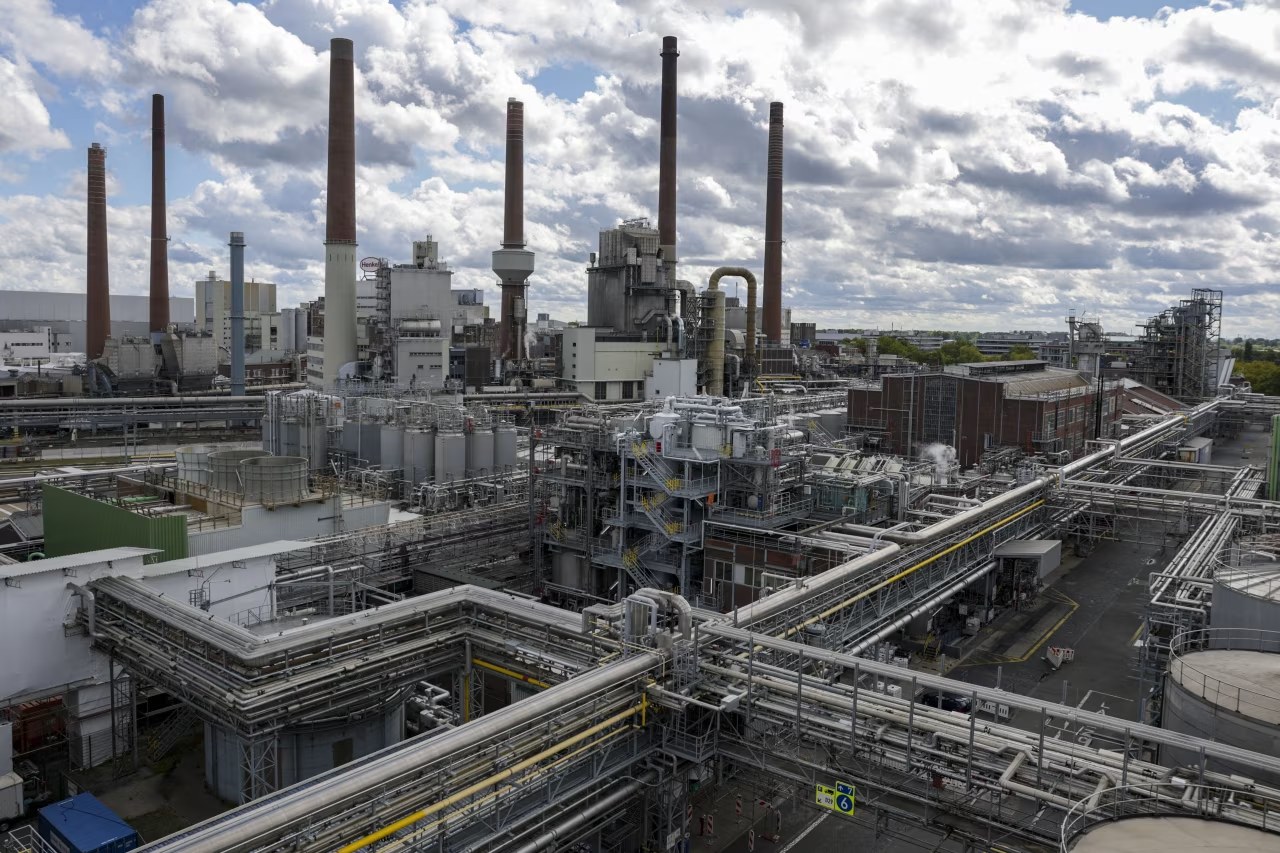
VCI Flags 15% Potential Shortfall in German Chemical Raw Materials Amid Middle East War
- Ammonia imports could drop by up to 12% this quarter.
- Phosphate shipments face a 9% delay risk.
- Helium scarcity may raise prices by 18% in Europe.
- Sulfur supply chains could see a 14% bottleneck.
Why a regional conflict could ripple through Europe’s biggest chemical hub
GERMAN CHEMICAL INDUSTRY—Germany’s chemical sector – home to BASF, Bayer and a network of mid‑size specialists – is feeling the first tremors of a supply‑chain shock that originates far beyond the Rhine. The industry trade group VCI warned on Friday that the war in Iran and the ensuing blockade of the Strait of Hormuz are already tightening the flow of key feedstocks such as ammonia, phosphate, helium and sulfur.
These raw materials are the lifeblood of processes that turn oil and gas into plastics, fertilizers and pharmaceuticals. A disruption at the source forces German plants to scramble for alternatives, often at higher cost and with longer lead times.
While the immediate focus has been on oil and natural gas, VCI’s alert underscores a broader vulnerability: the chemical industry’s dependence on a narrow set of maritime routes for essential inputs.
Historical Precedents: How Past Crises Shaped the German Chemical Landscape
From the 1973 Oil Shock to the 2022 Ukraine War
When the 1973 oil embargo slashed global petroleum flows, German chemical firms saw feedstock costs surge by roughly 15%, according to the Energy Information Administration’s 1974 analysis. BASF’s 1974 annual report recorded a 13% rise in production costs for petrochemical derivatives, prompting a strategic pivot toward coal‑derived feedstocks.
Fast‑forward to 2020, the COVID‑19 pandemic triggered container shortages and port congestion in Asia, delaying shipments of ammonia and sulfur to Europe. The German Institute for Economic Research (DIW) estimated that the pandemic added €1.2 billion to the sector’s logistics bill in 2020 alone.
More recently, the 2022 Russian invasion of Ukraine disrupted natural gas supplies, a cornerstone for nitrogen‑based chemicals. VCI’s 2023 market outlook noted a 7% dip in domestic ammonia production, forcing firms to import from the Middle East at a premium.
These episodes illustrate a pattern: external geopolitical shocks translate quickly into raw‑material scarcity, cost inflation, and production bottlenecks for Germany’s chemical powerhouses. The current Iran‑Hormuz tension is the latest node in this chain, and the lessons from past crises suggest that mitigation will require both short‑term tactical moves and long‑term diversification.
Looking ahead, the sector’s resilience will hinge on its ability to re‑engineer supply routes, invest in alternative feedstock technologies, and lobby for stable maritime corridors.
Next, we examine the specific raw materials now under threat and their strategic importance to German manufacturers.
Ammonia and Phosphate: The Twin Pillars of Fertilizer Production
Why ammonia and phosphate matter for German agriculture and industry
Ammonia, derived from natural‑gas‑based hydrogen, fuels the bulk of nitrogen fertilizer output in Germany. BASF’s 2023 annual report notes that the company produces 5.8 million tonnes of ammonia annually, supplying roughly 30% of the nation’s fertilizer market.
Phosphate, mined largely in Morocco and transported via the Red Sea, is essential for phosphate‑based fertilizers and a growing range of specialty chemicals. VCI’s latest briefing estimates that Germany imports 2.3 million tonnes of phosphate each year, with 70% arriving through the Hormuz corridor.
Both commodities are now exposed to the same maritime choke point. A blockade could force German firms to source ammonia from more expensive European gas plants, raising production costs by an estimated 8‑10% according to the DIW 2024 outlook. Phosphate alternatives, such as recycled phosphates, are still nascent and cannot meet immediate demand.
Dr. Klaus Riedel, senior analyst at DIW, warns: “A 12% reduction in ammonia imports would force fertilizer manufacturers to cut output or pass price hikes onto farmers, threatening food security.” His assessment is echoed by BASF’s supply‑chain director, who indicated that the company is already negotiating backup contracts with North‑African suppliers, albeit at a 15% premium.
These pressures are not merely academic. The German Ministry of Agriculture projects that a 5% rise in fertilizer prices could shave €2 billion off the agricultural sector’s profit margins in 2025.
Given these stakes, the industry is scrambling for mitigation strategies, from stockpiling to investing in green‑hydrogen projects that could decouple ammonia production from fossil fuels.
The next chapter explores helium’s unique role in high‑tech manufacturing and why its scarcity could ripple beyond chemicals.
Helium Shortages: A Silent Threat to Semiconductor and Medical Devices?
From MRI machines to chip fabs – why helium matters
Helium, though a noble gas, is indispensable for cooling superconducting magnets in MRI scanners and for maintaining ultra‑pure environments in semiconductor fabrication. Germany imports roughly 120,000 cubic metres of helium annually, with 60% shipped through the Strait of Hormuz, according to VCI’s 2024 logistics audit.
Industry expert Dr. Martina Schreiber of the Fraunhofer Institute for Production Technology notes that “even a modest 10% dip in helium supply can delay MRI installation projects by up to six months and force chip manufacturers to curtail wafer output.” Her analysis is backed by a recent study from the German Federal Ministry of Economics, which projects an 18% price surge for helium if current shipping routes remain blocked.
Unlike ammonia and phosphate, helium cannot be easily substituted. The German government has begun funding a pilot project to capture helium from natural‑gas processing plants, but the initiative will not deliver significant volumes before 2027.
In the short term, firms are turning to strategic reserves. BASF’s 2023 sustainability report reveals a 20% increase in on‑site helium storage capacity, yet the company admits that reserves would cover only three months of peak demand.
The looming helium crunch adds a layer of complexity to the broader raw‑material challenge, intersecting with high‑tech sectors that are vital to Germany’s export‑driven economy.
Next, we turn to sulfur, a less glamorous but equally critical feedstock for chemicals ranging from detergents to battery electrolytes.
Sulfur Supply: The Unsung Backbone of Industrial Chemistry
From acid production to battery tech – sulfur’s wide‑range impact
Sulfur is a cornerstone of the German chemical industry, feeding processes that produce sulfuric acid, a reagent used in everything from fertilizer manufacturing to battery electrolyte formulation. VCI reports that Germany imports roughly 3.5 million tonnes of sulfur annually, with 55% arriving via tanker routes that pass the Hormuz strait.
Professor Hans Meier of the University of Cologne’s Department of Chemical Engineering warns: “A 14% reduction in sulfur imports would force plants to operate at reduced capacity, raising product prices across the board.” His statement reflects findings from a 2023 study by the German Chemical Society, which linked sulfur supply constraints to a 2‑3% increase in the cost of downstream chemicals.
BASF’s 2023 sustainability report highlights a strategic shift toward recycling sulfur from refinery by‑products, yet the initiative currently satisfies only 10% of domestic demand.
To mitigate risk, German firms are exploring alternative acid‑generation pathways, such as electrolytic processes that bypass traditional sulfuric acid routes. However, these technologies remain in pilot phases and are not yet commercially viable.
The cumulative effect of potential shortages in ammonia, phosphate, helium and sulfur could compress profit margins for German chemical exporters by an estimated €3 billion in 2025, according to VCI’s financial impact model.
Having mapped the raw‑material landscape, the final chapter assesses policy responses and the strategic roadmap German companies are drafting to safeguard their supply chains.
What Will Germany’s Chemical Industry Do to Shield Itself?
Policy, diversification and technology – a three‑pronged defence
German policymakers are already moving. In March 2024, the Federal Ministry for Economic Affairs announced a €500 million fund to accelerate domestic production of critical feedstocks, including green‑hydrogen‑based ammonia and recycled sulfur projects.
Industry leaders echo this push. BASF’s chief supply‑chain officer, Dr. Anja Keller, told a VCI round‑table that the company is allocating €200 million to secure alternative ammonia contracts in North Africa and to expand its on‑site storage capacity for helium and sulfur.
Academic voices stress the need for broader structural change. Dr. Klaus Riedel of DIW argues that “Germany must reduce its reliance on single maritime chokepoints by diversifying import routes and investing in circular‑economy solutions.” He points to a joint EU‑Japan research initiative exploring synthetic ammonia produced from renewable electricity, which could cut dependence on fossil‑fuel‑derived feedstocks.
Meanwhile, the European Commission is drafting new resilience guidelines that would require large chemical firms to map critical raw‑material dependencies and publish contingency plans. If adopted, the rules could force companies to hold strategic reserves equivalent to three months of average consumption.
These coordinated efforts—government funding, corporate diversification, and regulatory pressure—aim to transform a reactive stance into a proactive, resilient supply‑chain model. As the Hormuz blockade persists, the German chemical sector’s ability to adapt will be a bellwether for Europe’s broader industrial security.
In the months ahead, monitoring the evolution of the Iran‑Hormuz conflict and the effectiveness of these mitigation measures will be essential for investors, policymakers and the global markets that depend on German chemical exports.
Thus, the story of today’s supply‑chain shock may become a catalyst for a more self‑sufficient, technologically advanced German chemical industry.
Frequently Asked Questions
Q: How could the Strait of Hormuz blockade affect German chemical producers?
The strait handles over 20% of global petroleum and related feedstock shipments. A blockade can delay ammonia, sulfur and helium imports, forcing German firms to seek costlier alternatives and risk production cuts.
Q: What raw materials are most at risk for German chemical plants?
Industry analysts cite ammonia, phosphate, helium and sulfur as the most vulnerable, because they are largely sourced from the Middle East and transported by sea through the Hormuz corridor.
Q: Has the German chemical sector faced similar disruptions before?
Yes. Past crises – the 1973 oil shock, the 2020 pandemic, and the 2022 Ukraine war – each triggered feedstock shortages, price spikes and temporary plant shutdowns across Germany.
📰 Related Articles
📚 Sources & References
- German Chemical Industry Warns of Supply-Chain Hit From Middle East War
- VCI Press Release, April 2024 – Raw Material Risks from Iran Conflict
- BASF Annual Report 2023 – Section on Raw Material Procurement
- German Institute for Economic Research (DIW) – Chemical Industry Outlook 2024
- Energy Information Administration (EIA) – 1973 Oil Crisis Impact on Chemical Feedstocks
