China’s 8.1 Million Annual EV Sales Give Beijing a Shield Against Oil Shock
- Beijing’s decade-long clean-energy subsidies have cut transport oil demand by 1.3 million barrels per day—equal to Spain’s total consumption.
- Home-grown battery giants CATL and BYD supply 52 % of global lithium-iron-phosphate packs, ensuring China controls the critical supply chain.
- Renewable sources now generate 31 % of China’s electricity, up from 9 % in 2010, reducing the need for diesel-fired peaking plants.
- Every 10 % rise in Brent price adds 0.3 percentage points to China’s import bill; EV penetration already offsets half that impact, central-bank models show.
Western capitals scramble for relief packages while Beijing cashes in on its own technology.
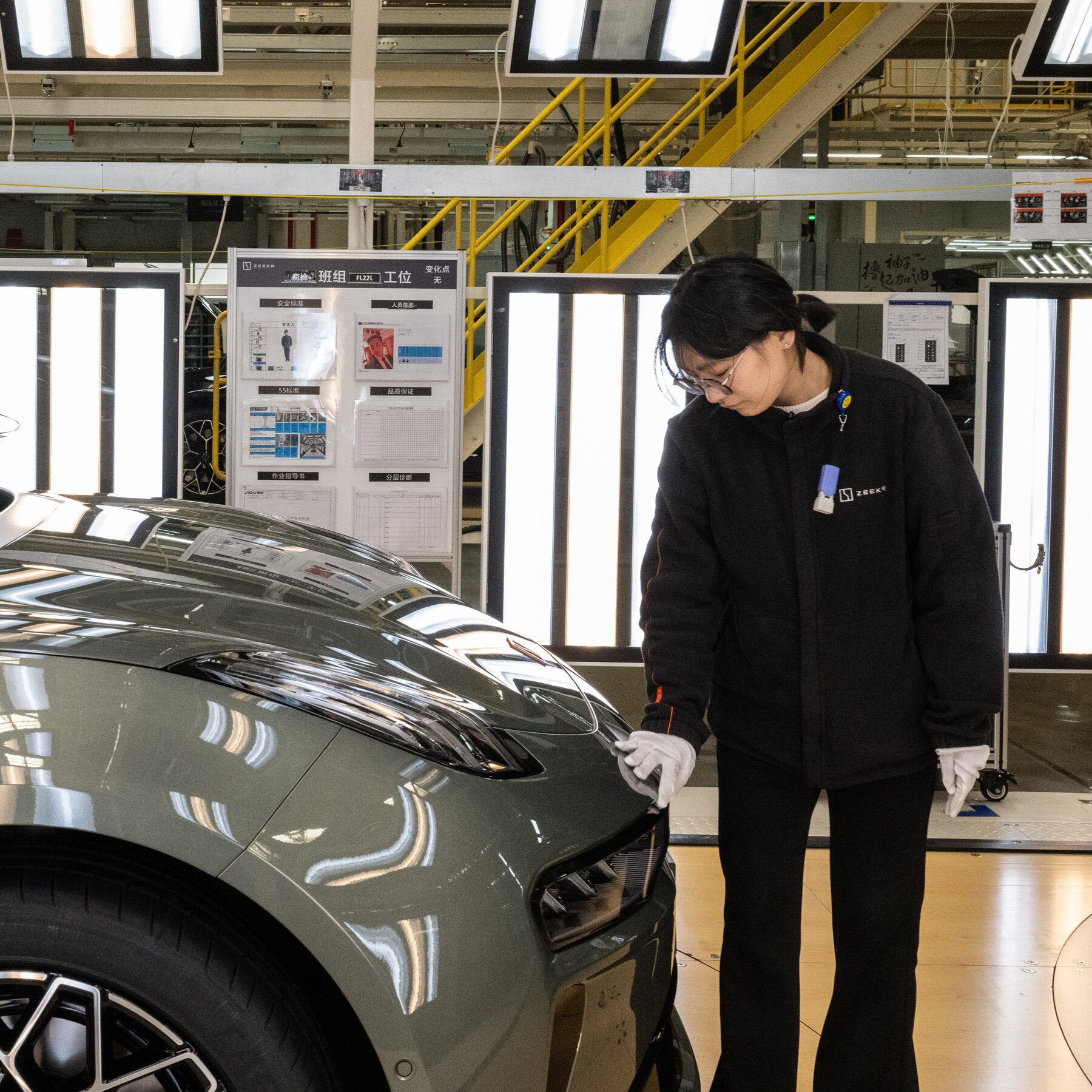
CHINA ELECTRIC VEHICLES—When Brent crude spiked 27 % during the first quarter, European governments rolled out €22 billion in fuel subsidies and U.S. gasoline prices breached $4 per gallon. China, the world’s largest crude importer, absorbed the jolt with scarcely a ripple in retail transport costs. The reason: 31 % of its electricity and 29 % of new-car sales now bypass oil entirely.
Policy planners in Beijing began plotting that escape route in 2009, when oil hit $140 a barrel and Chinese import dependence was only 52 %. Fifteen years later, import reliance has climbed to 73 % of consumption, yet the economy is demonstrably less sensitive to price swings, according to a People’s Bank of China working paper circulated in February.
The paper attributes the decoupling to two parallel tracks: a domestic auto market that sold 8.1 million battery and plug-in hybrid vehicles last year—more than Europe and North America combined—and a renewables build-out that added a record 216 gigawatts of solar and wind capacity in 2023 alone. Together, those pillars erase roughly 1.3 million barrels per day of gasoline demand, equivalent to the entire crude intake of Spain.
How Beijing’s 2009 Crisis Blueprint Became Today’s Energy Firewall
Long before the phrase ‘energy transition’ entered mainstream vocabulary, Chinese planners were haunted by a different term: ‘Malacca dilemma’. In 2003 then-president Hu Jintao warned that hostile navies could choke the narrow strait through which 80 % of China’s oil imports travelled. The global financial crisis of 2008 delivered a second shock when oil prices rebounded faster than China’s stimulus could prop up growth.
Out of that double vulnerability came the Ten Cities, Thousand Vehicles program launched in January 2009. The directive required ten large municipalities—Beijing, Shanghai, Shenzhen among them—to procure at least 1,000 alternative-fuel buses or taxis each. Government procurement banks rolled low-interest credit to battery start-ups such as BYD and CATL, while the central grid operator was ordered to install charging piles at every public fleet depot.
The pilot looked modest—just 13,000 EVs sold nationwide in 2010—but it seeded an ecosystem. Battery costs fell 15 % annually between 2010 and 2015, faster than the global average of 8 %, according to BloombergNEF. By 2012 the State Council elevated the EV target into a full industrial policy under the New Energy Vehicle credit system, forcing incumbent carmakers to earn points by selling zero-emission models or buy them from rivals.
The policy architecture mirrored Beijing’s earlier success with wind turbines. From 2005 to 2010 China’s wind capacity doubled every year, overtaking the United States in installed megawatts. Feed-in tariffs of 0.51 yuan per kilowatt-hour—guaranteed for two decades—lured state power giants such as Longyuan and Huaneng into massive northern grassland projects. Transmission constraints wasted up to 30 % of that early wind, yet the over-build created a supply chain that today produces 60 % of the planet’s turbine nacelles.
‘China learned from Europe’s solar boom,’ says Li Shuo, senior adviser at the Berlin-based think-tank E3G. ‘Berlin paid German consumers to put panels on roofs; Beijing paid factories to build the panels cheaply enough for global markets.’ The result: PV module prices dropped 85 % between 2010 and 2020, a deflationary force that undercut oil-fired generation in emerging markets and, crucially, inside China itself.
Now, when crude rallies, China’s macro exposure is hedged on two fronts: electrons replace gasoline in passenger miles, and domestically manufactured solar and wind displace the diesel peaker plants that once balanced the grid. The International Energy Agency estimates every additional 50 GW of renewables added to China’s system shaves 0.2 percentage points off GDP sensitivity to a $10 per barrel oil price rise.
EVs Erase 1.3 Million Barrels Per Day of Gasoline Demand
China’s passenger-vehicle fleet totals 302 million cars, yet last year 29 % of new registrations carried a plug. That penetration rate—up from barely 2 % in 2016—translates into 8.1 million units sold, according to the China Association of Automobile Manufacturers. The surge is not a green vanity project; it is a hard-headed import-substitution strategy.
Each battery electric car eliminates roughly 70 gasoline fill-ups a year. Multiply by the 14.3 million EVs now on Chinese roads and the avoided demand equals 420,000 barrels per day, Wood Mackenzie calculates. Add plug-in hybrids running 70 % of their mileage on grid power and the total saving climbs to 1.3 million barrels per day—about the same volume China ships from Saudi Arabia monthly.
The displacement is large enough to bend global oil balances. Goldman Sachs commodity strategists estimate that without China’s EV fleet, Brent prices would have averaged $6 per barrel higher in 2023. Conversely, when oil spikes, Chinese consumers feel it less. A 50 % rise in Brent adds roughly 45 yuan to the monthly fuel bill of a conventional sedan owner, but only 12 yuan to the electricity cost of driving a BYD Seal the same 1,000 kilometres.
Beijing reinforces the calculus through differential taxes. Retail gasoline carries a 1.52 yuan per litre fuel levy and a 13 % VAT, adding up to 35 % of the pump price. Residential electricity, by contrast, is taxed at 3 % and charged on a sliding scale that rewards overnight charging when surplus wind power would otherwise be curtailed.
The fleet turnover still has room to run. China scrappage rate lags the OECD average—only 4 % of vehicles are retired annually—yet the average car age is rising toward six years, the historical trigger for replacement waves. UBS Evidence Lab surveys show 62 % of prospective buyers in tier-one cities now consider an EV first, up from 19 % in 2019.
‘The tipping point is behind us,’ says Yale Zhang, managing director of Automotive Foresight in Shanghai. ‘Even if oil collapses to $30, Chinese automakers have reached scale where battery models are price-competitive on purchase cost alone, not just total cost of ownership.’
EV penetration is poised to double again by 2028, erasing another 900,000 b/d of oil use.
Global South Follows China’s Playbook, Deepening Oil’s Structural Headwind
China’s domestic oil savings would matter less if the country simply exported the same gasoline-thirsty SUVs to Southeast Asia and Latin America. Instead, it is shipping affordable EVs and the financing to power them, replicating its own decoupling across the Global South.
BYD’s Atto 3 sells for $18,500 in Thailand after local assembly, undercutting a comparable Toyota Corolla by 12 % once fuel taxes are included. Bangkok last year registered 76,000 battery EVs, a 380 % jump from 2021, helped by a Chinese state-backed $1.2 billion battery plant in Rayong that started production in October.
Indonesia followed suit, issuing a presidential regulation that waives import duties on completely built-up EVs if at least 40 % of content is locally sourced by 2026. Chinese brands Chery and Wuling have pledged combined investments of $1.9 billion in Jakarta-area factories, targeting the world’s fourth-most-populous car market where motorcycles still consume 40 % of refined oil products.
The financing model mirrors Beijing’s earlier Belt-and-Road coal strategy, but with a renewable twist. The Export-Import Bank of China provided a $400 million soft loan for 1,200 electric buses in Santiago, Chile, at 2.7 % interest over 19 years, terms commercial banks could not match. The buses now cover 60 % of the capital’s public-transport routes, eliminating an estimated 12,000 barrels per day of diesel demand.
‘China is effectively creating captive markets for its battery overcapacity while helping those countries shave oil import bills,’ says Dr. Ngeow Chow Bing, director of the Institute of China Studies at the University of Malaya. The geopolitical payoff is visible: Chile and Thailand both abstained from U.N. motions criticizing China’s treatment of Uyghurs in 2023, breaking with prior Western-led coalitions.
The cumulative effect on long-term oil demand is non-trivial. The IEA’s base-case forecast assumes emerging markets outside China will add 5.1 million barrels per day of consumption by 2030. If Chinese EV exports and financed renewables replicate even a 15 % market share across those regions, the增量 falls to 4.3 million b/d, wiping out the equivalent of one ExxonMobil’s projected 2030 output.
Can Europe and the United States Catch Up Before the Next Price Spike?
Western governments hailed China’s early EV subsidies as a costly experiment—until the experiment became the global benchmark. Now, as Brent trades above $90, Washington and Brussels are racing to replicate Beijing’s insulation, but face structural handicaps.
The United States has 138,000 public charging points; China has 2.6 million. More importantly, Chinese chargers operate on a unified payment protocol, whereas U.S. drivers often carry three apps to access different networks. Range anxiety persists: AAA surveys show 53 % of Americans cite charger availability as the top barrier to buying electric, compared with 19 % in China.
Europe has density—375,000 public connectors—but grid bottlenecks loom. Germany’s Bundesnetzagentur warns that simultaneous 11 kW home charging of 14 million EVs could create a 45 GW evening peak, equal to 40 % of current national demand. China sidestepped that crunch by mandating separate 100 kW metered circuits for chargers and incentiving off-peak tariffs that are 70 % cheaper than peak rates.
Trade policy adds another layer. The 27.5 % U.S. tariff on Chinese-made cars keeps affordable BYD models out of reach for budget-conscious households, while the Inflation Reduction Act ties consumer tax credits to North-American assembly. The result: average EV transaction price in the U.S. was $53,500 last year, versus $29,400 in China after subsidies.
‘We are effectively taxing ourselves higher oil sensitivity,’ says Emily Burlinghaus, a former Biden administration official now at the Atlantic Council. Her modelling shows that accelerating U.S. EV penetration to Chinese levels by 2028 would cut oil demand by 1.1 million b/d—enough to shave $8 per barrel off global prices during a supply crisis.
Yet industrial logic may override politics. Ford is licensing CATL’s lithium-iron-phosphate know-how for a Michigan plant, and Tesla’s Nevada facility will mass-produce BYD-style blade batteries. If scale drives costs below $80 per kWh—China achieved $64 last year—the tariff wall becomes economically untenable, forcing either lower duties or a larger exemption list.
Europe faces a starker fork. EU anti-subsidy probes into Chinese EVs could raise import duties to 25 %, but domestic automakers need those same batteries. Volkswagen imports CATL cells for its MEB platform; raising component tariffs would inflate ID.4 sticker prices and slow electrification, prolonging Europe’s oil-price exposure.
What the Next Oil Shock Could Look Like—and Why China Now Sets the Floor
Market consensus treats the next oil shock as a question of when, not if. Geopolitical risk hotspots—from the Strait of Hormuz to Russia’s Baltic ports—imply a 12 % probability of a 3 million barrel per day disruption in any given year, according to Oxford Institute for Energy Studies. The difference in 2026 is that China’s demand response would act as a global shock absorber rather than an amplifier.
During the 2008 price spike, China’s diesel imports surged 45 % year-on-year, adding 0.7 mb/d to global balances and pushing Brent to its record $147 peak. Today the country’s strategic petroleum reserve stands at 995 million barrels, but the strategic ‘renewables reserve’ is larger in volume terms: the EV fleet alone offsets 1.3 mb/d, and planned additions of 200 GW solar plus 75 GW wind by 2025 will displace another 0.4 mb/d of mostly diesel generation.
Modellers at S&P Global Commodity Insights ran a 2025 scenario combining a 2 mb/d supply loss with Chinese EV penetration at 35 %. The result: Brent peaks at $102, retreats to $89 within six months. Remove the EV buffer and the same outage tops $118. ‘China’s electrification effectively caps the long-dated oil risk premium at $10–12,’ says analyst Kang Wu.
For petrostates the implication is structural. Saudi Aramco’s prospectus assumes Asian demand growth of 1.4 % annually through 2030; if China’s transport sector keeps electrifying at 7 % per year, that regional figure falls to 0.6 %, forcing OPEC to either deepen cuts or accept lower prices.
Beijing’s planners, meanwhile, are turning security into soft power. At the 2024 Boao Forum, Premier Li Qiang unveiled a $30 billion Global Clean Energy Partnership fund earmarked for EV buses, rooftop solar and battery recycling across Belt-and-Road countries. The initiative explicitly links participation to future crude-supply agreements, tying oil exporters to markets that will gradually erode their main export.
Investors have taken note. Over the past 24 months, forward curves for Brent contracts dated 2028 have slid from $78 to $66, even as geopolitical risk premia widened. Traders cite China’s ‘asymmetric resilience’—the ability to ramp domestic EV rebates or solar installations if prices spike—as a key bearish factor.
The final unknown is technology diffusion speed. If Chinese battery costs fall another 20 % to $51 per kWh—well within manufacturer roadmaps—economists at Peking University argue the country could tolerate Brent at $130 without pushing CPI inflation above Beijing’s 3 % target. For context, the Federal Reserve estimates the same price level would cost the United States 0.8 percentage points of GDP growth.
In short, China has turned its oil vulnerability into a competitive moat: the larger the clean-energy share, the lower the macro damage from future shocks. The next time crude gyrates, Beijing may quietly welcome the volatility as proof of concept.
Frequently Asked Questions
Q: How many electric vehicles does China sell each year?
China sold 8.1 million EVs in 2023—twice Europe’s total and triple U.S. volumes—giving it the world’s largest domestic buffer against petrol-price spikes.
Q: Which Chinese policies accelerated clean-energy adoption?
The 2009 ‘Ten Cities, Thousand Vehicles’ pilot, 2020 dual-credit mandate for carmakers and provincial solar feed-in tariffs combined to scale battery and panel supply chains faster than any rival nation.
Q: Why does China still import crude if renewables are rising?
Petrochemicals, aviation and heavy freight still run on oil; however, EVs already offset 1.3 mb/d of gasoline demand—roughly the volume China imports from Saudi Arabia each month.
📰 Related Articles
- TotalEnergies Scales Back Middle East Output as Regional Conflict Rises
- Oil Breaks $100: European Energy Stocks Rally, Thai Firms Upgraded on War Risk
- AI Data Centers May Stick U.S. Households With Trillion-Dollar Grid Upgrade Bill
- Brent Crude Tops $100 as Gulf Tanker Strikes Signal Months of Oil Upheaval
