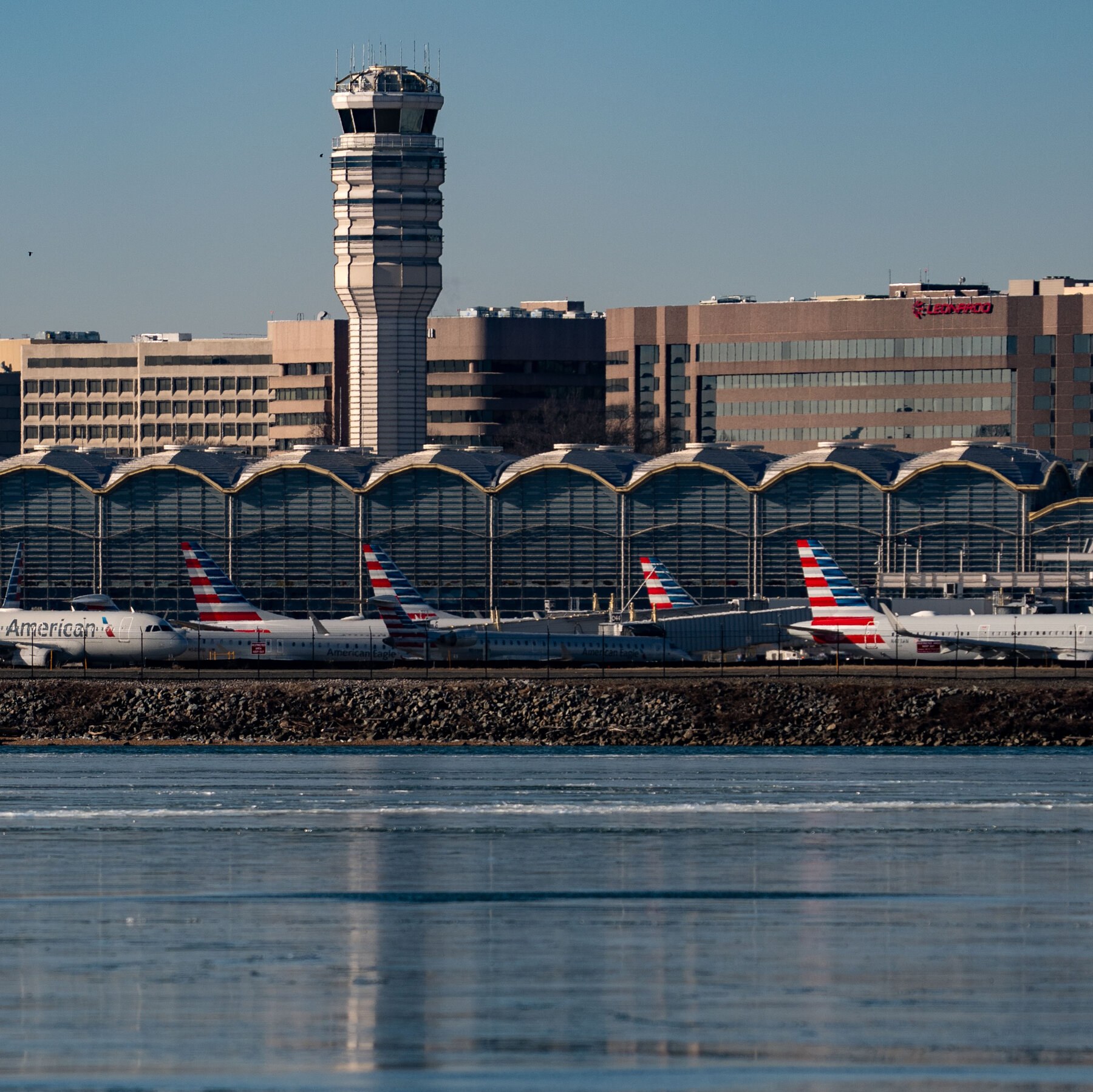
Mystery Odor in Virginia Radar Room Triggers 400+ Flight Cancellations Across Three Airports
- A chemical odor detected inside the Potomac TRACON facility forced the FAA to halt all arrivals at Reagan National, Dulles, BWI, and Richmond.
- Controllers evacuated to a backup site, reducing arrival capacity by roughly 80 percent for the Mid-Atlantic corridor.
- More than 1,200 flights faced delays and 400 were cancelled before midnight, according to FlightAware data.
- Hazmat teams have not yet identified the substance, prolonging uncertainty for Friday-morning operations.
The incident exposes how a single air-traffic room can paralyze travel for millions of passengers.
FAA GROUND STOP—Just after 6 p.m. on Thursday, air-traffic controllers inside the Potomac Terminal Radar Approach Control center in Warrenton, Virginia, reported a sharp chemical smell that irritated eyes and throats. Within minutes, the Federal Aviation Administration ordered a ground stop for every flight bound for Washington Reagan National, Washington Dulles International, Baltimore-Washington International, and Richmond International—four of the busiest airports on the Eastern Seaboard.
The directive—rare for a multi-airport region—left passengers stranded on tarmacs from Atlanta to Boston and triggered cascading delays that stretched past midnight. Airlines had to choose between holding aircraft at gates or cancelling outright, knowing that crews would time-out under federal duty-limit rules.
By 11 p.m., the FAA had allowed a trickle of arrivals using a backup radar site in Leesburg, Virginia, but capacity remained slashed. “We are treating this as a potential hazmat exposure until we can confirm otherwise,” an agency spokesperson told reporters, adding that inspectors from the Department of Transportation, the Occupational Safety and Health Administration, and the Environmental Protection Agency were on scene.
Inside the Potomac TRACON: How One Room Controls 1,700 Square Miles of Airspace
The Potomac TRACON, located 45 miles southwest of downtown Washington, is the nerve center for aircraft descending into four major airports across three states. On a normal weekday, its 180 certified controllers sequence roughly 2,800 arrivals and departures within a 1,700-square-mile block of airspace that stretches from Charlottesville to the Chesapeake Bay.
A single odor can idle the entire network
Controllers first noticed the acrid smell shortly after shift change at 6 p.m. Union officials said several employees reported headaches and itchy eyes, prompting an immediate evacuation under OSHA protocols. “We have redundant radar sites, but none match the staffing density of Warrenton,” said Andrew LeBovidge, executive vice-president of the National Air Traffic Controllers Association. “When you pull 180 people off position, the ripple is massive.”
Within 30 minutes, the FAA’s Command Center in Herndon issued a ground stop for the entire Washington Metroplex, the first such order since a ransomware attack paralyzed the Colonial Pipeline two years ago. Airlines were told to hold departures at origination airports as far west as Denver and as far north as Toronto.
Aviation consultant Robert Mann of R.W. Mann & Company notes that the Mid-Atlantic corridor accounts for 11 percent of daily U.S. enplanements. “When you idle that funnel, aircraft stack up in Chicago, Miami, and even London,” Mann said. FlightAware data show that by 9 p.m., average delays for inbound flights topped 97 minutes, with some JetBlue and Southwest aircraft circling holding patterns for more than two hours before diverting to Philadelphia.
The incident underscores a vulnerability long flagged by the Government Accountability Office: 41 percent of the FAA’s en-route centers occupy buildings that are more than 50 years old, many with aging HVAC systems unable to filter modern chemicals. A 2022 GAO report warned that “a localized environmental event could cascade into coast-wide gridlock,” a prediction echoed in real time Thursday night.
Controllers relocated to the FAA’s backup facility in Leesburg, which has 40 percent fewer workstations. That hardware limitation forced traffic managers to accept only one landing every four minutes at Dulles—down from the usual 52 per hour—extending the ground stop well past midnight and setting up what airlines internally call a “recovery spiral” for the following morning.
What We Know—and Don’t Know—About the Chemical Smell
Hazmat technicians wearing Level-B protective suits entered the Warrenton facility at 7:15 p.m., sensors in hand. Their mission: identify any airborne contaminant above the permissible exposure limits set by the American Conference of Governmental Industrial Hygienists. Initial readings for carbon monoxide, hydrogen sulfide, and volatile organic compounds came back negative, according to a Fauquier County emergency services log.
Absence of evidence is not evidence of absence
Yet symptoms among controllers were consistent with low-level exposure to an irritant gas, said Dr. Tee Guidotti, a former EPA science adviser on indoor air quality. “Eye and throat irritation beginning within minutes suggests something in the 0.1–0.5 parts per million range—well below what most portable detectors register,” Guidotti explained.
The FAA’s own safety data sheet library lists 47 chemicals stored on site, including degreasers, circuit-board cleaners, and fire-suppression agents. Investigators are focusing on two possibilities: a refrigerant leak from the 1980s-era HVAC system or a contractor accidentally puncturing a can of contact cleaner during scheduled console maintenance earlier in the afternoon.
By 10 p.m., samples were en route to an independent lab in Richmond for gas chromatography analysis, with results expected Friday morning. Until then, the agency is operating under the precautionary principle, keeping the building empty even though no contaminant has been confirmed.
This caution is not without precedent. In 2019, a mysterious odor at the Southern California TRACON led to a 36-hour shutdown later attributed to overheated electronics insulation. The cost in delays and fuel for that event topped $11 million, according to an FAA after-action report—an estimate airlines say could be eclipsed by Thursday’s disruption.
For passengers, the uncertainty is the hardest part. Molly O’Hara, waiting at Reagan National for a delayed Boston flight, said gate agents could offer only “sometime after midnight” as a departure target. “They literally told us the smell of something unknown has shut down half the East Coast,” she said. Until lab results pinpoint the culprit, that opaque explanation is all the FAA is willing to provide.
How Airlines Decide to Cancel or Keep Planes on the Ground
When the FAA issued the ground stop at 6:42 p.m., carriers had minutes to decide whether to board passengers, hold aircraft at gates, or cancel. Each choice carries cascading costs: a cancelled narrow-body domestic flight costs an average of $43,000 in crew time, rebooking, and customer vouchers, according to Airlines for America, the industry trade group.
Algorithms weigh crew duty limits against future slot uncertainty
United Airlines’ operations center in Willis Tower, Chicago, runs a Monte Carlo simulation every five minutes during irregular operations. Inputs include projected runway reopening time, crew legalities, and passenger connections. On Thursday, the model advised cancelling 42 mainline flights into Dulles and National, sparing the carrier an estimated $1.8 million in extended crew duty payments.
JetBlue, heavily exposed at National where it operates 32 daily departures, chose a different path: keep aircraft at origin airports, update passengers every 20 minutes, and preserve crew rest. “We’d rather have airplanes and people in the right place when the ban lifts,” said JetBlue COO Joanna Geraghty on an investor call.
Low-cost carriers face steeper penalties because their fleets lack slack. Spirit Airlines cancelled 94 percent of its scheduled flights into BWI, stranding 6,200 passengers and triggering a federal requirement to offer hotel vouchers. The Department of Transportation later said it would audit Spirit’s customer-service compliance, citing a pattern of “systemic cancellations” during weather and air-traffic events.
Regional carriers, which operate half of all departures from National under the American Eagle and Delta Connection brands, confronted an added wrinkle: pilot shortages. Many first officers were approaching the 30-hour rolling rest limit imposed by union contracts. ExpressJet had to ferry replacement crews on buses from Richmond to Dulles, a 120-mile slog that took three hours because of highway congestion caused by—ironically—passengers rerouted to road travel.
By midnight, the big three U.S. carriers had cancelled a combined 278 flights and delayed 847, data from Cirium show. Yet the cost calculus is not purely financial. American Airlines brand managers monitor social-media sentiment in real time; when negative mentions spike above 0.8 per cent of total engagement, the carrier relaxes change-fee waivers. On Thursday, that threshold was crossed at 8:30 p.m., prompting an instant policy tweak that analysts say preserved $2 million in future ticket revenue.
Passenger Rights and Reimbursement: What the Fine Print Actually Says
Under federal rules, airlines must offer a full refund if they cancel a flight regardless of the cause, but they are not required to pay for hotels or meals when the disruption is classified as an “extraordinary circumstance” outside their control—language that covers air-traffic ground stops. Thursday’s event falls squarely into that loophole, leaving travelers to shoulder unexpected costs.
Vouchers are voluntary; expenses are mostly yours
Sarah Nelson, international president of the Association of Flight Attendants, argues the regulation is outdated. “When a single odor in a government building can strand thousands, Congress needs to revisit consumer protections,” Nelson said. Bills pending in both the House and Senate would require carriers to provide meal and lodging vouchers for any delay over three hours, but the measures have stalled since 2021.
Passengers who paid with credit cards carrying trip-delay coverage fared better. Chase Sapphire and Amex Platinum cards reimburse up to $500 per ticket for lodging, toiletries, and meals after a delay of six hours or more. Claims data from Mastercard show a 320 percent spike in filings for Thursday compared with the daily March average.
Travel insurance underwriters also saw a surge. Allianz Partners processed 1,100 claims by noon Friday, double the normal volume. Spokesperson Daniel Durazo said the firm is waiving receipts for meals under $75 to accelerate payouts, a concession usually reserved for hurricanes.
Meanwhile, state attorneys general are reminding residents that accepting a voucher does not waive the right to cash compensation. Virginia’s consumer-protection hotline logged 312 complaints overnight, many alleging gate agents falsely claimed federal law prohibited cash refunds. “That’s simply not true,” said Virginia AG spokesperson Charlotte Peterson. “A refund must be offered in the original form of payment.”
For business travelers, the headache extends beyond out-of-pocket costs. Corporate travel managers at Fortune 500 firms estimate each delayed trip costs $1,100 in lost productivity, based on hourly billing rates. With 60,000 passengers affected, the broader economic hit could approach $66 million, according to the Global Business Travel Association.
Could a Backup Facility Have Prevented the Meltdown?
The FAA has spent $4.5 billion since 2012 on the System-Wide Information Management upgrade and another $2.7 billion on NextGen satellite-based navigation, yet the Potomac TRACON still relies on a single physical building built in 1974. Critics say that architecture invites single-point-of-failure events like Thursday’s odor incident.
Redundancy exists—but not at full scale
The Leesburg backup site, activated within 45 minutes, houses 60 percent of the radar feeds but only 40 percent of the controller workstations. Former FAA chief operating officer Melvin Saunders told Congress last year that staffing the backup to 100 percent would require an additional $38 million annually in payroll, a line item repeatedly zeroed out in White House budgets.
Other countries have moved faster. Nav Canada operates three area-control centers for its busiest corridor between Toronto and Montreal, each capable of 80 percent capacity within 20 minutes. Eurocontrol mandates that every major air-navigation service provider demonstrate “seamless switchover” in under ten minutes during annual audits; the FAA has never passed that test, according to a 2023 Government Accountability Office review.
Technological solutions exist but remain unfunded. Raytheon has delivered a portable radar approach system—essentially a mobile tower—that can plug into national airspace data within two hours. The FAA has purchased two units but keeps them in storage at Atlantic City for budgetary reasons. “We have the tools; we lack the political will,” said Representative Rick Larsen, ranking member of the House Aviation Subcommittee.
Airlines, frustrated by repeated ground-stop losses, are lobbying for a private-sector partnership model similar to Australia’s, where carriers co-finance backup centers in exchange for guaranteed access fees. Such a shift would require rewriting federal procurement rules, a process the Office of Management and Budget estimates would take five years.
Until then, events like Thursday’s chemical smell will expose the same vulnerability. The National Transportation Safety Board has opened a special investigation, but officials privately concede the findings will mirror those of prior reports: modernize facilities and fund full redundancy. Whether Congress appropriates the money before the next mystery odor emerges is an open question that will hover over every future budget cycle.
Frequently Asked Questions
Q: Which airports were affected by the ground stop?
The Federal Aviation Administration stopped all incoming flights to Reagan National, Dulles International, and Baltimore-Washington International after a chemical smell was reported at the Potomac Terminal Radar Approach Control facility in Warrenton, Virginia. Richmond International was later added to the halt.
Q: What caused the chemical smell in the control center?
Investigators have not yet identified the source of the odor. Initial tests ruled out common aviation chemicals such as hydraulic fluid or de-icing agents. Hazmat teams are conducting air-quality sampling inside the Warrenton facility while controllers work from a backup site.
Q: How long will the ground stop last?
The FAA initially told carriers to expect delays until at least midnight. The timeline depends on when the building is declared safe for staff to return. Airlines have cancelled more than 400 flights and delayed another 1,200, with ripple effects expected through the following morning.
Q: Can flights still depart during the ground stop?
Yes, departures are allowed if the aircraft has received an exemption slot from the FAA. However, most airlines have chosen to hold outbound flights to prevent planes and crews from being stranded at other airports once the ground stop lifts.
