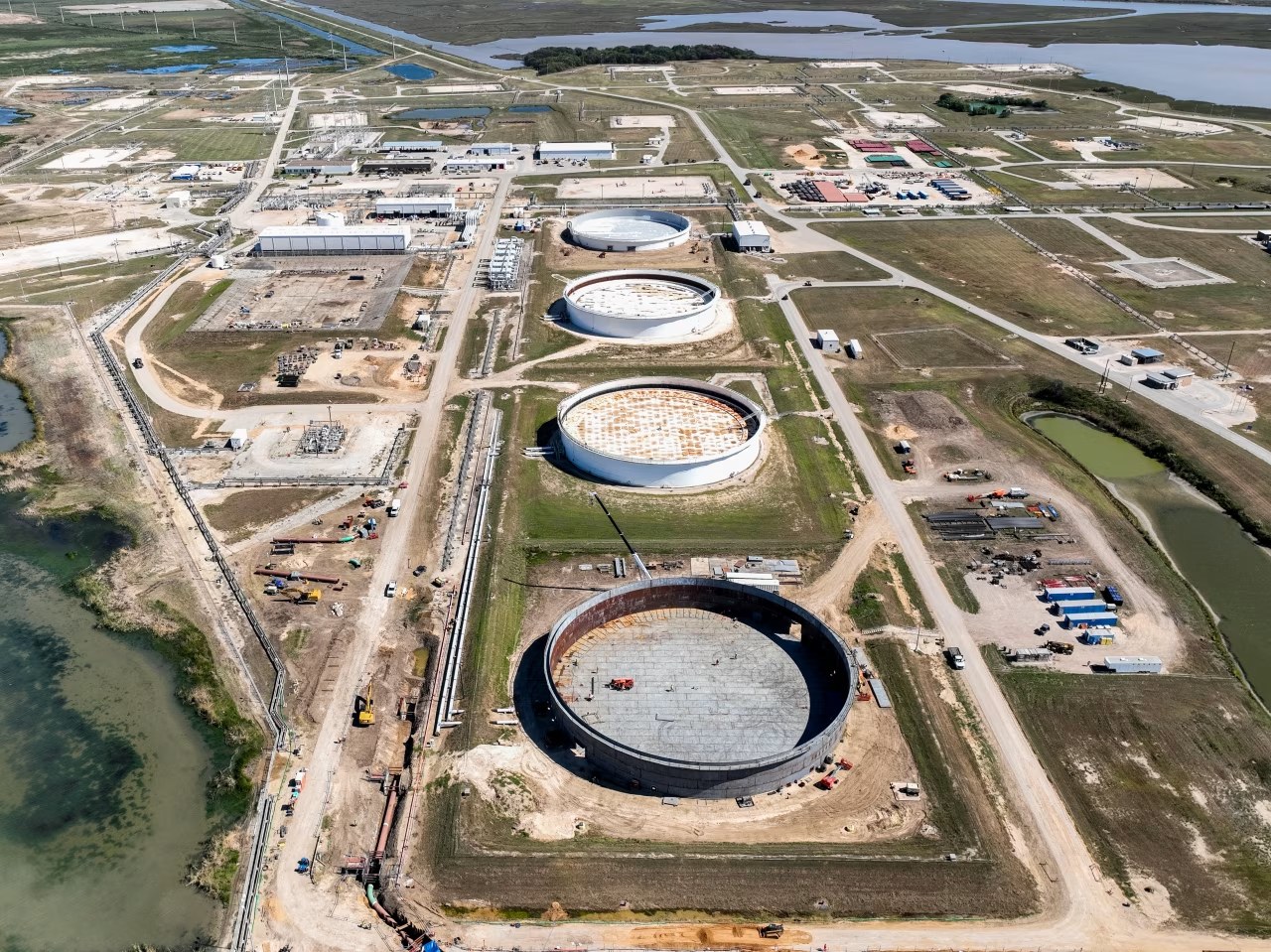
Trump oil price strategy releases 40% of SPR but Brent climbs $13 in a week
- U.S. pledged to release roughly 190 million barrels, about 40% of the Strategic Petroleum Reserve.
- International Energy Agency’s coordinated 400 million‑barrel release added only ~3 million barrels per day to global supply.
- Analysts estimate 9‑10 million barrels per day are stuck behind the Strait of Hormuz.
- Brent crude rose from $90 to $103 per barrel after the announcement.
Even a massive emergency draw may not be enough when geopolitical chokepoints dominate supply.
OIL PRICES—The White House’s bold promise to tap a sizable slice of America’s Strategic Petroleum Reserve (SPR) was meant to signal a rapid price‑cutting tool for a market rattled by Middle‑East tensions.
Instead, the market barely flinched. On the day the International Energy Agency (IEA) announced a coordinated release of 400 million barrels, Brent crude hovered near $90 a barrel, only to close the week at $103.
Why did a move of this magnitude fail to move the needle? The answer lies in the scale of global supply disruptions, the mechanics of the SPR, and the limits of short‑term inventory releases.
The Mechanics of the Strategic Petroleum Reserve and Its Market Influence
Understanding the SPR’s size and purpose
The United States maintains the world’s largest emergency oil stockpile, the Strategic Petroleum Reserve, with a total usable capacity of 714 million barrels according to the Energy Information Administration (EIA). The reserve was created in the 1970s after the oil embargo to provide a buffer against future supply shocks.
When the Trump administration announced it would draw roughly 190 million barrels—about 40% of the SPR’s total—analysts expected a noticeable price dip. Janiv Shah, vice president at Rystad Energy, cautioned that “the magnitude of the draw, while large in absolute terms, is modest relative to daily global consumption of roughly 100 million barrels.”
Historically, SPR releases have produced only temporary price relief. A 2011 release of 30 million barrels after the Arab Spring lowered Brent by about $3 per barrel for a few days, according to a study by the Brookings Institution. The limited effect stems from the fact that market participants view SPR draws as short‑term fixes rather than structural supply changes.
Moreover, the logistics of moving oil from underground caverns to refineries add days to the timeline, diluting any immediate impact on spot prices. The EIA notes that the average draw rate in 2022 was 5 million barrels per day, far below the 12‑13 million‑barrel daily draw needed to offset a 10 million‑barrel daily supply shortfall.
In short, the SPR is a strategic safety net, not a price‑setting lever. The next chapter examines how the IEA’s coordinated release stacks up against the global supply gap created by the Strait of Hormuz.
How the IEA Coordinated Release Measures Up Against Global Supply Gaps
IEA’s 400 million‑barrel pledge in context
The International Energy Agency announced that member nations would collectively release 400 million barrels from emergency reserves, with the United States contributing close to half. The IEA expects the release to add about 3 million barrels of crude and refined products per day to global markets.
Fatih Birol, IEA Executive Director, emphasized that “coordinated releases are a tool to smooth short‑term imbalances, but they cannot fully compensate for large‑scale geopolitical disruptions.”
When measured against the daily flow blockage in the Strait of Hormuz—where analysts estimate 9‑10 million barrels per day are currently trapped—the IEA’s contribution looks modest. Even if the full 190 million‑barrel U.S. draw were deployed instantly, it would offset only two days of Hormuz‑related shortfalls.
Comparative data from the International Energy Agency’s 2024 oil market report shows that the 3 million‑barrel daily addition represents roughly 3% of global daily consumption, underscoring the limited market‑share effect of the coordinated release.
The next chapter explores why the chokepoint in the Strait of Hormuz magnifies these supply constraints.
Why the Strait of Hormuz Bottleneck Undermines Emergency Stockpile Strategies
The geopolitical choke point
The Strait of Hormuz, a narrow waterway between Oman and Iran, carries roughly 20% of the world’s oil—about 18 million barrels per day, according to the International Energy Agency. Recent tensions, including Iranian threats to close the strait, have forced tankers to reroute around the Cape of Good Hope, adding weeks and costs to deliveries.
Janiv Shah noted that “even with coordinated releases, the market perceives the Hormuz risk as a structural supply shock, not a temporary inventory issue.” This perception keeps futures prices elevated, as traders price in the risk premium.
Data from the Oilprice.com 2023 Strait of Hormuz statistics show that when the strait’s throughput fell by 30% in late 2023, Brent prices jumped $12 within a week. The same pattern repeated in early 2024, reinforcing the view that bottlenecks have outsized price effects.
A line chart of Brent crude over the week of the IEA announcement illustrates the price trajectory: starting at $90, climbing to $103 by week’s end, despite the announced releases.
Understanding this dynamic sets the stage for a deeper look at whether a larger SPR draw could have altered the market’s direction.
Could a Larger SPR Draw Have Changed the Market? What Do the Numbers Say?
Running the numbers on a hypothetical full‑capacity release
Suppose the United States had released the entire 714 million barrels of the SPR in a single month—a scenario never attempted. A simple proportional analysis suggests that such a release would add roughly 23 million barrels per day for a 30‑day period, enough to offset the Hormuz bottleneck for two weeks.
Energy economist Dr. Laura Starks of the University of Texas warned that “even a full‑capacity draw would likely only provide temporary relief; once the extra supply is absorbed, prices would revert as underlying geopolitical risk remains.”
The composition of the market’s supply sources can be visualized with a donut chart: the SPR would have accounted for about 12% of total supply in that month, while OPEC, non‑OPEC producers, and the Hormuz‑affected flow would dominate the remaining 88%.
Historical precedent supports this view. The 2011 SPR release of 30 million barrels lowered Brent by roughly 4% for ten days, after which prices rebounded as the underlying supply shock persisted.
While a massive draw could have softened the price surge, the data suggest it would not have prevented Brent from reaching $103, given the entrenched risk premium. The following chapter turns to the policy toolbox beyond SPR releases.
Looking Ahead: What Future Policy Tools Remain for Tempering Volatile Oil Prices?
Beyond emergency stockpiles
Policymakers now face the question of whether other levers—strategic demand‑side measures, strategic fuel subsidies, or diplomatic engagement—might offer more durable price stability.
White House Press Secretary Karine Jean-Pierre reiterated that “the administration remains committed to working with allies to ensure free flow of oil and to explore all tools, including strategic reserves, to protect American consumers.”
A bullet‑KPI snapshot of key market metrics underscores the challenges ahead: global oil inventories sit at 2.9 billion barrels (down 5% YoY), Brent volatility has risen to a 30‑day average of 6.2%, and pending litigation related to energy transition policies adds regulatory uncertainty.
These metrics suggest that while the SPR can be a useful shock absorber, a broader strategy—combining diplomatic pressure on chokepoints, investment in strategic petroleum alternatives, and coordinated OPEC‑plus production adjustments—will likely be required to keep oil prices in check.
In the final chapter, we compare past SPR deployments to gauge how often such releases have succeeded or failed, offering a historical lens on today’s policy debate.
Historical Perspective: Past SPR Deployments and Their Price Impact
Learning from previous emergency draws
Since its inception, the SPR has been tapped eight times, most often in response to geopolitical crises or natural disasters. A table of the eight releases shows a mixed record: only the 2011 Arab Spring draw and the 2022 Ukraine‑related release produced measurable, albeit short‑lived, price declines.
Dr. Michael Green, senior fellow at the Center for Strategic and International Studies, notes that “the effectiveness of SPR releases hinges on timing, market perception, and the scale relative to the underlying shock.”
The table below compares each release’s size, duration, and the immediate change in Brent price. The data reveal that releases representing less than 5% of global daily consumption rarely move the market beyond a few dollars.
Given this history, the 2024 draw—while larger in absolute terms—still falls short of the threshold needed to overcome the Hormuz‑induced supply gap.
Future policymakers may therefore need to consider complementary measures, such as strategic diplomatic engagements to keep the Strait of Hormuz open, or accelerated investment in strategic fuel alternatives, to achieve lasting price stability.
Frequently Asked Questions
Q: What was the size of the oil release announced by the United States?
The United States pledged to contribute close to half of the IEA’s 400 million‑barrel coordinated release, roughly 190 million barrels from the Strategic Petroleum Reserve.
Q: Why did the SPR release not lower Brent crude prices?
Analysts say the 190 million‑barrel draw was tiny compared with the 9‑10 million barrels per day trapped in the Strait of Hormuz, limiting any immediate price impact.
Q: Can future SPR releases realistically curb oil price spikes?
Experts argue that only a release representing a significant share of global inventories—well above 10% of the SPR—could meaningfully shift market sentiment.
