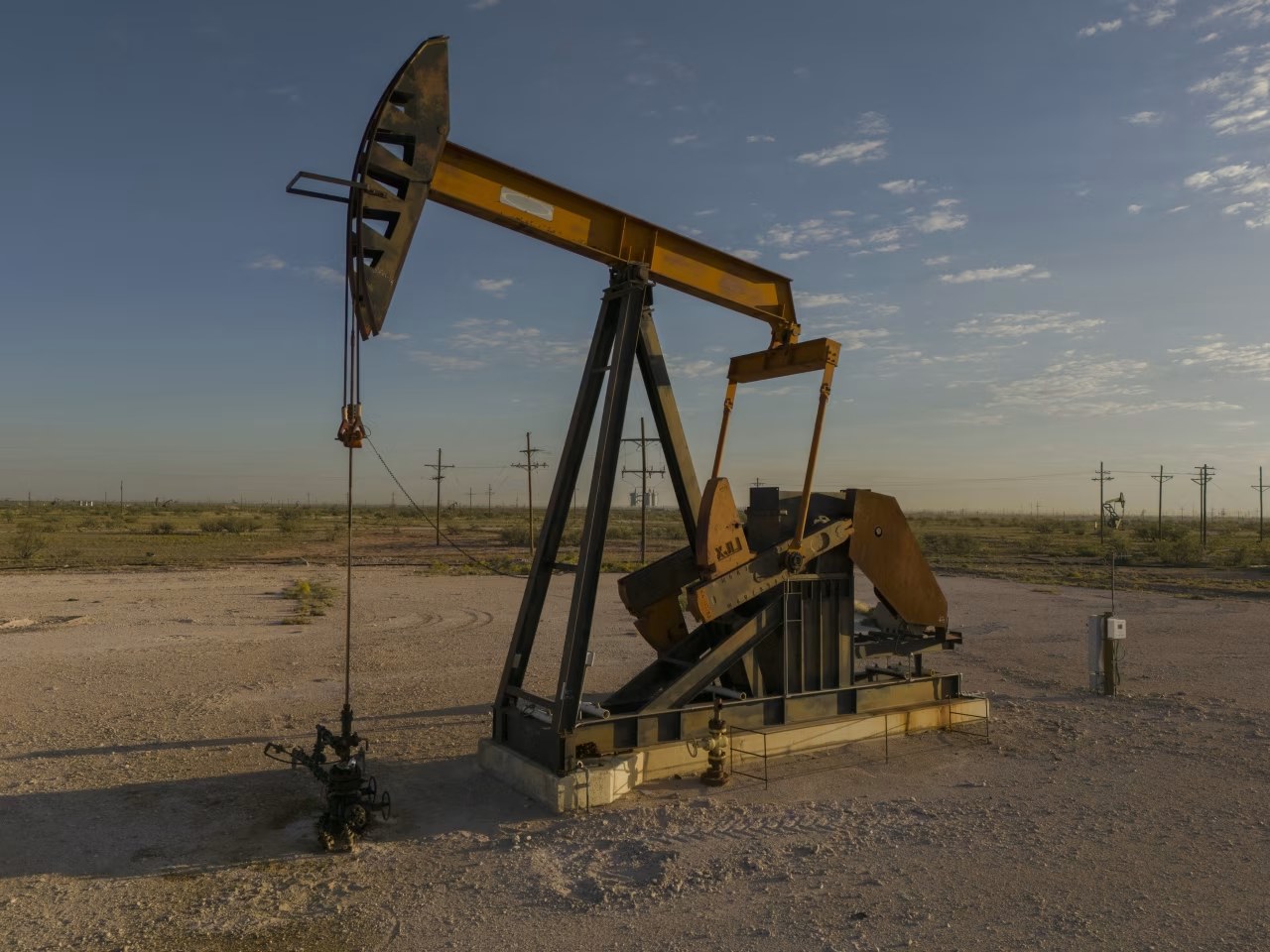
New Mexico Oil Revenue Already Tops $7.3 Billion as Iran Tensions Lift Prices
- New Mexico produces 2.3 million barrels of crude daily, second only to Texas.
- Fiscal-year 2025 state revenue from production hit at least $7.3 billion.
- Hobbs mayor says higher prices mean ‘more jobs and more opportunities’.
- Unlike past oil shocks, the U.S. now exports more than it imports, turning price spikes into budget windfalls.
Local governments from Santa Fe to small desert cities brace for a revenue surge just as consumers feel the pinch at the pump.
IRAN CONFLICT—SANTA FE—New Mexico’s desert rigs pumped 2.3 million barrels per day through early 2025, funneling at least $7.3 billion into state coffers. With every $5 increase in West Texas Intermediate, fiscal analysts add roughly $400 million to revenue forecasts, a trajectory now accelerating as tensions with Iran push Brent past $90 a barrel.
The shift underscores a historic reversal: the United States, once crippled by Middle-East supply scares, now harvests them. “At the end of the day, it means more jobs and more opportunities for people,” Hobbs Mayor Jonathan Sena told the Journal, capturing the sentiment across America’s new oil heartland.
Yet the windfall carries a caveat—higher crude feeds retail gasoline prices, nudging inflation just as households budget for summer travel. How state leaders balance tax relief against fresh spending will shape both the region’s boom-cycle politics and the broader U.S. energy narrative.
From Import Vulnerability to Export Powerhouse
America’s shale revolution quietly flipped the geopolitical chessboard. In 2008 the country imported 12 million barrels per day; today the U.S. ships out more crude and petroleum products than it brings in. When drone strikes jolted Iranian exports a decade ago, Brent spiked above $120 and U.S. drivers paid dearly. Now New Mexico’s Permian basin alone adds 800,000 barrels since 2019, enough to backfill most global shortfalls if Tehran’s 1.5 million bpd disappears.
That production cushion explains why Governor Michelle Lujan Grisham’s budget office still projects a $1.9 billion surplus even after raising teacher pay 7%. “We’re no longer hostage to foreign barrels,” Energy Secretary Melanie Martinez told legislators last month, citing rig counts that have climbed 14% since January.
Still, the upside is uneven. Every $10 price bump adds an estimated $1 billion to New Mexico’s general fund, but also raises national gasoline costs by roughly 25 cents a gallon, according to the Energy Information Administration. Rural school districts may gain new STEM labs while urban commuters shell out more for fuel—a redistribution map that economists call the ‘shale paradox.’
Forward-looking lawmakers want to lock in gains through an expanded permanent fund, modeled on Norway’s trillion-dollar sovereign wealth pool. Draft bills would channel 5% of future windfalls into a trust that could pay out when prices crash. The proposal is expected to dominate next year’s legislative session.
$7.3 Billion and Counting: How Crude Dollars Flow
New Mexico earns royalties on every barrel pulled from state trust land—about 35% of total output—plus severance taxes and corporate income tax on drillers. When WTI averaged $76 in fiscal 2025, those streams produced the record $7.3 billion haul, eclipsing even the 2014 boom. Analysts at the Legislative Finance Committee model a $12 billion biennial budget; energy now funds 39% of it, up from 15% a decade ago.
The cash arrives just as other states confront deficits. California faces a $68 billion shortfall; Illinois’ pension hole deepens. New Mexico, by contrast, deposits surplus oil revenue into its early-education endowment, raising pre-K enrollment 40% since 2021. “We’re literally educating toddlers with barrels of crude,” Representative Patricia Lundstrom, chair of the House Appropriations Committee, said during March hearings.
Yet dependence carries risk. Legislative analysts estimate that if prices slid back to $60, the state would forfeit $900 million in the next fiscal year. That volatility fuels bipartisan support for diversifying into renewables, but lawmakers are reluctant to blunt an industry that employs 18% of the state’s workforce.
Meanwhile, Hobbs’ Lea County, which produces one in four state barrels, just approved a $45 million events-center expansion financed almost entirely by oil taxes. Construction crews booked every local hotel room through October, demonstrating how fiscal spillover turns into Main-Street reality.
Hobbs at the Epicenter: Hotels, Hiring, and Highways
Hobbs, population 40,000, sits atop the Permian’s most prolific sub-basin. When WTI crossed $85 in April, the city’s unemployment rate fell to 2.9%, the lowest since the fracking renaissance began. Mayor Sena ticks off the indicators: restaurant sales up 22%, hotel occupancy above 90%, building permits on pace to triple 2022 levels. “We’re seeing cranes again,” he told the Journal, noting a $120 million downtown-revitalization bond voters approved in May.
The boom revives memories of 2014, but with guardrails. Companies now favor automated drilling, so job gains skew toward welders, electricians, and data-tech roles. New Mexico Junior College added a mechatronics program whose graduates start at $70,000—double the county median. Local contractors fly in apprentices from Atlanta and Denver, paying per-diem bonuses that trickle to retailers.
Still, housing strains emerge. Average rents jumped 28% in two years; the school district added portable classrooms for 500 extra students. State transportation officials fast-tracked a $60 million highway-widening project after traffic fatalities rose 35%. Federal royalty disbursements—$1.8 billion last year—help underwrite the upgrades, but labor shortages slow progress.
City planners insist they learned from the last bust, banking 20% of gross oil taxes in a reserve that now tops $50 million. The cushion, they say, will soften service cuts when prices inevitably slide.
Price Spike vs. Pump Pain: Who Wins, Who Loses?
When Brent rallied above $90 after Iranian supply threats, the national average for regular gasoline climbed to $3.78 a gallon, up 42 cents since January. Analysts at GasBuddy estimate every penny increase drains $1.2 billion annually from consumer wallets, a headwind that could shave 0.3 percentage points from GDP growth. Yet the aggregate picture is more nuanced.
The Federal Reserve Bank of Dallas calculates that rising crude prices now boost U.S. energy investment faster than they depress consumption. Shale firms hedge 60% of next-year output above $80, locking in cash flow that fuels capital spending. Equipment suppliers in Texas and Ohio report back-orders through 2026; steel-pipe prices are up 19%.
Still, rural motorists feel the sting. In McKinley County, New Mexico, where per-capita income is 30% below the state average, residents spend 9% of earnings on fuel. “We’re cheering the rigs while pinching pennies at the pump,” community-organizer Rosa Chavez said during a May town-hall. Congress is debating a targeted fuel-tax rebate, though analysts doubt it will pass before November.
For now, the net effect is redistribution: dollars migrate from coastal consumers to interior producers. History suggests that when oil’s share of GDP exceeds 4%, recessions follow; the U.S. is nearing that threshold, but record household savings and a services-heavy economy may blunt the blow.
Can New Mexico Avoid the Boom-Bust Trap This Time?
Between 2015 and 2017 New Mexico slashed higher-education funding 12% after oil collapsed to $26 a barrel. Lawmakers vowed never again, yet the state still relies on volatile revenue for nearly two-fifths of spending. The question now is whether record inflows will be channeled into durable assets rather than recurring programs.
A bipartisan “Legacy Fund” proposal would capture 25% of future surpluses in a locked-box endowment, mirroring North Dakota’s $8 billion trust that pays steady dividends. Analysts at Pew Charitable Trusts estimate such a fund could yield $500 million annually by 2035, enough to offset 30% of oil-related revenue during downturns. Governor Grisham has signaled support if safeguards prevent legislative raids.
Meanwhile, the administration is accelerating renewables leasing on state trust land, aiming for 6 gigawatts of solar and wind by 2030. Critics argue that could undercut the very industry bankrolling schools, but Energy Secretary Martinez counters that diversified royalties smooth volatility. “We don’t want to kill the goose,” she said, “but we can’t be hostage to one commodity.”
Private capital is already hedging. A $400 million lithium-processing plant broke ground outside Silver City, attracted by cheap power and tax abatements. If global battery demand surges, the facility could employ 600 workers—small beside oil’s 90,000, yet emblematic of a pivot.
Legislators must decide in 2026 whether to constitutionally dedicate a slice of oil windfalls to permanent savings. Without that discipline, economists warn, the next price crash could replay the austerity of a decade ago.
Frequently Asked Questions
Q: How much oil does New Mexico produce daily?
New Mexico pumps roughly 2.3 million barrels of crude every day, making it the second-largest oil-producing state behind Texas.
Q: What did the state earn from oil in fiscal 2025?
Fiscal-year 2025 revenue tied to crude output reached at least $7.3 billion, a figure expected to rise with higher Iran-driven prices.
Q: Why does the Iran conflict boost U.S. oil states?
Geopolitical risk premiums lift global crude prices; because the U.S. is now a net exporter, shale producers capture the upside rather than just feeling the pain.
Q: Which New Mexico city sees the fastest upside?
Hobbs, seat of the most productive oil county, reports fuller restaurants, hotels, and construction sites as prices climb.
Q: Does higher domestic production shield the U.S. economy?
Yes—unlike past shocks when imports dominated, today’s 13+ million bbl national output cushions consumers while still swelling local tax bases.
📰 Related Articles
- China’s Clean-Energy Build-Up Turns Oil Turmoil Into Strategic Advantage
- TotalEnergies Scales Back Middle East Output as Regional Conflict Rises
- Oil Breaks $100: European Energy Stocks Rally, Thai Firms Upgraded on War Risk
- AI Data Centers May Stick U.S. Households With Trillion-Dollar Grid Upgrade Bill
