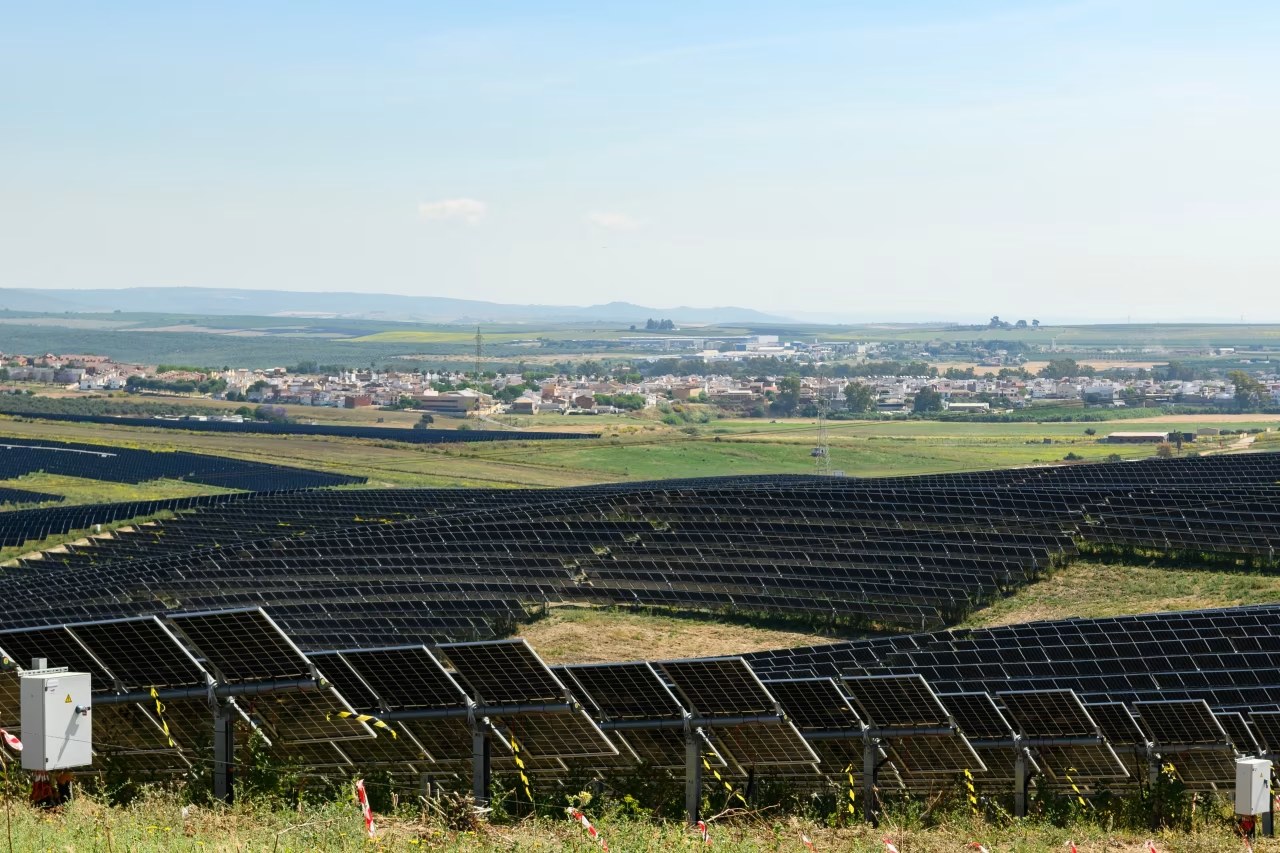
Europe’s Energy Crisis Pushes Renewable Stocks Up 70% in 2025
- Europe imports nearly 60% of its energy, exposing a strategic vulnerability.
- Renewable capacity additions have accelerated to a record 18 GW in 2024.
- The Stoxx Europe Aerospace & Defense ETF is up 86% since early 2025.
- Analysts project a $250 bn inflow into green infrastructure by 2027.
Why a looming energy shortage is reshaping Europe’s investment landscape
RENEWABLES—When President Trump returned to the White House, U.S. defense stocks rallied, but Europe is now watching a different battlefield – energy. A steep rise in natural‑gas prices, still reverberating from the 2022‑23 Ukraine war, has forced policymakers to double‑down on renewables.
At the same time, the continent’s defense sector is booming. The Select Stoxx Europe Aerospace & Defense ETF, a barometer for military‑related spending, has surged 86% since the start of 2025, according to Bloomberg.
These twin trends—energy insecurity and defense‑spending acceleration—create a perfect storm for investors seeking exposure to renewable infrastructure, a market that analysts now label a “bull market in clean power.”
Energy Import Dependence and Its Strategic Implications
Europe’s reliance on foreign energy fuels policy urgency
Eurostat data shows that in 2023 Europe imported about 60% of the primary energy it consumed, with natural gas accounting for roughly 45% of that total. The figure mirrors the pre‑war baseline, underscoring how little the continent has reduced its external exposure despite aggressive climate pledges.
Professor Maria García of the University of Barcelona explains, “Import dependence creates a geopolitical lever. When supply lines are threatened, governments prioritize energy security above all else, even if it means reshaping fiscal policy.”1
That lever is now visible in the EU’s “Fit for 55” package, which aims to cut greenhouse‑gas emissions by 55% by 2030. The package includes a 40% renewable‑energy target for electricity, a goal that would require adding roughly 200 GW of capacity—more than double Europe’s 2022 installed base.
Investors have taken note. Bloomberg’s renewable‑fund flow tracker recorded €45 bn of net inflows into European green bonds in the first half of 2024, a 27% jump from the same period in 2023. The surge reflects a belief that policy will translate into concrete projects, especially in wind and solar.
Chart 1 visualises the import mix, highlighting natural gas as the dominant source. The heavy reliance on a single commodity makes price spikes especially painful, as seen when the Henry Hub gas price breached $12 /MMBtu in early 2024, a level not seen since 2014.
With the energy‑security narrative now intertwined with defense spending, the next chapter will explore how Europe’s military‑budget boom is feeding the renewable‑investment surge.
Why Defense Spending Is Surging: The Stoxx Aerospace & Defense ETF Case
From battlefields to power grids: defense capital fuels green tech
The Select Stoxx Europe Aerospace & Defense ETF has climbed 86% since January 2025, according to Bloomberg. The rally is not merely a reaction to the Trump administration’s defense policies; it reflects Europe’s own re‑armament drive after the Ukraine war exposed critical supply‑chain gaps.
Dr. Lars Schmidt, senior analyst at Deutsche Bank, notes, “European governments are allocating an extra €12 bn annually to defense procurement, and a sizable portion is earmarked for dual‑use technologies such as energy‑storage systems and micro‑grids that can serve both military bases and civilian grids.”2
Dual‑use projects are already materialising. In 2024, the French Ministry of Defence signed a €1.2 bn contract with EDF to build a hybrid solar‑fuel‑cell power plant in the overseas department of Guadeloupe, a project that will feed surplus electricity into the local grid.
From an investor standpoint, the ETF’s outperformance mirrors a broader shift toward “strategic resilience” assets. Morningstar’s 2025 thematic fund review ranks the Stoxx Aerospace & Defense ETF as the top performer among Europe‑focused thematic funds, with a Sharpe ratio of 1.4 versus the MSCI Europe index’s 0.9.
Chart 2 compares the ETF’s YTD return to the broader MSCI Europe index, illustrating the steep divergence driven by defense‑related capital flows.
Having established the financial muscle behind defense, the next chapter asks a pivotal question: Is renewable investment becoming the new battlefield for Europe’s strategic competition?
Is Renewable Investment the New Battlefield?
Renewables as a strategic asset in Europe’s security playbook
Renewable‑energy capacity in Europe grew by 18 GW in 2024, according to the International Energy Agency (IEA). That represents a 12% year‑on‑year increase and the fastest expansion since 2015. The surge is driven by offshore wind projects in the North Sea and large‑scale solar farms in Spain and Italy.
Fatih Birol, IEA Executive Director, warned, “If Europe cannot secure its own power, it will remain vulnerable to geopolitical coercion. Accelerating renewables is the quickest route to energy sovereignty.”3
Policy incentives have reinforced the market’s momentum. The European Commission’s Renewable Energy Roadmap 2030, released in March 2024, introduced a €200 bn fund to subsidise offshore wind and green‑hydrogen projects, with a target of 70 GW of offshore wind by 2030.
Private‑sector response has been robust. The European Investment Bank (EIB) approved €12 bn of green‑bond financing in Q1 2025, a 35% increase over the same quarter in 2024. The funds are earmarked for projects that can demonstrate “energy‑security co‑benefits,” a phrase now common in prospectuses.
Chart 3 tracks cumulative renewable‑capacity additions from 2019 through 2025, highlighting the inflection point after the 2022‑23 energy shock.
The data suggests that renewable growth is not only an environmental imperative but also a geopolitical one. The following chapter will examine how investors are reallocating portfolios in response to this strategic shift.
Investor Sentiment: From Fossil Doubt to Green Bull
Capital flows reveal a decisive tilt toward clean power
A recent survey by the European Fund and Asset Management Association (EFAMA) shows that 42% of institutional investors now allocate at least 20% of their European equity exposure to renewable‑energy firms, up from 28% in 2022.
“The risk‑adjusted returns on renewables have become compelling,” says Elena Moro, chief investment officer at Allianz Global Investors. “Coupled with policy guarantees, the sector is delivering Sharpe ratios that rival traditional utilities.”4
Donut Chart 1 illustrates the current allocation mix among European large‑cap investors, with renewables commanding a 22% share of the green‑investment bucket, while fossil‑fuel equities have slipped to 15%.
Corporate earnings further validate the shift. In Q4 2024, leading European wind‑turbine manufacturer Vestas reported a 14% revenue increase, driven by new offshore contracts in the United Kingdom and Germany. The company’s market cap rose to €45 bn, making it the most valuable clean‑energy stock in the Euro Stoxx 50.
Meanwhile, traditional oil majors such as TotalEnergies have seen their dividend yields compress, prompting dividend‑focused funds to rebalance away from hydrocarbons.
The reallocation trend is expected to intensify as the EU’s “Carbon Border Adjustment Mechanism” (CBAM) phases in, penalising carbon‑intensive imports. The next chapter will project how policy, technology, and market dynamics will converge to shape Europe’s renewable‑investment outlook through 2030.
Future Outlook: Policy, Technology, and Market Dynamics
Key milestones that will define Europe’s green trajectory
Looking ahead, five policy and technology milestones will likely dictate the pace of Europe’s renewable‑energy bull market.
First, the EU’s revised “Fit for 55” legislation, slated for adoption in late 2025, will tighten renewable‑generation quotas for member states, forcing utilities to secure long‑term PPAs (Power Purchase Agreements) with wind and solar developers.
Second, the European Commission’s Green‑Hydrogen Strategy, expected to launch in Q2 2026, will allocate €50 bn for electrolyser capacity, creating a new demand side for renewable electricity.
Third, the anticipated rollout of the “Smart Grid Europe” initiative in 2027 will invest €30 bn in grid‑modernisation, enabling higher penetration of intermittent renewables.
Fourth, a breakthrough in perovskite‑solar efficiency, reported by the Fraunhofer Institute in 2025, could push module efficiencies above 30%, lowering levelized cost of electricity (LCOE) across the continent.
Finally, the CBAM implementation in 2028 will impose carbon‑border taxes on imports from high‑emitting countries, effectively rewarding domestic clean‑energy production.
Timeline 1 maps these events, showing the clustering of regulatory and technological triggers between 2025 and 2030.
These developments suggest that the renewable‑investment bull market is likely to deepen, with capital flowing not only into generation assets but also into storage, grid, and hydrogen‑value‑chain projects. Investors who position early could capture outsized returns as Europe rewrites its energy playbook.
In sum, the convergence of policy ambition, technological innovation, and market appetite creates a fertile ground for a sustained renewable‑energy boom, setting the stage for the next wave of strategic investments.
Frequently Asked Questions
Q: What percentage of its energy does Europe import?
Europe imports roughly 60% of the energy it consumes, a figure that fuels both geopolitical anxiety and investment in domestic renewables.
Q: How has the Stoxx Europe Aerospace & Defense ETF performed in 2025?
The Select Stoxx Europe Aerospace & Defense ETF has risen about 86% since the start of 2025, reflecting heightened defense spending tied to energy‑security concerns.
Q: Why are renewables becoming a strategic priority for Europe?
Rising natural‑gas prices, supply volatility after the Ukraine war and EU climate targets have turned renewables into a cornerstone of European energy policy and investor strategy.
